Stitch aims to mirror Atlanta Beltline to build park over Downtown Connector
Capping one of the country’s busiest interstate corridors with an elevated park is a tall task, but a group of Atlanta leaders aims to rise to the challenge.
The formation of a nonprofit was announced Tuesday to helm the Stitch project, an effort to build parks and gathering spaces atop the Downtown Connector. A nine-member board of directors will oversee the project’s development, aiming to prepare for construction to start in earnest next year.
The Stitch is one of Atlanta’s most challenging engineering endeavors, promising to reconnect parts of downtown and Midtown divided by I-75 and I-85 more than 70 years ago. Its financing has come into question after Congress last year revoked $151 million in federal funding, but project leaders say the board’s formation is a critical step to bringing the Stitch to life.





Jack Cebe, the Stitch project director, will become the CEO and president of the new nonprofit called Atlanta Downtown Stitch Inc. He’s following a development playbook used by another ambitious Atlanta project.
“Our agreements with the city, our board structure and the public-private partnership approach are modeled a lot off a very successful example: the Atlanta Beltline,” Cebe told The Atlanta Journal-Constitution.

The board consists of appointees from Mayor Andre Dickens, the City Council, Invest Atlanta and the Atlanta Downtown Improvement District. Board members include Councilmember Jason Dozier, alongside executives for Truist, Georgia Power, the Westin Peachtree Plaza hotel and real estate developers.
They will assume their roles Friday and will oversee the Stitch’s construction, event programming and financing.
“You can draw all the drawings you want,” said John McColl, executive vice president at Atlanta-based Cousins Properties and one of the new board members. “But (it won’t happen) if you don’t come up with a true sense of governance of how something is going to be managed.”
Cebe said the Beltline was able to build momentum and continuously deliver new paved trails along its 22-mile loop around Atlanta because of its structure and dedicated backers. The Stitch board aims to replicate that “tried and true” model, he said.
“A lot of times, boards can maybe be seen as symbolic or perfunctory,” Cebe said. “But this is very much a working governing board that will direct what my job is and how funding is spent.”
Downtown reconnection
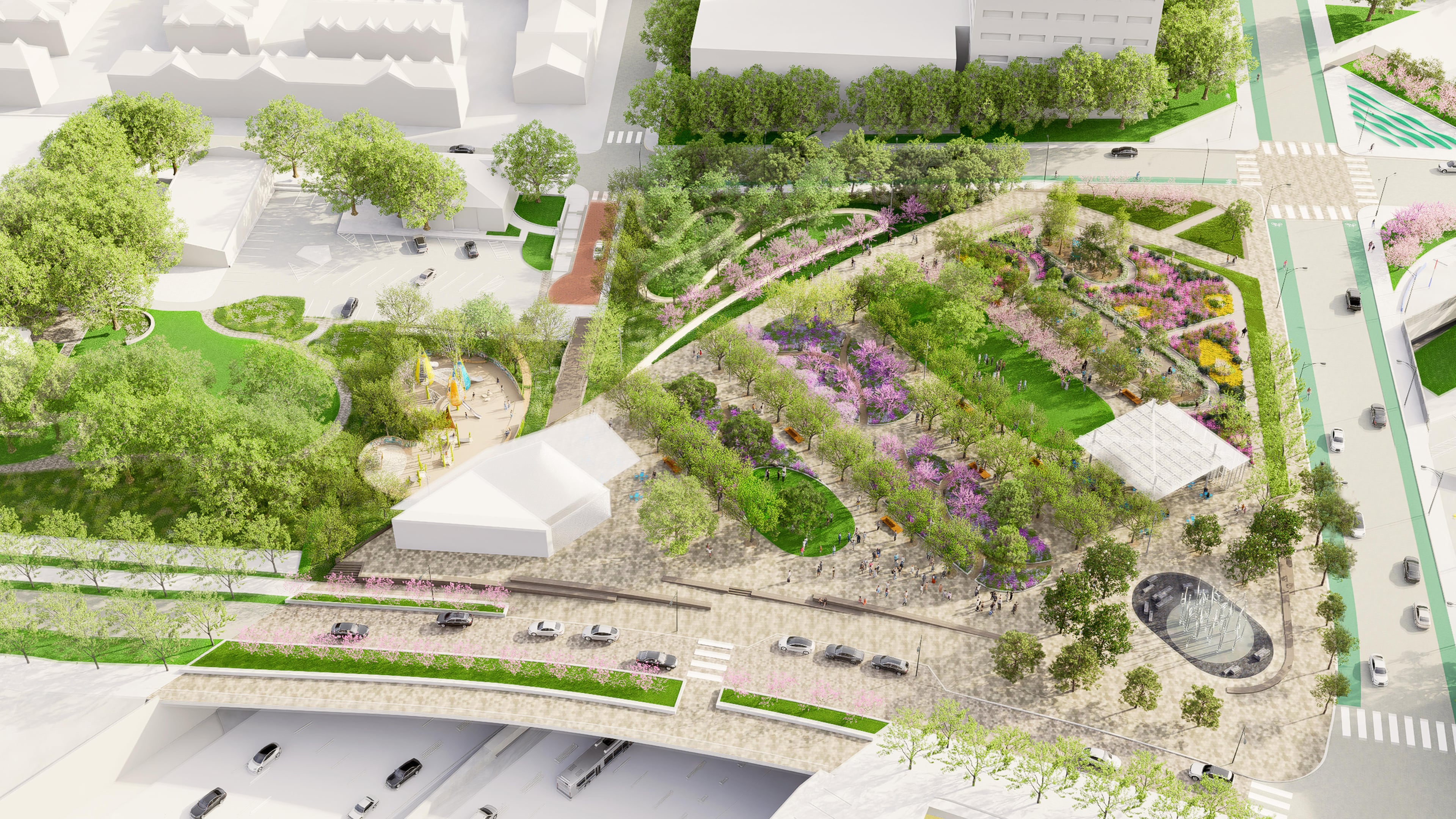
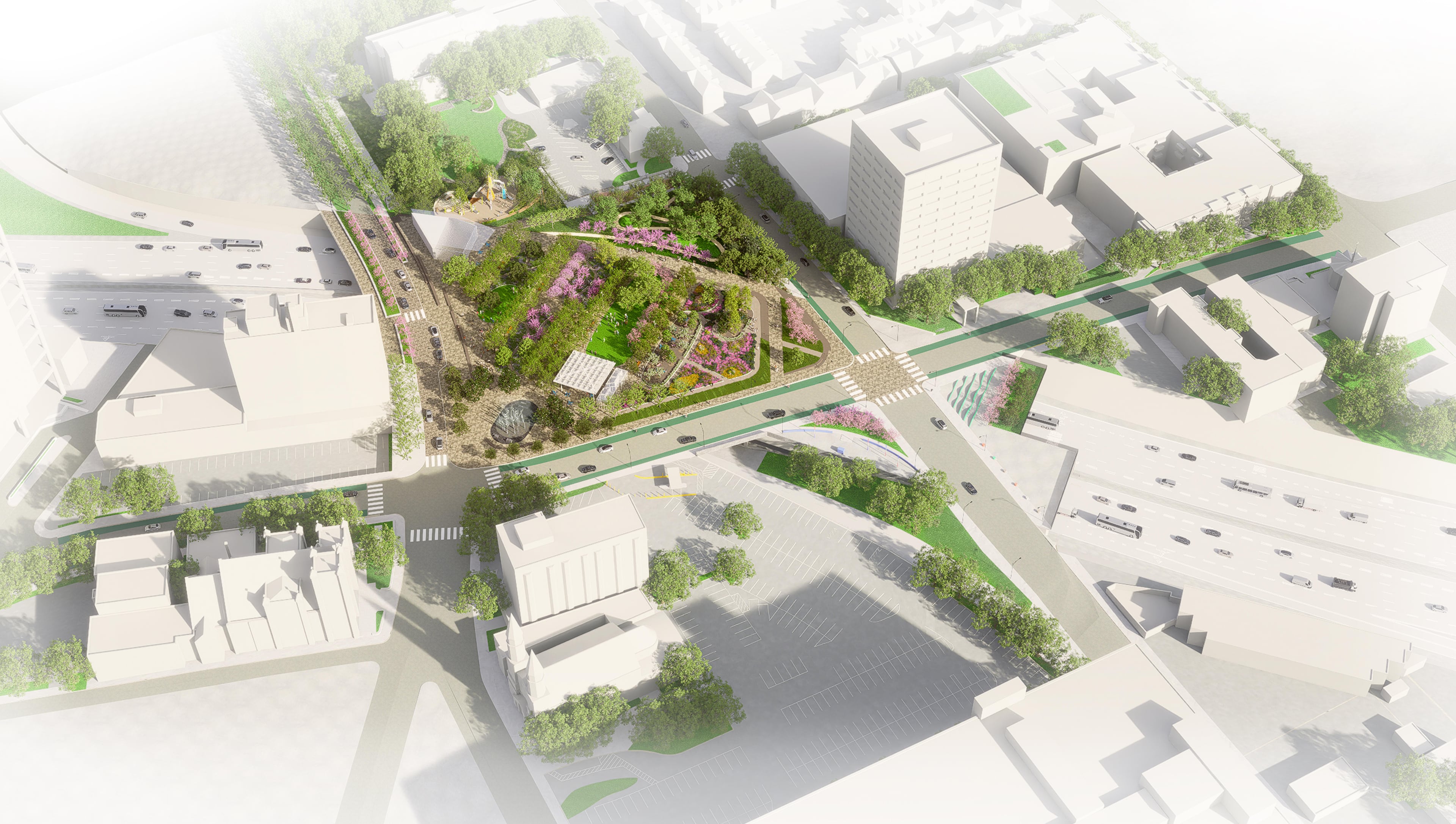
Construction of the Stitch is expected to be split into three phases and estimated to cost $713 million. It will rise over about three-quarters of a mile of freeway from Piedmont Avenue to the south to West Peachtree Street to the north, creating about 14 acres of green space.
McColl, who worked on redeveloping Crawford Long Hospital into Emory University Hospital Midtown, said the Downtown Connector has long been an obstacle for the area’s cohesion. He compared the Stitch effort to a quilt, aiming to sow back together the neighborhood’s seams.
“It was driven by a desire to just see two parts of our city be literally stitched back together,” McColl said.
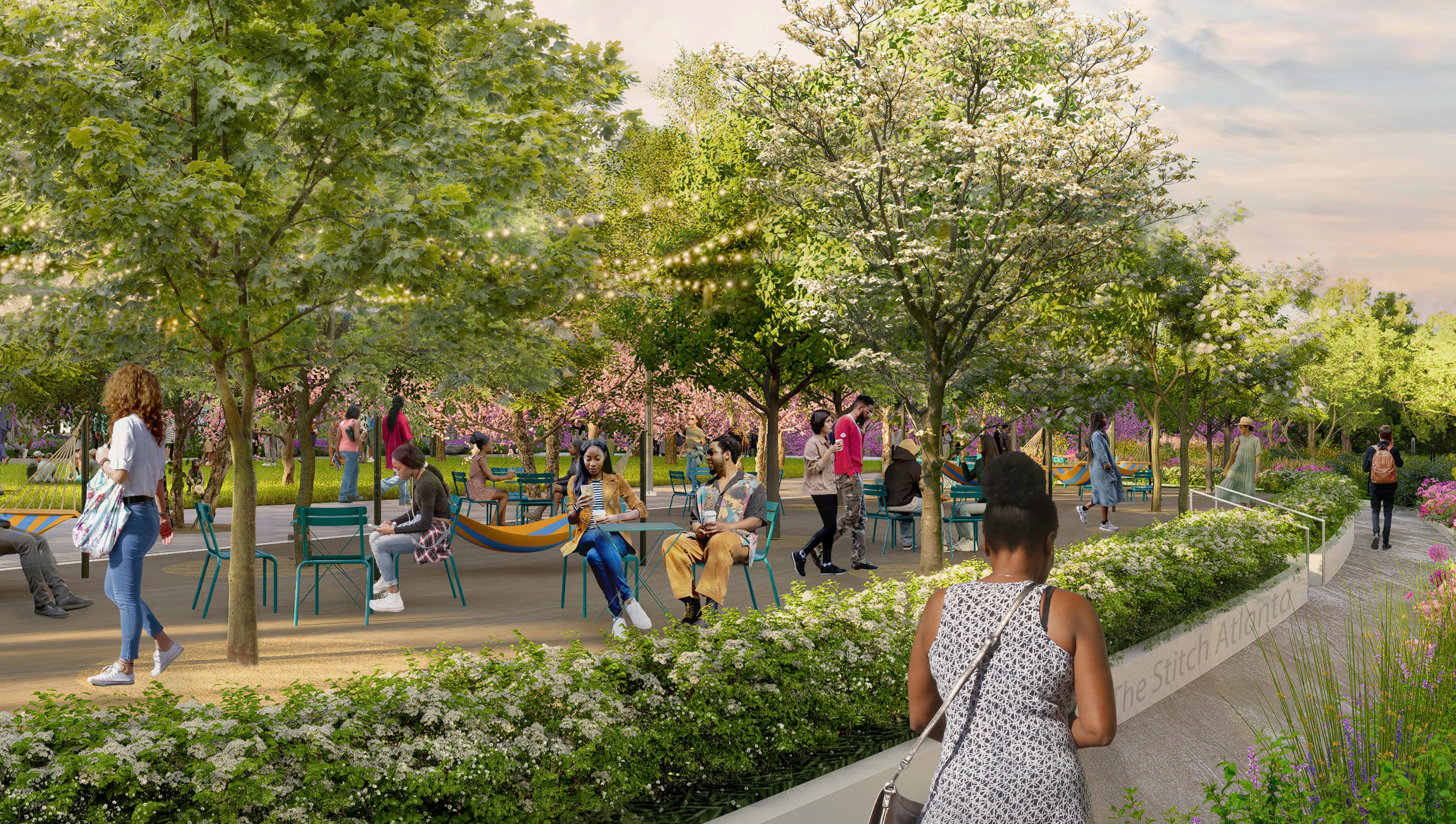
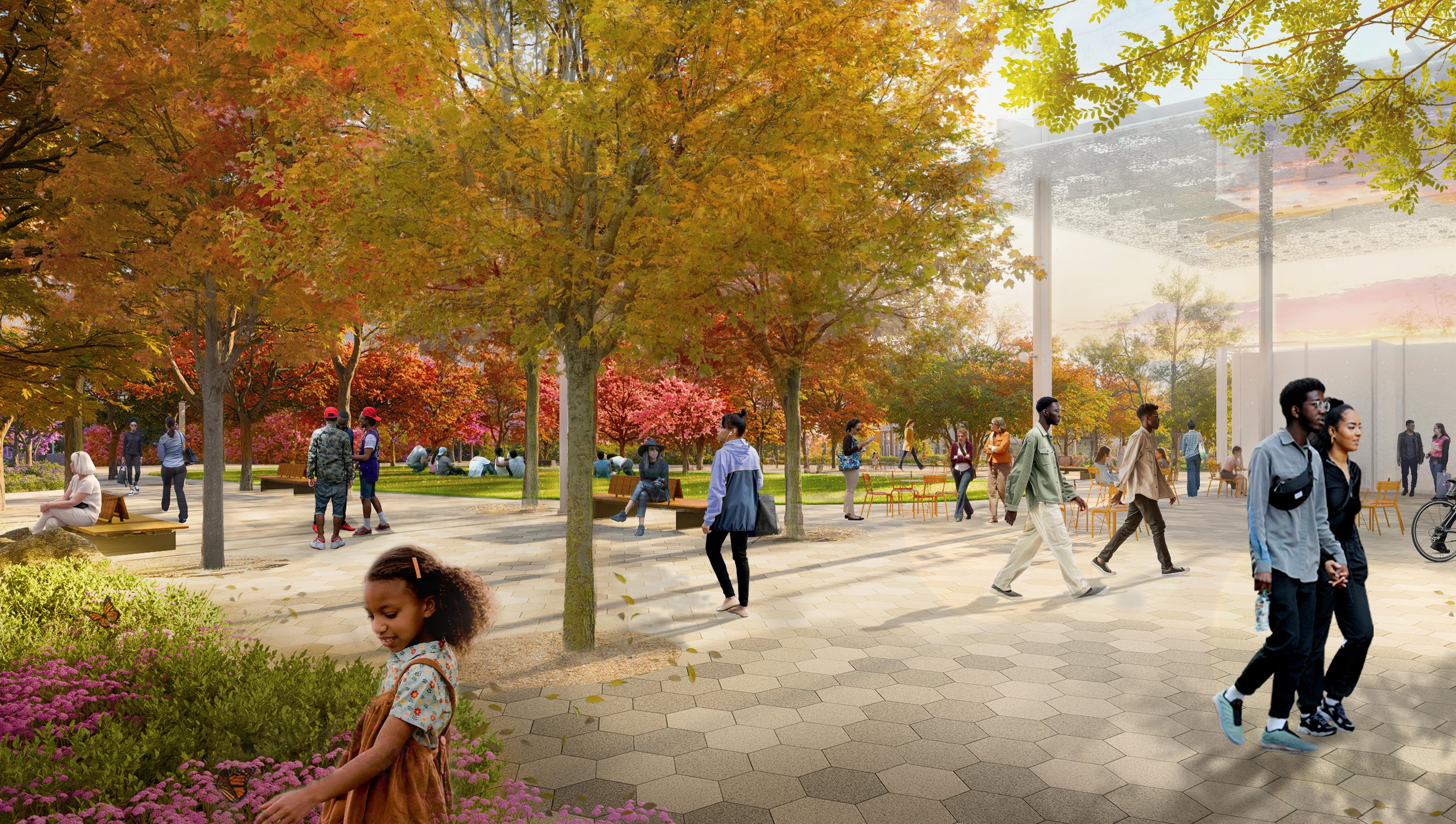
Phase 1 is a 5-acre park alongside Peachtree Street and Ralph McGill Boulevard, a project estimated to cost $200 million. The most recent renderings show a mix of public spaces, including pavilions, playgrounds, fountains and gardens.
The Stitch’s master planning and design work began in 2022, but construction start dates have continuously been delayed. Cebe said Phase 1’s site engineering is on track to be shovel-ready by the summer, aiming to break ground next year.
“With how long procurement takes, I think the soonest we could expect construction activities would be in 2027,” he said.
Financing hurdles
In April, the City Council created a special tax district to help pay for the Stitch. Dickens is also pushing to renew the city’s tax allocation districts, which could also act as a financing tool.
The Beltline, similarly, receives TAD support and financial support from a special services district and philanthropic donors.
The Stitch so far has raised $50 million in local commitments, but the rest of its financing for Phase 1 was supposed to come from federal grants.
In July, however, Republicans in the House and Senate passed President Donald Trump’s One Big Beautiful Bill Act, which included repealing about $2.5 billion in grants for infrastructure projects across the country. The list included a $151 million grant for the Stitch alongside smaller grants for the Atlanta Beltline and the Flint River Trail.
Dickens in October said he remained confident the Stitch would come to fruition.
“This public park will be transformative. And it is still going to happen,” he said at the inaugural Downtown Day on Oct. 22. “… Nationwide cuts in federal funding — that is not going to derail this project.”
McColl said one of the board’s responsibilities will be to act as project cheerleaders, building support and helping plug the nine-figure financing hole.
“We’re all bullish that those funding sources exist inside the state of Georgia and/or through relationships external to the state of Georgia,” McColl said. “More to come on how that happens, but we’re not shy that we’re bullish it can happen.”
Cebe said the formation of the Stitch’s board will provide the structure and brain trust needed to make the project a reality.
“This is just helping build confidence,” Cebe said. “That’s what it takes — committed community members — to make initiatives like this happen. And we’ve got them.”
About the Author

Zachary Hansen, a Georgia native, covers economic development and commercial real estate for the AJC. He's been with the newspaper since 2018 and enjoys diving into complex stories that affect people's lives.