North Atlantic right whale dies from entanglement injuries
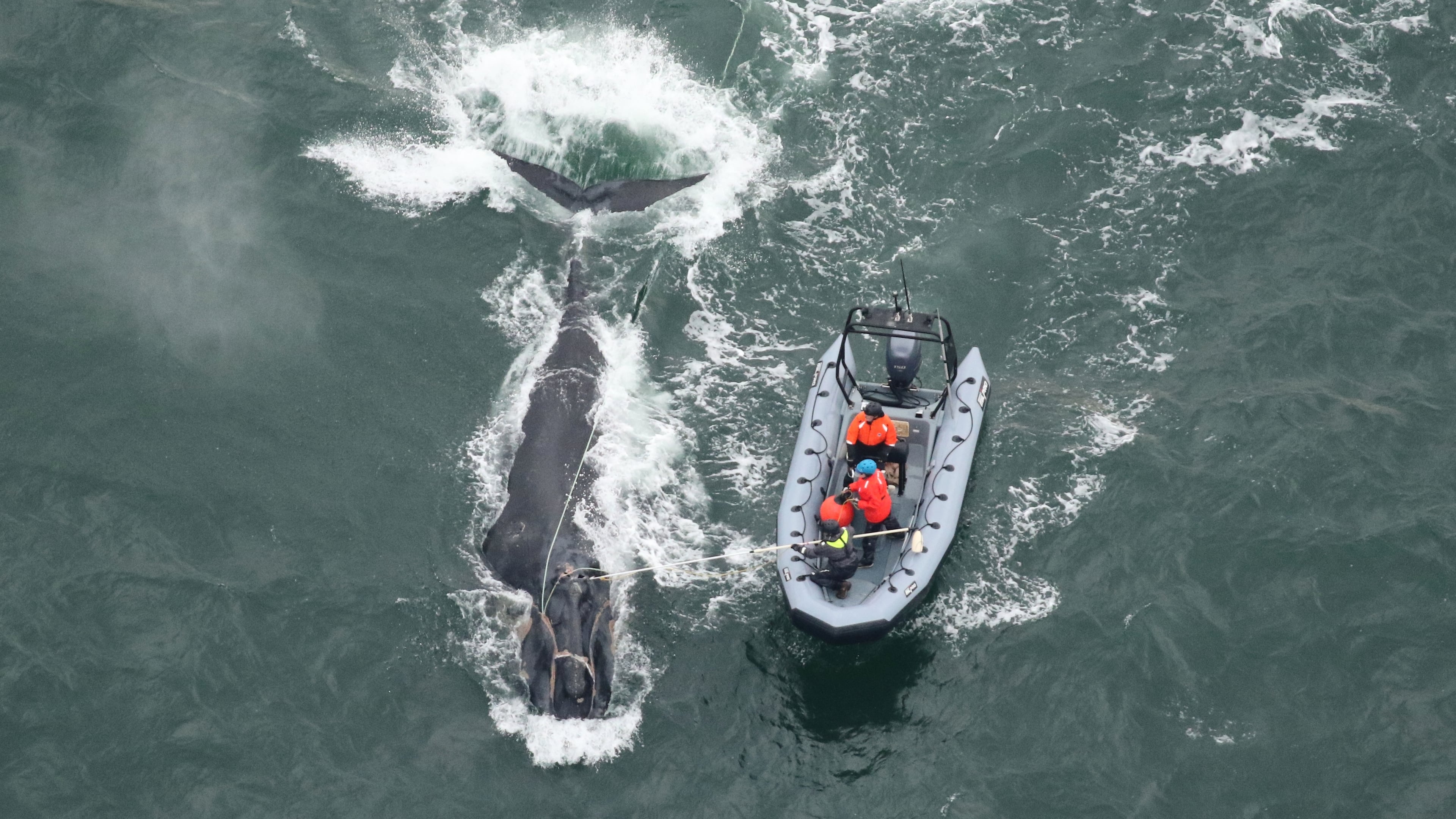
A young North Atlantic right whale that state wildlife officials helped partially disentangle from fishing gear in December, has died, having to succumbed to severe injuries from those lines, according to the National Ocean and Atmospheric Administration (NOAA).
NOAA fisheries and other agencies had been monitoring the 4-year-old male whale, known as “Division,” after state wildlife officials from Georgia and Florida helped disentangle it during a two-day effort in early December. Tracking later showed the whale had moved north into the waters of New England before traveling south again before an aerial survey team saw its carcass off of the North Carolina coast.
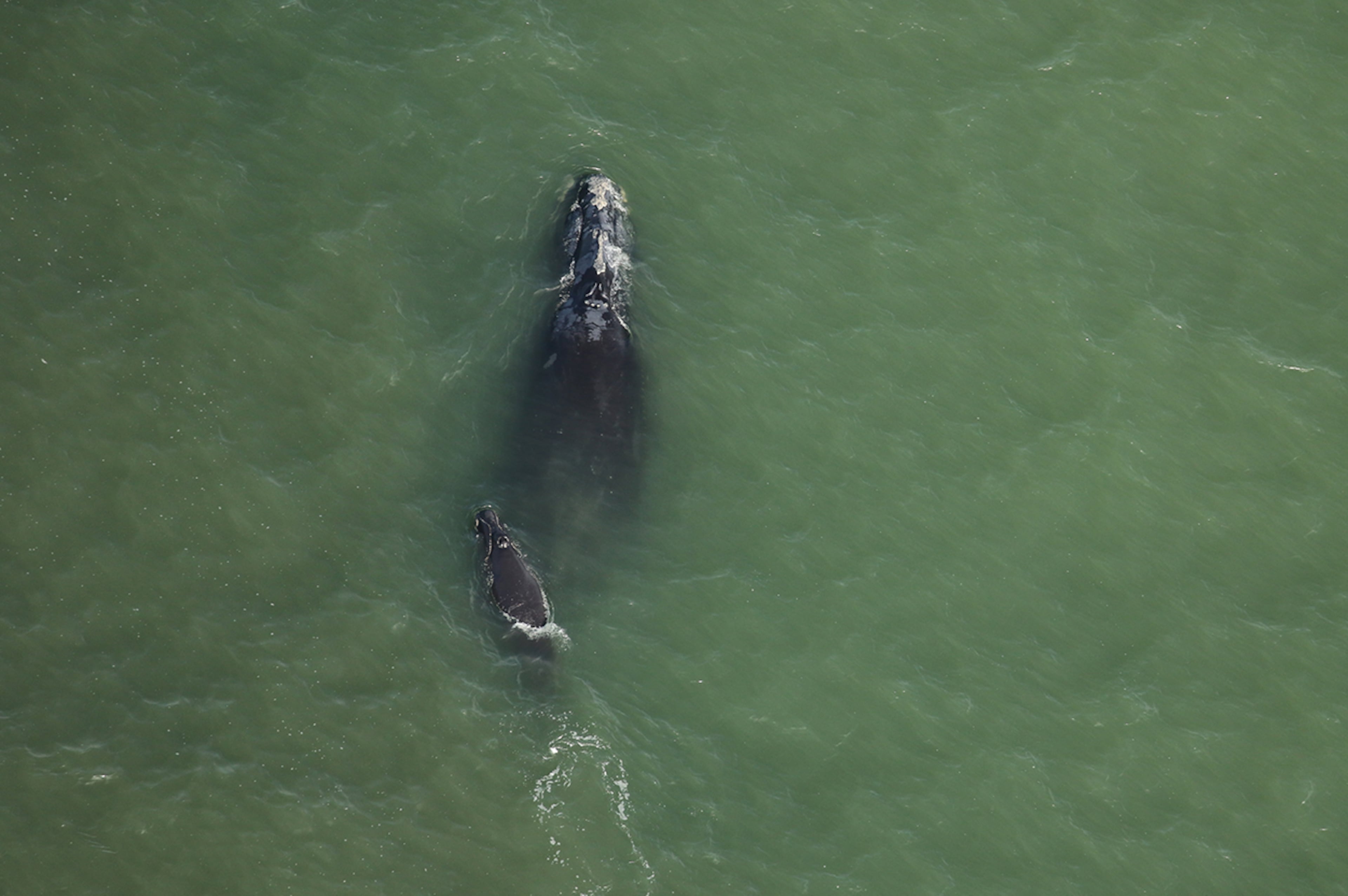
The news comes just one day after researchers said they have spotted 21 North Atlantic right whale calves off the Southeastern coast in recent months. That number of mother-calf whale pairs is the highest in 15 years.
Division was one of just 380 of the severely endangered North Atlantic right whales. Scientists said at the time of the disentanglement it was unclear whether the whale would survive because its injuries were so severe.
“While this outcome is not a surprise given the severity of the entanglement, it’s still incredibly disheartening to bear witness to the death of a critically endangered right whale,” said Heather Pettis, senior scientist in the Aquarium’s Anderson Cabot Center, in a statement.
The North Atlantic right whale, Latin name Eubalaena glacialis, is one of three species of the lumbering giants and among the rarest species on Earth. They were hunted to the brink of extinction in the late 19th century.
Vessel strikes are a common killer of right whales today, but warming ocean waters and gear used in fishing have created new threats.
State wildlife officials in Georgia and Florida have teamed up for more than two decades to survey the right whales — mostly females — as they migrate to the southeastern U.S. coast from Canada during the winter months to give birth and raise young.
As such, it is rare to see males in the area because they do not have a food source, according to officials.
Had wildlife officials not helped free Division in December, the whale likely would have died sooner. Although the whale was able to travel, poor weather and its distance from the coast prevented teams from further aiding it afterwards, NOAA said.
Eventually, aerial assessments showed the whale was in declining health and its injuries had worsened. A satellite track began to show a movement patterns more consistent with it drifting instead.
An aerial survey team from the Clearwater Marine Aquarium Research Institute flew over an area off of North Carolina on Jan. 27 and spotted a whale carcass. Scientists from the New England Aquarium reviewed images of the carcass and confirmed it was Division.
NOAA said scientists will not attempt to recover the whale’s carcass from the ocean, as the pending winter storm is making the waters too dangerous to bring it to shore.
NOAA has been documenting and analyzing the fishing gear removed in December, however.
More than 85% of the right whale population has been entangled in fishing gear, and some as much as nine times, Amy Knowlton, a senior scientist in the New England Aquarium’s Anderson Cabot Center for Ocean Life, told The Atlanta Journal-Constitution, in a previous interview.
A note of disclosure
This coverage is supported by a partnership with Green South Foundation and Journalism Funding Partners. You can learn more and support our climate reporting by donating at AJC.com/donate/climate.
About the Author

Kristi Swartz is an AJC contributing writer covering climate change and related matters. She writes about how climate change impacts people’s lives, from extreme weather hitting parts of the state more frequently, to higher electricity bills, insurance premiums and health care expenses.