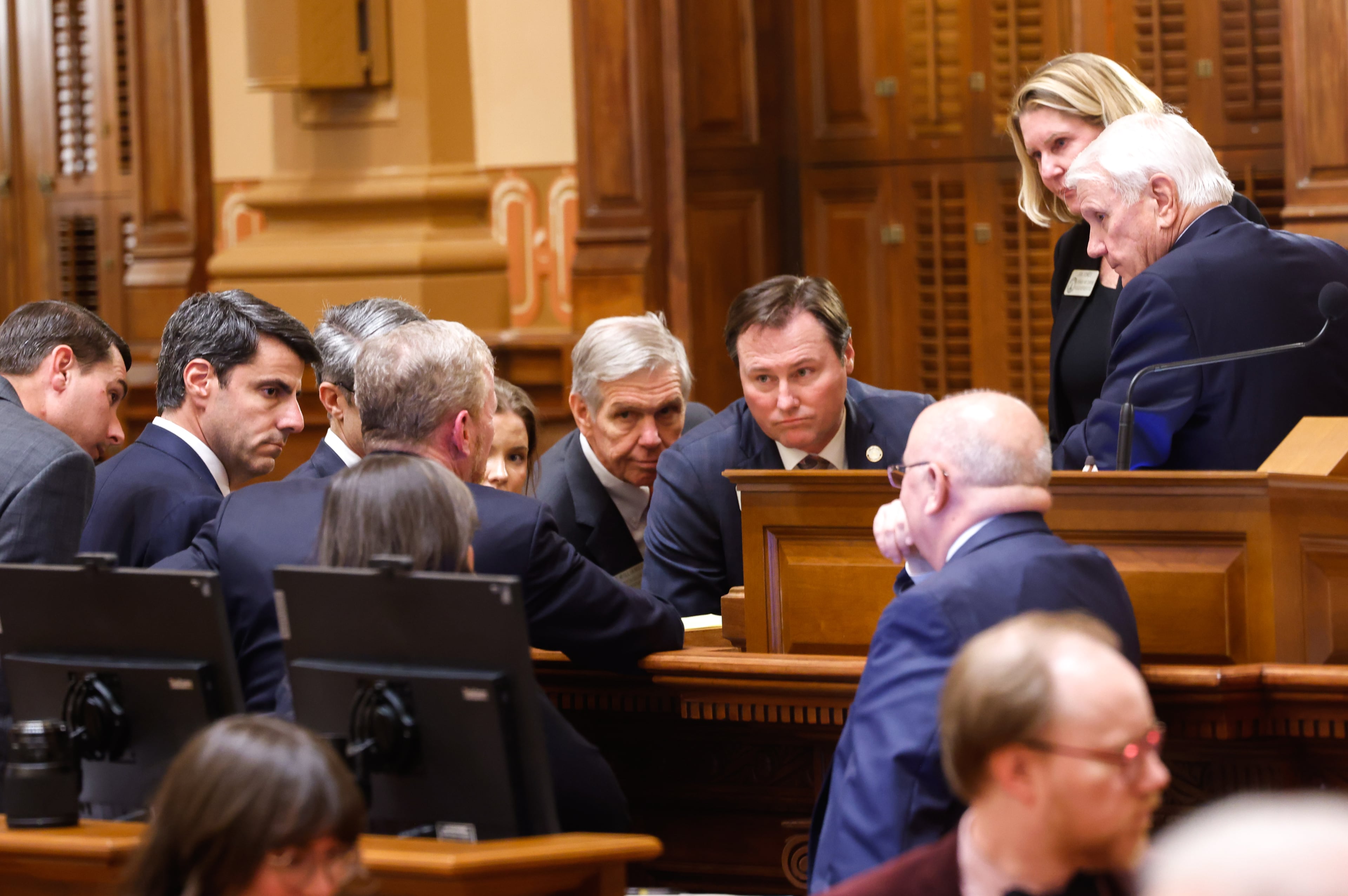
Rangel Alleged Violations
The House Ethics Committee has unveiled the 13 counts of alleged ethics violations by Rep. Charlie Rangel (D-NY). Read through the official document and tell me what you think.
HOUSE OF REPRESENTATIVES
Session
COMMITTEE ON STANDARDS OF OFFICIAL CONDUCT
INVESTIGATIVE SUBCOMMITTEE
IN THE MATTER OF REPRESENTATIVE CHARLES B. RANGEL
STATEMENT OF ALLEGED VIOLATION
Adopted June 17,2010
STATEMENT OF ALLEGED VIOLATION
For each of the following alleged violations, the Investigative Subcommittee has detennined there is "substantial reason to believe that a violation of the Code of Official Conduct, or of a law, IUle, regulation, or other standard of conduct applicable to the performance of official duties or the discharge of official responsibilities by a Member, officer, or employee of the House of Representatives has occurred."
19(f), Rules of the Connnittee on Standards of Official Conduct.
At all times relevant to this Statement of Alleged Violation, Representative Charles B. Rangel ("Respondent") was a Member of the United States House of Representatives representing the Fifteenth District of New York. During the 109
Respondent was Ranking Minority Member of the House Committee on Ways and Means
("Ways and Means Committee") and was a member of the Joint COlmnittee
on Taxation. During the 11 oth and 111tl1 Congresses, Respondent was Chairman of the Ways and
Means Committee. During the first session of the 11 oth and 111 til Congresses, Respondent was
Chainnan of the Joint Committee on Taxation. During the second session of the
110tll and 111th Congresses,
Respondent was Vice-Chairman of the Joint Committee on Taxation.
STATEMENT OF FACTS IN SUPPORT OF ALLEGED VIOLATIONS
I.
SOLICITATION OF POTENTIAL DONORS TO THE CHARLES B. RANGEL CENTER FOR PUBLIC SERVICE AT THE CITY COLLEGE OF NEW YORK.
became interested in creating an institution, similar to the Clinton
Presidential Center, in part, to preserve Respondent's legacy.
2. Respondent discussed the idea with Gregory Williams, the president of City
("CCNY").
wrote Williams and stated:
our participation in the dedication of the William J. Clinton Presidential
Center several colleagues encouraged me to begin to think of the creation of an
institution that would preserve the work of my public life and make it
available to the public, especially to students and scholars. I am receptive to
this idea if it pennits me to locate these aspects of my legacy in my home
Harlem community at the City College. The creation of a Rangel Center at the
City College of New York would pennit me to continue my career long interest in
the promotion of education and the motivation of young people towards careers
in public service.
[if !supportLists] 1. [endif] In the December 2004 letter to Williams, Respondent
further stated that "I will be exploring with my Congressional
colleagues how best to move this idea through the appropriations process
...."
[if !supportLists] 2. [endif] In early 2005, fundraising efforts for the Charles B.
Rangel Center at the City College of New York ("Rangel Center")
began.
[if !supportLists] 3. [endif]CCNY prepared a
20-page glossy brochure for use in fundraising for the Rangel Center. That
brochure includes a description of the Rangel Center Building. It described the Rangel Center Building as including a
library to house and archive the Respondent's congressional papers, an
archivist/librarian, and a "well-furnished office for Congressman
Rangel."
the cost ofthe archivist/librarian to be $46,550 per year.
memo to Respondent was prepared by Jim Capel, his district director, regarding
the proposal prepared by CCNY for the Rangel Center. The memo states,
"[iln the proposal, the last page is a request for $30 million or $6 million each year for the next
our Appropriations process?"
[if !supportLists] 1. [endif]In May 2005,
Respondent sent letters to members of the Subcommittee on Transportation,
Treasury and Housing and Urban Development requesting eannarks in the amount of
$6 million "to help establish a Center for Public Service at the City
College of New York in my Congressional District."
[if !supportLists] 2. [endif]An eannark in the
amount of approximately $445,000 to the City College of New York for the
planning, design, and construction of the Center for Public Service was
included in the Transportation, Treasury, and Housing and Urban Development,
the Judiciary, District of Columbia, and Independent Agencies Appropriations
Act, 2006, Pub. L.
bill became law on November 30, 2005.
[if !supportLists] 3. [endif]In May 2005,
Respondent sent letters regarding the Rangel Center to individuals who served
as co-trustees of the Am1 S. Kheel Charitable Trust ("Kheel Trust").
Each of the letters states, "Since we are developing a relationship
between the Ann Kheel Charitable Trust and the City College and City University
of New York, I want to make you aware, tlu'ough this letter and the enclosed
proposal, of the Rangel Center for Public Service as another promising
development at the City College."
[if !supportLists] 4. [endif]The May 2005
Kheel Trust letters were sent on congressional letterhead, bearing the words
"Congress of the United States" and "House
ofRepresentatives."
[if !supportLists] 5. [endif]Respondent has
been a trustee of the Atm S. Kheel Charitable Trust since its inception in
February 2004. The Kheel Trust is a private foundation as defined by 26 U.S.c.
§ 509(a).
14. The trustee agreement for Kheel Trust contains a prohibition against self-dealing.
[if !supportLists] 1. [endif]Members of
Respondent's congressional staff worked with CCNY officials to obtain the grant
from the Kheel Trust for the Ann S. Kheel Scholars Program.
[if !supportLists] 2. [endif]Respondent knew
his staff was working with CCNY officials to obtain funds fi'om the Kheel
Trust.
[if !supportLists] 3. [endif]Respondent was
present at all meetings of the Kheel Trust Board of Trustees from its first
meeting on February 19, 2004, tlu'ough June 3,2005.
[if !supportLists] 4. [endif]At various board
meetings, the trustees of the Kheel Trust discussed tile CCNY proposal and the
Rangel Center.
[if !supportLists] 5. [endif]The Kheel Trust
Board of Trustees approved a grant to CCNY to fund the AIm S. Kheel Scholars on
June 3, 2005.
[if !supportLists] 6. [endif]The Ann S. Kheel
Scholars Program has consistently been listed under the "Charles B. Rangel
Center for Public Service" section of the CCNY web site.
[if !supportLists] 7. [endif]CCNY officials
consistently represented to Respondent and his staff, potential donors, and
tile public the donation from the Kheel Trust as a grant to the Rangel Center
in its fimdraising for the Rangel Center.
[if !supportLists] 8. [endif]In 2005,
Respondent directed that his congressional staff develop a list of potential
donors to the Rangel Center. This work was done on propeliy of the House of
Representatives, on official House time, and with the use of official House
resources.
[if !supportLists] 9. [endif]In June 2005,
Respondent's staff prepared a fonnletter (the "June 2005 letter") to
be sent under Respondent's signature to potential donors to the Rangel Center.
This work was
done on property of the House of Representatives, on official House time, and with the use of
[if !supportLists] 1. [endif]In the June 2005
letter Respondent stated, "I will be exploring with my Congressional
colleagues how best to move this idea through the appropriations process and am
optimistic about securing funds for the plmming phase of the creation of the
Center. I request your advice mId assistance conceming how to approach the
donor community, particularly private and corporate foundations interested in
education. I look fOlward to entering into a dialogue with you on the funding
of the Rangel Center concept in the coming weeks atld months."
[if !supportLists] 2. [endif]The June 2005
letter was sent to over 100 foundations, including, inter alia, the
Verizon Foundation, New Yor1e Life Foundation, The Starr Foundation, Ford
Foundation, AT&T Foundation, Citi Foundation, JPMorgml Chase Foundation, Merrill
Lynch & Co. Foundation, MetLife Foundation, Bristol-Meyers Squibb
Foundation, Goldman Sachs Foundation, and Wachovia Foundation.
[if !supportLists] 3. [endif]The ltme 2005
letter was sent to several foundations that serve as the philanthropic arm of
related corporations, including, inter alia, Verizon COlllinunications,
Inc. and New York Life Insurance CompmlY.
signed each of the June 2005 letters.
were written on congressional letterhead bearing the words "United States
Congress" and "House of Representatives." Enclosed with each of
the letters was a 20-page glossy brochure that requested a gift of
"$30,000,000 or $6,000,000/year for five years."
29. The June 2005 letters, with enclosed brochures, were sent through the United
[if !supportLists] 1. [endif]In June 2005, the
Ford Foundation expressed to Respondent its interest in leanling more about the
Rangel Center.
[if !supportLists] 2. [endif]In August 2005,
Respondent sent a letter to Roger Balmik of The Balmik Foundation regarding the
Rangel Center (the "Bahnik letter").
[if !supportLists] 3. [endif]The Bahnik letter
was written on congressional letterhead. The letter stated, "[ w ]hile I
am disappointed that you will not be able to fund the Charles B. Rangel Center
for Public Service, I thank you for consideration ofmy request."
[if !supportLists] 4. [endif]In August 2005,
Respondent sent another round of letters (the "August 2005 letters")
to foundations, which were similar in content to the June 2005 letters.
[if !supportLists] 5. [endif]The August 2005
letters were written on congressional letterhead bearing the words "United
States Congress" and "House of Representatives." Enclosed with
each letter was a "presentation."
[if !supportLists] 6. [endif]In September
2005, Respondent sent a letter to Senator Robert Byrd seeking an earmark in the
amount of $3 million in order "to launch the Charles B. Rangel Center at
the City College of the City University of New York."
[if !supportLists] 7. [endif]In September
2005, Respondent sent a letter to Donald Trump (the "Trump letter")
requesting a meeting to discuss the Rangel Center.
[if !supportLists] 8. [endif]The Trump letter
was sent on congressional letterhead bearing a substantial portion ofthe Great
Seal ofthe United States and the words "House of Representatives."
38. In September 2005, Respondent sent letters to the Carnegie Corporation of New
(the "September 2005 letters"), which were similar in content to the
June 2005 letters.
[if !supportLists] 1. [endif]The September
2005 letters were sent on congressional letterhead bearing a substantial
portion of the Great Seal of the United States and the words "House of
Representatives." Enclosed with each letter was a
"presentation."
[if !supportLists] 2. [endif]In September
2005, a meeting occUlTed between Respondent, representatives of the Ford
Foundation, and CCNY officials.
[if !supportLists] 3. [endif]In December 2005,
CCNY submitted a proposal to the Ford Foundation (the "December 2005 Ford
Foundation proposal") regarding a potential contribution to the Rangel
Center.
[if !supportLists] 4. [endif]The December 2005
Ford FOUlldation proposal stated that "City College anticipates that the
United States Congress will suppOli this initiative with a seed grant."
[if !supportLists] 5. [endif]The Ford
Foundation tentatively scheduled a lUllcheon for other foundations regarding
the Rangel Center for May 5, 2006.
[if !supportLists] 6. [endif]In March 2006,
the Ford Foundation postponed the luncheon due to concerns about the lack of
funding, including congressional appropriations, for the Rangel Center.
[if !supportLists] 7. [endif]In March 2006,
Respondent sent letters to members of the Subcommittee on Transpoliation,
Treasury and Housing and Urban Development requesting earmarks in the amoUllt
of $6 million "to help establish a Center for Public Service at the City
College of New York in my Congressional District."
[if !supportLists] 8. [endif]In March 2006,
Respondent sent letters to members of the SubcOlmnittee on Labor, Health and
Human Services, and Education requesting earmarks in the amount of $6
million to "help establish a Center for Public Service at the City College of New York in my
[if !supportLists] 1. [endif]In March 2006,
Respondent sent letters to members of the Senate seeking support for an earmark
in the amount of $6 million "to help establish a Center for Public Service
at the City College of New York in my Congressional District."
[if !supportLists] 2. [endif]In early 2006,
Respondent suggested that CCNY officials contact AIG regarding the Rangel
Center.
[if !supportLists] 3. [endif]In July 2006,
Respondent sent another letter (the "July 2006 letters") to
approximately 47 ofthe foundations he previously solicited, including the Ford
Foundation.
[if !supportLists] 4. [endif]The July 2006
letters were prepared by Respondent's staff. This work was done on property of
the House of Representatives, on official House time, and with the use of
official House resources.
[if !supportLists] 5. [endif]The July 2006
letters were also written on congressional letterhead bearing the words
"United States Congress" and "House of Representatives."
The letters infonned potential donors that Respondent had secured eannarks of
$3.6 million for the Charles B. Rangel Center project.
signed each of the July 2006 letters.
[if !supportLists] 1. [endif]As of July 2006,
Respondent had secured, in 2005, one eannark in the amount of $445,000 for the
Rangel Center.
[if !supportLists] 2. [endif]As of July 2006,
earmarks in the total amount of $3,150,000 for the Rangel Center for fiscal
year 2007 were included in appropriations bills coming out of the respective
subcommittees of jurisdiction. Those eannarks were ultimately not included in
any appropriations bills for fiscal year 2007.
[if !supportLists] 3. [endif]In September
2006, Respondent met with CCNY officials and Eugene Isenberg, CEO of Nabors
Industries, in the offices of Robert Morgenthau, then District Attomey for New
York County to discuss the Rangel Center.
[if !supportLists] 4. [endif]In November 2006,
Isenberg pledged a personal contribution of $500,000 to the Rangel Center.
Nabors Industries pledged a matching contribution of $500,000.
[if !supportLists] 5. [endif]In February 2007,
Respondent met with Eugene Isenberg and KelU1eth Kies, a federally-registered
lobbyist, at the Carlyle Hotel in New York. They discussed tile issue of
retroactivity oftax provisions related to inverted companies.
[if !supportLists] 6. [endif]In June 2007,
Respondent met with Eugene Isenberg at Respondent's office to again discuss the
issue ofretroactivity of tax provisions related to inverted companies.
[if !supportLists] 7. [endif]In October 2006,
CCNY officials represented to the Ford Fonndation that tiley had obtained
"the seed money the Congressman promised."
[if !supportLists] 8. [endif]In October 2006,
the Ford Foundation encouraged CCNY to submit a proposal for $1 million to fund
academic programs at the Rangel Center.
[if !supportLists] 9. [endif]In January 2007,
the Ford Foundation hosted a luncheon (the "Ford Foundation lunch")
to bring together Respondent and CCNY officials with other potential donors to
tile Rangel Center.
[if !supportLists]
10.
[endif]Respondent made a presentation about the Rangel Center at the Ford Foundation lunch.
[if !supportLists]
11.
[endif]Other potential donors that attended the Ford Foundation lunch included, inter alia, Verizon Foundation, New York Community Trust, and Rockefeller Brothers Fund.
[if !supportLists]
12.
[endif]In March 2007, the Ford Foundation approved a grant in the amount of $1,000,000 for the Rangel Center.
[if !supportLists]
13.
[endif]In March 2007, Respondent sent letters to Donald Trump, David Rockefeller, and Maurice "Hank" Greenberg (the "March 2007 letters") requesting meetings to discuss the Rangel Center.
[if !supportLists]
14.
[endif]The March 2007 letters were sent on congressional letterhead bearing a substantial portion of the Great Seal of the United States and the words "House of Representatives. "
Respondent personally signed each of the March 2007 letters.
[if !supportLists] 1. [endif]The March 2007
letters were prepared by Respondent's staff. This work was done on property of
the House of Representatives, on official House time, and with the use of
official House resources.
[if !supportLists] 2. [endif]In March 2007,
Respondent wrote a letter to the Chair of the Subcommittee on Labor, Health and
Human Services, and Education requesting eannarks in the amount of $6 million
"to help establish a Center for Public Service at the City College of New
York in my Congressional District."
[if !supportLists] 3. [endif]In March 2007,
Respondent wrote a letter to the Chair of the Subconnnittee on TranspOliation
and Housing and Urban Development requesting an eannark "to make
structural and rehabilitation work a [sic] Center for Public Service."
[if !supportLists] 4. [endif]An eannark in the
amount of approximately $245,000 for the City College of New York for "the
planning, design, construction, renovation and buildout of a multipurpose
educational facility" was included in the Transportation, Housing and
Urban Development, and Related Agencies Appropriations Act, 2008, Pub. L. No.
110-161, 121 Stat 1844 (2007).
[if !supportLists] 5. [endif]An eannark in the
amount of approximately $1.915 million for "the City College of New York
for the Charles B.
careers in public
service, which may include establishing an endowment, library, and archives for such center" was included in the Labor, Health and Human Services, and Education, and Related Agencies Appropriations Act, 2008, Pub.
[if !supportLists] 1. [endif]In May 2007,
Respondent spoke with Melvin NOlTis, a fonner House employee in Respondent's
district office. NOlTis was then working as a New York state lobbyist for
Verizon Communications, Inc. Respondent requested an update on the status of
the Verizon Foundation donation to the Rangel Center.
[if !supportLists] 2. [endif]In June 2007,
Respondent spoke with George Nichols, a federally-registered lobbyist for New
York Life Insurance Corporation, at a breakfast campaign fundraiser. Respondent
requested that New York Life consider contributing to the Rangel Center.
[if !supportLists] 3. [endif]On June 4,2007,
Respondent met with Hank Greenberg, Chainnan of the Board ofthe StalT
Foundation regarding a possible donation to the Rangel Center.
[if !supportLists] 4. [endif]On June 12, 2007,
the StalT Foundation approved a grant to the Rangel Center in the amount of
$5,000,000.
[if !supportLists] 5. [endif]In August 2007,
Verizon Foundation approved a grant to the Rangel Center in the amount of
$500,000. NOlTis infonned Respondent that the grallt had been approved.
[if !supportLists] 6. [endif]In APlil 2008,
Respondent met with CCNY officials and AIG officials (the "AIG
meeting"), including Edward "Ned" Cloonan, a
federally-registered lobbyist, regarding the Rangel Center. The briefing memo
prepared for Respondent by CCNY stated the objective of the meeting was to
"close $1 OM gift for the Rangel Center to create AIG Hal1."
[if !supportLists] 7. [endif]At the AIG
meeting, a potential donation to the Rangel Center was discussed. AIG raised
concems about a potential donation, including the potential headline risk.
Respondent asked AIG, at least twice, what was necessary to get this done.
[if !supportLists] 8. [endif]On numerous
occasions during 2005 through 2008, Respondent attended several meetings with
CCNY officials and potential donors. These potential donors included Eugene
Isenberg, Hank Greenberg, David Rockefeller, Donald Trump, the Ford Foundation,
and AIG.
In addition to the contributions noted above, the following entities and
individuals
by Respondent made pledges and contlibutions to the Rangel Center:
($100,000); 3) New York Community Trust ($130,000); and 4) Rockefeller Brothers
Fund ($50,000).
[if !supportLists] 1. [endif]On numerous
occasions during 2005 through 2008, Respondent and his staff used official
House resources, including telephones, emails, and facsimile machines, to
communicate with CCNY and others regarding fundraising for the Rangel Center.
[if !supportLists] 2. [endif]During the
relevant period, George Dalley, Jim Capel, and Dan Berger were House employees
on Respondent's personal staff. Jon Sheiner was a House employee on the Ways
and Means Committee staff.
[if !supportLists] 3. [endif]During the
relevant period, pursuant to the Internal Revenue Code of 1986, the duties of
the Joint COimnittee on Taxation were the following: (1) to investigate the
operation and effects of internal revenue taxes and the administration of such
taxes; (2) to investigate measures and methods for the simplification of such
taxes; (3) to malce reports to the House Committee on Ways and Means and the
Senate COimnittee on Finance (or to the House and the Senate) on the results of
such investigations and stndies and to ma1ce recommendations; and (4) to review
any proposed refund or credit of income or estate and gift taxes or celiain
other taxes in excess of $2,000,000, as set fOlih in § 6405 of the Internal
Revenue Code.
[if !supportLists] 4. [endif]Pursnant to House
Rule X, cl. 1(1)(8), the House Ways and Means Committee has jurisdiction over
tax exempt foundations and charitable trusts.
[if !supportLists] 5. [endif]Pursuant to House
Rule X, cl. 1(t)(2), the House Ways and Means Committee has jurisdiction over
reciprocal trade agreements.
[if !supportLists] 6. [endif]Pursuant to House
Rule X, cl. 1(t)(3), the House Ways and Means Committee has jurisdiction over
revenue measures generally.
[if !supportLists] 7. [endif]During the
relevant period, issues before Congress affecting foundations included, inter
alia, private foundation payout rules, excise tax rates on investment
income, potential caps on foundation executive pay, IRA charitable rollover
provisions, unrelated business income tax, and other charitable contribution
and charitable governance issues.
[if !supportLists] 8. [endif]During the
relevant period, Nabors Industries lobbied members of the House of
Representatives on tax issues, including retroactivity of corporate inversion
tax treatment.
[if !supportLists] 9. [endif]During the
relevant period, Verizon lobbied members of the House of Representatives on
numerous Issues, including, inter alia, tax Issues related to
telecommunications.
[if !supportLists]
10.
[endif]During the relevant period, AIG lobbied members of the House of Representatives on numerous issues including, inter alia, subpart F of the Internal Revenue Code, treatment ofincome received by partners for perfol1ning investment management services, treahnent of mortgage insurance premiums as interest, deferral of income on executives' domestic income, and several treaty and free trade agreement issues.
[if !supportLists]
11.
[endif]During the relevant period, New York Life Insurance Company lobbied members of Congress on numerous issues including, inter
alia, intemational trade agreements, tax treatment of long term care insurance, tax treatment of estate assets and lifetime aI111uities, tax on insurance products, aI1d executive compensation.
II. FINANCIAL DISCLOSURE STATEMENTS AND AMENDMENTS FILED IN CALENDAR YEAR
ON BEHALF OF REPRESENTATIVE CHARLES B. RANGEL
annual Financial Disclosure statement for calendar year 1998 on May 17,1999.
almual Financial Disclosure statement for calendar year 1999 on May 26, 2000.
almual Financial Disclosure statement for calendal' year 2000 on May 16,2001.
letter, dated June 5, 2001, amending his Financial Disclosure statement for
calendar year 2000.
annual Financial Disclosure statement for calendar year 2001 on May 15, 2002.
almual Financial Disclosure statement for calendar year 2002 on May 14, 2003.
annual Final1cial Disclosure statement for calendar year 2003 on May 13, 2004.
almual Final1cial Disclosure statement for calendar year 2004 on June 15, 2005.
Respondent was graJ1ted aJ1 extension to file his Financial Disclosure
statement for calendar year 2004 beyond the May 16, 2005 deadline, and filed
within that extended deadline.
amendment to his FinaJ1cial Disclosure statement for calendar year 2004 on May
12, 2006.
annual Financial Disclosure statement for calendar year 2005 on May 12, 2006.
[if !supportLists] 1. [endif]Respondent filed
an atumal Financial Disclosure statement for calendar year 2006 on June 15,
2007. Respondent was granted an extension to file his Financial Disclosure
statement for calendar year 2006 beyond the May 15, 2007 deadline, atld filed
within that extended deadline.
[if !supportLists] 2. [endif]Respondent filed
an atnendment to his Financial Disclosure statement for the calendar year 2006
on December 26,2007.
[if !supportLists] 3. [endif]Respondent filed
an annual Financial Disclosure statement for calendar year 2007 on May 14,
2008.
[if !supportLists] 4. [endif]Respondent filed
an annual Financial Disclosure statement for calendar year 2008 on August 12,
2009. Respondent was granted an extension to file his Financial Disclosure
statement for calendat' year 2008 beyond the May 15, 2009 deadline, and filed
within that extended deadline.
[if !supportLists] 5. [endif]Respondent's
Financial Disclosure statements contained numerous errors and omissions,
including failure to disclose rental and other unearned income, understating
rental income and other unearned income, failure to disclose earned income,
failure to disclose tratlsactions, failure to disclose cancellation of debt
income, and failure to disclose a reportable position.
[if !supportLists] 6. [endif]Respondent's
Financial Disclosure statements were prepared by members of his congressional
staff.
signed each ofhis Financial Disclosure statements.
ensure that the infonnation repOlied on the Financial Disclosure Statements was
accurate or complete.
each of calendar years 1998 through 2007 on August 12, 2009.

statements.
113. Respondent owned a brownstone rental unit, located at 74 West 132nd Street in " v:shapes="_x0000_s1026" align="left" height="114" hspace="12" width="687" />[endif]
sold in 2004.
[if !supportLists] 1. [endif]Respondent
disclosed ownership of the Brownstone on his original Financial Disclosure
Statements for the calendar years 1998 tlrrough 2004.
[if !supportLists] 2. [endif]Respondent
failed to disclose his rental income from the Brownstone on his original
Financial Disclosure Statements for calendar years 1998, 1999,2000, and 2004.
[if !supportLists] 3. [endif]For
Respondent's original Financial Disclosure statements related to calendar years
1998 and 1999, the box for "none" under "amount of rental
income" was checked. For calendar year 2000, the boxes under amount of
rental income were left blank.
[if !supportLists] 4. [endif]Respondent's
original Financial Disclosure statements for calendar years 2001, 2002, and
2003 each listed the amount of income derived from the Brownstone rental in the
range of $2,501 -$5,000.
[if !supportLists] 5. [endif]Respondent's
original Federal tax returns reported income from the Brownstone rental as
follows:

Original Tax Retnms
1998 $29,852
1999 $20,449
2000 $28,938
2001 $21,416
2002 $19,603
2003 $23,036
2004 $3,406 " v:shapes="_x0000_s1027" align="left" height="221" hspace="12" width="290" />[endif]
119. Respondent purchased a rental villa at the Punta Cana Yacht Club in the
of the Punta Cana villa was $82,750. Respondent made a down payment of
$28,962.50, and financed the remaining portion of the purchase price.
[if !supportLists] 1. [endif]Respondent
financed the purchase through a mortgage. The mortgage was payable over 7 years
at 10.5% interest.
[if !supportLists] 2. [endif]Respondent
repOlied the purchase of the Pmlta Cana villa on his initial Financial
Disclosure statement for calendar year 1987, although he assigned an incorrect
value to the property. Respondent submitted an amendment to that Financial
Disclosure statement on June 10, 1988, re-categorizing the purchase.
[if !supportLists] 3. [endif]Respondent
issued a statement on Febrnary 2, 1989, regarding the incorrect valuation on
his original Financial Disclosure statement for the Punta Cana villa, as well
as the associated mortgage and distribution from his retirement account used to
finance the down payment. Respondent stated that he "amended my Financial
Disclosure to include these items as soon as the oversight was brought to my
attention."
[if !supportLists] 4. [endif]Respondent
received income from a Punta Cana rental pool. The rental pool was detennined
by taking all revenues fi'om the gross rentals of all the units. From that
amount, deductions were made for agent commissions, Dominican Republic taxes,
and a 10% maintenance fee. From that balance, 53% was paid to Punta Cana and
47% was paid to the owners in the rental pool. Each owner's share of the rental
pool payments was determined on a point system, with a 3 bedroom beach villa
receiving 3 points. All of the owner's points were totaled, and each owner's
share of the rental pool income was based on that owner's number of points as a
percentage of all points.
124. No later than February 1993, management of the Punta Cana Yacht Club
remaining interest due on Respondent's mOligage.
[if !supportLists] 1. [endif]Respondent
failed to repoli the forgiveness of interest on his Financial Disclosure
statements.
[if !supportLists] 2. [endif]In
January 1993, Respondent wrote to the Punta Cana Yacht Club requesting
infoTInation about his unit. In that letter, he stated, "As I mentioned to
you, the House Ethics Committee requires the disclosure by members of Congress
of any assets and lU1earned income and while I enjoy a good relationship with
the Committee's Chairman it certainly would be politically embalTassing if I
were unable to provide an accurate accounting of my holdings."
[if !supportLists] 3. [endif]Respondent
did report ownership of the Punta Cana villa on his original Financial
Disclosure statements for each of calendar years between 1998 through 2008.
[if !supportLists] 4. [endif]Respondent
failed to report any rental income from Punta Cana on his original Financial
Disclosure statements for calendar years 1998, 1999,2000,2006, and 2007.
[if !supportLists] 5. [endif]Respondent
failed to report any rental income from Punta Cana on his original Federal
income tax retums for calendar years between 1998 through 2006.
[if !supportLists] 6. [endif]For
Respondent's original Financial Disclosure statements related to calendar years
1998, 1999, 2006, and 2007, the box for "none" under amount of rental
income was checked. For the year 2000, the boxes under amount of rental income
were left blank.
[if !supportLists] 7. [endif]In
June 2001, Respondent wrote a letter to the Standards Committee amending his
Financial Disclosure statement for calendar year 2000. In that letter he
stated, "Thank you for calling to inform me of the omission in my recent
Financial Disclosure Statement of information concerning the income derived
during the year 2000 fi·om the two propeliies in New York City
by my wife and me and the New England Mutual Life Insurance policy listed by me
as assets in the repOlt. There was no income detived by us from these assets
during the year 2000 and that fact should have been noted in my Financial
Disclosure Statement."
[if !supportLists] 1. [endif]Respondent
did report income from Punta Cana on his original Financial Disclosure
statements for calendar years 2001 through 2005, but the amounts reported were
incorrect.
[if !supportLists] 2. [endif]Respondent
reported income from Punta Cana on his original and amended Financial
Disclosure statements, as well as his original and, where applicable, amended
Federal income tax returns as follows:
[if !supportLists] 3. [endif]Respondent
failed to report earned income from IRA disttibutions on his original Financial
Disclosure statements for calendar years 1998 through 2007.

1998 None Not repOlted $5,001 -$15,000 N/A
1999 None Not reported $2,501 -$5,000 N/A
2000 None per letter amendment Not reported $2,501 -$5,000 N/A
2001 $5,001 -$15,000 Not repOlted $2,501 -$5,000 N/A
2002 $5,001 -$15,000 Not reported $2,501 -$5,000 N/A
2003 $5,001 -$15,000 Not reported $1,001 -$2,500 N/A
2004 $2,501 -$5,000 Not reported $5,001 -$15,000 $5,030
2005 $2,501 -$5,000 Not reported $5,001 -$15,000 $6,280
2006 None Not repOlted $5,001 -$15,000 $8,467
2007 None $7,800 $5,001 -$15,000 $7,800 " v:shapes="_x0000_s1028" align="left" height="298" hspace="12" width="743" />[endif]
in the following amounts:

1998 Congressional FCU IRA $13,333
2000 Congressional FCU IRA $6,144
2001 Congressional FCU IRA $8,693
Menill Lynch IRA $4,235
2002 Congressional FCU IRA $4,177
2004 Congressional FCU IRA $4,438
2005 Congressional FCU IRA $4,486
2006 Congressional FCU IRA $4,187
2007 Congressional FCU IRA $5,509
2008 Congressional FCU IRA $4,893 " v:shapes="_x0000_s1029" align="left" height="274" hspace="12" width="384" />[endif]
numerous assets and sources ofunearned income on his original Financial
Disclosure statements for calendar years 1998 through 2007, including,
inter alia:
1) Respondent failed to disclose his holdings at Congressional Federal Credit Union ("CFCU") for calendar years 1998, 1999, 2000, 2004, 2005, 2006, and 2007. Respondent disclosed his holdings for the years 2001, 2002, and 2003, but estimated the value of the accounts
calendar years 1998 through 2006, and valued in the range of $250,001 -$500,000 for calendar year 2007.
Respondent reported eamings related to the CFCU accounts on his Federal income
tax retums for each ofcalendar years 1998 through 2007. 2) Respondent failed to
report holdings of stocks in corporations in various years including, inter
alia, Bell Atlantic, BellSouth, Niagara Mohawk Holdings, Verizon
Communications, PepsiCo, and Yum! Brands. Respondent reported earnings related
to celiain stock transactions on his related Federal income tax returns. For
example, Respondent reported a capital gain associated with the sale of stock
in BellSouth
amended Financial Disclosure statements repolted the following valuations for
the stocks listed above:

1998 $15,001 -$50,000 None (sold in 1998) $1,001 -$15,000 N/A N/A N/A
1999 $15,001 -$50,000 N/A $1,001 -$15,000 N/A $1,001 -$15,000 N/A
2000 N/A N/A $1,001 -$15,000 $15,001 -$50,000 $1,001 -$15,000 N/A
2001 N/A N/A $1,001 -$15,000 $1,001 -$15,000 $1,001 -$15,000 N/A
2002 N/A N/A N/A N/A $1,001 -$15,000 N/A
2003 N/A N/A N/A N/A $1,001 -$15,000 N/A
2004 N/A N/A N/A N/A $1,001 -$15,000 N/A
2005 N/A N/A N/A N/A $1,001 -$15,000 N/A
2006 N/A N/A N/A N/A $1,001 -$15,000 $1,001 -$15,000
2007 N/A N/A N/A N/A $15,001 -$50,000 $1,001 -$15,000 " v:shapes="_x0000_s1030" align="left" height="540" hspace="12" width="724" />[endif]
of mutual funds in various years including, inter alia, Alliance
MWlicipal Income Fund, Rochester Municipal Fund, ING Principal Protection Fund,
and iShares Dow Jones Select Dividend Income Fund. Respondent reported eamings
related to certain mutual fund holdings on his cOlTesponding Federal income tax
return. For example, Respondent repOlted a capital gain related to his holdings
in the ING Principal Protection Fund on his 2007 tax return. Respondent's
amended Financial Disclosure statements reported the following valuations for
the mutual funds listed above:

Municipal Municipal Municipal Principal Dow
Income Income Fund Protection Jones
Fund! Alliance Fund (B) Fund Select
Bernstein (A) Dividend Income Fund
1998 N/A $1,001 -$15,000 $15,001 -$50,000 N/A N/A
1999 $1,001 -$15,000 $1,001 -$15,000 $15,001 -$50,000 N/A N/A
2000 $1,001 -$15,000 $1,001 -$15,000 $15,001 -$50,000 N/A N/A
2001 $1,001 -$15,000 $15,001 -$50,000 $15,001 -$50,000 N/A N/A
2002 $50,001 -$100,000 $50,001 -$100,000 $15,001 -$50,000 $50,001 -$100,000 N/A
2003 $50,001 -$100,000 $50,001 -$100,000 $15,001 -$50,000 $50,001 -$100,000 N/A
2004 $100,001 -$250,000 $50,001 -$100,000 $15,001 -$50,000 $50,001 -$100,000 $15,001 -$50,000
2005 $100,001 -$250,000 $50,001 -$100,000 $1,001 -$15,000 $50,001 -$100,000 $15,001 -$50,000
2006 $100,001 -$250,000 $50,001 -$100,000 $15,001 -$50,000 $50,001 -$100,000 None
2007 $100,001 -$250,000 $50,001 -$100,000 $15,001 -$50,000 $50,001 -$100,000 N/A " v:shapes="_x0000_s1031" align="left" height="610" hspace="12" width="634" />[endif]
disclose his holdings in Merrill Lynch Allianz Global Investors Fund for
calendar years 2006 and 2007. The holding was purchased in 2006 with a value in
the range of$250,001 -$500,000.
disclose his ownership of vacant lots in New Jersey for calendar years 1998
through 2007. Respondent's amended Financial Disclosure statements for calendar
years 1998 through 2007 reported the lots with a valuation in the range of$I,OOI
-$15,000.
transactions on his original Financial
including, inter alia: 22
Respondent failed to disclose the sale of holdings in BellSouth in the amount
of $6,709 in 1998. Respondent did report a capital gain in the amount of$2,738
related to that transaction on his Federal income tax retunl for 1998.
disclose the purchase in 2002 of holdings in ING Principal Protection in the
range of$50,001 -$100,000.
disclose the purchase and sale during 2004 of Calve1i Tax Free Reserves, Eaton
Vance Insured New York Municipal Bond Fund, and Nuveen New York Quality Income
Municipal Fund. Each of those transactions was valued in the range of$50,001
-$100,000.
disclose the purchase and sale in 2006 of Men'ill Lynch Institutional
Tax-Exempt Fund in the range of$250,001 -$500,000.
[if !supportLists] 1. [endif]In
September 2008, Respondent filed amended Federal income tax returns for tax
years 2004 tln'ough 2006.
[if !supportLists] 2. [endif]Respondent
snbsequently filed a second amended Federal income tax return for 2006 and an
amended Federal income tax return for 2007.
[if !supportLists] 3. [endif]Amendments
to Respondent's Federal income tax returns were necessary to correct errors in
the original income tax returns, including failure to report the income related
to Punta Cana and failure to report other items of income.
[if !supportLists] 4. [endif]Respondent
disclosed that he was a member of the Board of Directors of "the Kheel
Foundation" or "the Atm
on his Financial Disclosure statements for calendar years 1998 through 2007.
[if !supportLists] 5. [endif]Respondent
did not disclose on his original Financial Disclosure Statement for calendar
year 2008 that he was a trustee of the Ann S. Kheel Charitable Trust for
calendar year 2008.

144. Respondent has not filed an amended Financial Disclosure Statement for calendar
year 2008. " v:shapes="_x0000_s1032" align="left" height="115" hspace="12" width="686" />[endif]
III. RENTAL OF LENOX TERRACE APARTMENT UNIT IOU FOR CAMPAIGN PURPOSES
[if !supportLists] 1. [endif]The
Olnick Organization ("Olnick") is a developer of residential,
commercial and hotel properties in New York City.
[if !supportLists] 2. [endif]The
Olnick Organization's properties include the Lenox Terrace apartment complex
and other properties in Respondent's congressional district and elsewhere
throughout New York City.
[if !supportLists] 3. [endif]The
Hampton Management Company ("Hampton") is the propeliy management
company for Lenox Terrace. Hampton is an affiliate of Olnick.
[if !supportLists] 4. [endif]In November
1988, Respondent signed a lease for the use of apartment 16N-P in the Lenox
Terrace apartment complex.
[if !supportLists] 5. [endif]In January
1997, Respondent signed a lease for the use of apartment 16M in the Lenox
Terrace apaJiment complex.
[if !supportLists] 6. [endif]Respondent
signed an application for the use of apartment IOU in the Lenox Terrace
apaJiment complex ("apartment IOU") indicating
that his son, Steven Rangel, would occupy the apaJiment.
[if !supportLists] 7. [endif]In
October 1996, Respondent signed a lease for the use of apartment IOU in the
Lenox Terrace apartment complex.
152. Apartment IOU was a rent stabilized apartment unit.
153.
The lease for apartment
IOU
states, "You shall use the Apartment for living purposes only."
154.
Steven Rangel never occupied apatiment
apartment IOU for living purposes.
[if !supportLists] 1. [endif]Respondent's
principal campaign COllli11ittee, Rangel for Congress, and leadership PAC,
National Leadership PAC, occupied aparhnent IOU as
at1 office £i'om November 1996 until October 2008.
[if !supportLists] 2. [endif]Respondent
did not enter into any written sublease with Rangel for Congress or National
Leadership PAC.
[if !supportLists] 3. [endif]No
individual occupied apatiment IOU
November 1996 tln'ough October 2008.
[if !supportLists] 4. [endif]There
is no evidence that the management of Lenox Tenace permitted the use of any
other rent stabilized apatiments in the complex for solely non-residential
purposes above the first floor.
[if !supportLists] 5. [endif]In
2004, Olnick increased the number of legal
actions it brought against tenants on primary residency, including those who
improperly sublet their rent stabilized apartments.
[if !supportLists] 6. [endif]Olnick
brought no action against Respondent for the non-residential use of apartment
IOU.
[if !supportLists] 7. [endif]Respondent
was included by Olnick on a "special handling list" on which he was
identified as a Member of Congress.
[if !supportLists] 8. [endif]Respondent's
congressional office received complaints from constituents living in Lenox
Terrace regarding legal actions brought against them by Olnick based on primary
residency.
[if !supportLists] 9. [endif]Respondent's
staff, including his District Director, James Capel, worked with Lenox Terrace
management to resolve constituent issues related to primary residency.
[if !supportLists]
10.
[endif]Lenox Terrace tenants discussed going on strike by refusing to pay rent until certain conditions were satisfied.
with a Lenox Terrace official regarding the potential rent strike.
2005, Respondent and his staff met with Olnick executives at least once
regarding proposed constrnction projects for Lenox Ten·ace and other Olnick
developments.
ALLEGED VIOLATIONS
Count I: Conduct in Violation of the Solicitation and Gift Ban
reincorporated as if set f01ih fully herein.
[if !supportLists] 1. [endif]Section
7353 of Title 5 of the United States Code provides that no Member "shall
solicit or accept anything of value from a person -(1) seeking official action
from ... the individual's employing entity; or (2) whose interests may be
substantially affected by the perfonnance or nonperfonnance of the individual's
official duties."
[if !supportLists] 2. [endif]The
Committee on Standards of Official Conduct ("Standards Committee"),
acting pursuant to 5 U.S.C. § 7353(b), has determined that celiain
solicitations for organizations qualified under § 170( c) of the Internal
Revenue Code are pelmissible. TIlose solicitations are subject to the following
restrictions:
1) No official resources may be used. Such official resources include House
office equipment and supplies, and official mailing lists. See House
Comm. on Standards of Official Conduct, "Solicitation Under the Ethics
Reform Act of 1989," (Oct. 9, 1990) (reprinted in Comm. on Standards, House
Ethics Manual, 102d Cong., 2d Sess. 1992, at 64-65) ("1990
Solicitation Pink Sheet"). See also House Comm. on Standards of
Official Conduct, "Revised Solicitation Guidelines," (Apr. 4, 1995)
(reprinted in H.R. Rep. No. 104-886, at 28-32 (1997) ("1995 Solicitation
Pink Sheet"); House Comm. on Standards of Official Conduct, "Rules
Governing (1) Solicitation by Members, Officers and Employees in General, and
(2) Political Fundraising Activity in House Offices." (Apr. 25, 1997)
("1997 Solicitation Pink Sheet").
2) No official endorsement by the House of Representatives may be implied. Thus, no letterhead or envelope used in a solicitation may bear the words "Congress of the United States," "House of Representatives," or "Official Business," nor may the letterhead or envelope bear the Seal of the United States, the Congress, or the House.
themselves as a Member of Congress, Congressman, Congresswoman, or by using
their leadership title. See 1990 Solicitation Pink Sheet; 1995
Solicitation Pink Sheet; House Rule XXIII,
cl. 11;
soliciting official. See 1990 Solicitation Pink Sheet.
Building Commission generally prohibit soliciting and other nongovermnental
activities in facilities of the House of Representatives. See 1995
Solicitation Pink Sheet; The House Office Building
Commission's Rules and Regulations Goveming the House Office Buildings, House
'1[4.
5) No suggestion may be made either that donors will be assisting the individual in the perfonnance of official duties or that they will receive favorable consideration from the individual in official matters. See, e.g., Code of Ethics for Govermnent Service (72 Stat., Part 2, B12 (1958), H.Con. R. 175, 85
6) Under a provision of the House gift lUle, registered lobbyists or agents of foreign principals may not be targeted in any solicitation. Thus, no employee of a lobbying film should be targeted in a solicitation. However, it is permissible to solicit a company, association, or other entity that employs registered lobbyists to lobby only for itself or its members, provided that the solicitation is directed to an officer or employee who is not a lobbyist. See House Rule
1997 Solicitation Pink Sheet.
constitute official House business.
[if !supportLists] 1. [endif]Between
2005 and 2008 Respondent engaged in a pattem of soliciting for donations and
other things of value on behalf of the Charles B. Rangel Center for Public Policy at
the City College of New York.
[if !supportLists] 2. [endif]The
entities solicited were seeking official action from the House and/or had
interests that might be substantially affected by the performance or
nonperfonnance of Respondent's official duties.
[if !supportLists] 3. [endif]Respondent's
conduct was not within the parameters established by the Standards Committee
for solicitations on behalf of charitable organizations.
U.S.C. § 7353.
Count II: Conduct in Violation of Code of Ethics for Government Service,
[if !supportLists] 1. [endif]Paragraphs
1 through 175 are reincorporated as if set forth fully herein.
[if !supportLists] 2. [endif]The
Code of Ethics for Government Service (72 Stat., Part 2, B12, H. Res. 175,
85
th
Cong.) (adopted July 11,1958) provides: [A lny person in Government service should:
dispensing of special favors or privileges to anyone, whether for remuneration
or not; and never accept for himself or his family, favors or benefits under
circumstances which might be constmed by reasonable persons as influencing the
perfonnance ofhis govenunental duties.
[if !supportLists] 1. [endif]As
set forth above, Respondent made numerous requests for support of the Rangel
Center. Those requests were directed at entities and individuals whose
interests could be affected by the legislative and oversight activities of
Respondent in his capacity as a Member of Congress.
[if !supportLists] 2. [endif]Contributions
were made by persons with interests before the Ways and Means Committee.
[if !supportLists] 3. [endif]Contributions
to the Rangel Center were made at the request of aud as a favor to Respondent.
provided a benefit to Respondent.
[if !supportLists] 1. [endif]Reasonable
persons could constme conh'ibutions to the Rangel Center by persons with
interests before the Ways and Means Committee as influencing the perfornlance
of Respondent's govenunental duties.
[if !supportLists] 2. [endif]Respondent's
conduct violated c1anse 5 of the Code of Ethics for GoverlUuent Service.
Count III: Conduct in Violation of the House Gift Rule
set forth fully herein.
[if !supportLists] 1. [endif]Clause
4 of House Rule XXIII states that a Member "may not
accepts gifts except as provided by clause 5 of rule XXV."
[if !supportLists] 2. [endif]House
Rule XXV, cl. 5(a)(1)(A)(i) provides that a
Member may not knowingly accept a gift except as provided in that clause.
[if !supportLists] 3. [endif]House
Rule XXV, cl. 5(a)(2) defines "gift"
as "gratuity, favor, discount, entertainment, hospitality, loan,
forbearance, or other item having monetary value."
[if !supportLists] 4. [endif]Respondent
solicited contributions for the Rangel Center and the Rangel Center did receive
contributions.
[if !supportLists] 5. [endif]Respondent
has a personal interest in the Rangel Center in that it will provide him with an office, and allows him to perpetuate his legacy,
including the storage and archiving ofhis

190. Contributions to the Rangel Center constituted indirect gifts attributable to
Respondent.
191. These indirect gifts do not fall within any exception of clause 5 of House Rule " v:shapes="_x0000_s1033" align="left" height="158" hspace="12" width="688" />[endif]
192. Respondent's conduct violated clause 4 of House Rule
Couut IV: Conduct in Violation of Postal Service Laws and Franking Commission Regulations
193. Paragraphs
I
through 192 are reincorporated as if set forth fully herein.
39 provides that "a person entitled to use a Frank may not .. pennit its
use by any person for the benefit or use of any committee, organization, or
association." The Regulations on the Use of the Congressional Frank by
Members of the House of Representatives ("Franking Regulations")
interpret this statute as prohibiting "the use of the Frank for the
benefit of charitable organizations, political action committees, trade
organizations, and so fOlih." Franking Regulations at 3.
[if !supportLists] 1. [endif]Section
3210 of Title 39 provides for the use of franked mail "in order to assist
and expedite the conduct of the official business, activities, and duties of
the Congress of the United States."
[if !supportLists] 2. [endif]The
Franking Regulations provide specific examples of nonfrankable items, including
the following: "No solicitations for funds for or on behalf of any organization
or person" and "[n]o material that advertises, promotes, endorses or
otherwise provides a benefit to an individual or organization not entitled to
use the frank. This would include cOlmnercial, charitable, non-profit and
political organizations as well as Congressional Member Organizations (CMO) and
advisory boards or task forces." Franking Regulations at 7-8. The
Regulations further provide that "[t]he solicitation of funds for or on
behalf of a private organization, for example, for the purpose of supporting
any charitable, education, religious or political program is not
frankable." Franking Regulations at 12.
[if !supportLists] 3. [endif]Respondent
used his frank for the benefit of a chatitable organization and for
solicitation of funds.
[if !supportLists] 4. [endif]Respondent's
conduct violated 39 U.S.C. §§
Franking Commission Regulations.
Count V: Conduct in Violation of Franking Statute
ifset forth fully herein.
1719 of Title 18 provides that "whoever makes use of any official
envelope, label, or indorsement [sic] authorized by law, to avoid the payment
of postage or registry fee on his private letter, packet, package, or other
matter in the mail, shall be fined under this title."
[if !supportLists] 1. [endif]Respondent
used his fi·ank on materials tllat were not official business.
[if !supportLists] 2. [endif]Respondent's
conduct violated 18 U.S.C. § 1719.
Count VI: Conduct in Violation of House Office Building Commission's Regulations
reincorporated as if set forth fully herein.
[if !supportLists] 1. [endif]The
House Office Building Commission's Rules and Regulations Governing the House
Office Buildings, House Garages and the Capitol Power Plant (Feb. 1999) at ~ 4 provide that the "soliciting of alms and contributions
... in any of the areas covered by these regulations is prohibited."
[if !supportLists] 2. [endif]Respondent
and his staff drafted solicitation letters and pelfonned other work related to
solicitations on property of the House ofRepresentatives.
[if !supportLists] 3. [endif]Respondent's
conduct violated clause 4 of the House Office Building Commission's
Regulations.
Count VII: Conduct in Violation of the Purpose Law and the Member's Congressional Handbook
reincorporated as if set forth fully herein.
United States Code provides that "[a]ppropriations shall be applied only
to the objects for which the appropriations were made except as othelwise
provided by law."
United States Code provides:
on House [Administration] of the House of Representatives may, by order of the
COlllinittee, fix and adjust the amounts, tenns, and conditions of, and other
matters relating to, allowances of the House of Representatives within the
following categories:
Representatives, the Member's Representational Allowance, including all aspects
of official mail within the jurisdiction of the Committee under section 5ge of
this title.
[if !supportLists] 1. [endif]The
Committee on House Administration sets forth the regulations governing the use
of tile Member's Representational Allowance ("MRA") in the Member's
Congressional Handbook ("Member's Handbook").
[if !supportLists] 2. [endif]The
Member's Handbook provides that "[o]nly expenses the primary purpose of
which are official and representational and which are incIDTed in accordance
with tile Handbook are reimbursable." Member's Handbook at p. 6.
[if !supportLists] 3. [endif]Respondent
used House employees and other official House resources for work related to the
Rangel Center.
[if !supportLists] 4. [endif]Those
resources included the use of staff time, use of telephones and House email
accounts, other office equipment and supplies, and use of the fi·ank. Those
expenses were paid using the MRA.
[if !supportLists] 5. [endif]The
use of the MRA to pay expenses related to the Rangel Center was in violation of
tile Member's Handbook and 31 U.S.C. § 1301.
Count VIII: Conduct in Violation of the Letterhead Rule
reincorporated as if set forth fully herein.
216. Clause
11
of House Rule XXIII provides that a Member "may not authorize or otllerwise allow an individual, group, or organization not under the direction and control of the
House to use the words "Congress of the United States," "House of Representatives," or
ofwords thereof, on any letterhead or envelope.
[if !supportLists] 1. [endif]Pursuant
to regnlations adopted pursuant to 5 U.S.C. § 7353(b), the Standards COlmnittee
has interpreted House Rule XXIII, c1. 11, as prohibiting the use by Members of
the words "Congress of the United States," "House of
Representatives" or "Official Business" on any solicitation.
1995 Solicitation Pink Sheet.
[if !supportLists] 2. [endif]As
set forth above, Respondent sent letters related to the Rangel Center on
letterhead bearing the words "Congress ofthe United States" and
"House ofRepresentatives."
Respondent's conduct violated House Rule XXIII, c1. 11.
Count IX: Conduct in Violation of the Ethics in Government Act and House Rule XXVI
reincorporated as if set forth fully herein.
[if !supportLists] 1. [endif]The
Ethics in Govenunent Act ("EIGA"), incorporated into the House Rules
by House Rule XXVI, requires all Members to file Financial Disclosure
statements. EIGA at § 101.
[if !supportLists] 2. [endif]Section
102 of the EIGA requires a "full and complete statement" with respect
to several categories, including generally: income and honoraria; unearned
income including dividends, rents, interest and capital gains; gifts; property
used in trade or business or held for investment or the production ofincome;
liabilities; transactions; and reportable positions.
established a policy on the filing of
to Financial Disclosure statements:
test for detennining whether an amendment is considered to be filed with a
presumption of good faith: First, whether it is submitted within the
appropriate amendment period (close-of-year); and second, a
"circumstance" test addressing why the amendment is justified. In
this latter regard, filers will be expected to submit with the amendment a
brief statement on why the earlier FD is being revised. Thus, amendments
meeting the two-pronged test will be accorded a rebuttable presumption of good
faith and [the] Committee
34
burden to overcome such a presumption. Conversely, any amendment not satisfying
both of the above-stated criteria will not be accorded the rebuttable
presmnption of good faith. In such a case, the burden will be on the filer to
establish such a presumption.
Regarding Amendments to Financial Disclosure Statements" (Apr. 23, 1986),
reprinted
Manual and 2008 House Ethics Manual. The guidance further
pedod of prescribed 'timeliness' and such amendments are not submitted as a
result of, or in c01111ection with, action by [the] Committee that may have the
effect of discrediting the quality of the initial filing(s), then such
amendments will be deemed to be presumptively good faith revisions to the
filings.
[if !supportLists] 1. [endif]Respondent
engaged in a pattern of submitting Financial Disclosure statements that were
incomplete and inaccurate.
[if !supportLists] 2. [endif]Respondent
failed to report numerous items required to be reported under the EIGA during
the period 1998 through 2008.
[if !supportLists] 3. [endif]Respondent
enoneously reported nmnerous items required to be reported under the EIGA
during the period 1998 through 2007.
[if !supportLists] 4. [endif]Respondent's
amendments to his Financial Disclosure statements for calendar years 1998 through
2007 were not filed within the close of the year in which the original filings
were proffered. Respondent's amendments were not timely.
[if !supportLists] 5. [endif]Respondent's
amendments to his Financial Disclosure statements for calendar years 1998
through 2007 were filed after the Committee on Standards of Official Conduct
("Standards Committee") had established an investigative subcommittee
with respect to Respondent's conduct, including his repOliing of the Pmlta Cana
villa on his Financial Disclosure Statements.
[if !supportLists] 6. [endif]The
pending action by-the Standards COlmnittee has the effect of discrediting the
quality ofhis initial filings.
[if !supportLists] 7. [endif]Respondent's
amendments to his Financial Disclosure statements for calendar years 1998
tlu'ough 2007 are not entitled to a rebuttable presmnption of good faith.
[if !supportLists] 8. [endif]Respondent
has failed to establish that the amendments to his Financial Disclosure
statements for calendar years 1998 through 2007 were submitted in good faith.
Respondent's conduct violated the EIGA.
Count X: Conduct in Violation of Code of Ethics for Government Service,
[if !supportLists] 1. [endif]Paragraphs
1 through 232 are reincorporated as if set forth fully herein.
[if !supportLists] 2. [endif]The
Code of Ethics for Government Service (72 Stat., Part 2, B12, H. Res. 175,
85
th
Cong.) (adopted July 11,1958) provides: [A lny person in Government service should:
dispensing of special favors or privileges to anyone, whether for remuneration
or not; and never accept for himself or his family, favors or benefits under
circumstances which might be construed by reasonable persons as influencing the
perfonnance ofhis govenunental duties.
[if !supportLists] 1. [endif]Respondent
received a rent stabilized residential apartment at Lenox TelTace, which he
used as office space for Rangel for Congress and National Leadership PAC.
[if !supportLists] 2. [endif]The
terms of the lease for the rent stabilized apatiment provided that the
apartment was to be used "for living purposes only."
acceptance of that rent-stabilized apartment for nonresidential purposes in
contravention of the tenns of the lease was a favor or benefit to him.
238. Respondent had interactions with Olnick in his official capacity.
[if !supportLists] 1. [endif]Respondent
accepted the favor or benefit from Olnick under circumstances that might be
construed by reasonable persons as influencing the perfonnance of his
govemmental duties.
[if !supportLists] 2. [endif]Respondent's
conduct violated clause 5 of the Code of Ethics for Government Service.
Count XI: Conduct in Violation of Code of Ethics for Government Service, cl. 2.
[if !supportLists] 1. [endif]Paragraphs
1 through 240 are reincorporated as if set forth fully herein.
[if !supportLists] 2. [endif]The
Code of Ethics for Govermnent Service (72 Stat., Part 2, B12 (1958), H.Con.
R. 175, 85 th Cong.) provides that:
should:
legal regulations of the United States and all governments therein and never be
a patty to their evasion.
[if !supportLists] 1. [endif]Section
1 of Title 26 of the United States Code ("Intemal Revenue Code")
imposes a tax on the income of individuals.
[if !supportLists] 2. [endif]Section
61 of the Intemal Revenue Code defines "gross income" to include
"all income from whatever source derived ...."
[if !supportLists] 3. [endif]Respondent's
failure to report rental income related to Punta Cana on his Federal income tax
retums violated the Intemal Revenue Code.
conduct also violated 5 U.S.C. § 7353, 39
Franking Regulations, House Office
Building COlmnission's Regulations, 31 U.S.C. § 1301, Member's Congressional Handbook, the
Respondent's conduct violated clause 2 of the Code of Ethics for Govermnent
Service.
Violation of the Code of Conduct: Letter and Spirit of House Rules
reincorporated as if set forth fully herein.
[if !supportLists] 1. [endif]Clause
2 of House Rule XXIII states that a Member "shall adhere to the spirit and
the letter ofthe Rules ofthe House and to the rules of duly constituted
committees thereof."
[if !supportLists] 2. [endif]As
set forth above, Respondent's conduct violated House Rule XXIII, clauses 4 and
11, and House Rule XXVI.
Respondent's conduct violated clause 2 of House Rule XXIII.
Conduct: Conduct Reflecting Discreditably on the House
reincorporated as if set forth fully herein.
[if !supportLists] 1. [endif]Clause
I of House Rule XXIII states that a Member "shall behave at all times in a
manner that shall reflect creditably on the House."
[if !supportLists] 2. [endif]Respondent's
improper solicitations of potential donors to the Rangel Center violated the
Solicitation and Gift Ban, 5 U.S.C. § 7353.
[if !supportLists] 3. [endif]Respondent's
acceptance of favors and benefits from donors to the Rangel Center under
circmnstances which might be construed by reasonable persons as inflnencing the
perfOlmance of his governmental duties violated clause 5 of the Code of Ethics
for Government Service.
[if !supportLists] 4. [endif]Respondent
knowingly accepted indirect gifts from donors to the Rangel Center in violation
ofthe House gift rule.
[if !supportLists] 5. [endif]Respondent
improperly used his franking privilege to send solicitations for the Rangel
Center in violation ofpostal laws and the Franking Regulations. Respondent's
use of the franking privilege also violated 18 U.S.C. § 1719, a misdemeanor.
[if !supportLists] 6. [endif]Respondent's
written solicitations for the Rangel Center were prepared on property ofthe
House of Representatives, in violation ofthe House Office Building Commission
Regulations.
[if !supportLists] 7. [endif]Respondent's
misuse of official House resources, including use of his congressional staff,
official telephones and House email accounts, other office equipment and
supplies, and the fi'anking privilege, for work related to the Rangel Center
was in violation of the Purpose Law, 31 U.S.C. § 1301, and the Member's
Handbook.
[if !supportLists] 8. [endif]Respondent's
misnse of congressional letterhead for solicitations on behalf of the Rangel
Center violated the Code of Conduct's letterhead rule, House Rule XXIII, clause
11.
[if !supportLists] 9. [endif]Respondent
failed, in his Financial Disclosure statements for calendar years 1998 through
2007, to set forth a full and complete statement ofitems required by the EIGA.
[if !supportLists]
10.
[endif]Respondent engaged in a pattern of snbmitting Financial Disclosure statements that were incomplete and inaccurate.
[if !supportLists]
11.
[endif]Respondent failed to ensure that his Financial Disclosure statements were complete or accurate.
Respondent's conduct violated the Ethics in Govermnent Act.
Respondent failed to report rental income from Punta Cana on his Federal income
tax retUTIlS for the years 1998 through 2006.
Respondent's conduct violated Title 26 ofthe United States Code.
Respondent received a rent stabilized residential apartment at Lenox TelTace,
which he used as office space for Rangel for Congress and National Leadership
PAC, when the tenns of that lease provided that the apartment was to be used
"for living purposes only."
Respondent's acceptance of a rent stabilized apartment for non-residential
purposes was done under circumstances that might be constmed by reasonable
persons as influencing the performance of his govemmental duties in violation
of clause 5 of the Code of Ethics for Gove1Tl1nent Service.
Respondent's violation of the laws and regulations of the United States also
constituted a violation of clause 2 of the Code ofEthics for Gove111lnent
Service.
Respondent's violation of the Rules of the House of Representatives also
constituted a violation of clause 2 of tlle Code of Conduct, House Rule XXIII.
Respondent's pattem of indifference or disregard for the laws, mles and
regulations oftlle United States and the House of Representatives is a serious
violation.
accunmlation of actions reflected poorly on the institution of the House and,
thereby, brought discredit to the House.
Respondent violated clause I of House Rule XXIII.
The House Ethics Committee has unveiled the 13 counts of alleged ethics violations by Rep. Charlie Rangel (D-NY). Read through the official document and tell me what you think. HOUSE OF REPRESENTATIVES 111TH CONGRESS 2d Session COMMITTEE ON STANDARDS OF OFFICIAL CONDUCT INVESTIGATIVE SUBCOMMITTEE IN THE MATTER OF REPRESENTATIVE CHARLES ...