Father’s dementia prompts bestselling author’s healing journey

Matthew Quick knows a thing or two about silver linings. His literary debut in 2008 was the New York Times bestselling novel “Silver Linings Playbook,” which was adapted into an Oscar-winning rom-com starring Bradley Cooper and Jennifer Lawrence in 2012.
The story’s core philosophy is articulated by Pat Peoples, a former history teacher who’s moved back into his childhood home after spending time in a psychiatric hospital: “You have to do everything you can, you have to work your hardest, and if you do, if you stay positive, you have a shot at a silver lining.”
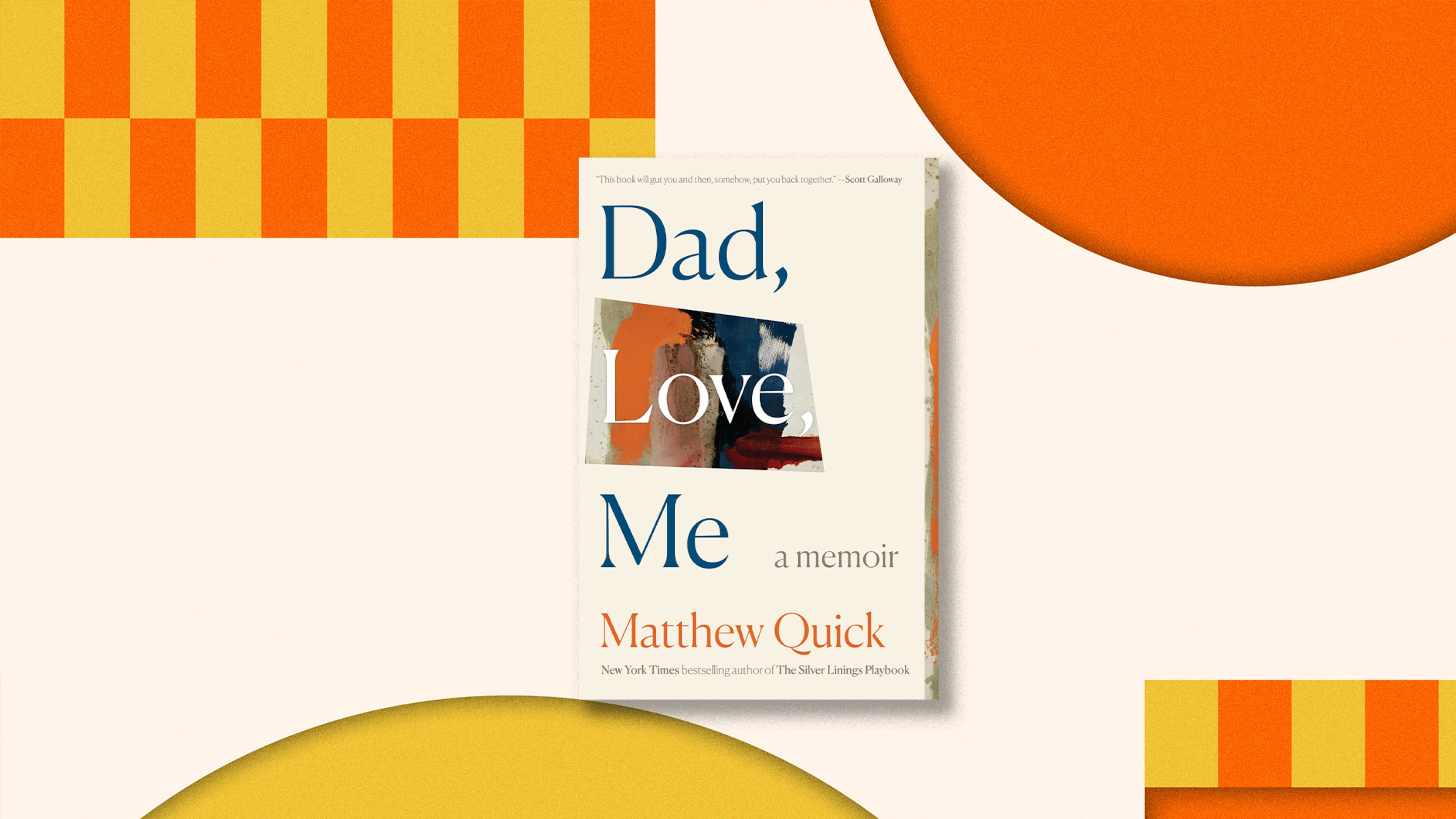
In his new memoir, “Dad, Love, Me” (Avid Reader Press/Simon & Schuster, $30), Quick discovers the silver lining in his father’s dementia.
“Dementia is a horrible disease. You don’t wish it on anyone,” Quick said in a telephone call last week from his home in Beaufort, South Carolina. “Having said that, my father, he never once said he loved me my entire life until this one day. … Later I realized that was when he was first showing signs of dementia.”
Written in the form of a letter to his father, the book is a multilayered narrative about Quick and his wife moving to Beaufort to help care for his dad shortly after his diagnosis.
It’s also a look back at Quick’s life ― the verbal and emotional abuse heaped on him as a child by his father; his use of alcohol to numb the pain and the struggle to overcome his addiction to it; and his journey through Jungian psychoanalysis as he processes his childhood trauma.
Along the way, in an unexpected turn of events, Quick connects with his father in ways he could have never imagined.
Quick’s father, a brilliant banker with deplorable social skills, was rarely physically abusive toward his first-born son. But he repeatedly demeaned and belittled Quick, never recognizing his accomplishments. When Quick shared the news about his first book deal, his father responded, “You know you have to pay taxes on that money.”
When Quick brought home his future wife to meet his parents, his father refused to acknowledge her presence or make eye contact. He would continue to ignore her throughout their marriage until dementia took hold and he finally began to engage with her.
“Dementia attacks parts of your brain. The parts of him that were traumatized … the paranoid parts of his brain were kind of shut down. As the dementia started to take hold, there were absolutely days when he was horrible and abusive, the worst he had ever been,” said Quick.
“But there were other days when we would go walk and he would turn into this boy. He would say, ‘Look at the cloud. There’s a lion in the sky. Look, there’s a turtle over there,’ or ‘The azalea bush is beautiful today. Look at the color of the azalea bush.’ To say this is miraculous behavior … I finally saw this side of my dad that was pure and innocent and capable of joy.”
Over time, Quick comes to understand that his father’s actions were partly a result of his own upbringing. Quick’s father was raised by a World War II veteran who suffered from PTSD. A strict disciplinarian, he treated his son harshly.
“The grandfather I knew later in life was not like that. He had softened. I think he was trying to make up for his past sins with me. He was very, very loving with me. And he had been very cruel with my father,” said Quick.
Quick also suspects his father may be on the autism spectrum, although he’s never been diagnosed.
“He didn’t understand that other people had feelings. He was very myopic about his needs … He didn’t know how to be a dad. He didn’t know how to love someone. He wasn’t a loving husband. But I don’t know that he did it out of cruelty so much as he didn’t know any better, and he didn’t have the skills to work on those things.”
In the early stages of his father’s diagnosis, Quick received his parents’ blessing to write “Dad, Love, Me.” Now his father is in a memory care facility, but his mother has read the finished product.
“She told me it was a tough read for her. ... She said she felt like she needed to take the rest of her life to make it up to me. I told her she didn’t have anything to make up to me.”
But it was one more step on his journey to healing. “It was a beautiful sentiment,” he said.
Suzanne Van Atten is a columnist for The Atlanta Journal-Constitution. She may be reached at Suzanne.VanAtten@ajc.com.