Meet the Georgia content creator going behind the scenes at your favorite concerts

Looking at Nick DeLaCruz’s upbringing, it’s no surprise that he ended up working in the music industry. His dad was a church worship leader and owned a recording studio at their family home. His mom was a vocal coach and previously toured with singer-songwriter Charlie Daniels.
DeLaCruz, 38, who was born and raised in Bremerton, Washington, but resides in Jefferson, had rock star dreams and sought the spotlight. That was until his parents gave him a reality check about the lack of money and abundance of hard work often associated with the path.
So, he chose the technical route instead, opting to go into audio and sound engineering. After high school, he worked for a labor company that provided staffing for tours like Sugarland and Kiss. There, DeLaCruz accepted every opportunity because “I wanted to be (in music) and I wanted to be around it.”
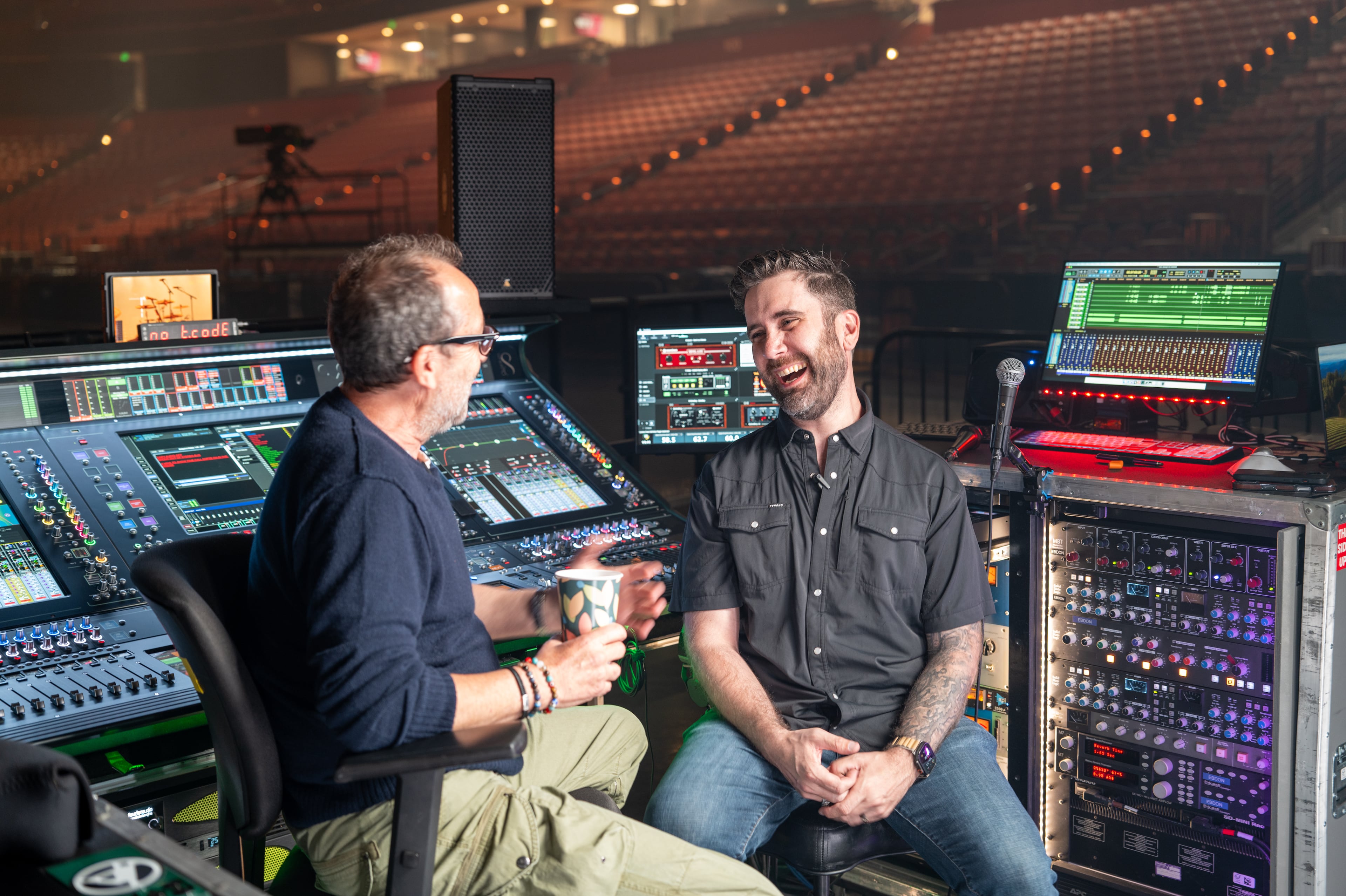
That laid the foundation for This Is DeLaCruz, a cross-platform brand he launched in 2023. Across his social media accounts, he posts weekly video interviews with crews (audio engineers, stage tech, etc.) behind major shows — from Madonna to Mariah the Scientist to Bruno Mars. He conducts conversations when tours stop in metro Atlanta, sometimes at the venue or via Zoom.

“Fans get to see the concert, but they don’t see the months and months before that lead up to that, and how passionate these techs are to be able to put that show on for them,” said DeLaCruz, who moved from Tennessee to Georgia in 2023 after leaving the Navy.
Today, his brand has become so popular that he receives roughly 600 messages every two months from crew members wanting to be guests on the show. He’s also created an app and merchandise to further connect with his growing audience (72K on Instagram, 38K on TikTok and 22K subscribers on YouTube). His platform generates revenue from a mix of sponsorships and paid subscriber-only content.
DeLaCruz does it all while maintaining his full-time job as a sales rep for an audio manufacturer.
The Atlanta Journal-Constitution talked to the content creator about his rise in the touring industry and building his platform.
This interview has been edited and condensed for clarity
Q: Was there any song or artist that deepened your affinity for sound engineering or music in general?
A: Probably John Mayer. I really like his thought process on music. I like his stage presence. I like how he goes to different genres, from blues to pop to rock to country, and he’s been one I’ve really, really admired for most of my career. But I had a really (musically) eclectic upbringing, even when I was in high school. I was in all the music classes. I was in band, jazz band, wind symphony, concert choir. My family had so much eclectic music from Tower of Power to gospel music to rock music to Phil Collins to country music.
Q: What made you go from working on tours to entering the Navy?
A: My last tour, I was with a band called Halestorm in 2012, and I ended up getting fired off that tour. That was also the start of my sobriety. I made a mistake on tour, and I forgot to do something that was very simple. Everywhere you go, you have to scan the room to see if there’s available frequencies for (wireless microphones). If not, there could be interference, and the microphones won’t connect, or they’ll drop out. You do it for every venue. I forgot to do it for a show, and the artists got up and started singing, and it kept cutting out. I went to try to find out what it was, and it was too late to do a scan. So that show was a complete disaster. Rightfully, they fired me on that one. And I had a whole reality check of like, what am I doing here?
Q: Do you care to share more of your sobriety journey? What was your addiction?
A: Mainly alcohol. It was so dark for so long, and it honestly defined me for so long, and it terrified me to get back in the industry because I got fired. That was tough. Fast forward to me doing these interviews, I actually ended up reaching out to the guy who fired me, and I got to do an interview with him. He’s still with that same band, so that was kind of a cool full circle.
Q: You’ve said a desire to highlight the “unsung heroes” of the music industry is what made you start your platform. Describe some of those early interviews.
A: My first interview was with Marcus Scott, who was the lead singer for Tower of Power at the time. It was so bad. I had index cards on the ground with things I’ve wanted to ask, and we ended up having to do it twice … but I kept doing the videos. I talked to some friends around who were successful at social media stuff, and they gave me some pretty cool pointers, and I’m so thankful for the advice they gave me, which was to keep doing it. I want to pay that forward to anybody and everybody that I can, and give a realistic view of this. As this thing has grown, there’s been so many lessons that I’ve learned, and some hard lessons, some good lessons. But it’s actually turned into a full business now.
Q: How have you been able to build your connections?
A: It started off with people I knew. I started getting some traction. I think most people behind the scenes, especially in this industry, they’re very passionate. Most people talk to the artists, and they don’t want to talk to them. They spent their entire lives building up for this. So it was people around me, then people from their circle, and it just continued to grow. Now, I get a lot of people requesting more to me than I do to them.
Q: When did you realize your videos were becoming popular?
A: At the Luke Combs one, some guy came up and was giving me some compliments, and I was kind of downplaying it. He’s like, “Oh, people love your stuff.” I was like, “Ah no.” He stopped and looked at me very serious. He’s like, “You got to not do that. You’re a staple and huge influence in this industry, and you need to come to grips with that now because it is happening.”
Q: Yeah, it’s a very niche topic, yet there seems to be a loyal audience for it.
A: The hardest part is, what do I compare it to? How do I know where to go? Like, what’s the parallel to know what’s successful, what’s not?
Q: What have you learned about the state of the touring industry right now from recent interviews?
A: Since COVID, touring has completely changed, and it’s been harder for bands to make money. You see that blue dot fever. So I think people are thinking about production and how do they bring value with it. I remember putting a post (up) recently (and) asking the question: Instead of bands doing an arena in five states a week, what if they did a theater for a week and there was less production? It was amazing. Hundreds of people were really excited about that.
Heat Check is a monthly music column where AJC culture reporter DeAsia Paige explores the temperature of Georgia’s buzzing, expansive music scene — via the people and places within it. The column includes music news, trends and any Georgia-related music that DeAsia is listening to. If you’re a Georgia artist and have music you want to be considered for this column — or if you just want to talk music — feel free to send an email to deasia.paige@ajc.com. If you’d like to receive Heat Check via email, sign up here. Below is an August playlist.