Atlanta artist makes a memorial to go up in flames at Burning Man
Since 1990 people have gathered from across the country and around the world in Nevada’s Black Rock Desert for the annual celebration of fire, free-thinking and communal living called Burning Man.
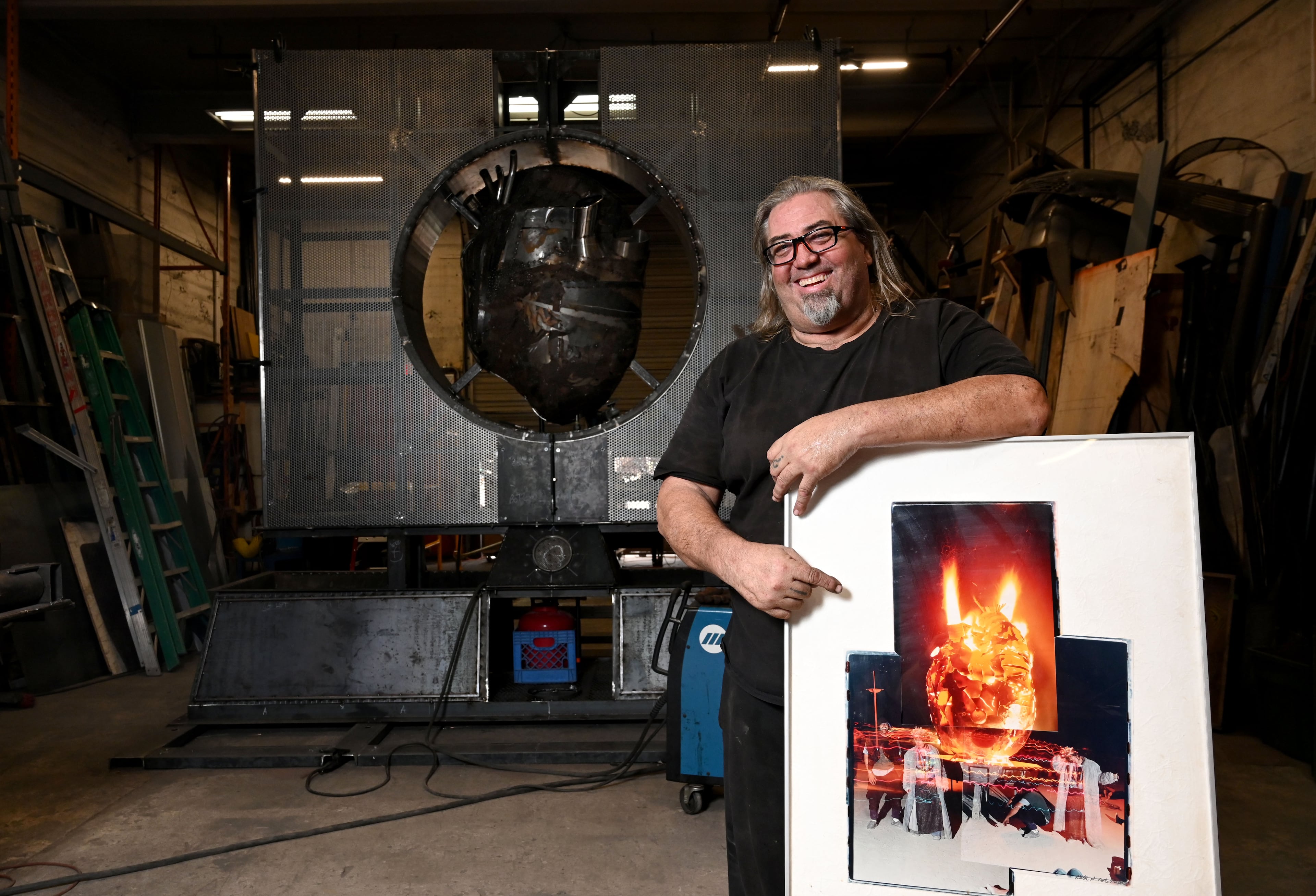
Adair Park resident and artist Charlie “Blackcat” Smith is a longtime participant in Burning Man as well as a number of offshoot festivals dedicated to fire art. But this year, Smith, who works out of a massive, warrenlike space called Sparseland Studios in Adair Park’s MET Atlanta complex, is approaching Burning Man with a different energy.
He’ll still be bringing the fire. And the sculpture. But he’ll also be commemorating a beloved friend, Brian Doherty, a prolific writer and journalist whose life embodied the freethinking ethos of Burning Man. Doherty worked as a senior editor at the Libertarian magazine Reason. He was also the author of several books including “This is Burning Man: The Rise of a New American Underground” and treatises on Libertarianism, including “Modern Libertarianism: A Brief History of Classical Liberalism in the United States.”
After Doherty died after a fall in March from a scenic overlook in the Golden Gate National Recreation Area near his home in Cathedral City, California, Smith decided he needed to create a sculpture memorial to his friend. He added that Doherty was like a Hunter S. Thompson documenting the contemporary subculture, “if Hunter S. Thompson was 100% honest about everything.”
For Smith, creating this memorial sculpture was inevitable. “I don’t have a choice. I’m compelled.”
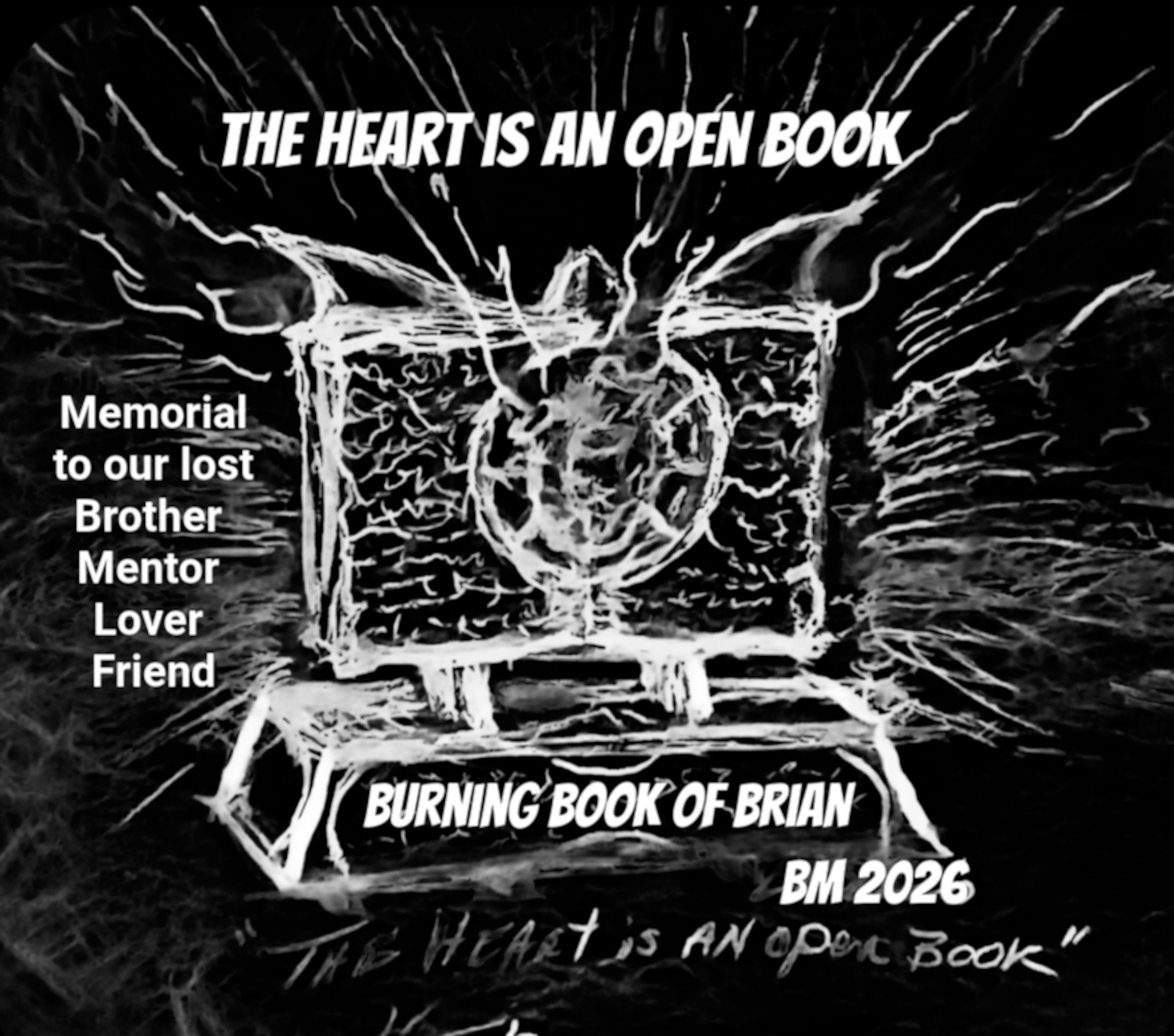
Smith said he and Doherty were working on a book together, a type of cookbook about how to create a subculture. “Now instead of writing the book,” Smith said, “I decided I would build a book.”
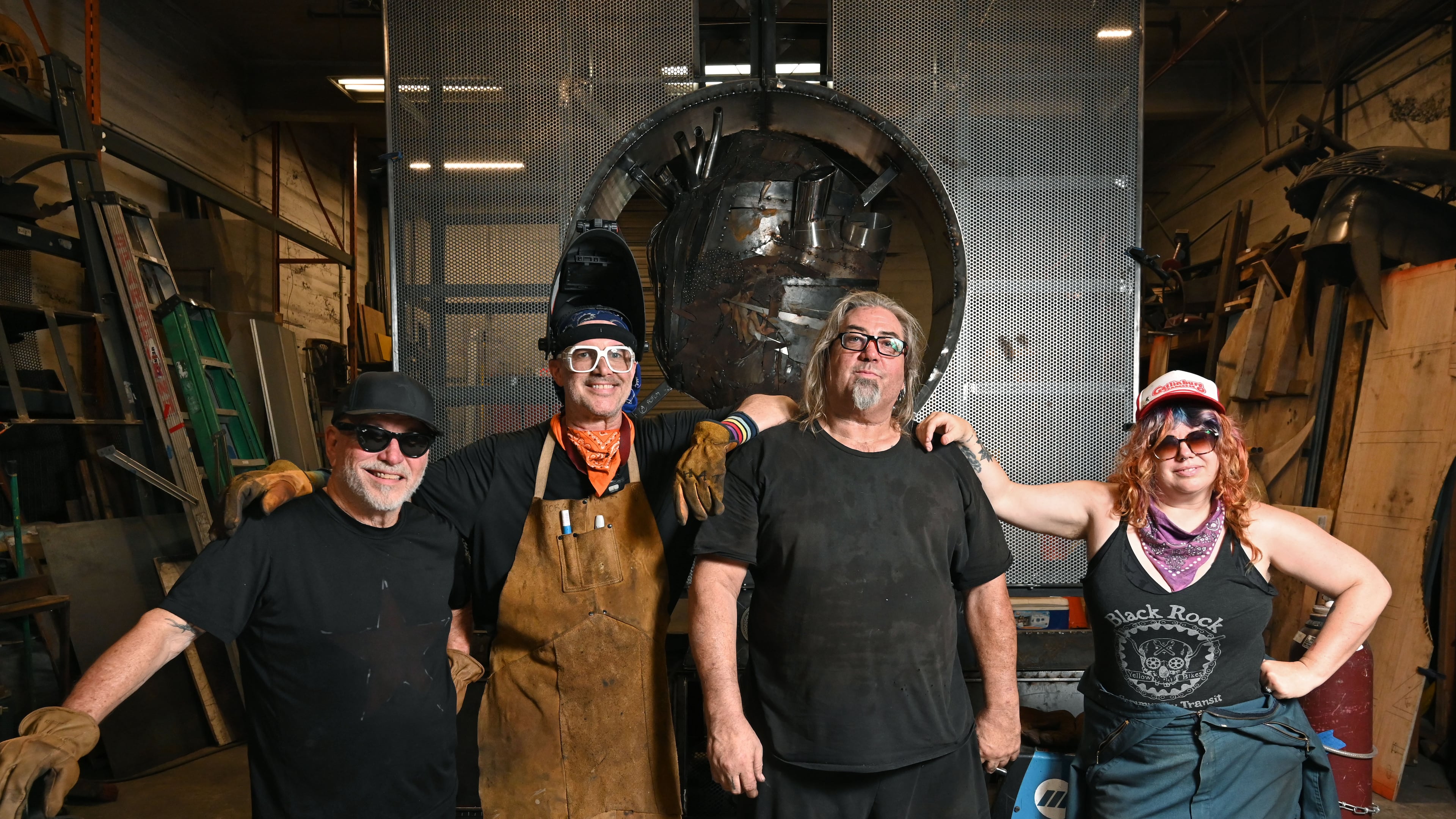
He has already raised more than $24,000 on Crowdfunder to fund a sculpture he’s calling “The Burning Book,” composed of a 15-foot-high metal scaffolding in the rough shape of a book. Inside, a metal heart the size of a bean bag is made from bits of a skate ramp, the literal kitchen sink and dribs and drabs soldered together into new life.
Participants will toss logs into the sculpture’s built-in furnace. Like many pyres at Burning Man, “The Burning Book” is meant to be a memorial and also a kind of catharsis by fire, a way for the many people who Doherty touched to come together to say goodbye.
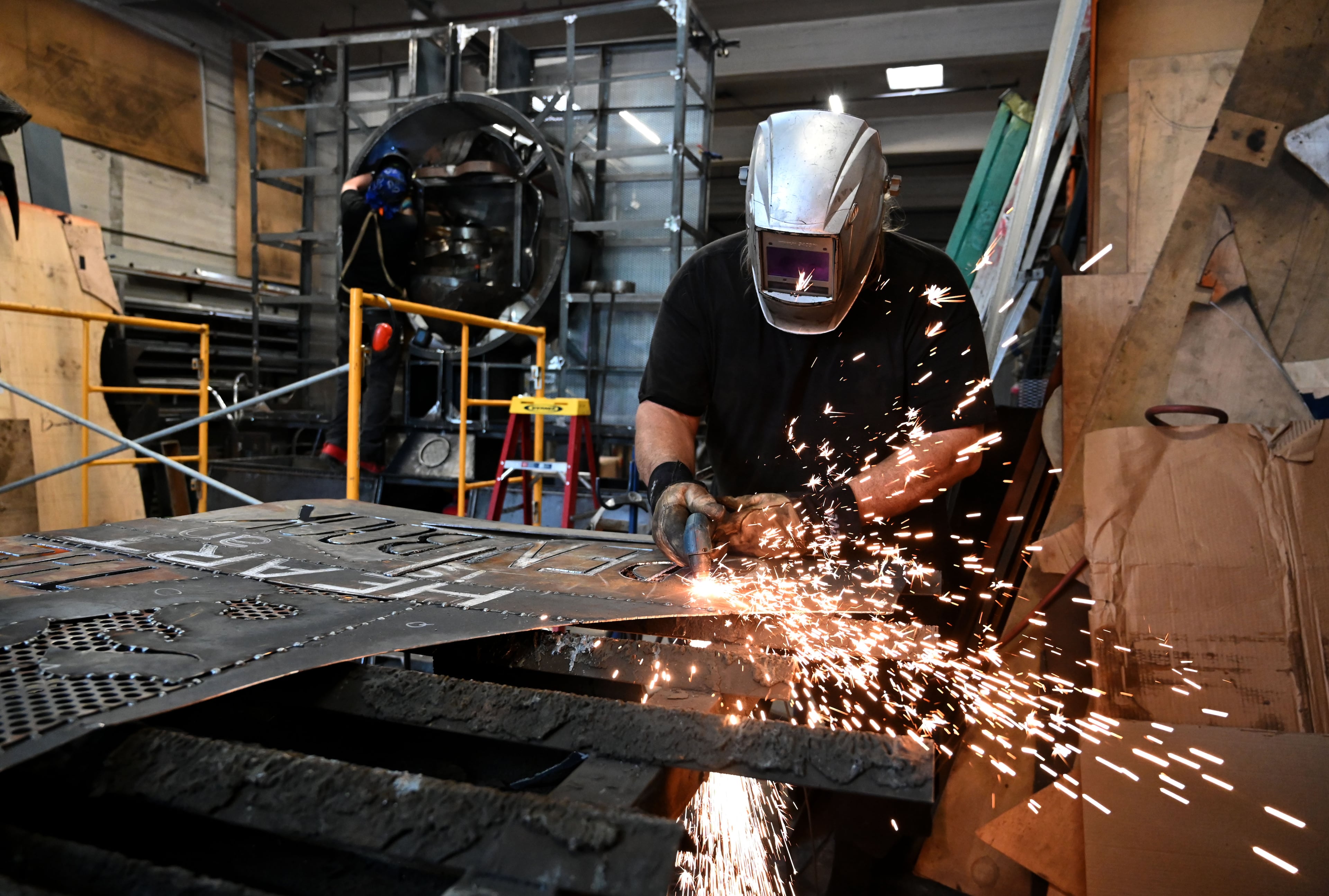
In recent weeks other creatives and outside-the-box thinkers have been passing through Smith’s Sparseland Studios to assist with the sculpture. Cloe Ashton traveled from her home in Saint Johnsbury, Vermont, to help commemorate a man who impacted their lives. Ashton met Doherty on a camping trip in California but got to know him at Burning Man, which he often attended.
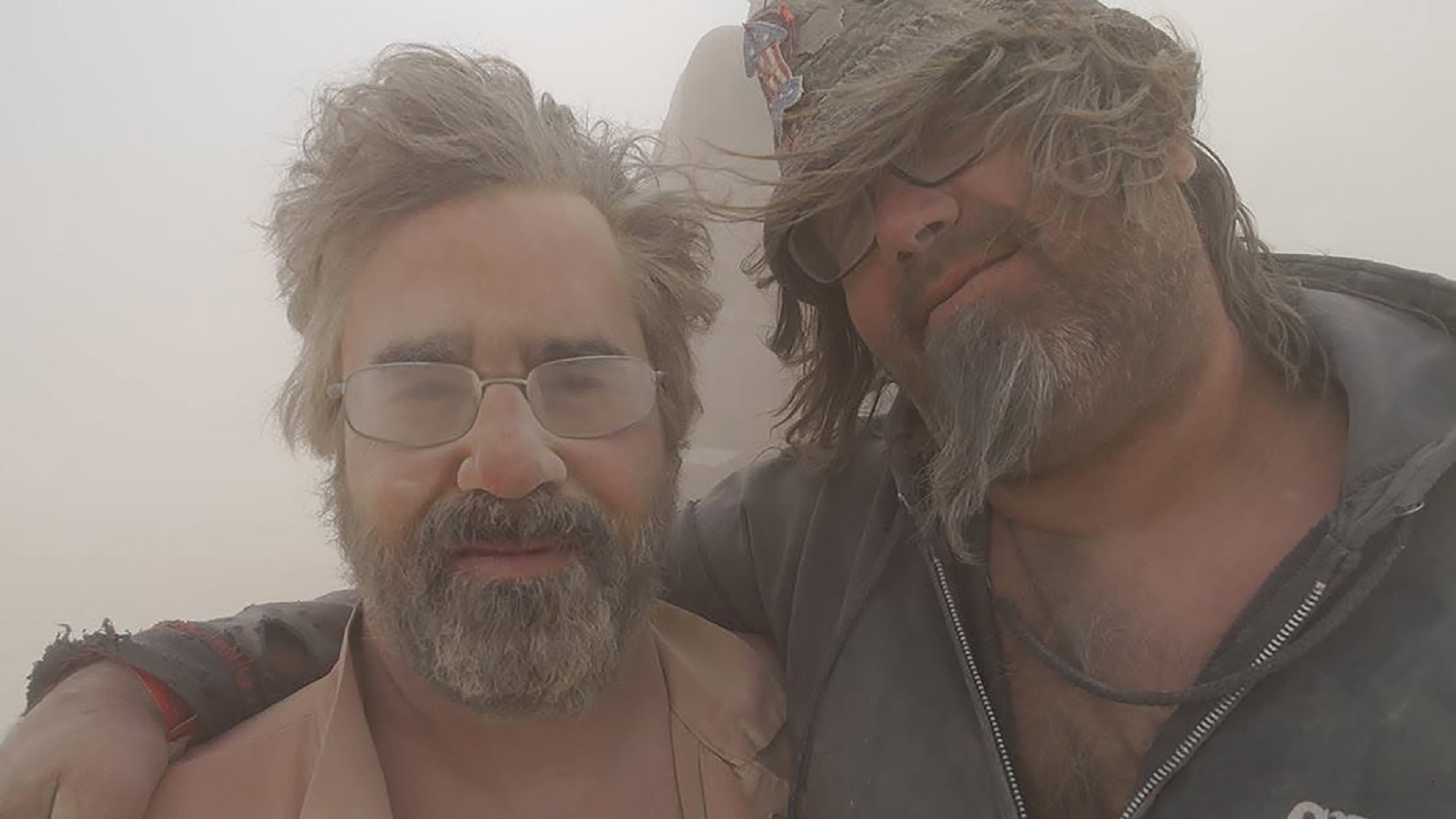
Smith met Doherty at Burning Man in 2000 and remembers him talking a very drunk man down from his hellbent plan to combine gasoline and a metal sculpture into a certain disaster. He was a negotiator and a peacemaker, Ashton said. “Brian was like the Jane Goodall of drunk artists.
“He loved the absurdity of the art and the absurdity of the community because it really is a collective of mad geniuses,” Smith said of Doherty’s love for Burning Man.

The sculpture is a group effort among Smith and his contingent of helpers hailing from as close as Woodstock and Chattanooga and as far away as Detroit and Colorado. Smith calls his work “contraptionism” or the reuse of anything to make a new thing. Indeed, the parking lot behind his studio is filled with a boneyard of Smith’s past contraptionism: giant metal heads, enormous roosters and beavers, hulking hunks of metal that stand in silent testament to fires past.
Smith and his merry band of outsiders will rent a truck to take “The Burning Book” to the Nevada desert where, on Sept. 2, it will go up in flames. For Smith, he and his friends are not simply building a sculpture. They are building an experience, a consortium of like-minded people warming themselves, as people have since the dawn of time, over a communal fire.
“I have been obsessed with the element of fire as an element in nature,” Smith said. “That’s the nature of my work: Healing fire energy that creates love and compassion and empathy for ourselves and for our planet.”
Correction
August 18, 2026This story has been updated to correct where Brian Doherty lived.