Why HBCU football keeps coming back to Atlanta
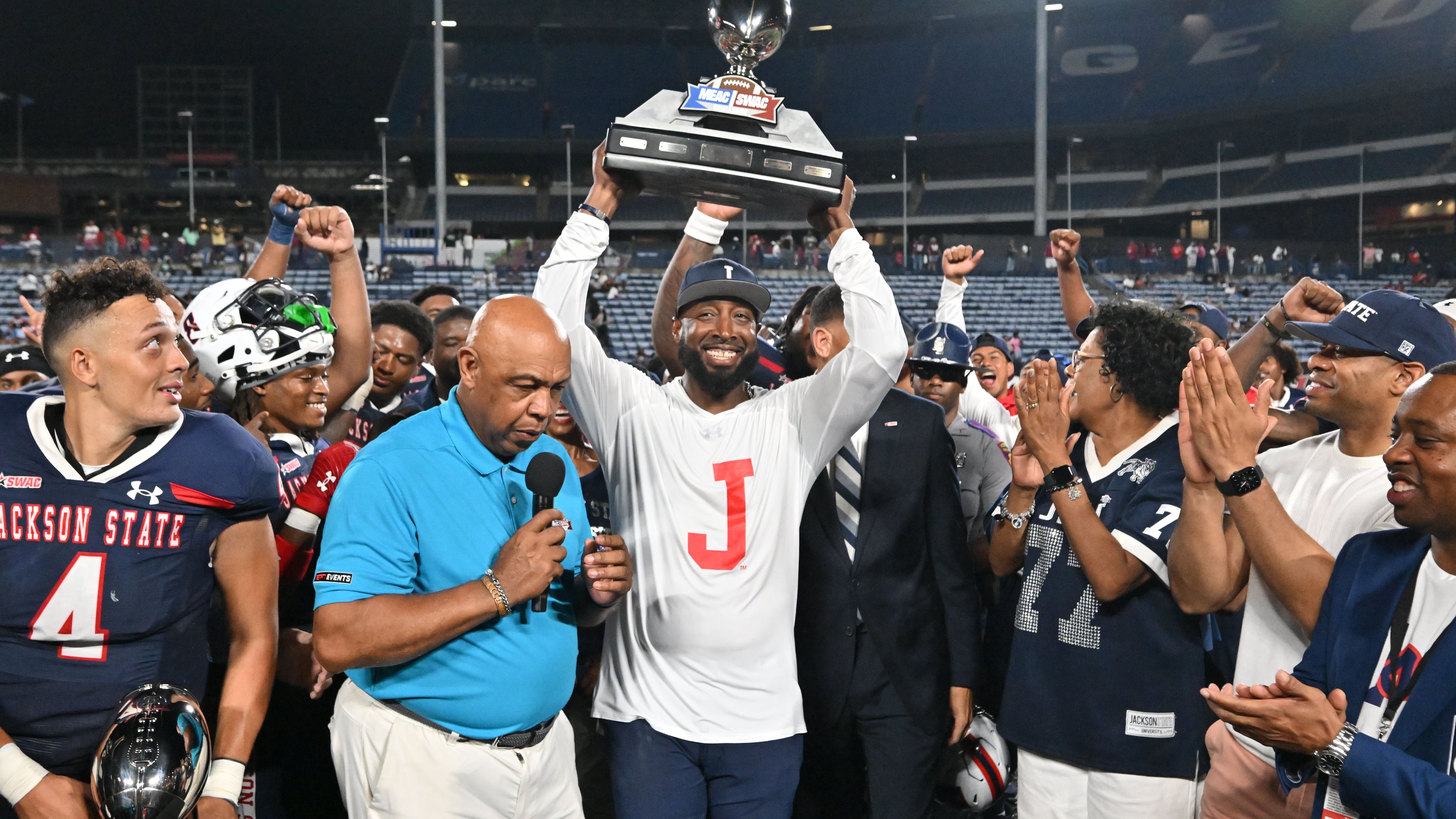
Atlanta has become HBCU football’s starting line in August and its championship stage in December.
On Saturday, Howard of the Mid-Eastern Athletic Conference and Alabama A&M of the Southwestern Athletic Conference will meet in the MEAC/SWAC Challenge Kickoff at Center Parc Stadium. The Week 0 matchup begins a season-long pursuit that could bring either program back to Atlanta for the Celebration Bowl, where the champions of the MEAC and SWAC will decide the Black college football national championship.
“The goal (for MEAC/SWAC teams) is to start in Atlanta and end in Atlanta,” said John Grant, ESPN’s executive director of the MEAC/SWAC Challenge Kickoff and the Celebration Bowl.
With a primetime broadcast on ABC, the Challenge places HBCU football before a national audience while showcasing the culture that gives the sport its rhythm. Marching bands turn halftime into another competition. Fashion transforms stadium walkways into runways. Tailgates become family reunions, while alumni gatherings connect generations through school pride and tradition.
The Challenge debuted in 2005 and bounced between Birmingham, Alabama, Orlando, Florida, and various campus sites before settling in Atlanta in 2018. In July, ESPN Events extended the MEAC and SWAC’s participation in the Challenge and Celebration Bowl through 2032, securing the long-term future of two events that bookend the HBCU football season here.
“Atlanta is in the center of the MEAC and the SWAC,” Grant told the AJC. “Atlanta is also a major travel destination for African Americans. It just made sense to hub it here.”
According to Grant, the ATL Airport District Convention & Visitors Bureau projects the Challenge could generate nearly $12 million in economic impact. Visiting fans are expected to fill hotel rooms, dine at area restaurants and move through Hartsfield-Jackson Atlanta International Airport.
For Alabama A&M, that reach extends directly into recruiting. Brandon Gilmore, a 2013 graduate and president of the university’s metro Atlanta Alumni Chapter, said AAMU enrolls an estimated 300 to 400 students from the area each year, making Atlanta its largest recruiting market outside Alabama.
The Bulldogs have not played in the Challenge since 2014. By spring, alumni were treating their return like a second homecoming. Chapters organized buses. Graduates requested time off, booked flights and reserved hotel rooms.
“The hype around it started way back in spring,” Gilmore said. “People have started putting dates and PTO ... into this game, just like they do for homecoming.”
Howard alumni arrive with similar energy, but different football expectations than a generation ago.
Erica Lee, a 2010 Howard graduate and immediate past president of the Howard University Alumni Club of Baltimore, remembers when the culture around Greene Stadium could eclipse football on the field. From 2006 through 2009, the Bison went 12-32. Today, Howard expects more. The Bison shared the MEAC title in 2022, won it outright in 2023 and returned to Atlanta that December for the Celebration Bowl.
“We’re going to these places and into these games, and we’re expecting to win,” Lee said. “That is a complete and total mindset shift.”
The Howard University Alumni Club of Atlanta has built its own weekend around the game, from an HBCU run and Bison pep rally to an alumni happy hour and tailgate. Yet Lee has noticed the Challenge becoming larger than the two schools printed on the ticket.
“It’s not just Howard graduates or supporters coming to the game,” Lee said. “Just because your team isn’t playing in the (game) does not mean you can’t attend the game or weekend events. … Atlanta lends itself to events.”
Grant puts the formula more simply.
“Football is our reason for gathering,” he said. “But gathering is our reason for being in Atlanta.”
In the HBCU sports economy, though, tradition alone cannot keep the lights on. Nostalgia can sell a vision, but somebody still has to secure the venue, market the game, move tickets, manage television obligations and make sure promises made months before kickoff become reality.
Atlanta received a reminder in 2025. The Georgia Football Classic was scheduled to bring Florida A&M and Mississippi Valley State to Mercedes-Benz Stadium, an attempt to revive some of the spirit of the Atlanta Football Classic that ran from 1989 through 2014. Instead, the game was moved to Mississippi Valley State, showing that Atlanta’s location and HBCU history are assets, not guarantees.
For Grant, a former organizer of the Atlanta Football Classic, sustainability starts with structure.
“Planning and who is behind it,” Grant said. “You’ve got a four-letter brand in ESPN behind this (MEAC/SWAC Challenge), which gives us access to resources that no independent promoter has.”
For all the business that keeps the 21st edition of this Challenge humming and all the culture that gives the weekend life, it still reaches its crescendo between the white lines.
Howard coach Ted White returns to a city tied to his own history. He played in Atlanta in the 1996 Heritage Bowl and now leads the Bison in his first season as head coach. Alabama A&M coach Sam Shade enters Year 2 with a full recruiting cycle behind him and 14 FBS transfers added to his roster.
Both coaches have framed Saturday night as something larger than one result.
“HBCU talent is second to none,” White said during the MEAC/SWAC Challenge Kickoff news conference on Aug. 20. “You got guys who really love the game of football.”
Shade sees the stage through the same lens.
“We want to represent the SWAC well, and our university,” he said.
Howard and Alabama A&M will arrive carrying different colors, conferences and expectations. Beneath ABC’s lights, though, both will be selling the same larger story, one of institutions, alumni, culture and football talent worthy of the stage.
By the time the lights dim Saturday night, only one team will leave Atlanta with a win. Both will have had the chance to show the country why HBCU football keeps coming back.
MEAC/SWAC Challenge Kickoff
Alabama A&M vs. Howard
Kickoff: 7:30 p.m. Saturday, Center Parc Stadium
TV: ABC