Georgia Republicans could redraw maps, limit governor’s powers after election
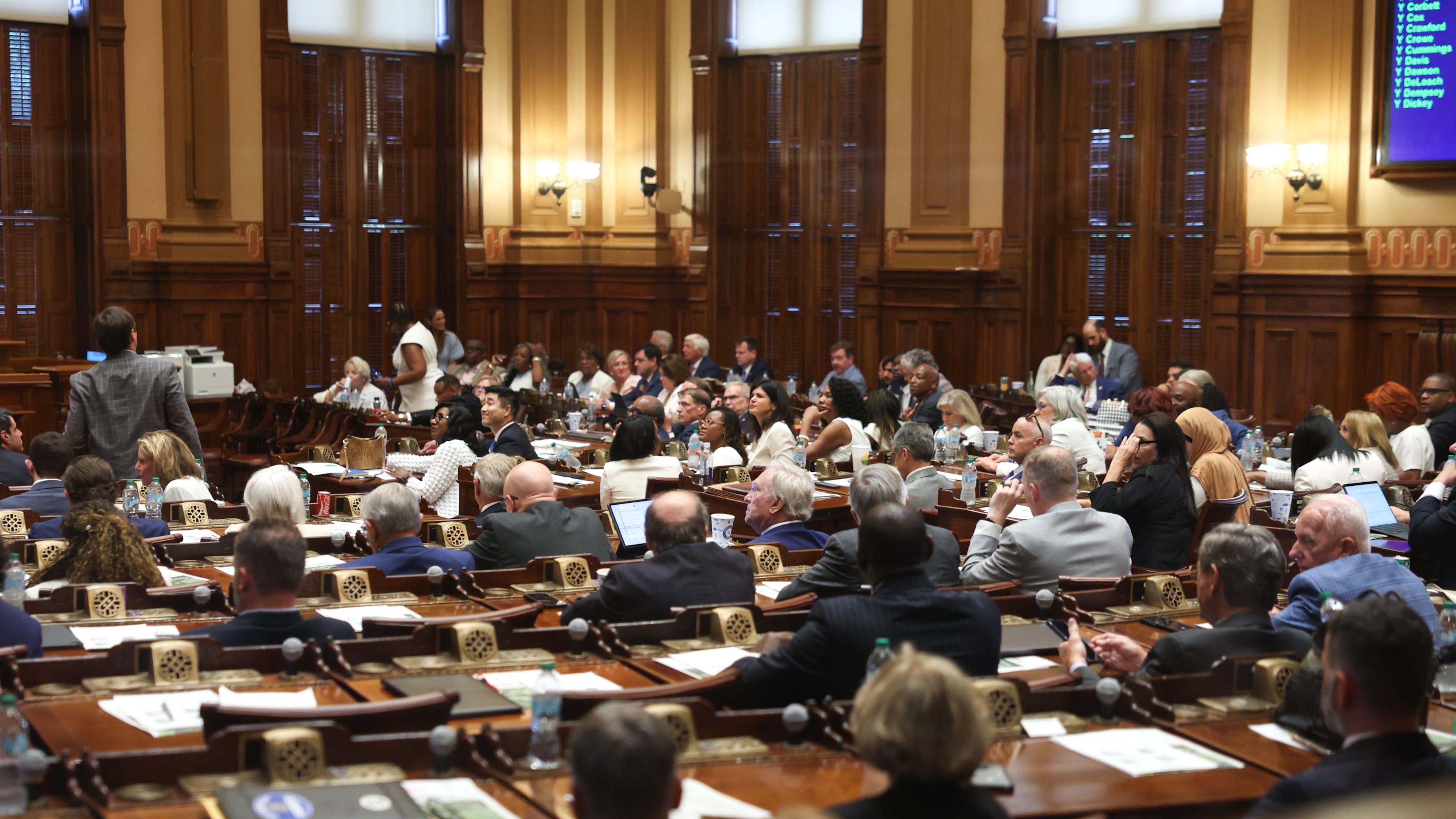

Georgia voters will choose their next governor on Nov. 3. But Republicans could have one last chance to reshape the state’s political landscape no matter who the winner is.
Gov. Brian Kemp could summon lawmakers back to the Gold Dome after the election to redraw Georgia’s congressional boundaries, potentially dismantling a majority-Black district Republicans have long coveted.
And if Democrat Keisha Lance Bottoms wins, the stakes are even higher: GOP lawmakers could also try to limit her powers before she takes office while Kemp still has the authority to sign them into law.
Neither move is certain. Legislative leaders have been tight-lipped about their plans, and Kemp hasn’t hinted about whether he will call another special session before leaving office.
But many Capitol insiders see it as likely. Kemp tried to push through a redistricting overhaul earlier this year, only to be rebuffed by GOP legislative leaders worried that a divisive fight could energize Democrats ahead of the midterms.
And some Republicans are already quietly bracing for fierce backlash if they try to redraw political boundaries or curb the powers of the nation’s first Black female governor before she even takes the oath of office.
Even a victory by Republican Rick Jackson wouldn’t necessarily take a special session off the table. A redistricting overhaul later this year would spare the incoming governor from having to begin his term with a bruising partisan fight over boundaries.
Bottoms has repeatedly warned Kemp not to use his final weeks in office to weaken her administration.
“I would hope that the Republican Party wouldn’t be the party of sore losers,” Bottoms told the “Politically Georgia” podcast.
“We are a state that has gotten things done in moderation, and it would be really unfortunate for them to do that on their way out of the door.”
An unfinished fight
Republicans have made no secret of their desire to redraw Georgia’s political maps after a U.S. Supreme Court ruling in April weakened Voting Rights Act protections for minority voters.
One potential target is Democratic U.S. Rep. Sanford Bishop’s southwest Georgia district, one of the last rural, Black-majority congressional seats in the Deep South. Another is the metro Atlanta seat once held by the late Democratic U.S. Rep. David Scott.
When Republican leaders blocked the push in June, Georgia House Speaker Jon Burns pledged a transparent process with public hearings across the state before any new maps were approved. More than four months later, he hasn’t held any of those hearings.
Burns’ spokesperson, Kayla Green, declined to elaborate this week on the speaker’s postelection strategy. She said House Republicans were “laser-focused” on Nov. 3.
Kemp, too, has not disclosed his plans. When pressed on whether Kemp might bring lawmakers back to the Gold Dome, his longtime political adviser was circumspect.
“I’m definitely not going to get out in front of the governor in terms of what he wants to do after the election,” Cody Hall told the “Politically Georgia” podcast.
He added: “But look, our goal is not to have to worry about this problem.”

Democrats are already preparing for a fight, warning that any postelection power grab would defy the will of the voters.
State Rep. Saira Draper, D-Atlanta, invoked Kemp’s refusal to help President Donald Trump overturn his 2020 defeat in Georgia.
“Redrawing maps and stripping power from newly elected leaders after an election isn’t governing. It’s refusing to accept the result,” she said.
“Gov. Kemp famously stood up to Trump in 2020 for refusing to accept the choice of Georgia voters,” she added. “It would be a shame for him to go out a hypocrite.”
Could Republicans limit the next governor?
Georgia has flirted with the possibility of a postelection session before.
In 2018, then-Gov. Nathan Deal called a rare postelection special session to address Hurricane Michael relief as Kemp battled with Democrat Stacey Abrams in a close race for governor.
The timing stirred speculation that Republicans could also use the session to curb Abrams’ power if she won. Deal later ruled that out, and Kemp’s victory rendered the entire debate moot.
But there’s a precedent elsewhere. North Carolina Republicans undercut incoming Democratic Gov. Roy Cooper’s authority after his narrow victory in 2016.
Wisconsin Republicans followed a similar playbook two years later, passing legislation to weaken incoming Democratic Gov. Tony Evers and the newly elected attorney general.
Whether Georgia Republicans could follow suit is another matter, particularly if Democrats flip the 10 seats needed to capture the Georgia House.
Anthony Michael Kreis, a constitutional law professor at Georgia State University, said Georgia’s constitution provides “fairly strong” protections for the governor.
That includes cementing the office’s power to fill judicial vacancies, crafting the state budget, appoint members of the Board of Regents and suspend public officials under indictment.
“However, many other powers, like emergency powers, are statutory grants that could be revised,” Kreis said.
Keith Mason, a longtime adviser to former Democratic Gov. Roy Barnes, notes that Democrats didn’t try to weaken the governor’s office in 2002 after Republican Sonny Perdue’s upset victory. He said Republicans would be foolish to try.
“I don’t think they’d want to pick that fight in light of the optics. It would overwhelm everything,” Mason said, adding that the scope of Democratic gains in the Legislature will determine how aggressively Republicans could move.
Bottoms, meanwhile, is appealing to Republican lawmakers’ sense of honor if a Democratic wave crashes on the GOP.
“I just hope that Republicans would be mature if they lose the House,” she said, “and that they won’t do anything drastic.”