Speaker Burns promised transparency before redistricting. We’re waiting.
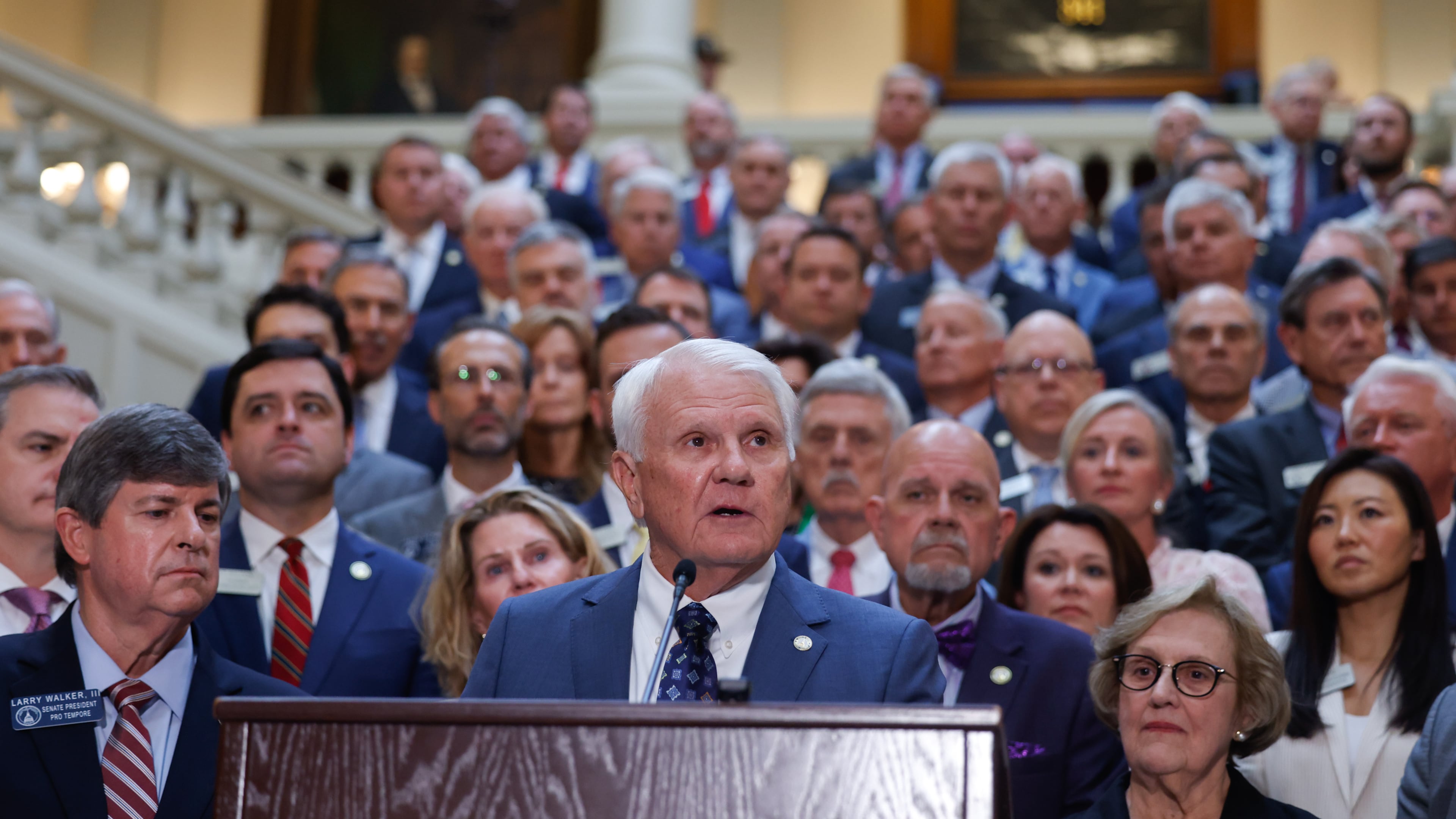
On a sweltering morning last June, House Speaker Jon Burns made an announcement to a tense and packed Capitol atrium. With more than 1,000 voting rights protesters listening intently, Burns said the state House would not move forward on a call from Gov. Brian Kemp to redraw the state’s political maps for 2028 ahead of the 2026 elections.
In his speech, Burns said that it was important to do redistricting “the Georgia way … responsibly, transparently and with ample opportunity for public input.”
To get that public input, the speaker said Republicans would hold public reapportionment meetings to hear from voters “in every corner of the state.” That, he said, would ensure that anyone in Georgia could have their voice heard before the General Assembly votes on new districts.
A roar of applause and whistles went up from the crowd, which included activists and everyday citizens who had gone to the General Assembly planning to protest a rushed redistricting session that would not happen after all.
But three months after Burns’ announcement and just six weeks away from the 2026 elections, the public hearings the speaker promised over the summer haven’t happened yet. According to his office, no hearings are currently scheduled either.
So what’s going on?
Asked about the progress on redistricting hearings, the speaker said in a statement, “Our focus remains on listening to and serving our fellow Georgians. Given recent court decisions and ongoing litigation, we are continuing to examine the legal landscape not only here in Georgia, but across the country.”
To Burns’ point, there are multiple lawsuits over Georgia’s congressional and legislative maps that could impact what the General Assembly can do or should do on any new maps going forward.
In late August, the 11th U.S. Circuit Court of Appeals ordered that a trial judge’s earlier ruling on the maps Republicans in Georgia drew in 2021 be reexamined in light of the U.S. Supreme Court decision in Louisiana v. Callais that drastically scaled back minority protections in the Voting Rights Act of 1965.
Legal experts say Burns could be waiting on a review process that might take months or years. But the looming the chance that Democrats could take control of the state and the redistricting process itself if Keisha Lance Bottoms is elected governor in November has Democrats convinced that Republicans could call a special redistricting session before January to retain as much power as possible for the GOP.
“If Keisha Lance Bottoms wins, they’re going to push this through, and I think any promises of halting for pending litigation or transparency will be out the window,” said state Rep. Saira Draper, D-Atlanta, who is also an election lawyer. “What does potential backlash matter when you can cement your party’s power for the next generation?”
Redrawing the state’s maps requires approval from not just the state House, but the state Senate and the governor too.
When I reached out to Senate Majority Leader Larry Walker, he made it clear he believes the Supreme Court decision requires Georgia to redraw its maps some time before the 2028 elections. But he added that he had not committed to the joint hearings that Burns talked about in June.
“As far as hearings go, I don’t know what the speaker has in mind,” Walker said. “I think it’s a good idea. And we do want to make sure we have up-to-date data, be thoughtful and do it the right way.”
Whether or not a special session happens at all depends on Kemp, who has the power to call a special session. He is the one who called the June special session in the first place and added redistricting to the agenda after President Donald Trump demanded that Republican states squeeze as many GOP districts as possible out of the new legal landscape. Although Kemp decided against overhauling the maps in time for the 2026 elections, he said Georgia would be obligated to come up with new maps before 2028.
So is Kemp planning to call one more special session while he’s still governor?
Carter Chapman, the governor’s spokesperson, said he didn’t have anything new on Kemp’s thinking about redistricting or a special session before the end of the year. “The governor is focused on the elections,” Chapman said.
If Kemp does call a special session on redistricting, but it moves forward without the joint hearings that the speaker promised, the transparency and opportunity for public input Burns said were essential for the process won’t happen either. And in his own words, that’s not the Georgia Way.