Ga. election board director acts without approval, tests limits of authority
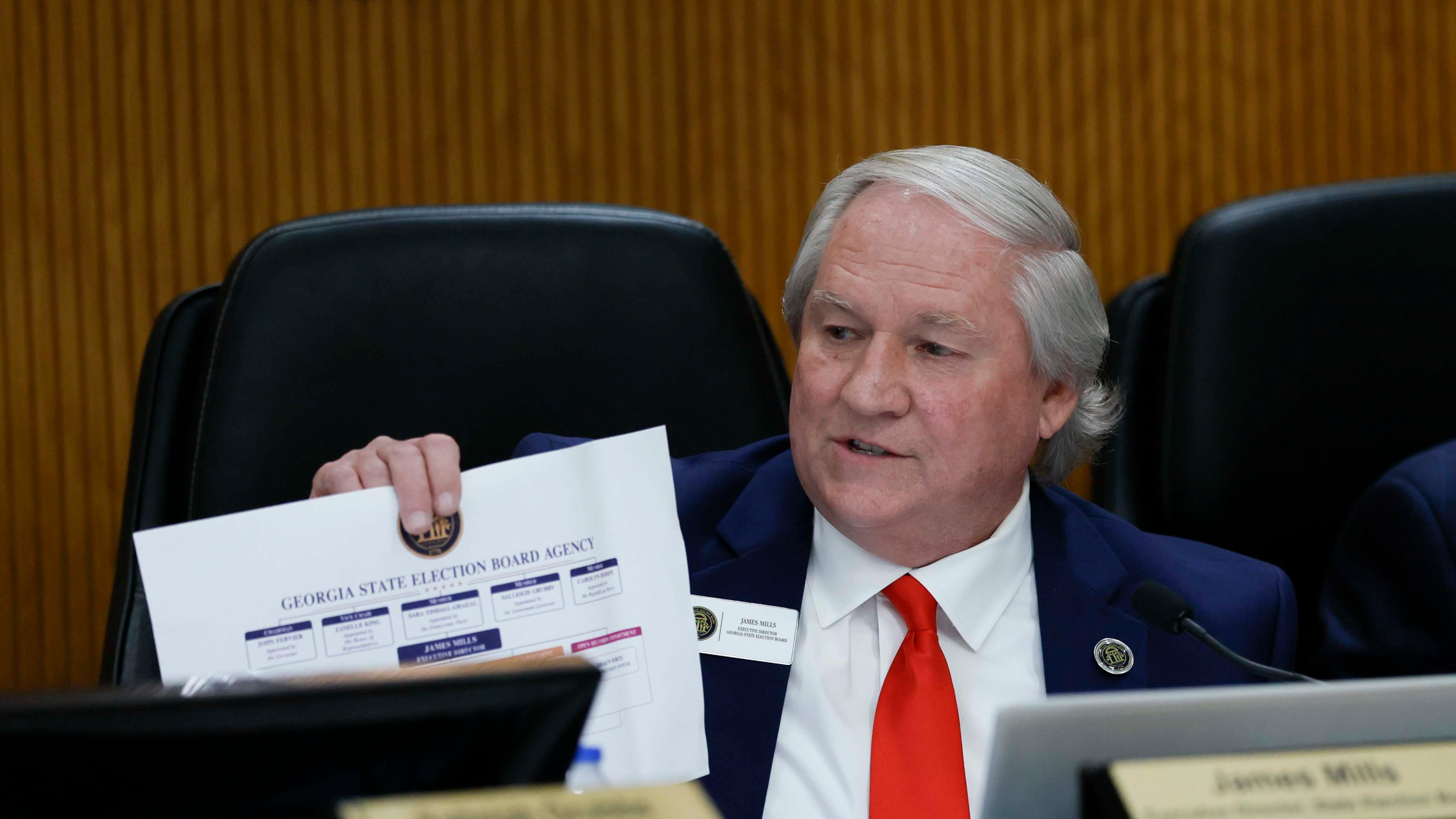

State Election Board Executive Director James Mills has been on the job for over a year. In his tenure, he has feuded with the board chair. He’s made hiring decisions without board members’ knowledge. Most recently, he asked the Trump administration to intervene in Georgia’s election and force changes to the state’s voting system.
Three of five board members say they never approved that last request, which came less than two weeks before early voting begins.
Mills, sympathetic to conspiratorial beliefs about the 2020 election and hailed by some election skeptics as a champion of voting integrity, has long clashed with members, squabbling over his power. Even as Mills continues to sidestep board approval and frustrations grow among members, no one has tried to oust him or reduce his power. In 2025, they voted to expand his authority.
Critics have said Mills — and the board — are creating confusion and fueling distrust in Georgia elections and the statewide voting system in advance of the Nov. 3 midterms.
A spokesperson for the secretary of state’s office said the board is “trying to cause chaos at the 11th hour.” John Fervier, a Gov. Brian Kemp appointee, said he was “shocked.”
Congressional Democrats blasted Mills.
“The intent of your letter is clear — to serve as a pretext for undermining public confidence in Georgia’s election results this November,” they said in a Tuesday letter to Mills.
Mills did not respond to phone calls seeking comment or to an emailed list of questions.
‘From any quarter’
The latest tumult came after the board’s right-wing majority approved a Sept. 28 resolution that empowered Mills to seek aid “from any quarter,” including the U.S. Justice Department and the U.S. Department of Homeland Security. The resolution said Mills should do anything necessary to address concerns about Georgia’s statewide voting system.
Days later, Mills sent a letter to DOJ and DHS seeking federal intervention. His requests were sweeping — a six-month deadline to ban QR code vote counting and 11th hour updates to the state’s voting system. He also levied unspecified accusations against Secretary of State Brad Raffensperger.
Long the subject of debate, Georgia’s system uses touchscreens that print a paper ballot with the voter’s selections in text and a QR code, which scanners use to officially tally votes. Critics of the technology say that they cannot verify the accuracy of their vote because the QR codes are unreadable by humans. They believe it to be less secure than hand-marked ballots. Officials point to audits showing the system’s accuracy.
His latest move frustrated a majority of members who say Mills exceeded his authority, but it’s unclear if that irritation will turn into action. The board could fire him.
Fervier and fellow board members Sara Tindall Ghazal and Salleigh Grubbs said they never approved the appeal to the Trump administration. In fact, Grubbs, a Republican, and Ghazal, a Democrat, asked Mills to send them drafts of any communications to the Justice Department and Homeland Security for approval before they went out.
Records show he sent the board copies, but they never authorized him to send the letter to the administration.
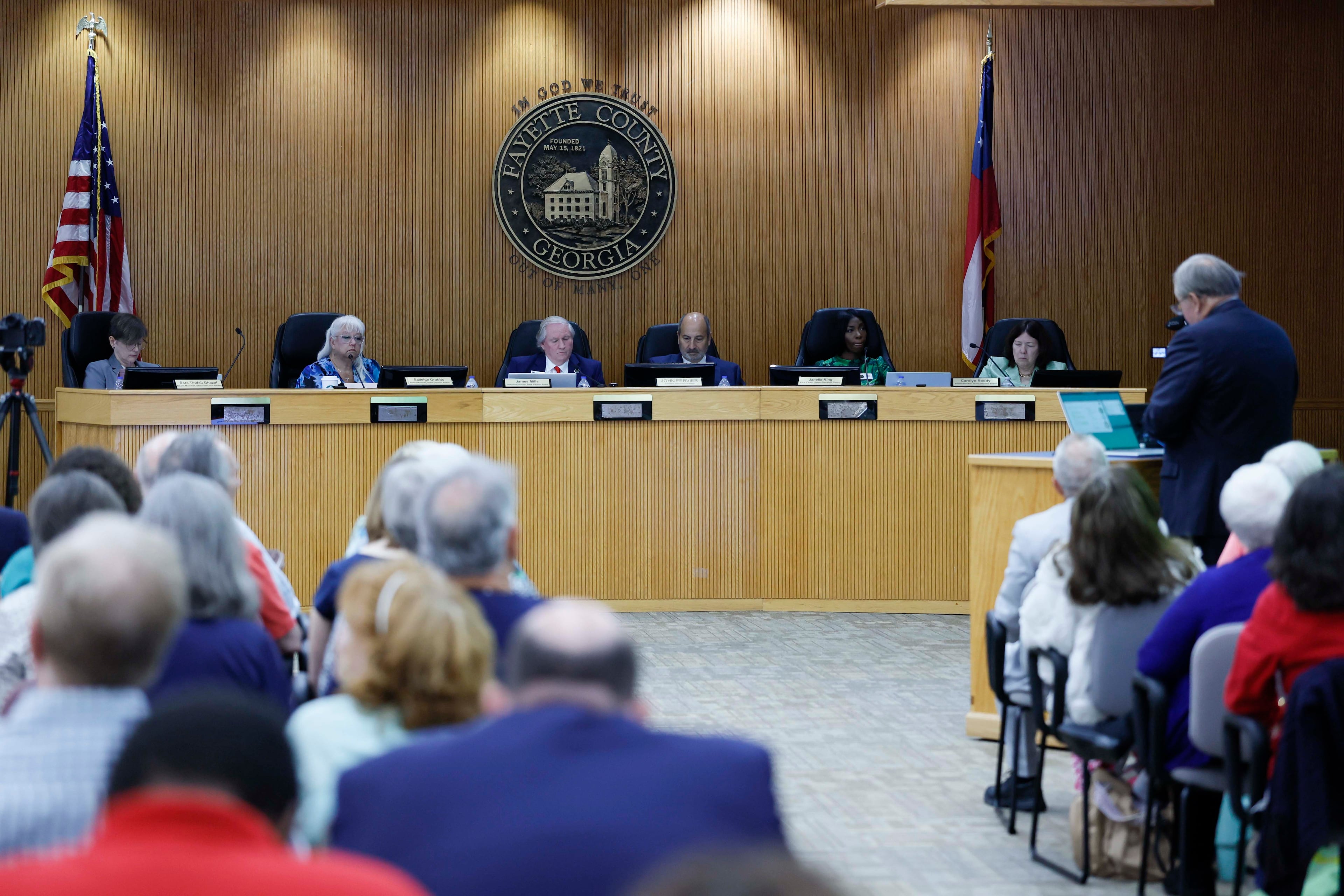
Ghazal said the letter went “far beyond” the resolution’s scope.
But Republican Vice Chair Janelle King pushed back, arguing Mills stayed within the bounds of Republican board member Carolyn Roddy’s broad resolution.
“I look forward to seeing the letter knowing what is in it because it was read and expressed through the resolution,” King wrote in an email to the board.
Roddy did not respond to a request for comment.
But while the resolution centered on voting systems, Mills’ letter also asked the Trump administration to investigate and hold accountable Raffensperger and other election officials.
It’s unclear how the Justice Department, which does not control the state’s voting apparatus, would carry out the changes on a timeline officials and experts say is impossible. There has been no public response from federal officials to Mills’ letter.

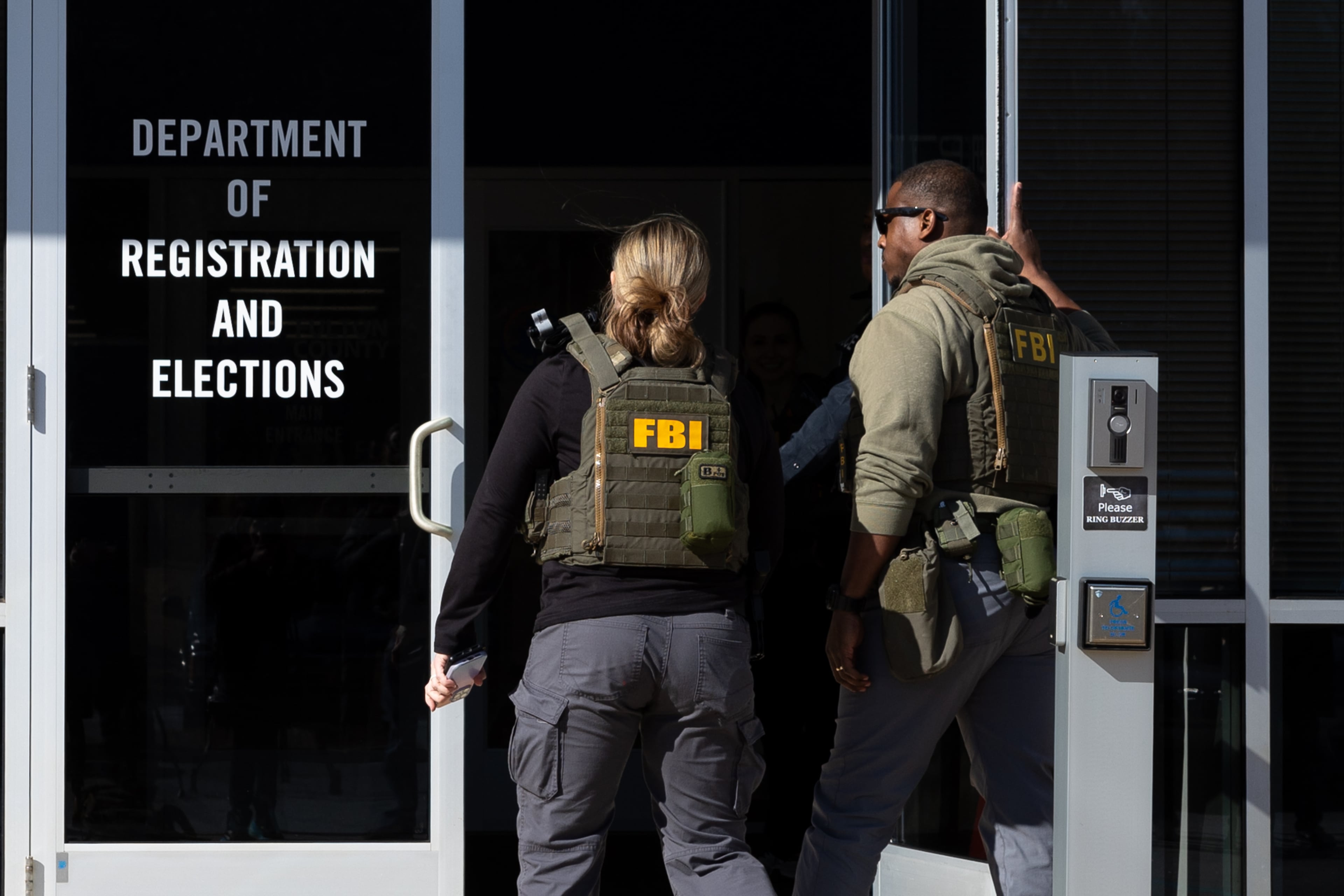
It reached an administration that has acted in Georgia before. Early this year, the FBI seized 2020 election records from Fulton County as part of a criminal investigation. Judges blocked the administration’s effort to obtain access to the identities of thousands of Fulton’s 2020 election workers and, separately, sensitive information on the state’s voters.
The letter offered new ammunition to those who have long cast doubts about Georgia’s elections. Prominent election deniers have echoed Mills’ requests for system upgrades to tens of thousands of voting touchscreens and thousands of scanners and have demanded federal intervention. They’ve cast intervention in Georgia as a way to secure elections.
Unilateral moves
Mills became executive director in June 2025, and according to the State Accounting Office’s records, he makes $120,000 annually.
The board’s tasked with reviewing complaints of alleged election violations and making election rules. In 2024, the board drew national attention ahead of the presidential election for passing a slate of sweeping rules. The Georgia Supreme Court overrode several of the board’s rules, determining members had overstepped their authority.
Mills’ time in the job has been marked with a series of power struggles and disputes over board operations.
The appeal to the Trump administration wasn’t the first time he’d acted without approval. Several board members say they never signed off on a separate letter before it was sent to the secretary of state’s office requesting access to sensitive voter information and the Georgia Registered Voter Information System. The Sept. 18 letter said the information would be used by staff for investigatory purposes.
Still, the letter said it was “authorized at the direction of the State Election Board.”
Mills has since retroactively asked board members to sign the missive — at least three have told the AJC they’ve refused.
Disconnects between the board and the executive director have also surfaced in the board’s years-long effort to access Fulton’s 2020 election records. And at times, infighting has turned personal. Mills has publicly challenged Fervier, the Kemp appointee, to “be a man” and accused him of being a “dysfunctional, dishonest chairman.”
Mills has also repeatedly hired staff without the board’s knowledge, according to several board members, who said they’ve learned of new hires secondhand on multiple occasions.
“He has yet to send out anything to the board saying ‘I’m going to hire this individual,’” Fervier said.
King, an appointee of House Speaker Jon Burns, pointed out that Mills is under no obligation to do so. That’s because in 2025, King and two other members delegated Mills the unilateral power to hire anyone as he deems necessary.
Ghazal, the panel’s lone Democrat, signaled her support for ousting Mills.
“He has so denigrated the position of the board and so undermined public confidence to be seen as a neutral, nonpartisan actor in adjudicating election issues that we are no longer able to perform our duties for the public,” she said.
Grubbs, the first vice chair of the Georgia Republican Party, and Fervier wouldn’t say whether they would support ousting Mills.
“To this date, there’s not a majority, apparently, that wants him removed,” Fervier said.