The post-Labor Day questions hanging over Georgia politics


Labor Day once traditionally marked the start of campaign season. That hasn’t really been true in Georgia, where campaign season never seems to end.
But the holiday has brought a more urgent tone from the candidates. The top contenders are suddenly rolling out more events, policy plans and attacks as the Nov. 3 election draws closer.
This week alone, all four nominees in Georgia’s marquee races are making big moves.
- Republican U.S. Senate nominee Mike Collins is set to speak Wednesday at the GOP’s midterm convention in Dallas.
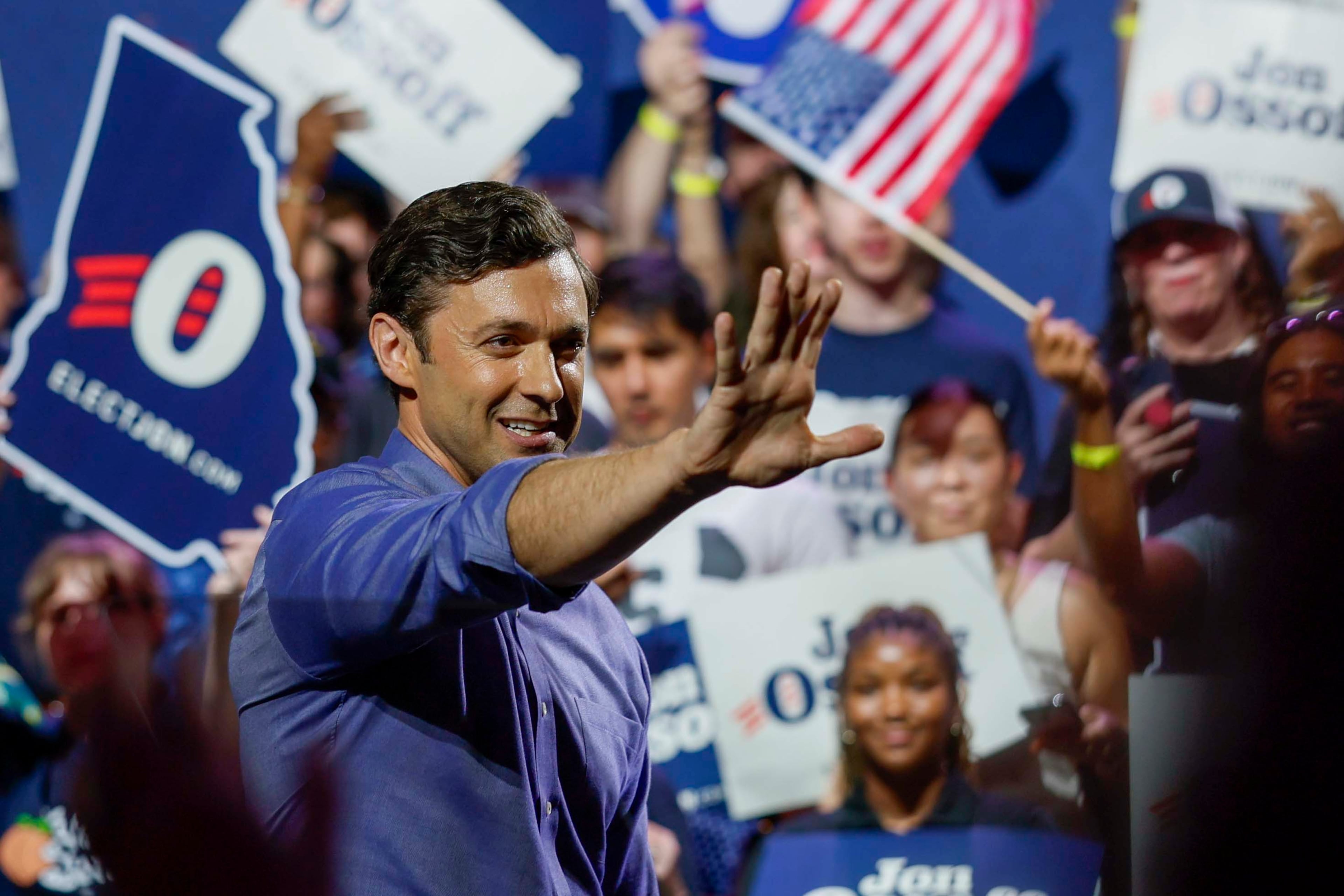
- U.S. Sen. Jon Ossoff and Democratic nominee for governor Keisha Lance Bottoms scheduled a joint rally in Athens on Sunday.
- And Republican nominee for governor Rick Jackson unveiled what he calls “intelligent Medicaid expansion.”
Here are the biggest questions we’re watching in those races down the stretch.
Will Collins drag down the GOP ticket?
The quiet rumbling in Republican circles these days isn’t just whether Ossoff can beat Collins. It’s how much the GOP nominee’s struggles could hurt everyone else on the ballot.
Plenty can change before November. But right now, Ossoff leads Collins in every major public poll, holds a crushing fundraising advantage and is running a no-mercy campaign designed to widen the gap. Some Republicans are openly doubting Collins’ chances. Others are keeping their distance.
In a sign of just how tough his position has become, Collins recently touted a poll showing him 7 percentage points behind Ossoff simply because it improved on an earlier double-digit deficit.
Republicans fear an Ossoff rout would do more than secure the Democrat another six years and fuel further 2028 presidential talk. It could also swamp Republicans down the ticket.
That anxiety was bubbling beneath the surface at a recent Jackson event. Many of Jackson’s backers are confident the billionaire businessman’s enormous financial advantage, foster care backstory and campaign strategy would normally give him an edge over Bottoms.
But Jackson doesn’t get to run his race in a vacuum. And some of his allies are openly wondering if he can still win if Ossoff carries Georgia by 6 points. What about 8 points?
And what happens farther down the ticket? Some squeamish Republicans say a Democratic takeover of the Georgia House isn’t out of the picture if Ossoff scores a runaway victory.
That helps explain why Ossoff’s team is keeping its foot on the gas. His campaign is trying not just to win, but to prevail by a margin big enough to reshape the political climate down the ballot.

Can Jackson hold the GOP base without losing swing voters?
Four years ago, roughly 200,000 Georgians split their tickets between Republican Gov. Brian Kemp and Democratic U.S. Sen. Raphael Warnock. Some analysts think that number could be even higher this year.
Jackson is making a direct play for those voters by leaning on his foster-care-to-billionaire story while also battering Bottoms over her record as a one-term Atlanta mayor.
But it’s not easy proclaiming that you’ll be “Trump’s favorite governor” while also trying to win over skeptical independent voters who voted two or three times against the president.
That helps explain why Jackson has lately put so much emphasis on affordability and public safety measures — and far less on Trump.
That doesn’t mean Jackson is washing his hands of Trump. He still touts the president’s blessing, and his allies hope to make peace with MAGA holdouts who distrust his agenda, starting with Lt. Gov. Burt Jones, his runoff rival.
But Democrats are working just as hard to erase whatever space Jackson tries to create between himself and Trump, pairing their “Slick Rick” attacks over his business record with a concerted effort to tie him to an unpopular president.
Can Bottoms counter the Jackson messaging machine?
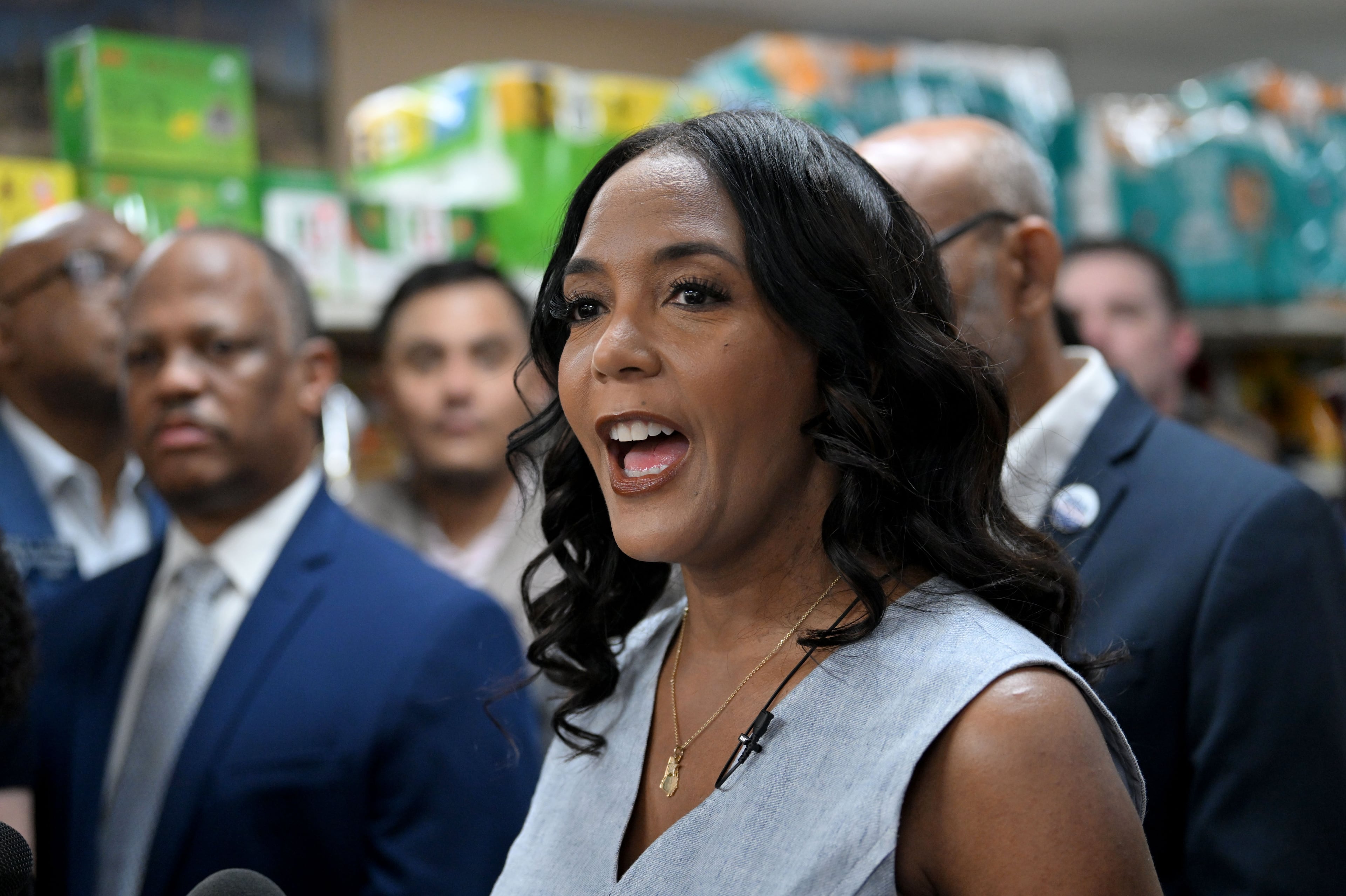
The former Atlanta mayor has been on something of a media blitz lately.
There have been sit-downs with the “Politically Georgia” podcast and other outlets, a Labor Day speech to union organizers and a steady stream of campaign events. Her recent policy rollouts include proposals aimed at lowering grocery taxes, pausing data center development and boosting transit funding.
That’s partly just what campaigns do after Labor Day.
But there’s also a financial reality behind it. Jackson can spend at a level Bottoms simply cannot match. He’s already snapped up $87 million worth of airtime, and his pockets are deep enough to buy more if he wants.
Bottoms has to find other ways to break through.
A news conference where she unveils a policy and unloads on Jackson can generate coverage without buying a single television spot. And Bottoms has generally been willing to stick around and take reporters’ questions, giving her more chances to make headlines.
Jackson’s fortune gives him a different kind of flexibility.
He can still generate plenty of free coverage with a well-timed announcement or policy rollout. But he can also spend staggering sums to tell voters exactly the story he wants them to hear. Over and over again.
One ad can hammer Bottoms over issues from her tenure as Atlanta mayor. The next can introduce those voters to the boy who bounced through foster homes before forging a healthcare empire.
Meanwhile, he’s building a massive grassroots turnout machine modeled after Kemp’s infrastructure.
That sets up the most interesting tactical fight of the fall: Can Bottoms generate enough attention to compete with a candidate who has the money to both buy it and reinforce it on the ground?

Will Collins try to pivot from base-first politics?
When Collins heads to Dallas on Wednesday to speak at the Republican Party’s midterm convention, he’ll be one of the rare Georgia Republicans at the event.
Jackson is sitting this one out. So is just about every other statewide contender.
That fits the campaign Collins has run from the start. He’s long cast himself as a “MAGA warrior” proud to back Trump on every debate from the Iran war to trade wars.
There’s a logic to that. Collins needs MAGA voters to turn out at near-presidential levels. He needs national GOP donors. And, perhaps most importantly, he needs Trump’s loaded super PAC to decide Georgia is worth a major cash infusion.
But Republicans are increasingly worried that the voters Collins needs aren’t the Republicans who already love Trump. They’re independents and reluctant Republicans who have repeatedly split from Trump — the very bloc that has made Georgia such a headache for the GOP.
Most statewide Republican nominees try to widen their campaign’s aperture after a primary. The question is whether Collins keeps betting that a base-first campaign can work one more time.

What effect will Trump have on the rest of the ticket?
Trump, of course, isn’t on the ballot this year. But Democrats would very much like Georgia voters to behave as if he is.
Republicans spent the primary proving their loyalty to him. That made strategic sense. An AJC poll this spring found 81% of likely GOP voters approved of Trump’s performance.
The general election brings a far different calculation. Polls show his ratings dropping among independents and moderates. And there’s even some evidence that the number of Republicans who identify themselves as “MAGA” is waning.
Now every Republican has to answer some version of the same question: How closely do you embrace Trump when the voters you need may be the ones most frustrated with him?
Collins has responded by leaning in. Jackson is navigating a balancing act. And Republicans running in competitive suburban districts would probably be just fine spending the next eight weeks talking about property taxes and education policy rather than whatever Trump said that morning.
Democrats are trying to make that impossible. Their bet is that voters unhappy with Trump will carry some of that frustration into races for marquee federal posts and legislative backbench seats.
Because if voters decide the midterm is truly a referendum on Trump, Republicans from the top of the ticket to swing legislative districts will have a far harder time making their elections about anything else.