Rick Jackson gets emotional. It might make him the next governor of Georgia.


It happens every time. No matter where, no matter when, Rick Jackson — the GOP billionaire candidate for Georgia governor — starts to choke up.
It usually happens when he talks about his troubled childhood growing up in Atlanta’s Techwood Homes that included a missing father, an abusive mother, five foster homes and 13 schools. But sometimes the tears come when Jackson talks about helping children in foster care or wanting to be a “voice for the voiceless,” which is the way he says he felt as a young boy growing up in poverty.
It’s the exact opposite of what you’d expect from a billionaire healthcare executive who exploded onto the political scene this year with $50 million worth of attack ads and a promise to spend “whatever it takes” to become the most powerful politician in Georgia.
Donald Trump visits Georgia
What to know: Donald Trump’s policy pitch turns into a Georgia campaign rally
Opinion: Rick Jackson is a crier. It might make him the next governor of Georgia.
Key takeaways: Endorsements, absences and the Braves
Video: Rick Jackson pledges an extra $1,000 for Georgia children
Trump Accounts: Here’s how they work
The response: ‘A slap in the face’: Some in Wheeler High community oppose Trump’s visit
But the Republican’s penchant for emotional moments may also be what convinces Georgia voters that he is more than his bank account or the candidate who promised to be “Donald Trump’s favorite governor,” whatever that means. Instead of the heartless rich guy he’s described as by his opponents — Democrats and Republicans alike — Jackson, at every event, seems to be wearing his heart on his sleeve.
I first noticed Jackson fighting back tears during his kickoff rally at the opulent corporate campus he built in Alpharetta. Getting emotional is not too unusual for candidates, in big moments especially. But his eyes welled up again at a meet-and-greet at a Golden Corral when he realized his brother and sister from his adopted family had come unannounced. He had to stop to compose himself before pointing them out to the audience. His brother and sister cried, too, and so then did a number of attendees.
Jackson teared up again during his victory speech on election night and again at a post-runoff rally in Cleveland, Georgia. That’s where he struggled to get through his explanation about wanting to defeat Keisha Lance Bottoms because he felt she abandoned Atlanta as mayor.
“I have, because of my background, severe abandonment issues,” he said, followed by a long silence. “And let me tell you one thing. I will never abandon you.”
He never cries during the whole speech, and I doubt the waterworks are flowing at Jackson Healthcare board meetings when they’re talking about profits and losses. Even his own campaign speeches can be lancing when he talks about the people he’s running against. He described Lt. Gov. Burt Jones “as lazy as the day is long.” And Bottoms, he says in a campaign commercial, “let Atlanta burn.”
But when he’s talking about his background or other people struggling, the emotion is right on the surface.
Speaking at the packed rally ahead of President Donald Trump’s appearance at Wheeler High School Wednesday, Jackson stopped more than once to hold back his tears.
His voice broke when he recounted an anonymous donation he once received as a boy in foster care. “It changed my life because somebody believed that I mattered.”
Talking about the $1,000 “Trump Accounts” that families now receive to invest for their newborns, he slowed down again.
“It’s more than an account. It’s a message, that ‘You are seen and you matter.’”
Of course Jackson isn’t the only emotional man in politics, although he may be the most emotional I’ve ever seen.
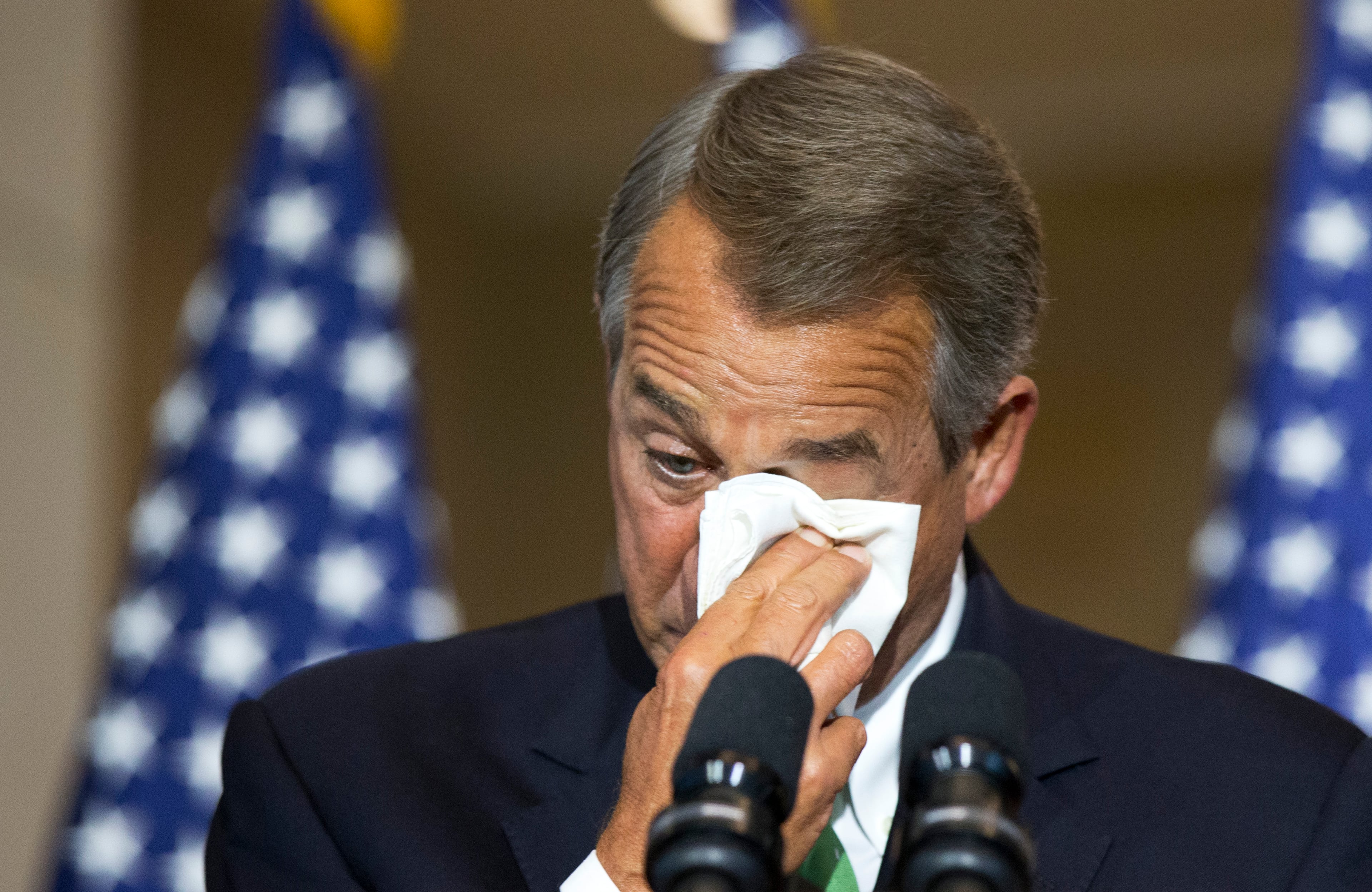
Former U.S. House Speaker John Boehner was famously unable to talk about children, his family, or his childhood in Ohio without deep wells of tears pooling in his eyes. When Pope Francis spoke to Congress in 2015, Boehner needed his white handkerchief to mop up his raw emotion after two decades of trying to get a pope to Congress.
Former Gov. Nathan Deal was also known to be squishy on the inside. His landmark legislation on criminal justice reform came directly from being moved by inmates’ personal stories and his Christian belief in redemption. He often teared up recounting those conversations.
Although female candidates are rarely afforded permission to break down on the job, tears from Boehner, Deal, and now Jackson, are a reminder that there is a real person in the job, or trying to get it. In Jackson’s case, it’s also at the center of his promise to voters.
“Your beginning is not what defines your ending. Period,” he said as he wrapped up at the Trump rally. “You’re worthy. You’re somebody. You can make it.”
He later announced that if he’s elected, he’ll push to have Georgia create its own $1,000 investment accounts for children, too, including those in foster care. “I believe the Legislature will approve that,” he said. “If they don’t, I will personally donate it myself.”
Political candidates often seem like robots, including Jackson himself in some of his campaign ads. But the Rick Jackson voters meet in person see anything but. That (and $110 million) is why he made it through the GOP primary. It’s also likely to be his strongest asset in the general election as he goes up against Bottoms and tries to convince Georgians that he’d be more than Trump’s favorite governor. He’d be one of them.