A tactical GOP retreat comes with a cost in Georgia

PERRY — Republican leaders tamped down two of Georgia’s most politically explosive issues before the 2026 election. But that doesn’t mean the party’s activist base is happy about it.
The decision to delay a contentious overhaul of the state’s political maps and postpone a rewrite of how ballots are counted could de-escalate two potent campaign issues for Democrats in an election year already shaping up as a referendum on President Donald Trump.
But the strategy comes with a cost. It is infuriating some of the GOP activists who spent months demanding Republicans wield their advantage during the special session that wrapped up Tuesday.
“The special session confirmed what grassroots conservatives already knew,” said Kylie Jane Kremer, a longtime GOP activist. “Republicans hold every lever of power in this state — the governor’s office, both chambers, every statewide office — yet the reforms our voters were promised, QR-coded ballots included, never come.”
Just weeks ago, many conservative activists expected Republican lawmakers to redraw congressional and legislative districts to help the GOP gain as many as two additional U.S. House seats in the 2028 cycle.
They also anticipated a sweeping move away from Georgia’s QR code-based voting system, which has long been distrusted by many Trump supporters and election skeptics.

Instead, they are getting neither. Republican legislative leaders have rejected calls from Gov. Brian Kemp and Lt. Gov. Burt Jones to redraw political boundaries while litigation over the state’s maps remains pending.
And lawmakers approved a scaled-back voting measure that would delay an impending ban on QR code vote-counting technology until January 2028 while also calling for hand recounts in for Georgia’s races for governor and U.S. Senate.
The result leaves the touchscreen voting system — long maligned by Trump’s base — intact through this year’s election cycle while shifting responsibility for future changes to the next governor, secretary of state and Legislature.
Republican leaders frame the decisions as pragmatic. House Speaker Jon Burns said he concluded Kemp’s push to redraw district lines during the special session was “not the right path forward for our state at this time.”
“We believe that it is important to do things the Georgia way — responsibly, transparently and with ample opportunity for public input, just as we do with every other issue that comes before the House,” he said.

A similar argument has emerged around election law. Many lawmakers worried that making major changes to voting procedures in the middle of an election cycle could create confusion and invite criticism.
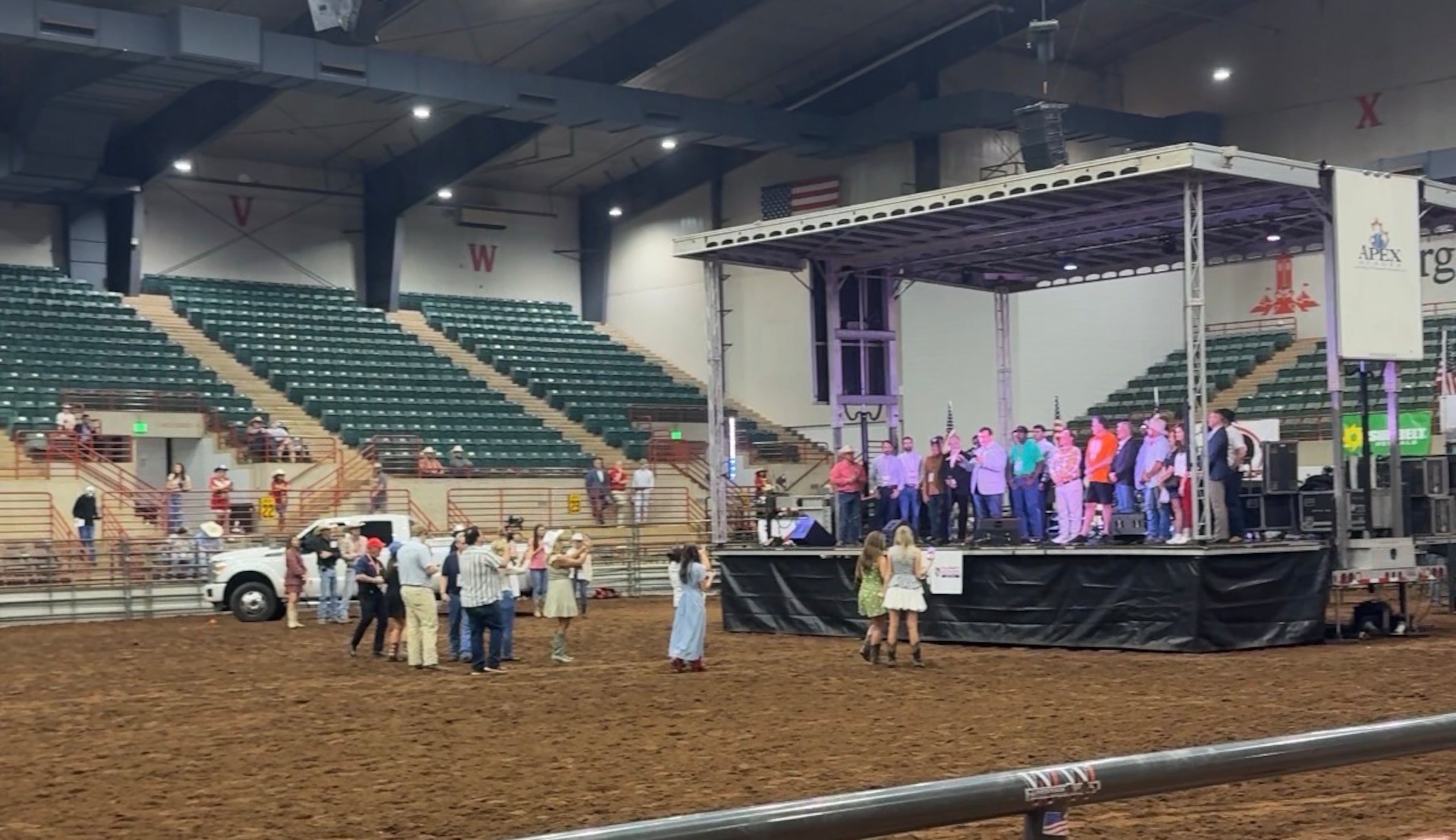
But for many activists, the decisions represent another broken promise. The disappointment was a frequent topic of discussion at the Georgia GOP’s annual fundraiser in Perry, which took place hours after lawmakers convened for a rare Saturday special session.
“I am not thrilled with any of this. We need hand-marked paper ballots. We don’t need to delay,” said Salleigh Grubbs, the first vice chair of the Georgia GOP who is also a member of the State Election Board. “I’m also realistic. It’s the middle of the summer. There’s not a lot of time allotted for the session. But we need a change.”
Brian Pritchard, a longtime activist and former state GOP vice chair, put it a different way: “People are furious that no matter what they say at the end of the day the QR code will still be on their ballot.”
Behind the scenes, Republican leaders have sought to reassure activists that both issues could resurface. They point out that Kemp could call another special session in December to redraw political maps, especially if Democrats win the governor’s race. And they note that the QR code system is on the way out.
Still, some conservatives see the decisions as evidence that GOP leaders are unwilling to use the power they already have. Kremer pointed to low turnout in recent runoff elections and sparse attendance at the Perry gathering as evidence of growing disillusionment.
“The result is an enthusiasm collapse you can measure. A statewide runoff drew fewer than 1 in 14 active voters, and a rodeo our own party hosted in Perry played to empty stands,” she said. “Those empty seats were a referendum.”