Georgia’s special legislative session ends with no redistricting

The Georgia Legislature on Tuesday resolved an elections mess of its own making, voting to continue using a touchscreen voting system for the midterm elections despised by President Donald Trump and his allies.
The bill was the only major piece of legislation to pass during a five-day special session that began with protesters marching in the street to oppose a Republican push to redraw Georgia’s political maps for the 2028 election cycle.
Republican leaders rebuffed Trump and Gov. Brian Kemp by refusing to take up the issue, fearing it would hand Democrats a potent campaign issue in November. Instead, they spent five days bickering about how to comply with a looming July 1 deadline for Georgia’s vote-counting system.
The fix lawmakers agreed to delays that deadline to Jan. 1, 2028 — effectively punting the problem to a new governor, secretary of state and Legislature. The measure now heads to the term-limited Gov. Brian Kemp, who is expected to sign it into law.
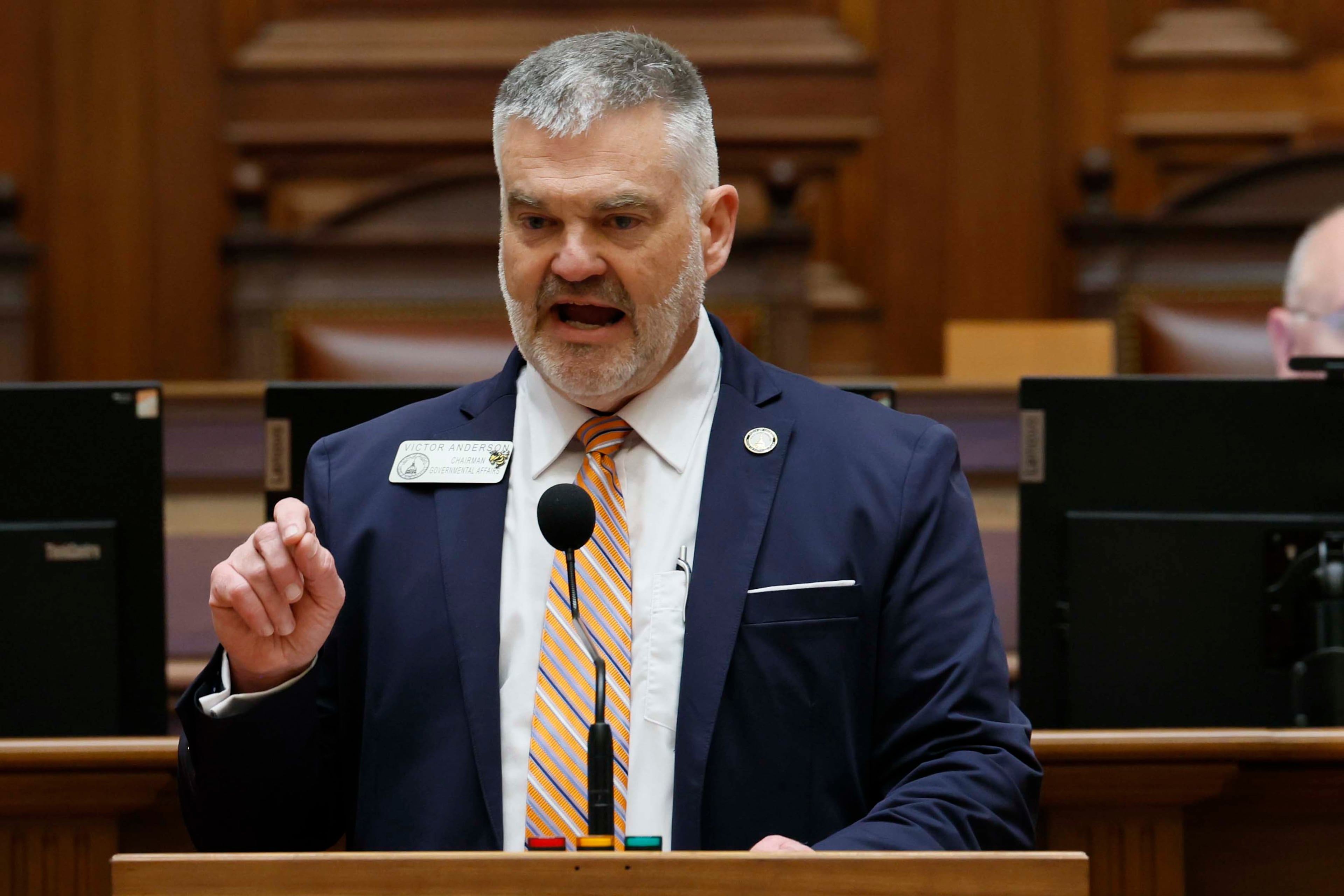
“This bill is not the ultimate solution,” said state Rep. Victor Anderson, R-Cornelia. “This bill solves an immediate conflict we have and lays out a path to achieve the most election integrity, the most accuracy, the most transparency that we can have going forward when we implement the next uniform voting system in Georgia.”
Voters in Georgia cast ballots by using touchscreen system, which prints a paper ballot with a QR code. Machines then read that QR code to tally the number of votes for each candidate.
But Trump and his supporters have long distrusted these QR codes because voters cannot read them to verify their ballot is correctly counted. In 2024, Georgia’s Republican-controlled Legislature, passed a law banning QR code vote counting beginning July 1 of this year.
But lawmakers never approved an alternate vote-counting method to comply with the law. If lawmakers did not delay the deadline, Anderson warned, it was likely election workers in Georgia’s 159 counties would have to count millions of ballots by hand in November — a costly move that could significantly delay results.
The legislation would also establish a committee to recommend specifications and standards for a new voting system with “equipment based upon hand marked paper ballots” printed on demand by 2028.
The debate over bar codes and voting machines dates back to Trump’s false claims that the 2020 election was stolen from him. He and his supporters have repeatedly assailed Georgia’s voting machines, including claims of foreign interference in elections and vote flipping.
Senate Minority Leader Harold Jones II, D-Augusta, said the bill will not solve what he sees as the biggest reason some Georgians aren’t confident in elections: Republicans’ unwillingness to dispute groundless conspiracy theories.
“This bill may ease some concerns, but here’s the problem,” Jones said. “No matter what happens in the next election, if people come out and start these kind of theories, and no elected official in the majority party has the guts to say ‘That’s not true’ and fight against that, then, no, this bill will have no impact at all.”
Other longtime election security advocates have criticized the touchscreen machines for vulnerabilities that they say could lead to tampering or hacking to alter election results. State election officials say that such flaws could not be exploited in a real-world setting.
Georgia has never paid for security upgrades to address those known security flaws.
Just months ago, Senate Republicans supported legislation that would have gotten rid of voting machines and switched to hand-marked ballots — a priority for Trump and his supporters. But local election officials warned against a major overhaul in the system so close to an election. Republicans eventually agreed to delay the move.
The fix, however, didn’t satisfy all hand-marked ballot proponents. “It is creating different issues and a burden on counties,” argued Republican State Election Board member Salleigh Grubbs.
Another part of the legislation would mandate hand recounts of the top two constitutional officer races on the ballot if candidates in those races are within 0.5% of each other. The state would reimburse counties for the cost of conducting the hand counts.
“While unnecessary hand counts can diminish voter confidence in election results, this legislation is a critical step toward transparent and trustworthy elections for the remainder of this year and beyond,” said Bartow County Elections Director Joseph Kirk, president of the Georgia Association of Voter Registration and Election Officials.
Staff Writer David Wickert contributed to this report.