With FBI raid, Trump may drive Black voter turnout in Fulton County

U.S. Sen. Jon Ossoff made headlines at the 10 a.m. service of Atlanta’s historic Big Bethel A.M.E. Church on Sunday when he told worshippers the recent FBI raid to seize Fulton County’s 2020 ballots was part of a deliberate effort to suppress Black votes in Georgia.
“Why Fulton?” Ossoff asked. “In part, for the same reason this president posts videos that depict Barack and Michelle Obama as apes.”
The fact that Black voters had helped eject President Donald Trump from office may have outraged him more than the fact he lost Georgia in 2020 in the first place, the Democratic senator said. “And so he tries to delegitimize your exercise of power. With elections approaching, he tries to suppress it.”
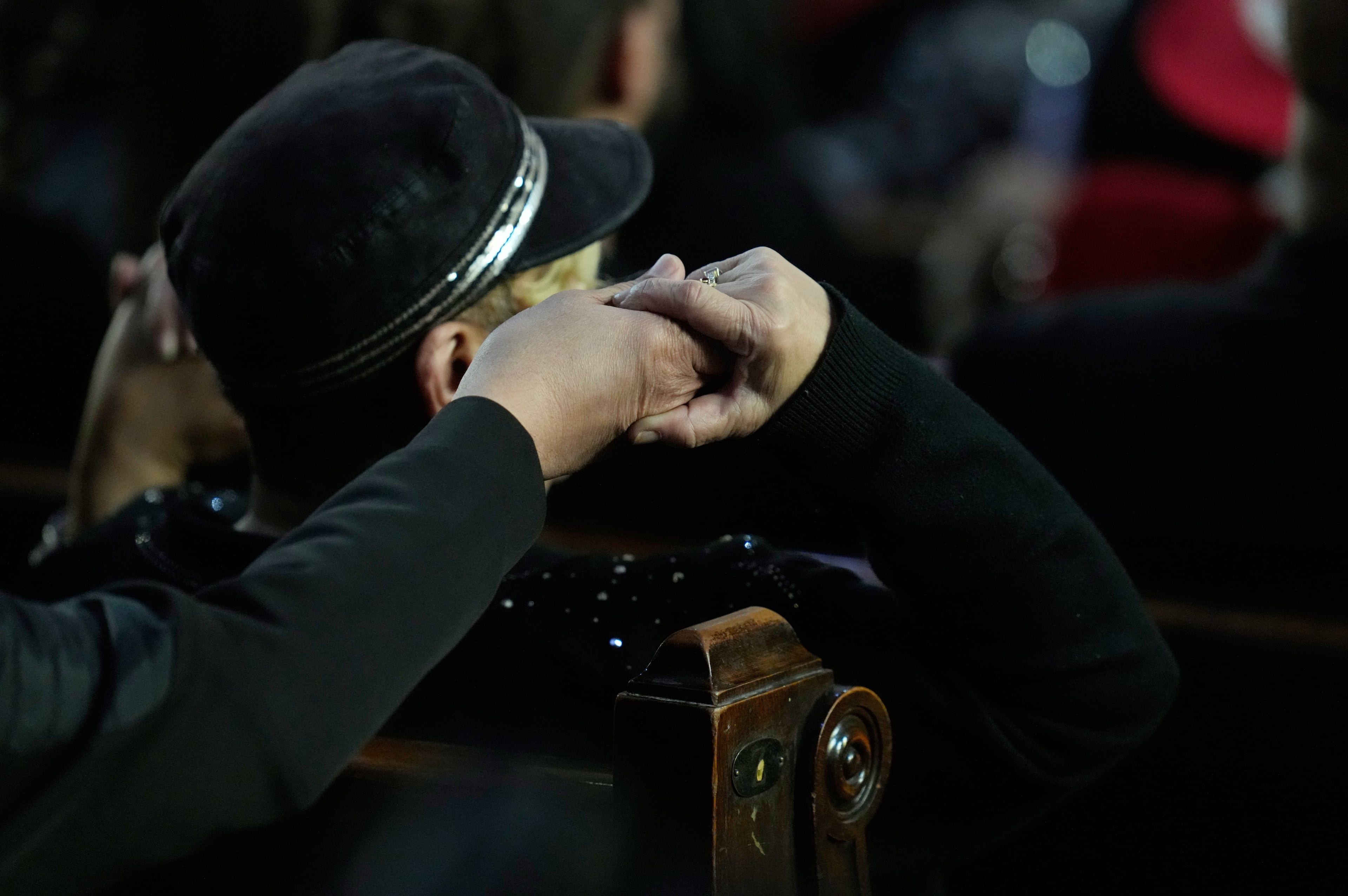
But Ossoff didn’t have to tell the people in the pews what they already believed to be true — that the raid of Fulton ballots was just another example in a long history of government officials trying to keep them from having their votes counted and their voices heard.
“The raid the other day, to me, it’s just like a slap in our faces,” said Tracy Franklin, who attended Sunday with her mother and grandchildren. “My mom, she’s 87, she fought hard during the movement. When is it ever going to end?”
The “movement” of course, is the Civil Rights Movement, the fight for equal rights for Black Americans that unfolded over decades just outside the doors of Big Bethel on Auburn Avenue, and oftentimes inside the church itself, even after the Voting Rights Act passed in 1965. That fight, for the people at church last Sunday, has never really ended.

“For me, it’s two steps forward and two steps back,” Franklin said of the FBI raid and Trump’s ongoing, and disproven, claims the 2020 election was rigged against him. “It was six years ago, why can’t you just move on?”
But she added that nothing Trump has said or done would, or could, stop her and her mother from voting in November. “Absolutely not.”
Dell Walker agreed. He had been with a group at Birmingham’s historic 16th Street Baptist Church the day before, the site of the 1963 Ku Klux Klan bombing in Alabama that killed four young girls attending Sunday school that day.
He said he sees the latest events in Fulton County as another part of that ongoing history.
“I have to acknowledge that this is our time to say, these are our moments to say, ‘Hell no, it won’t happen,’” Walker said.
The Rev. Charmaine Purvis was with the group in Birmingham, too.
“We cannot take it for granted all the things that are being done to dismantle voting rights,” she said. “With strength, with faith determination, and with action, we press on. Because that’s what God told us to do.”
To a person, I heard from churchgoers who said they believed the raid in Fulton County will make Black voters only more determined to cast their votes in 2026, not less so. If the intent of the FBI’s raid was to discourage Fulton County voters or scare them from going to the polls, it does not appear to be working.
“I’m absolutely voting,” said Richard Marion, predicting the FBI raid would only encourage others to do the same. “Anything to get rid of him and his people and the people he supports.”
The theme of the day was “Social Justice Sunday,” and the message from the pulpit echoed what the people in church already had on their minds.
“No one ever imagined that Raphael Warnock and Jon Ossoff could be elected to the United States Senate on the same day,” said National Urban League president Marc Morial. “They were so shook that the campaign to steal began, the suppression campaign got accelerated, and we have to say no, and we have to fight.”

Fulton County District Attorney Fani Willis spoke, too, more than a year after the 2024 speech at Big Bethel that Trump allies used as part of their successful effort to disqualify her from prosecuting Trump for his attempt to overturn Georgia’s 2020 elections.
“You understand that you are living in a time of our generational test,” Willis told the church. “This is our Selma. It’s our Birmingham. It’s our March on Washington.”
Trump and his allies have long denied they are engaging in voter suppression and, in fact, accuse Democrats of being the ones stealing elections and committing voter fraud.
But the people at church don’t need Democrats or Republicans to tell them about the history they’ve lived or the battles they’ve fought — and continue to fight to this day.
About the Author
Patricia Murphy is the AJC's senior political columnist. She was previously a nationally syndicated columnist for CQ Roll Call, national political reporter for the Daily Beast and Politics Daily, and wrote for The Washington Post and Garden & Gun. She graduated from Vanderbilt and holds a master’s degree in journalism from Columbia University.