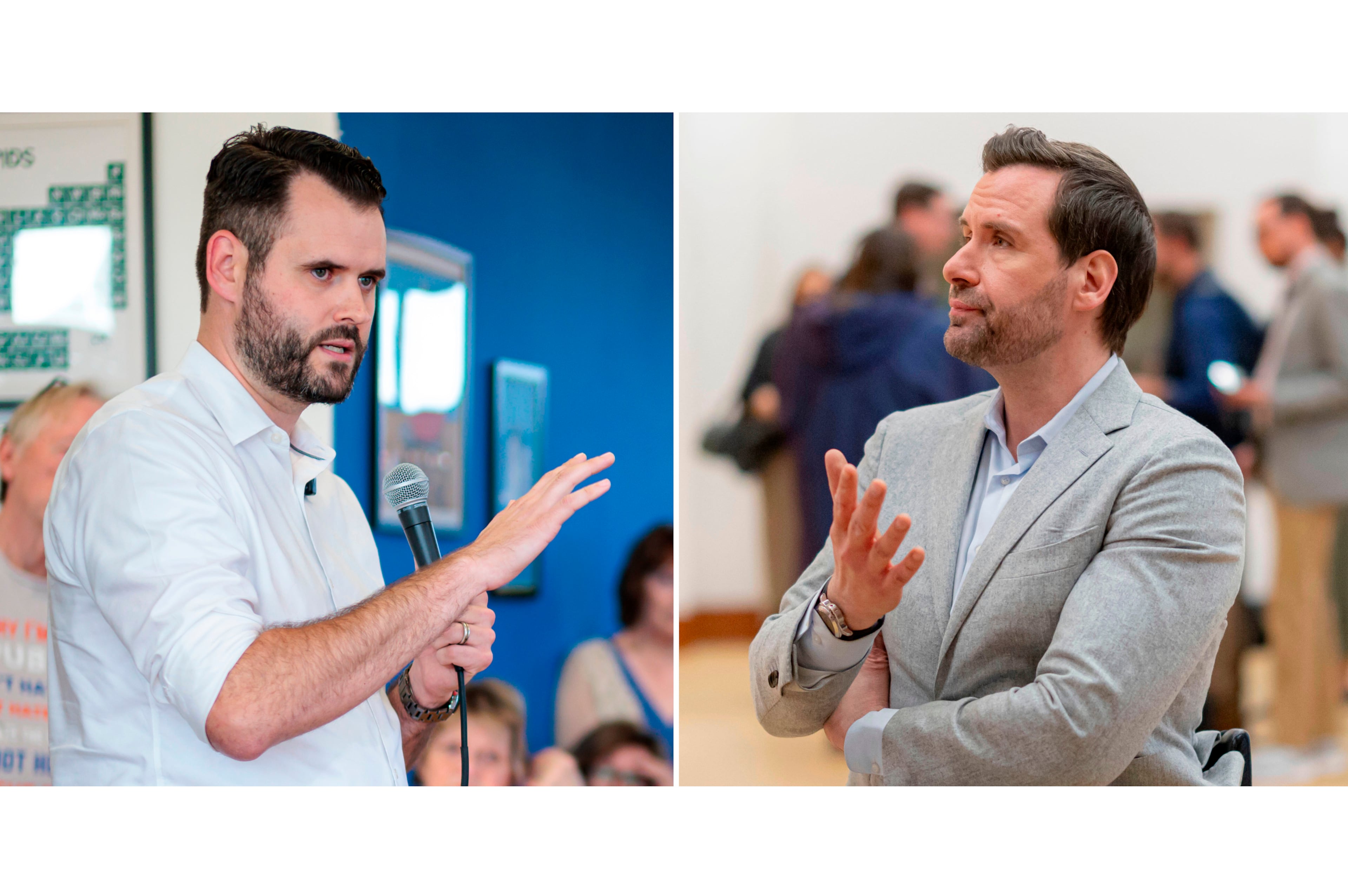
As women take majority on Austin City Council, staff warned to expect more questions, longer talks
- Woman stabbed by former boyfriend, engaged to the man who saved her life
- Refund may be in order for Verizon, Sprint customers
- Mom discovers toddler's eye cancer after snapping iPhone photo
- Bedtime snack of wine can help you lose weight, study claims
- Student sues university after failing course twice
The new 10-1 City Council in Austin has meant all sorts of changes at City Hall, from a bigger dais to more meetings.
But there’s one change the new system has brought to City Hall that city staff needed extra training to cope with:
Women.
As Beyonce would say: “Who run the City Council? Girls!” The newly-elected 10-member City Council, plus the mayor, is the first majority female City Council in Austin’s history, with seven women and four men.
But apparently this represented such a huge change in governance that the city manager's office thought the city staff who regularly interact with the City Council needed extra training – in the form of a two-hour training session in March with two speakers from Florida – on how to talk to a female-dominated City Council after decades of rule by men.
- Women ask lots of questions. He learned a valuable lesson on communicating with women from his 11-year-old daughter, who peppered him with questions while they were on the way to volleyball. "In a matter of 15 seconds, I got 10 questions that I had to patiently respond to," Allen said. Allen says female City Council members are less likely to read agenda information and instead ask questions. He says it's tempting to just tell them to read the packet, but "my daughter taught me the importance of being patient" even when they may already know the answer to the question.
- Women don't want to deal with numbers. Allen said in his city they used to have background information and financial analysis on the front pages of agenda forms. Allen says he normally would have presented the financial argument, but that his female commissioners would balk and say "Mr. Manager, I don't want to hear about the financial argument, I want to hear about how this impacts the whole community." He said that it may make good financial sense, but if he wants to get the votes, he has to present his arguments "in a totally different way."
- Women are taking over, Hillary Clinton will only encourage this. Allen talked about the general trend of more women getting involved in government, citing stats of more female mayors, for instance. "You see women in leadership positions…you will have to interact with them in a different way," Allen said. "I submit to you if Hillary Clinton just runs, just runs for the office, you are going to see even greater numbers in leadership position, if she wins, you will see even greater numbers starting at the bottom on top." He warns the staff to play nice with people on advisory boards or commissions because you never know when they become the elected official.
The city also brought along Dr. Miya Burt-Stewart, who owns a business development and marketing firm, to offer some training, and her session touched on the “Men are from Mars, Women are from Venus” philosophy:
- Openly acknowledge gender differences. Burt-Stewart says the author of the "Men are from Mars" book says men act on facts, women act on emotion. She also share such insights such as "Men have egos, women have wish lists," and that men are more likely to use a "dominating" management style than women, who use a "compromising" style. Men think women ask too many questions, Burt-Stewart said, and women often don't feel included. Men like acknowledgement, women want to be part of a team. Men, typically, communicate less often than females, she said.
- You must be as productive under this new leadership. Quite honestly, I wasn't sure what she was getting at, but she seemed to be saying that women can be more work than men, that men are more to the point and women want longer conversations. "You are probably expected to be at 1,000 percent where it used to be 100 percent," Burt-Stewart said.
Burt-Stewart then shifted the presentation to focus more on personality types and less on gender differences.
When contacted about this training session, offered on March 27 in City Council chambers, city spokesman David Green confirmed the impetus for the training was the “historic change in Austin’s municipal governance, including the election of a new, majority-women City Council” and that it was a “timely and relevant professional development opportunity.”
He also explained why there might have been so many women in the audience, soaking up advice about how to deal with their own gender. Though it was a training session offered to different departments and Council offices, several “internal employee affinity groups” were targeted including some for minorities and a group called “Woman-to-Woman.”
Green also clarified that the city did not pay the travel costs of Burt-Stewart and Allen, and only paid for the hotel costs for Allen in the amount of $457.70.
But after watching this training session (you can watch the video of the session yourself here), I couldn't help but wonder: Is it sexist to make these generalizations about women, or is there something to the idea that women do process decisions differently?
I reached out to Emily Amanatullah, who studies gender issues and is an assistant professor of management at the McCombs School of Business at the University of Texas, to help sort this out. “At the outset, it definitely feels archaic, like ‘The women are usually in the kitchen, how do we deal with them now that they have power,’ ” Amanatullah said. “It does reek of old norms and often it’s called benevolent sexism – they are not putting women down, but they are in a way.”
She said there is very little research that backs up the idea that women and men process decisions differently given the same set of circumstances. “There is no blanket men are like this, women are like that,” she said. “In certain contexts, you might see differences, but it’s not necessarily based on biological differences.” For instance, she has studied female assertiveness at the bargaining table. “We see that generally women tend to be a little less assertive, but that’s not because women are less assertive but because there are situational obstacles, they are punished if they assert themselves.”
Amanatullah did agree with one point that Allen made – women do tend to ask more questions. There is research that indicates that women communicate differently, and they are less likely to assert themselves in a group context or meeting, and are more likely to ask a question “as a way to get their voice heard. in a non-threatening, non-aggressive way,” she said.
It would be interesting to know if the training session led to “positive outcomes” for the city’s workforce, Amanatullah said. She suggested that a better way to handle that sort of training might be to focus less on gender differences and more on personality and leadership style differences. “Treating people as individuals rather than stereotypes,” she said.
We may never know what city employees thought of this training, because Green said the city didn’t do a survey of attendees. “However, many employees provided positive feedback about the presentation’s applicability and relevance to their careers,” Green said in an emailed statement. “Based on this feedback, it is clear that the value of the insights provided to our workforce far exceeded the minimal cost associated with providing this opportunity.”