AJC Sepia

54 years after 16th Street Church bombing, Patterson’s column still resonates

Mr. and Mrs. Chris McNair hold a picture of their daughter, Denise, 11, in Birmingham on Sept. 16, 1963, as they tell a reporter about the bombing of the 16th Street Baptist Church.
Sept 15, 2017

“A Negro mother wept in the street Sunday morning in front of a Baptist Church in Birmingham. In her hand she held a shoe, one shoe, from the foot of her dead child. We hold that shoe with her.”

That is how former Atlanta Journal-Constitution executive editor Eugene Patterson begin his daily column that ran on Sept. 16, 1963.

Eugene Patterson won a Pulitzer Prize in 1967 on the strength of his writing about the civil rights movement. His 1963 column, “A Flower for the Graves,” is considered his most powerful.

It was the day after four little black girls became victims of America's virulent racism, when Klansmen used dynamite to blow up the 16th Street Baptist Church in Birmingham and murder them.

Patterson used the power of his pen to write "A Flower for the Graves" and challenge the white South to do better. To be better. "Every one of us in the white South holds that small shoe in his hand," he wrote.
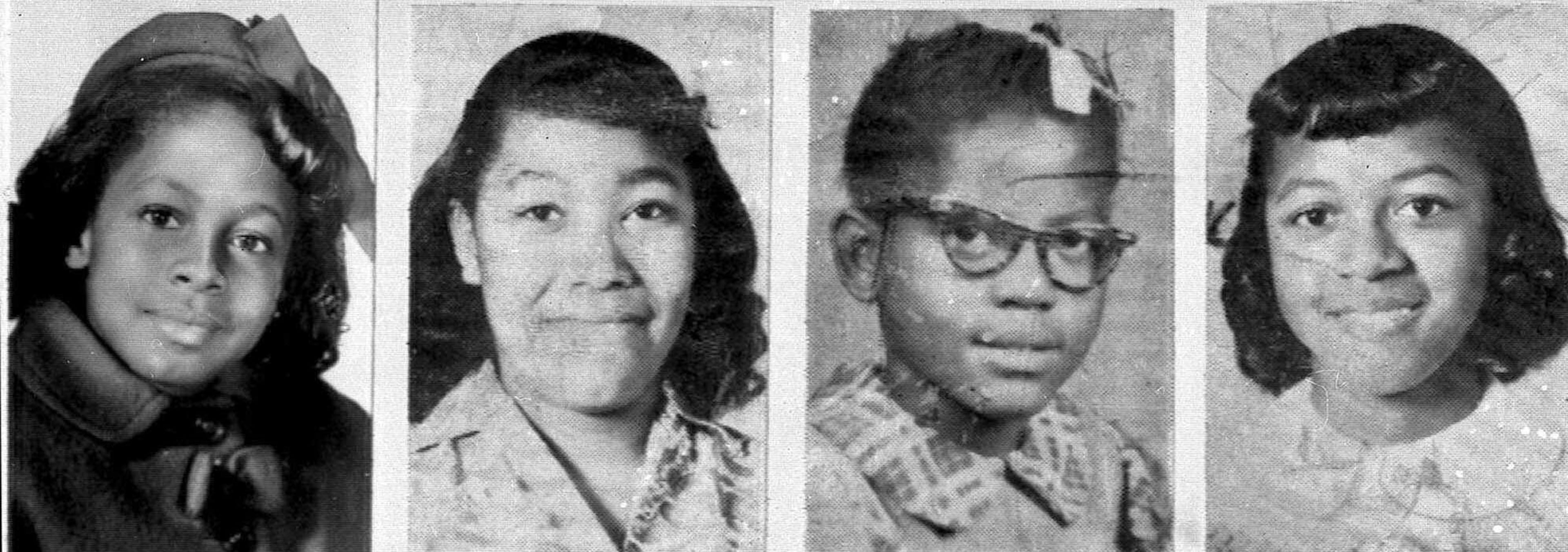
Killed when a bomb exploded at the 16th Street Baptist Church in Birmingham 50 years ago today were (from left) Denise McNair, 11; Carole Robertson, 14; Addie Mae Collins, 14; and Cynthia Dianne Wesley, 14.

Today, on the 54th anniversary of Patterson's column and the deaths of Addie Mae Collins, Cynthia Wesley, Carole Robertson and Carol Denise McNair, the AJC is re-running it in its entirety.

Log on to myajc.com to read "A Flower for the Graves."

»Local and indepth: How the AJC covered the civil rights movement

About the Author

Ernie Suggs is an enterprise reporter covering race and culture for the AJC since 1997. A 1990 graduate of N.C. Central University and a 2009 Harvard University Nieman Fellow, he is also the former vice president of the National Association of Black Journalists. His obsession with Prince, Spike Lee movies, Hamilton and the New York Yankees is odd.

More Stories