Medicaid more than medical aid
Editor's Note: Georgia plans to revamp its Medicaid program, possibly by expanding the use of for-profit companies to manage care for more recipients. Sunday's Atlanta Journal-Constitution reported on the potential advantages and risks to the poor and elderly for whom Medicaid is a lifeline. Today, we examine the effect on disabled Georgians who often get job training and other assistance through Medicaid to help them live independently.
People like Francel Kendrick once spent most of their lives locked inside state hospitals. Today, because of Georgia’s Medicaid program, Kendrick and thousands of disabled people like him can hold down a job and ride a city bus to their own homes after work.
Medicaid isn’t just a health plan for low-income people. These days, it’s a job training program, relief for a mom with an autistic son and crisis teams to help someone with schizophrenia live a stable life in the community.
State health officials who are redesigning the state’s $7.8 billion Medicaid program face an especially tricky task in dealing with recipients who rely on this broad spectrum of services. They are Georgians with developmental disabilities and mental illnesses, as well as foster children and people with disabling physical conditions that keep them in bed or in wheelchairs.
Theirs are the most complex cases in the Medicaid system. They also are the most costly. They account for one-fourth of the state’s Medicaid population but consume more than half the funding. Further complicating matters, the state is under a U.S. Department of Justice settlement to move mentally ill and disabled Georgians out of state hospitals because of an abuse scandal that erupted in 2007.
The state is contemplating a redesign to expand the use of for-profit managed care companies to oversee the services Medicaid provides. That could, in theory, help the state better afford a budget-busting Medicaid program by coordinating care in such a way that makes it more efficient and more effective.
Currently, about 1.2 million Georgians on Medicaid, mostly children and low-income pregnant women, are already enrolled with one of three companies with which the state contracts to manage their care. The change being considered could extend the concept to about 430,000 elderly and disabled Georgians.
Fashioning a new system that will work well for these Georgians while also saving money is expected to be one of the most politically challenging aspects of the redesign.
“A lot of our folks do have successful lives in the community, but it’s fragile,” said Pat Nobbie, deputy director of public policy at the Georgia Council on Developmental Disabilities. “It takes a lot of effort, and we want to make sure that holds up.”
Nobbie and many other advocates have spent months trying to influence the state’s revamp of Medicaid, expected to be rolled out this summer. State health officials say they are making a special effort to listen to these vulnerable Georgians and their advocates.
“There is potential for a lot of confusion ... a lot of fear of the unknown,” said Blake Fulenwider, deputy commissioner of the state Department of Community Health. “We recognize that and we’re going to make a very robust effort ... to get the message out and deal with issues quickly.”
The idea is to bring in a manager to look at the overall picture in a way that doesn’t happen now: someone who makes sure Medicaid beneficiaries take their medicine, get regular check-ups and manage chronic conditions, with a goal of holding down costs, saving taxpayers money and making a profit for the company doing the managing.
That equation could be hardest to pull off for the “aged, blind and disabled” segment of Medicaid, where per-patient costs are roughly $9,500 a year, compared with $3,000 for mothers and children.
“These are the people no private insurance company wants to cover,” said Russ Toal, a former director of Georgia’s Medicaid program who is now a health policy expert at Georgia Southern University.
Families and advocates agree managed care, if done well, could help guide people through a complicated health care system. But they also fear it could force them to switch care providers with whom they’ve spent years building relationships.
The change could backfire, they say, if people don’t get the medications and services they need and instead end up in emergency rooms or jails.
It’s not clear whether insurers hired as managers are capable of providing services that have nothing to do with doctors or hospitals, said Ellyn Jeager, director of public policy and advocacy at the nonprofit Mental Health America of Georgia.
“I think they’re going to have a really hard time with the social aspect of recovery,” she said. “You have to have a reason to get up in the morning.”
Georgia is looking at what models can best reduce costs and improve care for groups that require different approaches, said David Cook, head of the state’s community health agency. The effort is focused on a steady, phased-in approach, he said.
“We would make a mistake by trying to do too much too quickly,” he said.
Nonmedical services
Tens of millions of federal and state Medicaid dollars are spent each year toward making sure people like Francel Kendrick don’t end up institutionalized.
The 23-year-old has an intellectual disability and can’t function on his own without help. A job training program run by Briggs & Associates, a local employment agency that gets Medicaid funding, helped turn his desire to be independent into a reality.
Kendrick works part time at Emory University Hospital restocking rooms with needles and other supplies. He’s meticulous and friendly. The nurses who rely on Kendrick love him. He rides MARTA to work and lives in an apartment with house staff for support.
“He is a brand-new person since he got his job and apartment,” said Emily Myers, regional director for the agency.
Tens of thousands of Georgians receive services through “waiver” programs that allow Medicaid to step outside its traditional role as a health plan. Devoted to keeping people in homes, these programs often have little or nothing to do with health care.
The three companies that oversee low-income Medicaid beneficiaries in Georgia and commercial insurers that plan to bid on the multibillion-dollar contract say they are equipped to provide nonmedical services and already do so in other states.
The goal isn’t to try to replace existing networks of providers but to work with them, said Tom Kelly, head of insurance giant Aetna’s Medicaid unit.
The Connecticut-based insurer operates Medicaid managed care programs in 11 states and is one of a dozen or so companies expected to compete for Georgia’s business when the state asks for bids this year.
“Our goal is to reinforce existing relationships and fill the gap,” Kelly said.
Some insurers in other states opt to leave Medicaid waivers in place. Georgia health officials haven’t said whether programs here would remain intact, said Nobbie of the Georgia Council on Developmental Disabilities.
A waiver helped Harold Anderson regain his independence after rheumatoid arthritis forced him into a wheelchair and, eventually, into nursing homes when he was in his early 50s. After seven years, attorneys with the Atlanta Legal Aid Society helped Anderson get a waiver that pays for an aide to check on him daily. Years later, he is thriving.
“When you are in a nursing facility, you always catch whatever is going around,” said Anderson, now 62. “Once I left the nursing home, everything healed up.”
Mental health a key
Medicaid has played a role in state efforts to move hundreds of severely mentally ill and developmentally disabled patients out of state mental hospitals.
Former first lady Rosa-lynn Carter is concerned about the impending changes. Carter has been an advocate for mentally ill people since 1966, when widespread abuses at Central State Hospital in Milledgeville had just been exposed.
“We had nothing back then,” Carter said. “About the only thing that was available were jails and emergency rooms and family care.”
Georgia and the nation have made great strides since that time, she said. More recently, the state was spurred by a settlement with the U.S. Justice Department in 2010 that forced Georgia to spend tens of millions of dollars to move people out of state hospitals and set up dozens of new community services.
The average number of people served in state hospitals has fallen by nearly a third since 2009. Readmissions have dropped below the national average.
“We’re doing more with less, more effectively, closer to people’s homes,” said Frank Shelp, commissioner of the Georgia Department of Behavioral Health and Developmental Disabilities.
Advocates fear the reshaping of Medicaid could disrupt those efforts, pointing out that a 200-plus-page report outlining options by consulting firm Navigant, which has driven the state’s considerations, doesn’t even address the settlement.
“I don’t like the Navigant report,” Carter said. “It looks like it does away with the department of behavioral health.”
The community health department is legally bound by the settlement and has every intention of fulfilling it, Fulenwider said.
“I don’t want to see services that have been put into place deteriorated in any kind of way,” he said.
About the Author
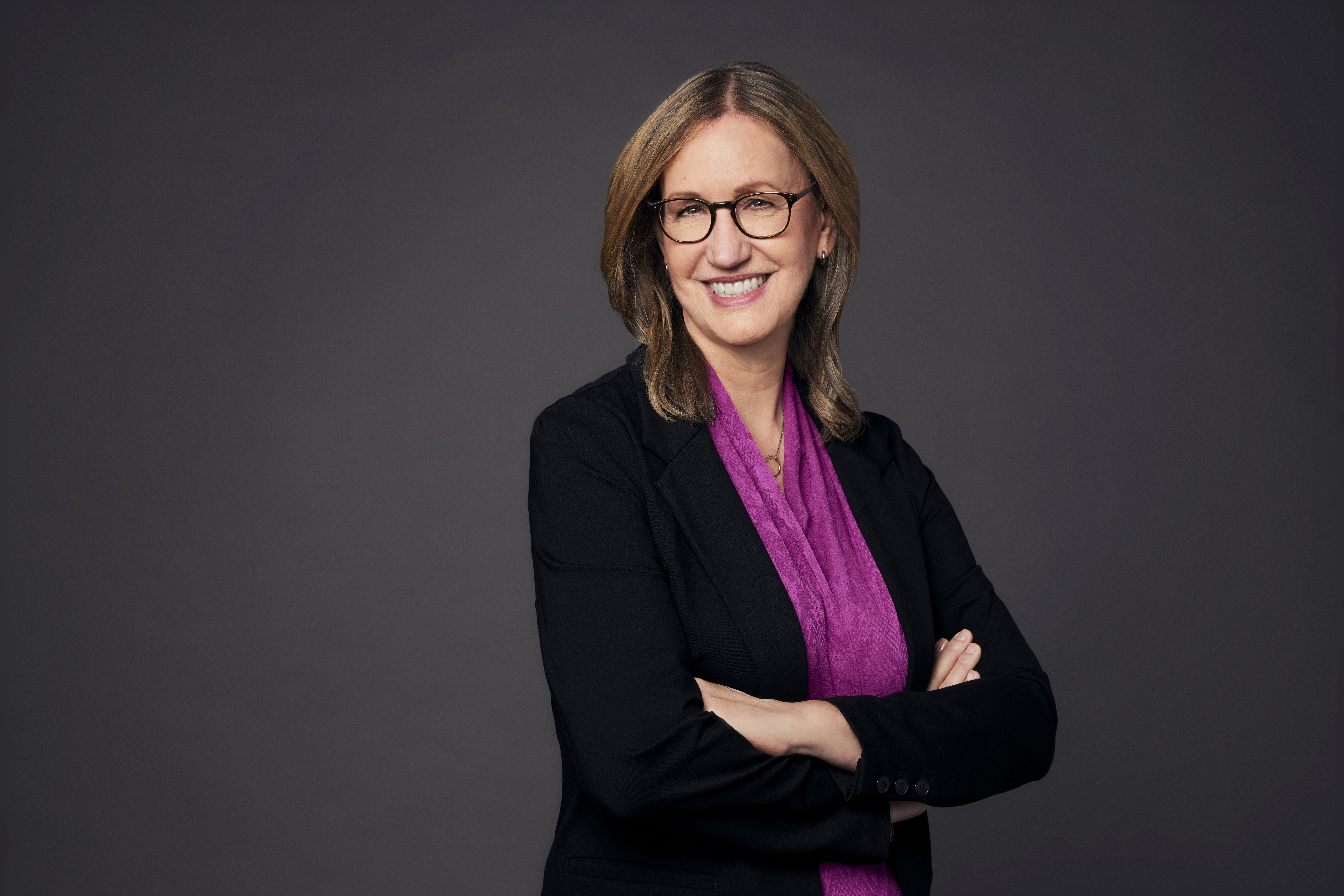
Carrie Teegardin is a reporter and part of the investigative team at The Atlanta Journal-Constitution. She is a graduate of Duke University and has won numerous national journalism awards.

