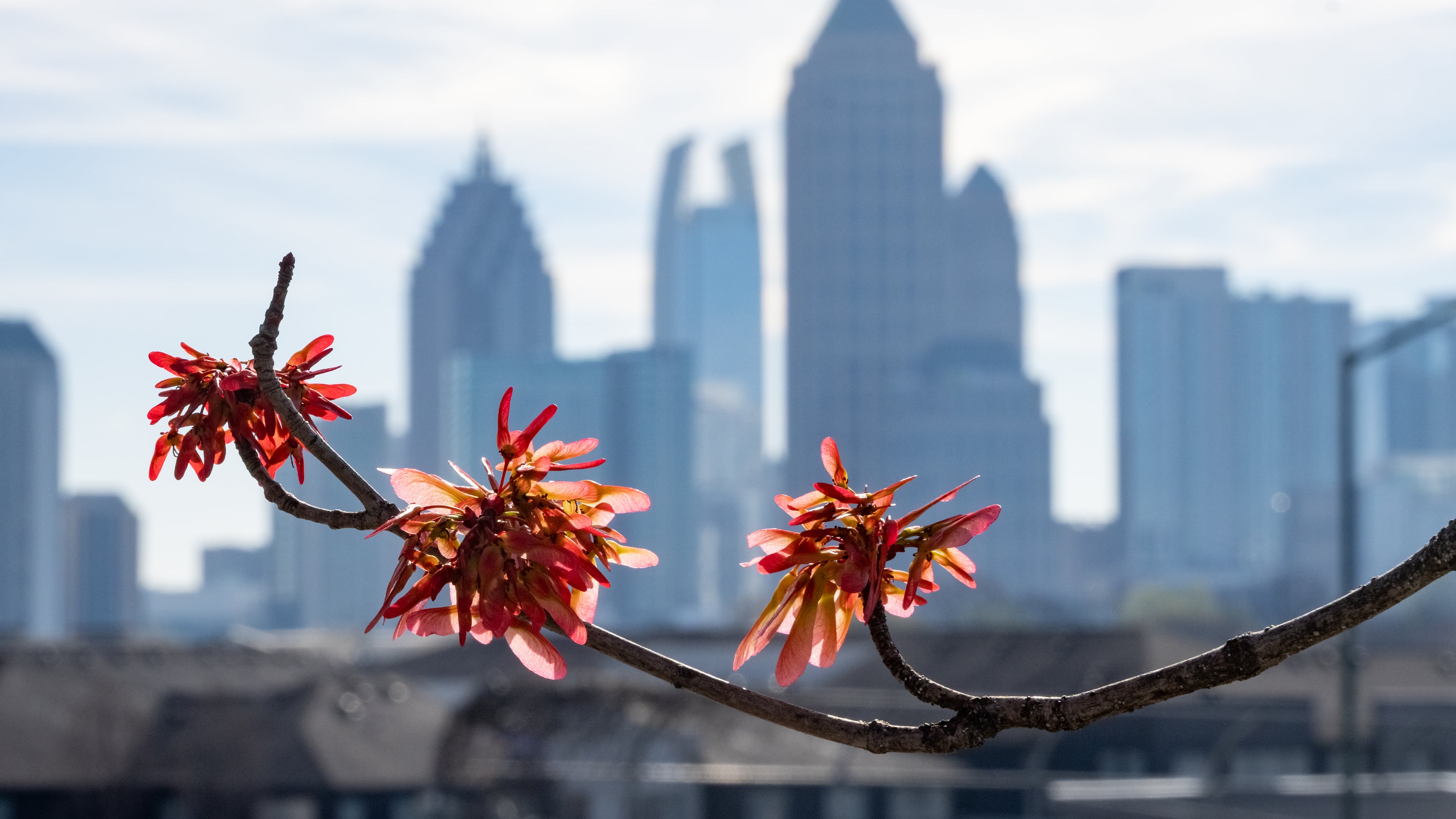
Retrieve the tissues and antihistamines, Atlanta. Pollen is exploding in the “city in a forest” this week.
Tree pollen counts have been climbing steadily since February, so if you’re a chronic allergy sufferer, you’ve already been battling the sniffles and itchy, watery eyes.
But Monday may have been especially difficult, as it marked the highest pollen count — at 3,028 — we’ve seen this season.
That number, which skyrocketed from Sunday’s count of 402, put the day well into the “extremely high” range, according to Atlanta Allergy & Asthma, which treats patients across the region and tracks daily pollen counts. The high range for tree pollen begins at 90; the extremely high range starts at 1,500.

Tuesday’s count is not as high — 1,295 — but that doesn’t mean we’re starting a downward trend. Pollen counts fluctuate and are very weather-dependent as spring swings from cool to warm. Dry, windy days like we’ve had this week make for higher pollen counts.
Rain helps wash pollen and other airborne allergens away, but dry stretches allow it and other pollutant levels to keep building. The next chance for rain is late Saturday into Sunday, so we can expect high and extremely high pollen counts this week.
“The typical trend for our pollen in Georgia and the Southeast, especially, is that we usually will see them kind of peak toward mid-March and then it can go all the way to mid-April, where you see the highest count,” said Dr. Lily Hwang of Atlanta Allergy & Asthma.
But high-range pollen counts can — and have in recent years — start as early as February and last through the end of May. And, notes Hwang: “You don’t have to be in that extremely high range to actually have symptoms.”
Once you’re exposed to allergens, your immune system is primed and ready to respond at the next exposure. Warmer winters lead to earlier pollen emergence, which leads to prolonged pollen seasons and more misery for those with allergies.
Tree pollens such as pine, oak, sweet gum and birch are the top contributors to this week’s counts. Weed pollens, such as mugwort and nettle, are in the moderate range.
Tree pollen is the main culprit for spring allergies, but it’s not the yellow or green dust we usually think of coating cars and porches. It’s actually the lighter, more powdery pollen from hardwood trees, such as oak, hickory and birch trees.
Over-the-counter antihistamines are a good temporary remedy, but they must be taken well in advance of exposure to allergens, Hwang advised.
“Once you’re triggered (antihistamines) can’t reverse that,” she said. “That’s the reason why a lot of people feel their medicines don’t work for them ... because they started when they are symptomatic.”
Getting tested to pinpoint what exactly causes your allergies is your best bet at longer-lasting relief. A board-certified allergist can recommend treatment plans, including determining whether immunotherapy, which desensitizes your immune system to the allergen, is an option.
Tips for managing seasonal allergies
- Keep your car and house windows closed. Run the air conditioner instead, and put it on a recycled setting if you can.
- Regularly change or clean your air filters.
- Shower before going to bed or when you get home. Pollen can settle into your hair and onto your clothes and skin, so washing off will keep you from breathing in pollen all night.
- Wear sunglasses or glasses to keep pollen out of your eyes.
- Remove your shoes upon entering your home.
- Wash off indoor pets’ paws and wipe down their fur with a damp cloth or towel if they’ve been outdoors.
- Pollen levels tend to be lowest between 4 a.m. and noon. Adjust outdoor activities accordingly.
- Take your allergy medication before going out. Don’t wait until you have symptoms.
Source: Atlanta Allergy & Asthma