Handwritten draft of King’s ‘I Have a Dream’ speech could fetch $10 million

Xernona Clayton has long been known for being precise, deliberate and meticulous.
So perhaps it is fitting that one of the most important documents in American history would spend decades tucked away in a desk drawer, waiting for her to take another look.
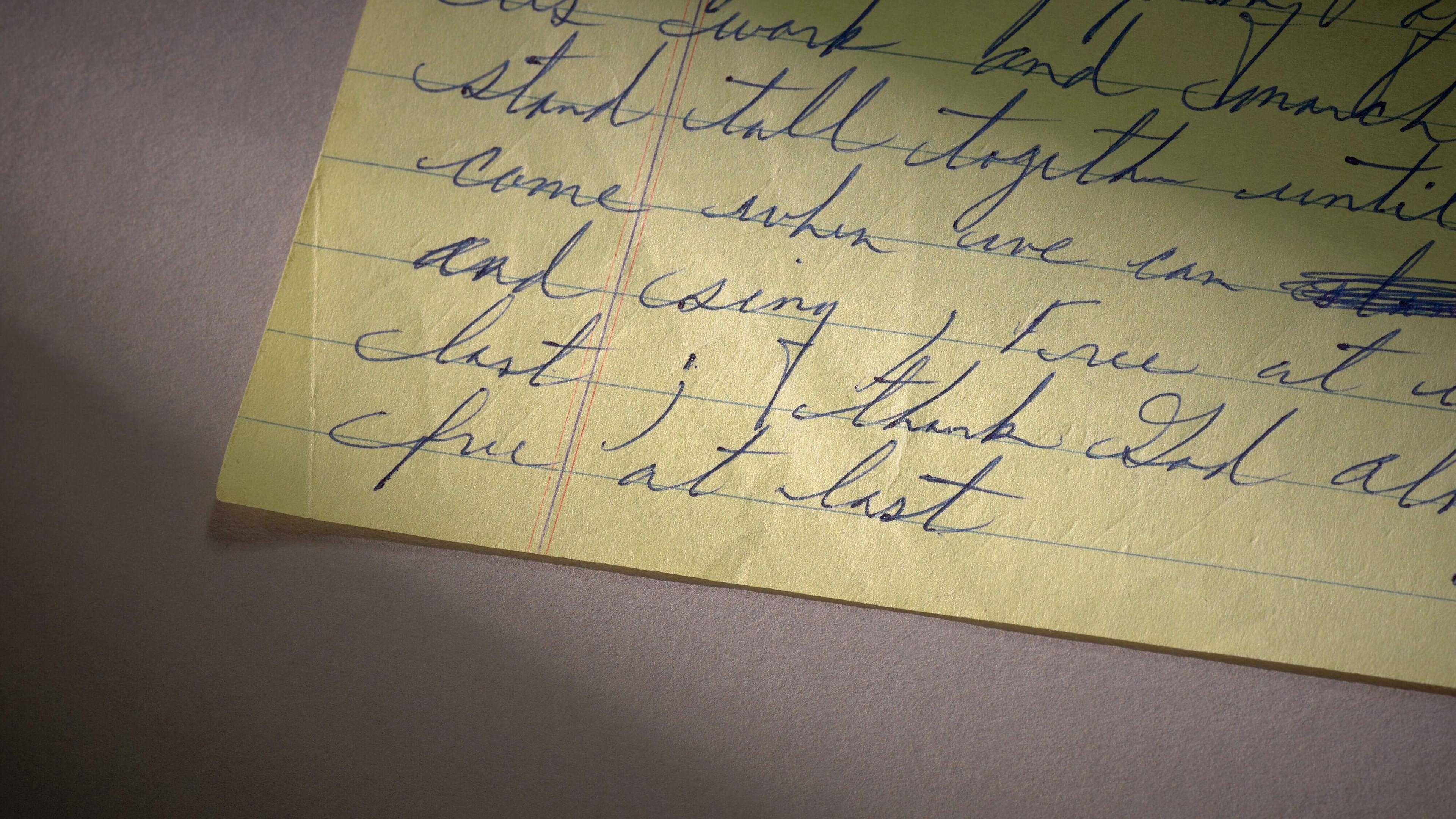
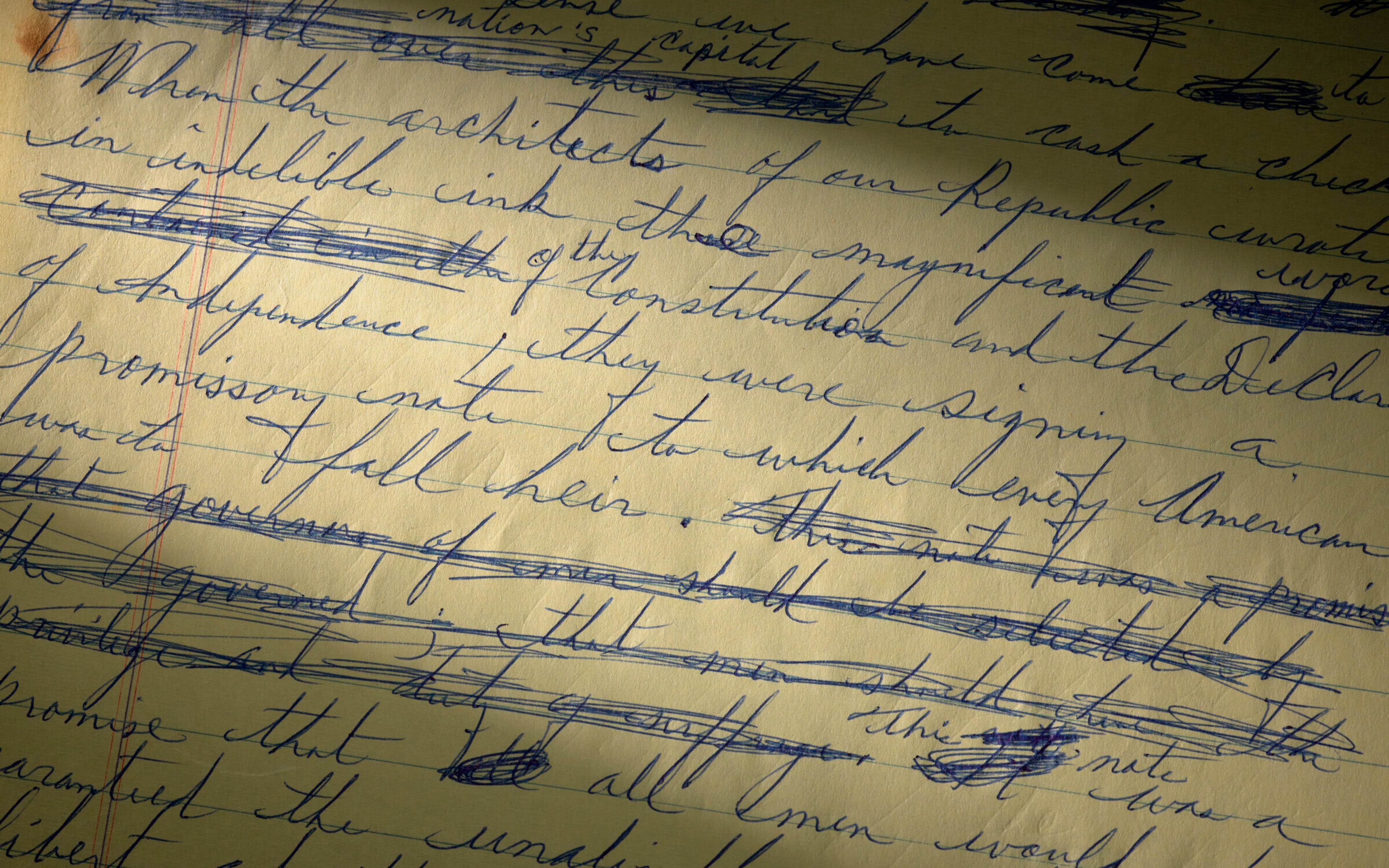
Inside an envelope marked simply “speech” were seven yellow legal pad pages, handwritten by the Rev. Martin Luther King Jr. in the final hours before he delivered his “I Have a Dream” speech at the 1963 March on Washington.


Clayton, the longtime Atlanta civil rights leader and broadcasting executive, had discovered the pages in the late 1990s among the belongings of her late husband, Edward T. Clayton, a trusted King aide, speechwriter and public relations director for the Southern Christian Leadership Conference.
When she revisited the envelope in 2024, she was holding what is believed to be the only surviving handwritten final draft of one of the most consequential speeches in American history.
Christie’s announced Monday that it would offer the seven-page document for sale on Jan. 22, 2027, in New York, where it is expected to fetch more than $10 million.
Proceeds will benefit several charitable organizations, including the King Center and the Xernona Clayton Foundation.

But first, the public will have an opportunity to see the manuscript in Atlanta, where it will be displayed at the National Center for Civil and Human Rights from Nov. 16 through Nov. 22.
Jill Savitt, president and CEO of the National Center for Civil and Human Rights, said the museum plans to display the manuscript alongside a typed copy of the speech in its March on Washington gallery.
Visitors will be able to examine King’s handwritten words while listening to the address he ultimately delivered at the Lincoln Memorial.
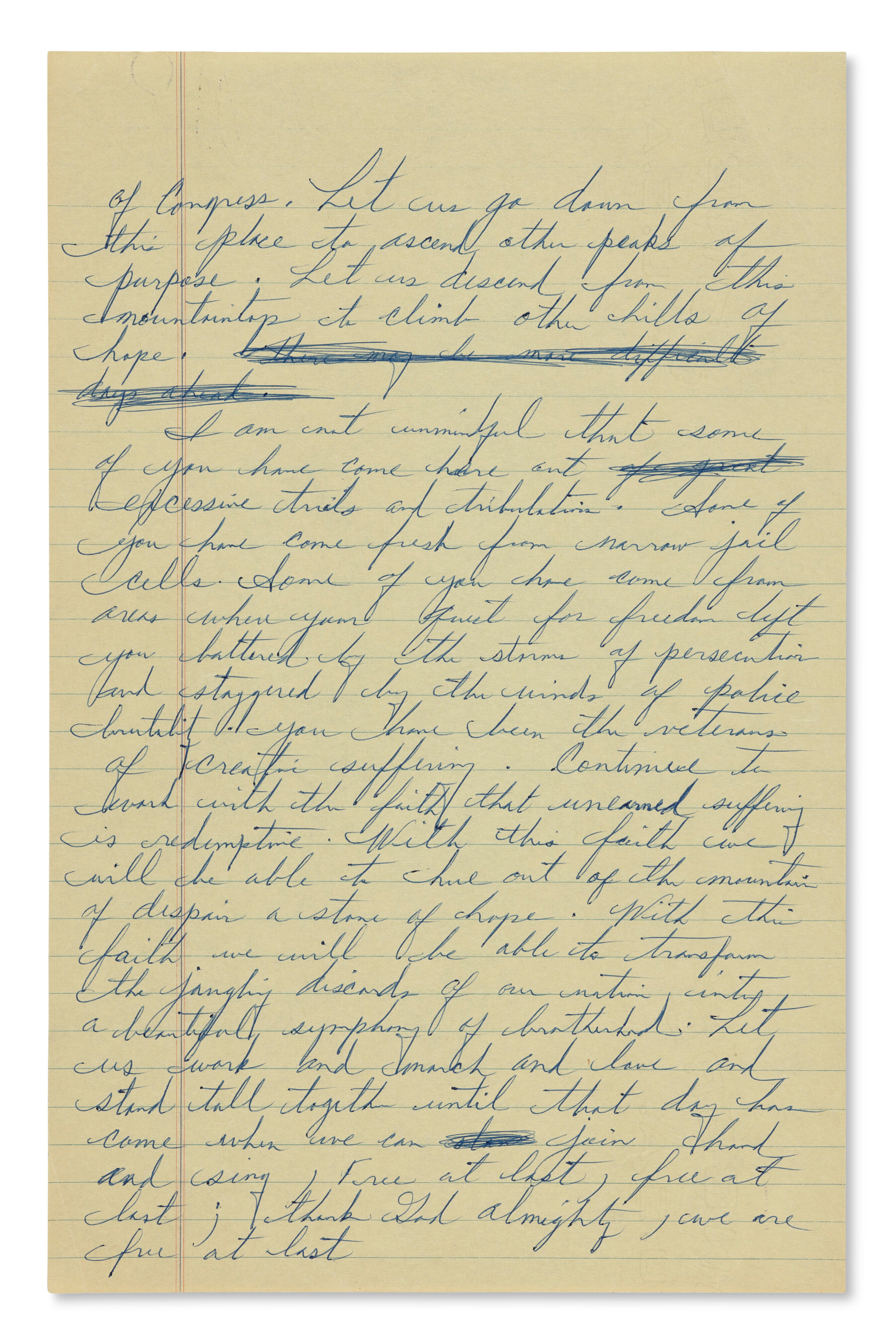
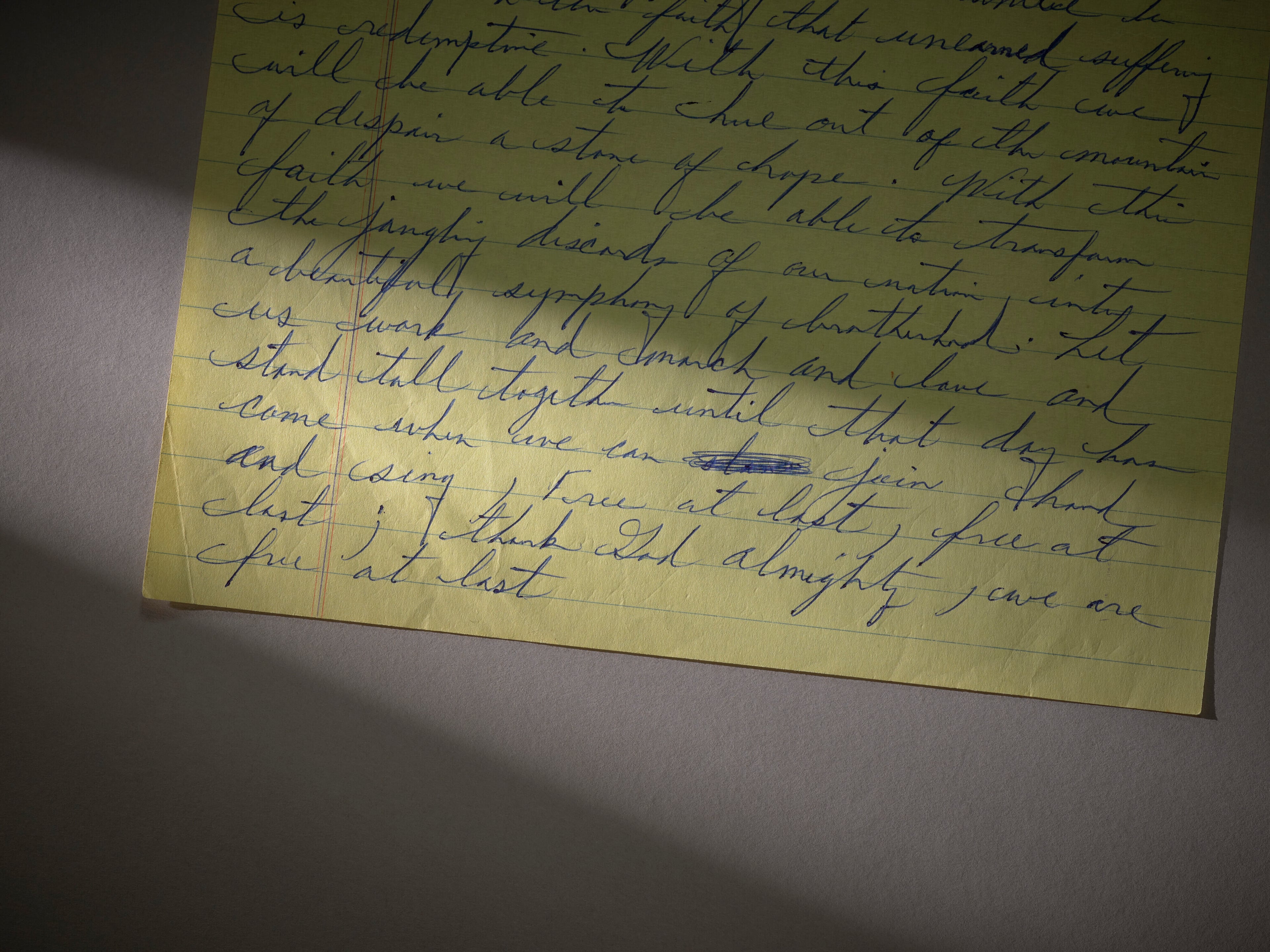
Savitt described the manuscript as a remarkable physical connection to King, with its distinctive longhand, crossed-out passages and even the rusty outline of a paper clip that once held the sheets together.
“There are very few times in your life that you actually get to see genius in process,” Savitt said. “It blows your mind to think that Dr. King was in a hotel room in D.C. writing this out.”
The making of a historic speech
Peter Klarnet, a manuscripts specialist at Christie’s who has spent three decades examining historical documents, was stunned when he first encountered the pages.

When Clayton invited him to Atlanta to see the document, he had expected a preliminary draft or fragment, given Edward Clayton’s role in helping King prepare the speech.
Instead, he found the handwritten pages beginning with “Five score years ago” and ending with King’s famous declaration of freedom.
“And at that point, my jaw hit the top of the table,” Klarnet said. “And I stared at it, and I stared at it, and I stared at it.”
Klarnet, who has handled manuscripts and letters by George Washington, Abraham Lincoln and Albert Einstein, immediately recognized King’s distinctive left-handed handwriting.
“I knew right away it was his hand. It was unmistakable,” he said. “But I was still asking myself, how could this be real?”
According to Klarnet, King completed the draft at approximately 4 a.m. on Aug. 28, 1963, after working through the night at the Willard Hotel in Washington.
He had spent days discussing the speech with advisers, including Edward Clayton, and was focused on delivering a concise address. The handwritten pages were given to assistants to be typed and distributed to the news media.
The first two pages contain extensive revisions, with entire passages crossed out. As the speech progresses, the corrections become less frequent.
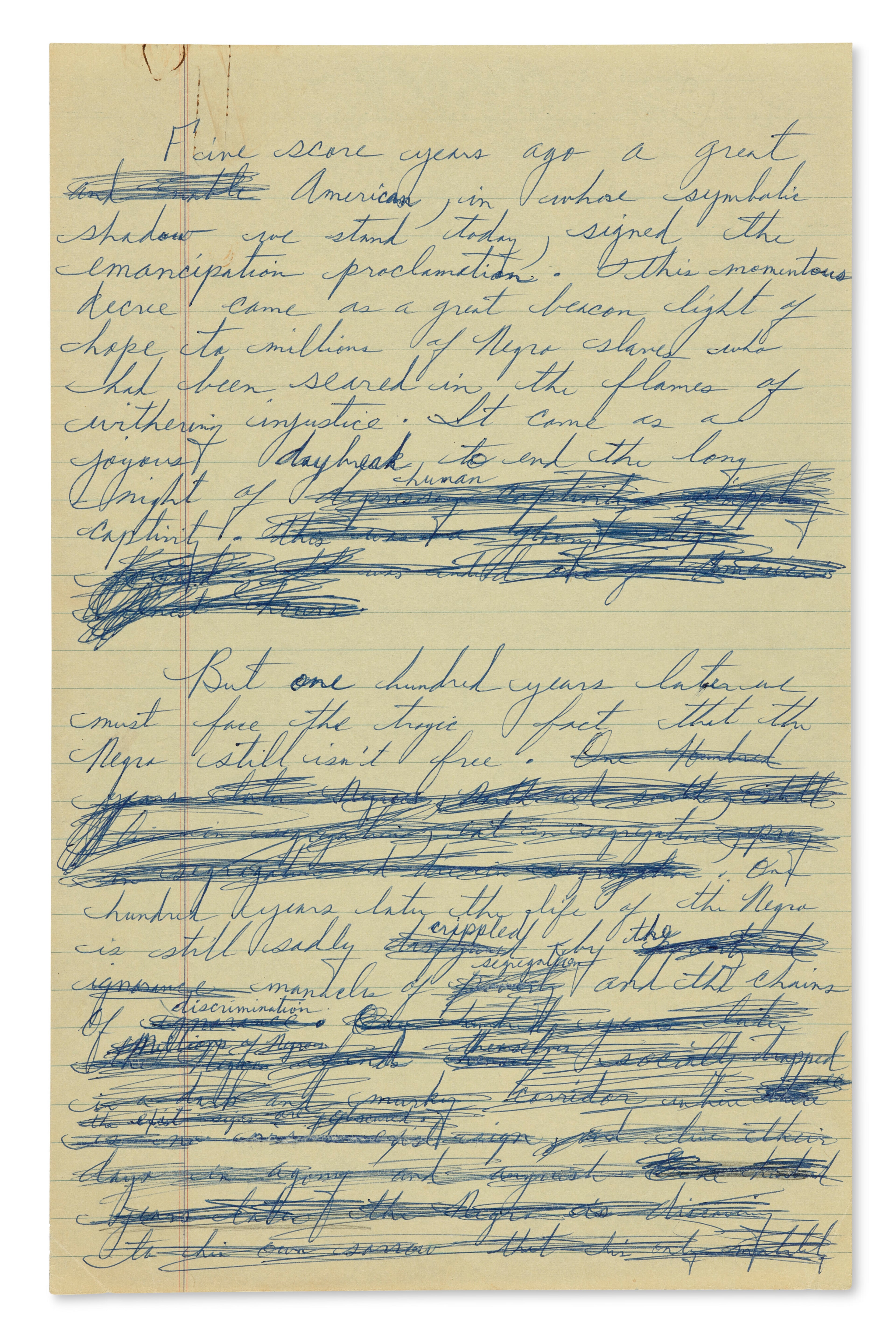
In one passage, Klarnet said, King repeatedly rearranged references to hotels and motels, apparently searching for the precise sequence and rhythm.
“To be able to see the creative process is so visceral,” Klarnet said. “It’s so engaging because you get to see those rhetorical avenues that he was trying out.”
Hours later, King stood before the Lincoln Memorial and delivered a speech that would become a defining expression of the civil rights movement.
Yet the manuscript contains a striking omission.
The words “I have a dream,” which would become the speech’s most enduring refrain, do not appear in the handwritten draft.
King famously departed from his prepared remarks that afternoon, launching into the passage that envisioned a nation where his children would be judged by their character rather than the color of their skin.
King had used versions of it in earlier speeches, and he and his advisers had considered including it in the March on Washington address before deciding against it, in part because of time constraints.
The manuscript does, however, include the speech’s concluding declaration: “Free at last, free at last; thank God almighty, we are free at last.”
A manuscript preserved for decades
While about 20 typed copies of King’s speech are known to have survived, including one at the National Center for Civil and Human Rights, evidence of its composition in King’s own handwriting has been far more elusive.
After her husband’s death in 1966, Xernona Clayton left his desk undisturbed for roughly three decades, according to Mami Hampton-Kisner, one of two trustees overseeing the sale.
Precisely how Edward Clayton came to possess the manuscript remains unclear.
“We really don’t know all of the details,” Hampton-Kisner said. She said it is unknown whether King gave Clayton the manuscript to keep or handed it to him to have it typed.
Although Clayton recognized that the pages were significant, she did not know that they represented the only known handwritten final draft of King’s most celebrated address.
So she put them back, leaving them in the desk until 2024.
“I’m just glad I looked in the drawer,” Clayton said in a statement released by Christie’s.
Clayton recalled watching her husband and King collaborate on speeches.
“They would go back and forth and there was such respect,” she said. “Dr. King, who was a great thinker, said Ed was so good at getting his words on paper and putting them in the right place at the right time.”
Clayton’s connection to King extended beyond her husband’s work.
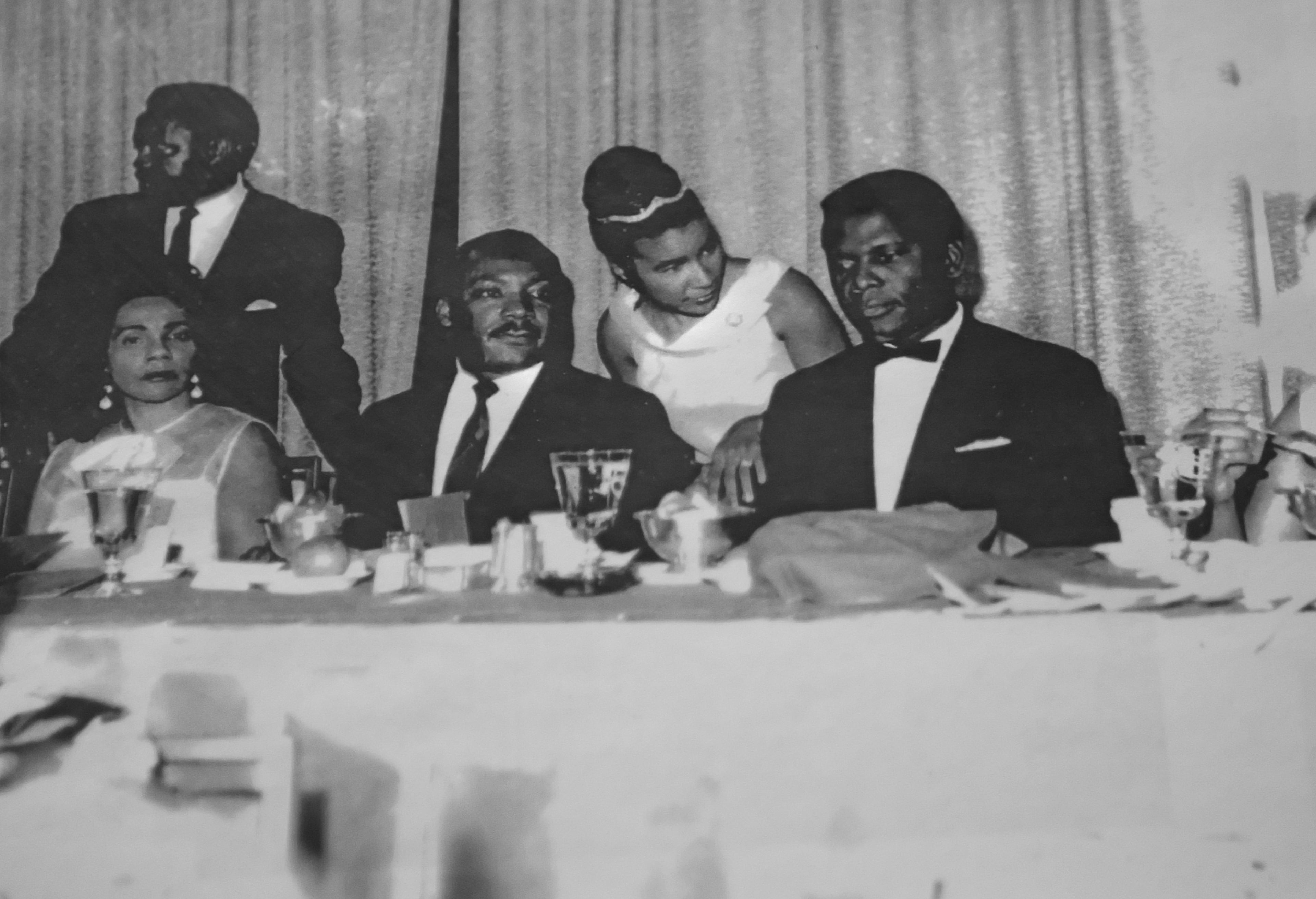
In January 1968, she hosted a surprise birthday party for King. Three months later, after his assassination, she helped Coretta Scott King prepare for her husband’s funeral.
Because of that, Clayton — who has remained close to the King children — has always been reluctant to appear to capitalize off the King name.
But Hampton-Kisner said Clayton’s thinking changed as she grew older and began considering how the manuscript could benefit others.
Hampton-Kisner, who has known Clayton for more than 45 years, said the 96-year-old civil rights leader is looking toward the next generation and wants the sale to help continue the charitable work to which she has devoted her life.
“She wants us to keep marching,” Hampton-Kisner said.
Keeping King’s legacy alive
King’s children also welcomed the discovery and its potential to support their father’s legacy.
“It is poetic that the past will protect the future,” said Martin Luther King III.
Bernice A. King, King’s youngest daughter and the chief executive of the King Center, said the sale would help sustain the institution founded by her mother, Coretta Scott King, in 1968.
“We are also grateful to join with Ms. Clayton to ensure that the sale of this draft helps support the great work of The King Center and our mother, Mrs. Coretta Scott King, who would be 100 this upcoming year,” she said.
The question of who should own King’s historical artifacts, and whether they should remain accessible to the public, has surfaced before in Atlanta.
In 2014, King’s children became embroiled in a legal dispute over plans to sell his 1964 Nobel Peace Prize medal and personal Bible, which former President Barack Obama used during his second inauguration.
Bernice King opposed the proposed sale, calling the items sacred, while her brothers supported it. The legal battle ended in 2016 after former President Jimmy Carter helped mediate a settlement.
Eight years earlier, Atlanta faced another question about the fate of King’s historical legacy.
In 2006, when more than 10,000 of King’s papers were at risk of being dispersed through a Sotheby’s auction, Atlanta civic leaders, led by then-Mayor Shirley Franklin, organized a $32 million effort to keep the collection in the city.
The papers are owned by Morehouse College, preserved at the Atlanta University Center and displayed on a rotating basis at the National Center for Civil and Human Rights.
The price of a national treasure
The sale is being overseen by the Still Marching Irrevocable Charitable Unitrust, established by Xernona Clayton to support organizations and causes she has championed. Eddie Bridgeman and Hampton-Kisner serve as trustees.
The precise division of the auction proceeds among the beneficiaries has not been disclosed.
Klarnet pointed to the prices paid for other foundational historical documents, including a printed draft of the U.S. Constitution that sold for $7.5 million earlier this year. He also cited Christie’s sale of Leonardo da Vinci’s Codex Leicester for more than $30 million in 1994.
“This is not just another speech,” Klarnet said. “This borders on a national treasure.”
Christie’s has already received expressions of interest, Klarnet said, although he declined to discuss prospective buyers.
For Savitt, the prospect of the manuscript entering a private collection raises a familiar concern. The museum’s existing King papers were acquired in part to prevent their dispersal and preserve public access.
“I hope wherever they go, they will be available for public view,” Savitt said.
And if the eventual buyer is looking for a place to exhibit the pages, she said, the National Center for Civil and Human Rights would welcome them.
“Open invitation,” she said.
The Atlanta exhibition opens Monday, Nov. 16, when the National Center for Civil and Human Rights will open specially for the occasion. The manuscript will remain on display through Nov. 22 before traveling to Chicago on dates yet to be announced.
It will then be exhibited at Christie’s at 20 Rockefeller Plaza in New York from Jan. 15, King’s birthday, through Jan. 21, before being offered at auction Jan. 22.
Visitors can reserve tickets for the Atlanta exhibition through the museum’s website.
“I am so grateful for the opportunity to give this amazing speech new life, and to give new life to people who are in need,” Clayton said. “And we cannot wait to give that first gift.”