America’s largest port was planned near Savannah. It’s now dead on the water.


SAVANNAH ― This barren landscape on the South Carolina bank of the Savannah River is little changed from two decades ago when two rival port authorities got together and made plans to turn it into North America’s largest maritime port terminal.
The site attracts little notice from the steady ship traffic that passes by. Liveaboards transiting the Intracoastal Waterway. Day-trippers heading to favorite fishing drops, beaches and sandbars. Hulking cargo vessels coming in and out of the Port of Savannah.
By now, some of those freighters were supposed to be docking at what was dubbed the Jasper Ocean Terminal. Designs called for enough berth space for 10 container ships and 1,500 acres of land to handle an estimated 7 million container units a year. Placed end to end, those boxes would circle the Earth once with enough left over to stretch from Atlanta to Phoenix.
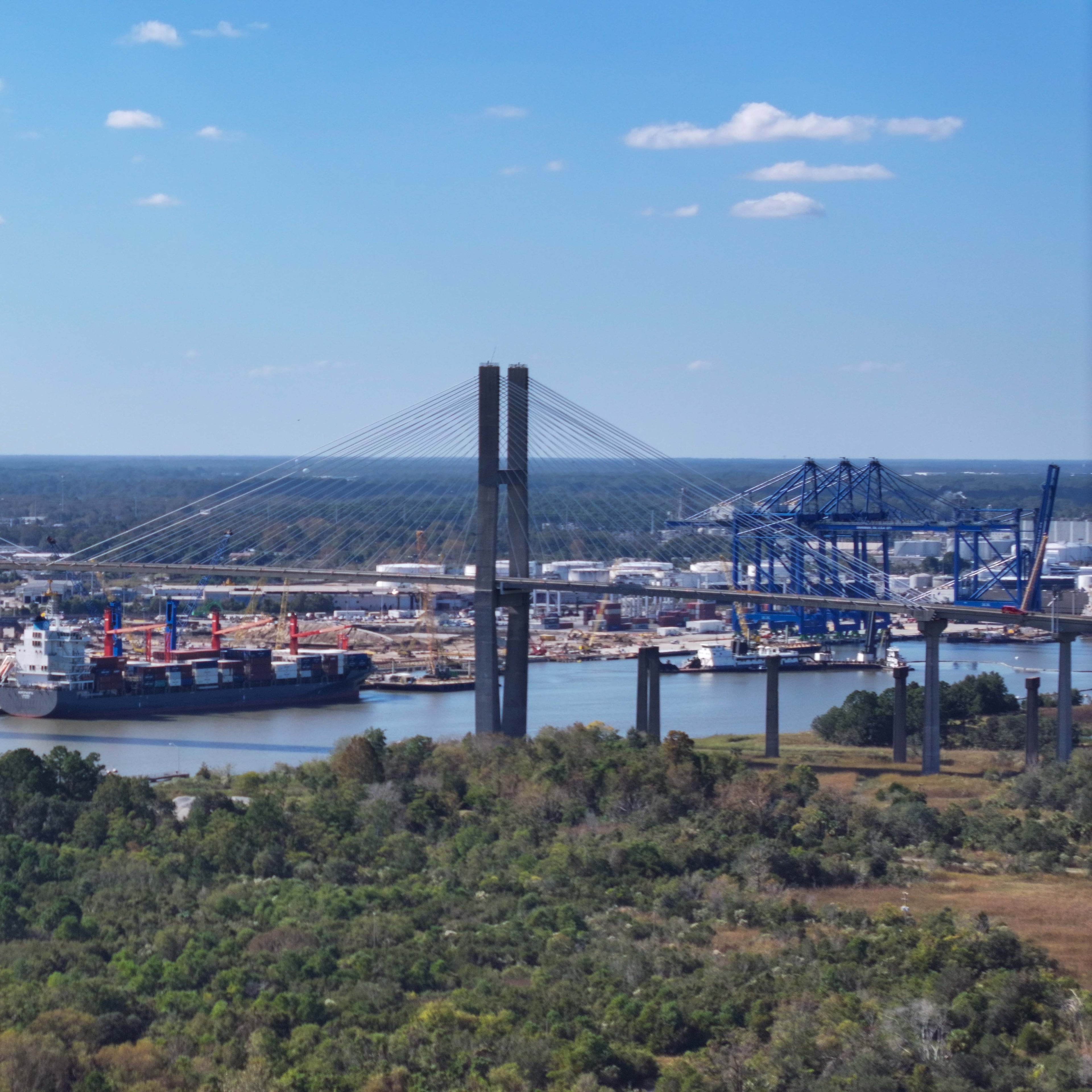
Instead, the would-be developers, the Georgia Ports Authority and the South Carolina Ports Authority, are going it alone, prepping to build or expand terminals closer to their existing facilities.
In Savannah, two cargo terminals are on the way near the East Coast’s fastest-growing facility. In Charleston, the state owns ready-to-develop land adjacent to two existing terminals.
All told, those projects promise to boost capacity in Savannah and Charleston to 22 million container units annually. In the most recent fiscal year, which ended June 30, the two port authorities combined to handle about 7 million.
The joint ports authority formed to shepherd the bistate Jasper Ocean Terminal project hasn’t met since 2024, and Georgia and South Carolina leaders agreed in May to “stand down” on Jasper’s development, essentially abandoning the project.
The letter formalizing the “stand down” became public last month, first published by the South Carolina Daily Gazette, a nonprofit online news site focused on South Carolina government.
“Necessity is the mother of all invention,” said Georgia Ports Authority CEO Griff Lynch. “Bottom line, neither port needs it right now.”
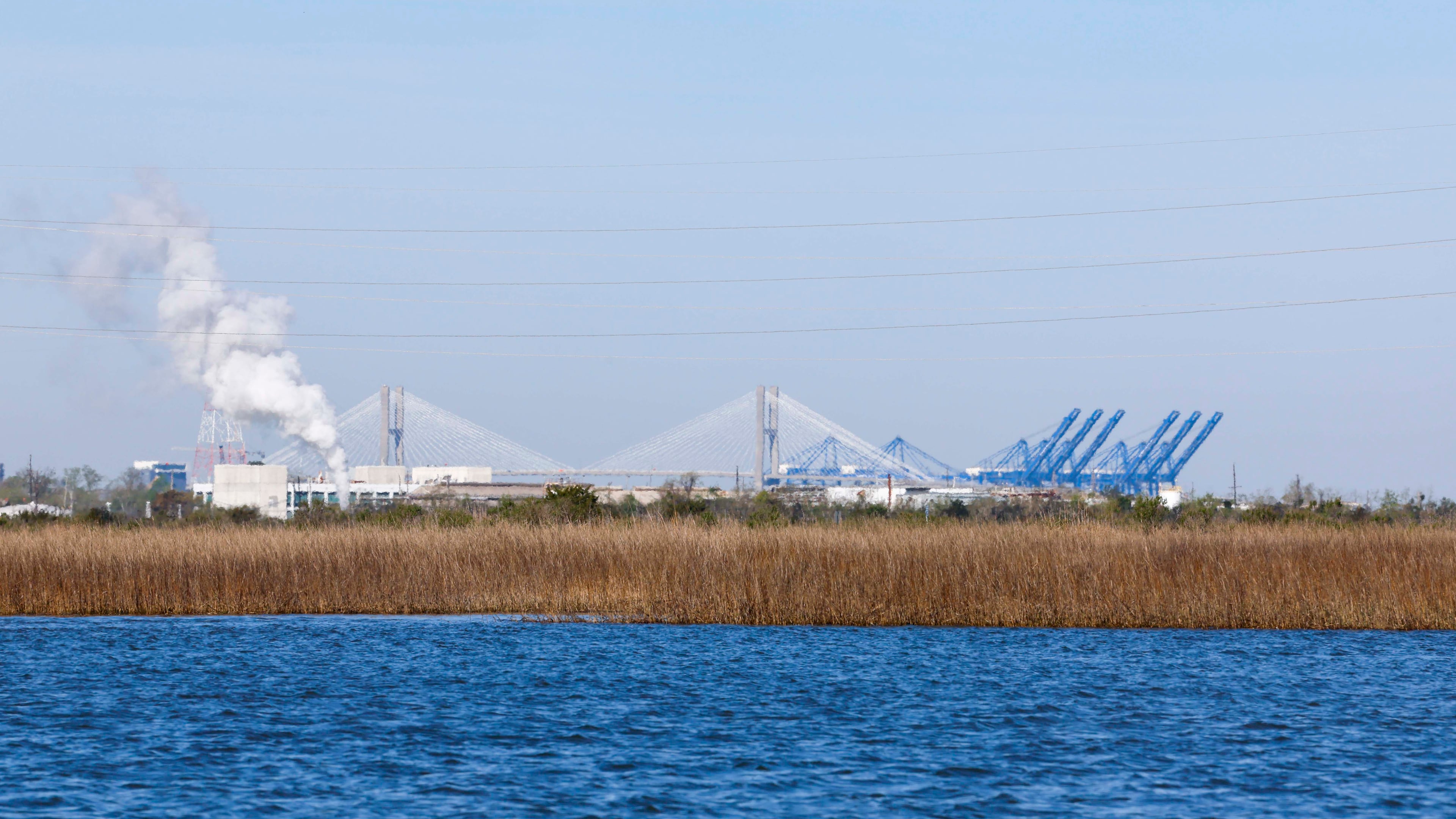
Lynch and his counterpart with the South Carolina Ports Authority, Micah Mallace, still envision a terminal there someday as global trade expands. For the next several decades, though, the site is destined to remain undisturbed beyond its current use as a dump site for silt and sand dredged from the Savannah River to maintain the shipping channel.
Close observers say the near-term plan was misguided from the start. Georgia and South Carolina are neighbors, but not neighborly — at least when it comes to port business competition.
And since Jasper was announced, one side, Georgia, is winning in a landslide.
Ulterior motives brought rivals together
The Jasper collaboration was, in the words of Tom Davis, one of the deal’s architects, a “shotgun wedding.”
Jasper County, which borders the Savannah River on the South Carolina side, began lobbying for a port terminal in the 1990s as a potential source of economic stimulus. Sandwiched between Savannah and Beaufort County, home to tourism-rich Hilton Head Island, Jasper had long missed out on the prosperity happening all around it.
Enter a deep-pocketed West Coast terminal operator in 2000 pledging $500 million to partner with Jasper County on a port. Only the prospective site, 5 miles downriver from Savannah’s famed River Street, belonged to the Georgia government. The Georgia Department of Transportation purchased it in the 1930s as a dredge spoils area for one of Savanah’s first harbor expansion projects.
Georgia refused offers to sell, recognizing the threat posed by a competing cargo terminal positioned several miles closer to the ocean than the Georgia Ports Authority facilities.
Meanwhile, a South Carolina plan to expand the Port of Charleston collapsed amid public pushback to a proposed site next to an affluent residential area. In 2002, that state’s legislature instructed the SC Ports Authority to focus its expansion sights elsewhere: an abandoned U.S. Navy base in Charleston, and the Jasper site on the Savannah River.
The SC Ports did both, only to be blocked at Jasper by the U.S. Army Corps of Engineers. The federal agency performs the river dredging work and held an easement on Jasper as a spoils dump site. Given Georgia’s ownership of the land, the Corps told South Carolina officials that the feds would only surrender their easement if the two state ports authorities agreed to partner on the project.

In 2008, Georgia and South Carolina formalized an agreement. But even then, the Jasper project felt “awkward” to Davis, then chief of staff to South Carolina Gov. Mark Sanford.
“There always was the concern that these two joint partners each had independent ownership of their own facilities and a natural bias toward optimizing what you have versus doing something jointly,” Davis said.
Davis has remained involved with Jasper. A Beaufort County native, he left Sanford’s office in 2009 to run for the state senate. He won the election and has represented a district that includes Jasper County ever since.
Davis’ trepidation stemmed from maneuvers happening behind the scenes, as both Georgia and South Carolina moved to shore up expansion plans of their own. In 2007, the Charleston Navy Base terminal design gained approval. That same year, the Georgia Ports Authority began buying land on the riverbank opposite one of its existing terminals.
Unlike the Jasper site, the property was on an island within Georgia’s borders. Today, those 350 acres make up a planned and permitted terminal on Hutchinson Island, with construction to begin in 2028.
Those acquisitions — the Charleston Navy Base and Hutchinson Island — gave the states’ port authorities room to grow without Jasper.
Yet Georgia pushed forward on the Jasper project in part because of a side benefit. By the time the agreement was signed, efforts to secure hundreds of millions in federal funds to deepen the Savannah River shipping channel had stalled. The promise of the Jasper terminal and its 7 million container capacity changed the cost-benefit analysis for investing in the harbor expansion.
In 2014, as the economy recovered from the Great Recession and a Panama Canal expansion meant to bring bigger and deeper drafting ships to the East Coast neared completion, Georgia got the deepening go-ahead. The seven-year, $973 dredging project began the next year.
Different business directions
Georgia and South Carolina remain port business rivals today just as they were 20 years ago. But Georgia has the upper hand.
Georgia’s Garden City Terminal near downtown Savannah is the second-busiest and fastest-growing on the East Coast, trailing only the cluster of facilities on the Hudson River operated by the Port Authority of New York/New Jersey. Over the last quarter-century, the Garden City has gone from handling 1 million container units annually to 5.7 million.
The Port of Charleston, meanwhile, has seen limited growth. In 2001, when Savannah hit the seven-figure mark for the first time, Charleston moved 1.63 million containers. Twenty-five years later, volumes were 1.4 million.
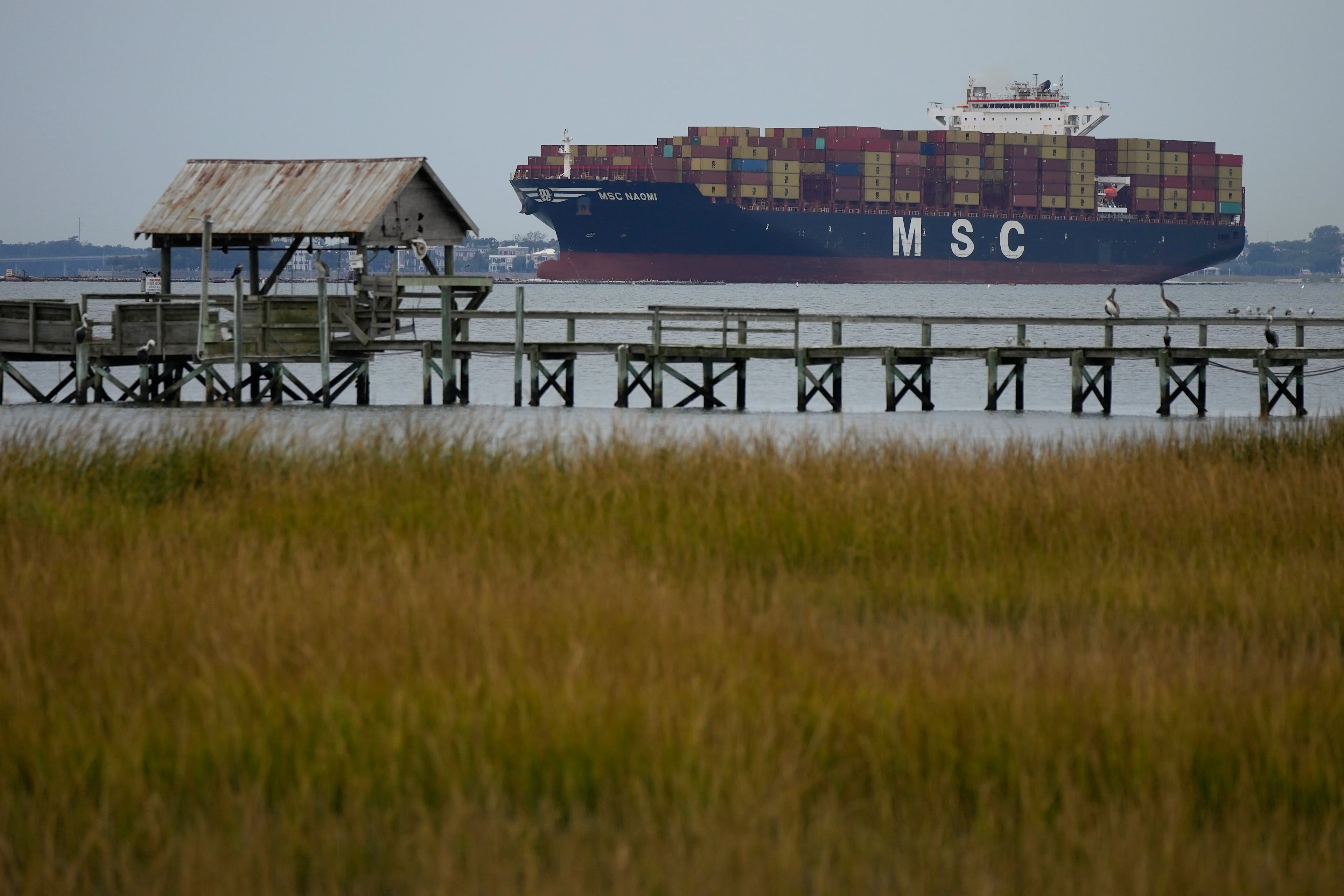
Business is so stagnant the SC Ports Authority in August shuttered — or as state Sen. Davis put it, “mothballed” — the Navy Base terminal that opened in 2021. Four of the five ships that were calling on that facility weekly moved to a nearby underutilized terminal. The other vessel ceased calling on Charleston entirely.
Savannah’s quarter-century of growth has been driven by infrastructure investments, not just on the water. In the 1990s and early 2000s, the Georgia Ports Authority and the Savannah Economic Development Authority partnered on a large industrial park 7 miles from the Garden City docks. They offered land to large retailers at steep discounts and wooed Home Depot, Target, Dollar Tree, Ikea and others to open distribution centers there.
The move turned Savannah into the Southeast’s logistics hub. Today the Savannah region is home to more than 700 warehouse facilities.
Georgia also developed an on-terminal rail facility that moves containers from floating on a ship to rolling along train tracks in less than a day. By contrast, Charleston’s main container terminal lacks direct rail service and its major rail improvements are happening at the currently shuttered Navy Base terminal.
“You have two ports in close proximity to each other, and one is going gangbusters while the other is playing catch-up,” said Walter Kemmsies, a longtime port infrastructure consultant. “It’s hard to change shippers’ attitudes about where they direct their business once they’re comfortable.
“Or until the terminal they like to use runs out of room.”
Jasper abandoned but not forgotten
Even with nearly 15 million container units of spare space planned for Savannah and Charleston, officials insist Jasper will be developed someday.

The site remains among the most feasible undeveloped ports on the Eastern Seaboard, along with one in Baltimore and another near New Orleans. Experts such as Kemmsies said Georgia and South Carolina would do well to start planning the infrastructure now for when Jasper is needed, projected as the 2050s or 2060s.
That means building roads and train tracks to the site and identifying new spots to dump dredge spoils. A bigger challenge is determining the location for a near-terminal, ship-turning basin. The Savannah River is narrow and twisty; a Jasper turning basin would require a circumference of between 1,500 and 2,000 feet.
Meanwhile, once-moribund Jasper County is thriving. It was the nation’s fastest-growing county by population in the first half of this decade and is home to dozens of logistics and other port-related businesses serving the Georgia Ports Authority terminals. The Hutchinson Island site already connects to Jasper County via a quarter-mile bridge.
State Sen. Davis has helped redirect funds earmarked for the Jasper Ocean Terminal to an economic development alliance representing Jasper and neighboring South Carolina counties. He said Jasper is “integrating into the Savannah economic sphere.”
At the same time, he’s leading a push to have Jasper County replace the SC Ports Authority as Georgia’s partner if and when the Jasper Ocean Terminal’s day finally comes.
“I’m very bullish on the future of Jasper,” Davis said. “You just have to have a long-enough view.”