State breaks ground on new psychiatric hospital in south DeKalb


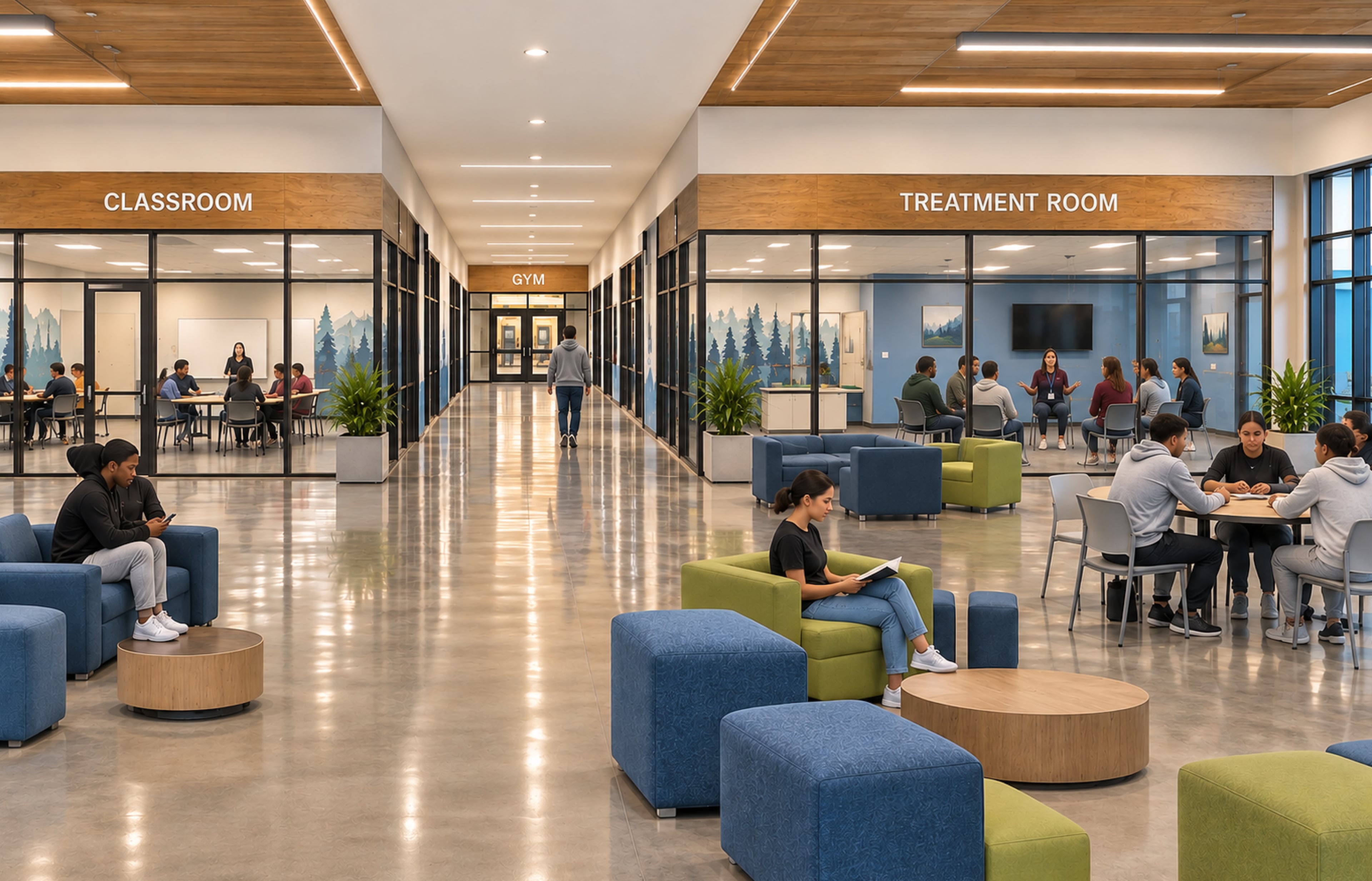
Georgia officials broke ground Monday on a $400 million psychiatric hospital in south DeKalb County aimed at easing the backlog of people in the criminal justice system with suspected severe mental illness who are waiting for behavioral health services from the state.
The 300-bed facility, located just south of the unincorporated community of Panthersville, is aimed at making a major dent in the waitlist of so-called forensic patients, most of whom have been charged with felonies and are sitting in county jails.
Those patients have been court ordered to have a psychiatric evaluation to determine if they are competent to stand trial. In some cases, patients have been found not guilty by reason of insanity and have been ordered for treatment; others need to be stabilized.
There are currently more than 860 people awaiting forensic services from the state, according to the Department of Behavioral Health and Developmental Disabilities, which will oversee the new hospital. Currently, many of those patients languish for upward of a year in county jails, their criminal cases effectively paused until they can receive state care.
“It’s frustrating that we have people waiting in jail, waiting on a forensic bed,” Kevin Tanner, the commissioner of the Department of Behavioral Health and Developmental Disabilities, told reporters after Monday’s groundbreaking ceremony. “We’re full every day in the state hospital, so the additional capacity has been needed for a long time.”

In an interview, Tanner said his department has worked hard in recent years to expand the state’s crisis system, bolster community-based treatments and jail-based care for people with severe mental illnesses or intellectual or developmental disabilities.
“But at the end of the day, the only way we’re really going to address that backlog in a meaningful way is we’ve got to have more hospital capacity,” he said.
The hospital, which is being built on the grounds of Georgia Regional Hospital, is the state’s first to be constructed for mental health purposes since the 1960s. Officials hope it will open its doors in about two-and-a-half years.
The project has the enthusiastic backing of many of the state’s sheriffs. Terry Norris, executive director of the Georgia Sheriffs’ Association, said the state’s 142 county jails “have become the de facto mental institutions.”
Norris said about half of the approximately 800 inmates at the Dougherty County jail in Albany were diagnosed or suspected to have severe mental illness.
“It’s a very difficult situation,” Norris told The Atlanta Journal-Constitution. “Jails are not built or staffed or resourced otherwise with the needs for many of these folks. So in many instances they’re warehoused.”
Disability rights and criminal justice reform groups warn that the new hospital is only a temporary fix and that the state should be focused on pouring resources into community programs that can help address the root causes that land people in jail.
“Historically, institutions are not places where people get well,” said Devon Orland, litigation director for the Georgia Advocacy Office, which represents Georgians with disabilities. “Even if you have the best institution, at some point the goal is to get the person back into the community.
“And if you don’t have the community services, they’re just going to end up cycling back.”
Not a `One-and-Done’
Georgia in recent decades has mirrored the rest of the country in moving away from large psychiatric institutions.
In 1999, the U.S. Supreme Court issued a landmark decision on a Georgia case that said the forced institutionalization of people with mental disabilities who could be cared for in a community setting was a form of discrimination under the Americans with Disabilities Act. Olmstead v. L.C. was filed on behalf of Lois Curtis and Elaine Wilson, two women who were confined at Georgia Regional Hospital.
In 2007, a series of articles in the AJC found that more than 100 patients had died over the previous five years in the state’s psychiatric hospitals because of neglect, abuse and substandard medical care.
Following a federal investigation that stemmed from those articles, Georgia signed a settlement agreement with the U.S. Department of Justice in 2010 that pledged to dramatically boost services for people with mental illnesses and intellectual disabilities.
A federal judge released Georgia from part of the settlement agreement earlier this year. Tanner said he expects that by the end of the year the state will be “substantially compliant” on the remainder of that agreement. He clarified that the new hospital “was not required in any way by the settlement agreement.”
“We have stood up so many community-based resources in Georgia over the last 17 years,” Tanner said, citing new crisis centers in Dublin and Augusta and others in the works in Fulton and Clayton counties. “Does there need to be additional resources over the next several years in the community? Absolutely. This is not a one-and-done.”

Tanner said that despite the surge of new community investments, there remains an urgent need for new hospital beds. A 2023 study his department commissioned found that without an additional facility, the state would not be able to accept new patients by 2034.
Part of the problem was exacerbated by the COVID-19 pandemic. More state medical staff were lured into the private sector for higher-paying work, cutting down on the number of forensic hospital beds available, and the courts produced more orders for psychiatric evaluations.
“They came back with a vengeance and really produced a lot of orders for us, so it has been digging out of a pretty good hole,” Tanner said of the 800-person backlog. “But it’s not just Georgia. We’ve seen that spike all around the United States, and a lot of states have had to build new hospitals.”
Earlier this year, state legislators approved $409 million in funding for the new hospital as part of the amended fiscal year 2026 budget. Tanner said his department will almost certainly need more money from the General Assembly in the years ahead to handle remaining costs for furniture, fixtures and equipment.
Blake Tillery, the outgoing chairman of the Senate Appropriations Committee, agreed. He said staffing is a particularly urgent concern.
“I hope this is the first of three facilities we’re able to do,” the Vidalia Republican said. “But in the end, if we only announce today and today is our high point, we’ve not just failed our state, we’ve failed our neighbors.”
‘Arrest, Release, Repeat’
This spring, the department struck an agreement with the Georgia Advocacy Office and the Southern Center for Human Rights to cut down on the time forensic patients wait in jails for evaluations and competency restoration services. By late 2029, the department must bring wait times down to 30 days or less.
Atteeyah Hollie, deputy director of the Southern Center, said that all too often people with disabilities spend longer durations in jails than people without disabilities, as they wait for services from the state to stand trial.
“At its core is that we arrest people who are in the throes of active mental illness, and we don’t have any resources but these back-end services to try to treat it,” Hollie said.
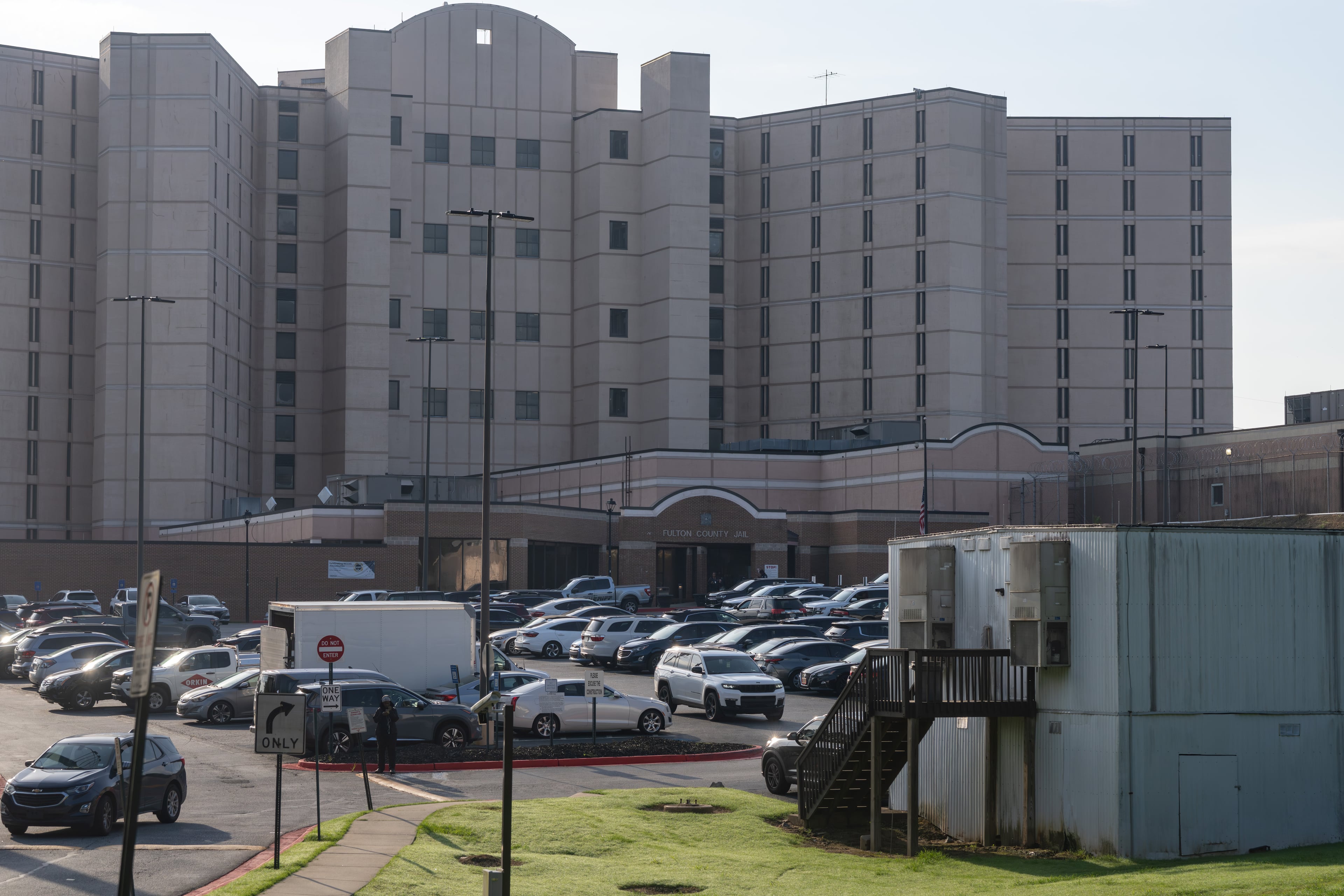
Hollie said the new hospital could “provide short-term relief,” but she warned about the “revolving door” of people being treated, serving time and then being rearrested.
“We have this vicious cycle of arrest, release, repeat,” she said. “And while I hope that hospitals can help with that, I don’t think that we can put all of our eggs in that basket without investing in community-based resources.”
Orland, of the Georgia Advocacy Office, said the only thing that will decrease the need for more institutions is robust community services. She said making mental healthcare and preventive healthcare more accessible could make a major difference, as well as bolstering supported employment and housing programs and funding more mental health crisis teams who can respond to emergencies.
Tanner touted recent state investments in mobile crisis teams; a nearly $21 million, 40-bed “forensic restoration” facility in Augusta; and the 988 Lifeline phone system for people facing emotional and behavioral health crises.
We have “no desire to move back to where the nation was, 50, 60, 70 years ago,” he said. “But we do have to have an acknowledgment that if someone’s been court-ordered by a judge, we’ve got to have a place to put that person and to be able to provide the treatment that person needs, and not let them just be stuck in a jail somewhere waiting on treatment.”