Waymo makes case for robotaxi safety citing its data, including in Atlanta

Artificial intelligence, or basically anything unmanned, is unnerving. Are the robots going to leave us jobless? Are they going to stage a coup? Or will they just twist the life out of everything?
The column will not address those valid questions.
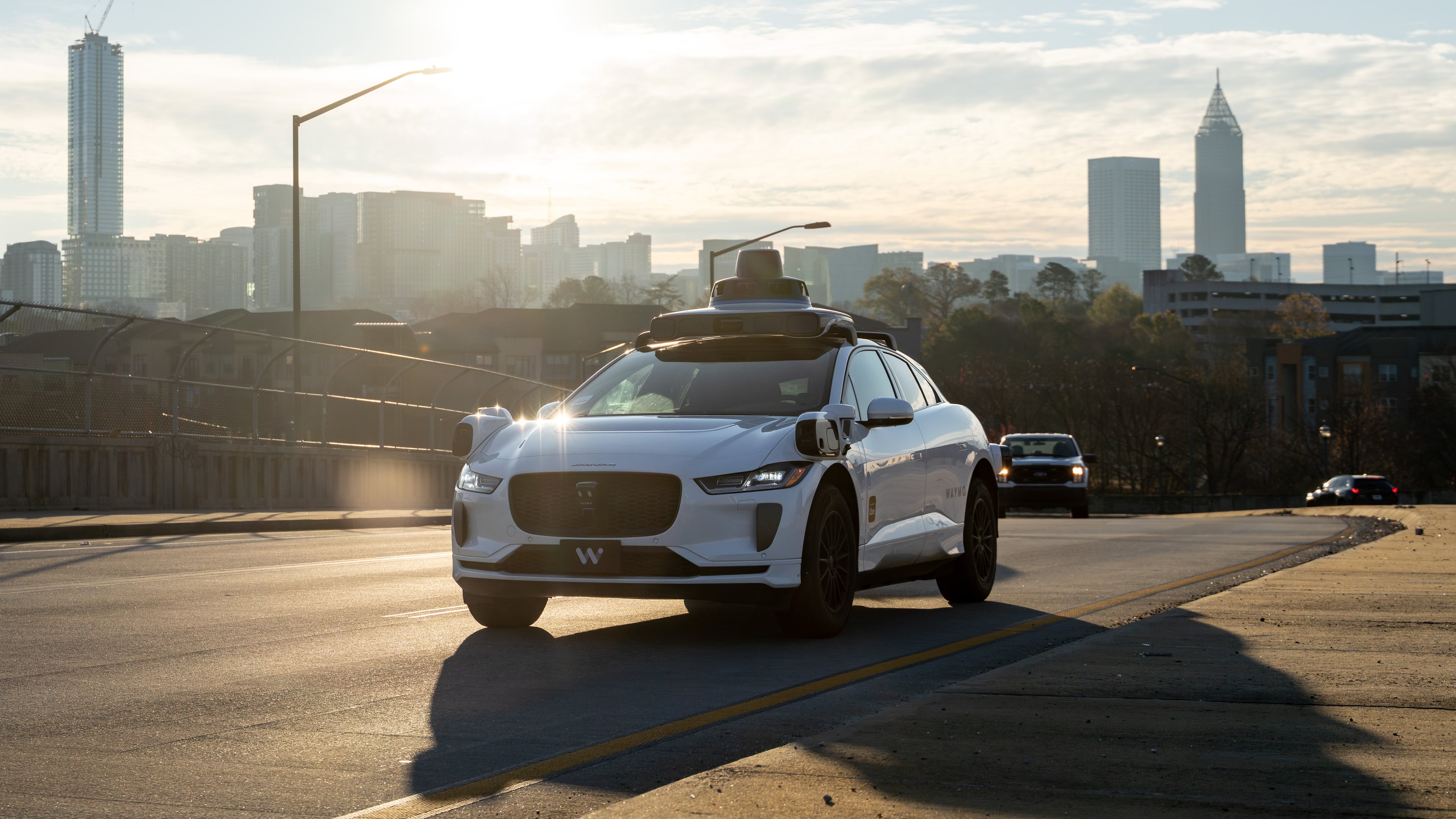
Concerns over driverless robotaxis, such as the Waymo vehicles that have traversed the Atlanta streets since last year, are also reasonable. But Waymo believes its technology is safer than human drivers and says it has the stats to back that up.
Waymo has done 10 peer-reviewed studies, it says, and its latest analysis of crash rates is encouraging, especially if autonomous vehicles are to become more prevalent.
“Compared to humans, Waymo has 95% fewer serious injury-or-worse crashes,” Waymo senior staff researcher Kristofer Kusano told me recently.
He defined serious injury crashes as ones that send people to the hospital. And the comparison to “an average human driver” is made “over the same distance” in cities where Waymos have driven enough to make statistically significant conclusions, the company said.
Waymo’s sensor-laden cars gathered data from over 271 million miles driven from September 2020 (the time of Waymo’s first recorded crash) to June.
The National Highway Traffic Safety Administration set its current standards for the reporting of crashes for self-driving cars in 2021, the company said.
Waymo researchers categorized 11 different types of crashes. They gathered human driver crash data, based on police reports, from these cities with heavy Waymo use: San Francisco, Los Angeles, Phoenix, Austin and, yes, Atlanta.
“Our cars have like a million sensors. We’re always tracking where they are. We know exactly when and where they drove,” Kusano said. “For humans, it’s not as easy.”
For one, he explained, humans do not report all crashes, especially ones with minimal property damage. Waymo vehicles record every single wreck, he said, which is why the stats the company focused on involve injuries.
To control for all of that, Kusano’s team applied three filters: vehicle-types (Waymos are generally Jaguar sedans), roads (Waymos generally only drive on surface streets) and geography (Waymos operate in only in select cities). Then they built a formula for a crash rate. Besides the difference in serious injury crashes, Waymos had 82% fewer airbag-inducing crashes, it said.
The latest data also showed Waymo vehicles handled what researchers called “vulnerable commuters” — meaning those not inside cars and trucks — better than humans. Waymos were involved in 93% fewer injury crashes with pedestrians, 86% fewer with cyclists and 82% fewer with motorcyclists, according to the company’s numbers.
Atlanta’s streets have only seen 8.6 million rider-only (another name for autonomous vehicles, essentially) miles in this study, as the robotaxis have been in our city for less time than others. That said, Waymo said its vehicles had an 88% lower injury crash rate than humans.
The Insurance Institute for Highway Safety (IIHS) has lent some backing in their own study to Waymo’s safety brag. That organization’s July 2026 report showed Waymo vehicles’ police-reportable crash rates were 68% lower than those of human drivers, and the study said Waymos rate of rear-ending another car was 91% lower. Waymos even got rear-ended 40% less than human drivers did, the study said. The IIHS paper measured a broader scope of crash types than the Waymo studies have.
There is still something quite unnerving about vehicles that do not respond to, “Hey! Hey! Heeeyyyyyyyyy!!!!” In Atlanta, there’s been reports of Waymos driving past stopped school buses or into active crime scenes. Local passengers have reported being stranded when a Waymo cruised into floodwater.
Outside of Waymos, there also have been concerns about other autonomous vehicles taking their passengers into peril.
Those worries are valid, and Kusano acknowledged Waymo is constantly trying to get better.
The path to greatness may be far more straightforward with algorithmic learning, as the constant driving teaches the programs.
Waymo cites the World Health Organization’s “Decade of Action for Road Safety” — an effort to reduce crash injuries globally by 50% by 2030 — as its impetus to keep pushing.
And, of course, they want to be successful and profitable, too.
Doug Turnbull covers the traffic/transportation beat for WXIA-TV (11Alive) with Rachel Cox-Rosen. Their reports appear on the 11Alive Morning News from 6 a.m. to 9 a.m. and on 11Alive.com. Email Doug at dturnbull@11alive.com. Subscribe to the weekly “Gridlock Guy” newsletter for the column here.