Men live amid darkness, raw sewage at South Georgia prison, group says
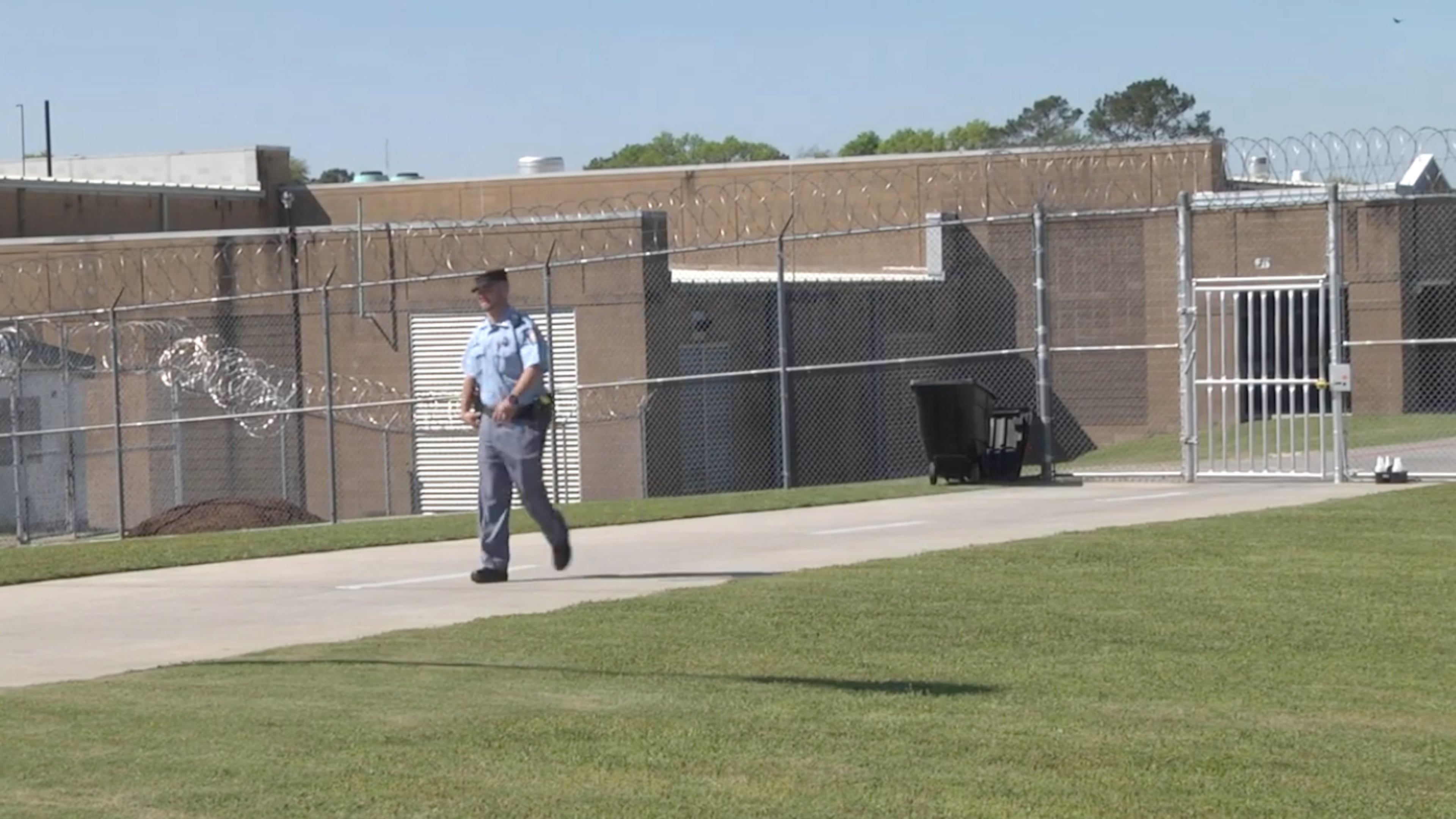
Conditions at one South Georgia prison have become so dysfunctional that men held there live in virtual darkness because so many cells are without working lights as the facility has experienced a rash of preventable deaths, according to a new review by the Southern Center for Human Rights.
The Southern Center, in a 14-page letter sent to officials with the Georgia Department of Corrections earlier this month, warns of a “humanitarian disaster unfolding at Valdosta State Prison.” The center said the facility’s conditions are illegal and violate the U.S. Constitution.
The physical conditions are so bad that cells are infested with mold and vermin, the letter said. Temperatures can exceed 100 degrees with no air conditioning. And a “shocking number” of cells are without functioning sinks or toilets, and floors are covered with waste and sewage, the letter said.
“The conditions at Valdosta State Prison are immoral, unconstitutional, and the foreseeable result of GDC’s years-long failure to keep people safe,” Alison Ganem, a Southern Center staff attorney who co-wrote the letter, said in a press release.
The center’s letter — addressed to Georgia’s corrections commissioner, Tyrone Oliver, and Valdosta’s warden, Kendric Jackson, among other high-ranking prison officials — demanded the problems be addressed immediately.
A Department of Corrections spokesperson, in an emailed statement, said the agency is aware of the issues raised by the Southern Center’s letter and are reviewing the specific allegations. The statement said significant efforts have been made to make improvements at the prison, which was built in 1959.
“We take our commitment to maintaining safe, secure and sanitary correctional facilities seriously,” the statement said.
The center blamed conditions at the prison for a rash of deaths over the past year and a half. All told, 25 people died at Valdosta State Prison between January 2025 and August 2026, the center said. Information was limited about the cases, but the letter noted that the Department of Corrections had classified approximately 12 as homicides and six as alleged suicides.
In one death, it took two days before the body of a 21-year-old incarcerated man, Je’Vion Benham, was discovered on Christmas Eve last year, the letter said. His death was ruled a homicide caused by strangulation, according to news reports.
Individuals held at the prison also report confinement for long periods of time in small holding cages about the size of telephone booths, the letter noted. Ganem said the cages restrict those inside from being able to adequately tend to their own needs.
“We’ve heard reports of people having to urinate in bottles and defecate on trays or in bags because they have nowhere to relieve themselves in the cages,” Ganem said.
Like many Georgia prisons, Valdosta State, which houses roughly 1,000 incarcerated men, has been plagued by chronic staffing shortages. A series of investigative reports in the AJC examined staffing shortages across the prison system that led to a rise in violence.
The AJC also found hundreds of corrupt guards in Georgia and a prison system rife with contraband and gang activity. In January 2025, Gov. Brian Kemp announced $600 million in additional funds to help address the staff shortages and other security problems across the system.
Kemp’s office declined to comment, referring questions back to the Corrections Department.
“Maintaining our aging facilities presents ongoing challenges, and improvements require sustained attention, resources and accountability,” the department said. It noted that $107 million in funding has been allocated to maintenance and improvements at Valdosta State Prison since fiscal year 2021. About $3.2 million of that has been spent, so far, the department said.
In its letter dated Oct. 1, the Southern Center noted that as of May, the vacancy rate for prison correctional officers at Valdosta State was 73%. The center’s investigation, which was based on prison records, audits and other sources, found that on some weekend shifts there were just seven guards on duty to monitor the entire prison. Earlier this year, one shift had just two officers on duty, the letter noted.
These staffing shortages, combined with broken cell locks and security cameras that don’t work, have compounded the problems, according to the center, an Atlanta-based nonprofit legal organization that advocates for people in the criminal justice system.
Ganem said they have yet to decide whether they will pursue litigation.
“I think the conditions are so serious and so pervasive and so widespread and such an abuse of people’s human rights that we’re exploring all possible options at this point,” Ganem said.
The Corrections Department’s internal audits have recognized many issues noted in the letter over the last few years, but Ganem says little has been done.
“Despite warnings from the GDC’s internal auditors, federal courts, the U.S. Department of Justice, and the Southern Center, the conditions in the state’s prisons, and at Valdosta in particular, have reached new lows,” the letter noted. “At this point, the only question is: will the State of Georgia continue to bury its head in the sand while more people die, or will it finally be moved to action?”
— This article was reported and written as part of the AJC investigative fellowship program with the University of Georgia’s Grady College of Journalism and Mass Communication.
To reach the AJC’s investigative team with tips or comments, email: AJCInvestigations@ajc.com.