Tom Houck — raconteur, civil rights activist and former driver for MLK — dies at 79
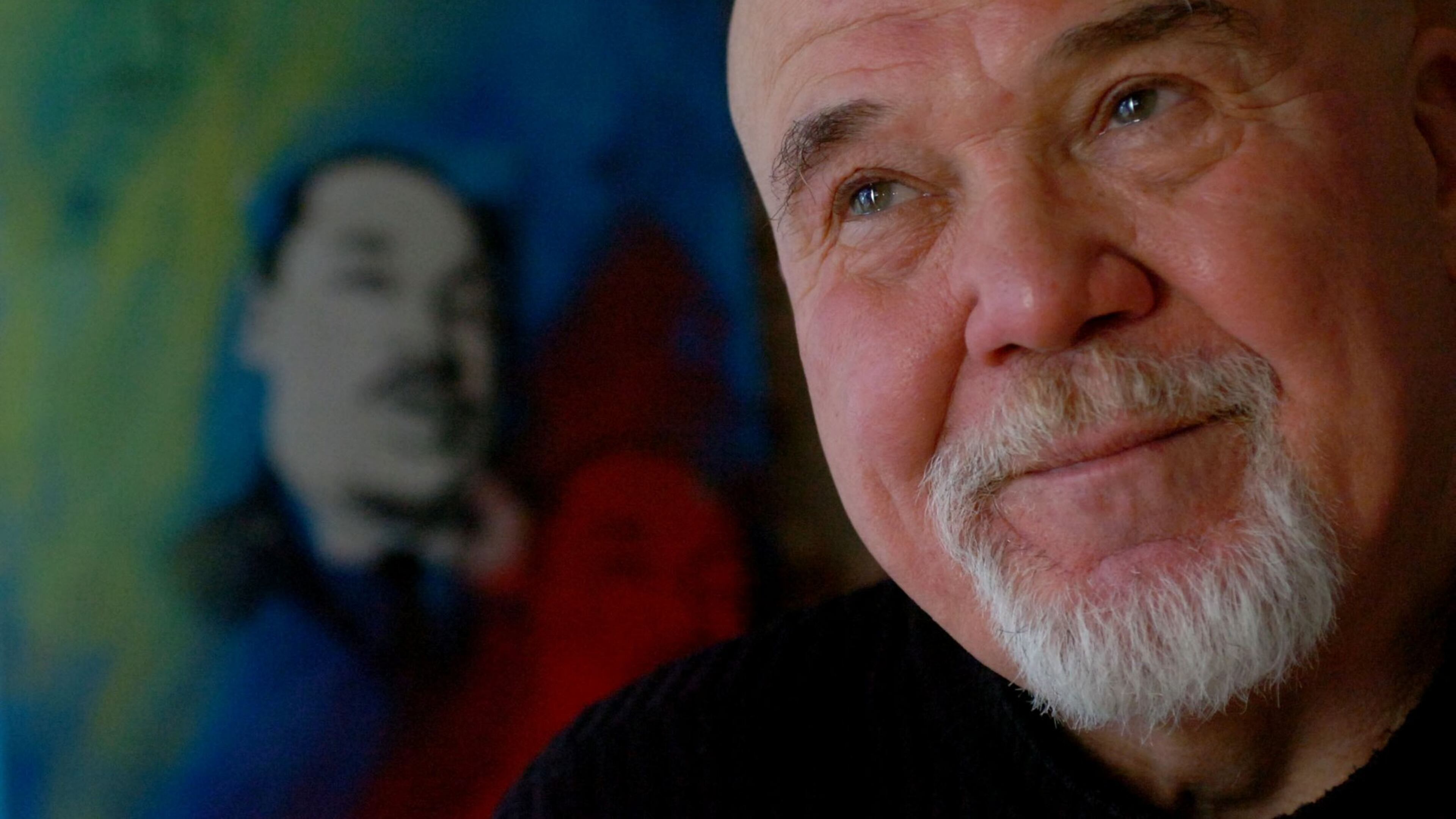

Tom Houck was never one to keep his opinions to himself.
Gregarious, argumentative and occasionally cantankerous, he spent six decades making friends, picking fights and inserting himself into the political and civil rights history of Atlanta.
As a teenager, he drove the Rev. Martin Luther King Jr. and became a trusted member of the King household. He later marched for civil rights, sparred with conservatives on Atlanta television and radio, and spent his final years taking visitors through the streets where history had unfolded.
Houck, 79, died Thursday from pneumonia, according to his close friend Judie Kenna.
Isaac Farris, son of Christine King Farris and King’s nephew, spent a lot of time by Houck’s side during his final days.
“We lost a true soldier,” Farris said, “one who was dedicated to the cause through and through.”

Houck also found life in the media spotlight, hosting a radio show in the 1980s, writing media and political columns for Atlanta magazine and Creative Loafing and parrying over politics on the weekly chat show “The Georgia Gang.” He also did political consulting and most recently hosted an Atlanta civil rights tour.
He regularly stayed in touch with a coterie of close friends over the years including civil rights legends like John Lewis and Julian Bond, former Atlanta Mayor Bill Campbell and veteran Atlanta journalist Maria Saporta.
“Friendship and conversation and being around people was his oxygen,” said Rick Allen, who worked with Houck on “The Georgia Gang” and spoke with him daily for many years. “He always prided himself on having the best and most accurate gossip in town.”
Houck would sometimes get angry with his friends and not talk to them for a time. But he’d make up with them later, Kenna said.
“He was a grumpy guy on the outside,” said Saporta, “and a marshmallow on the inside.”
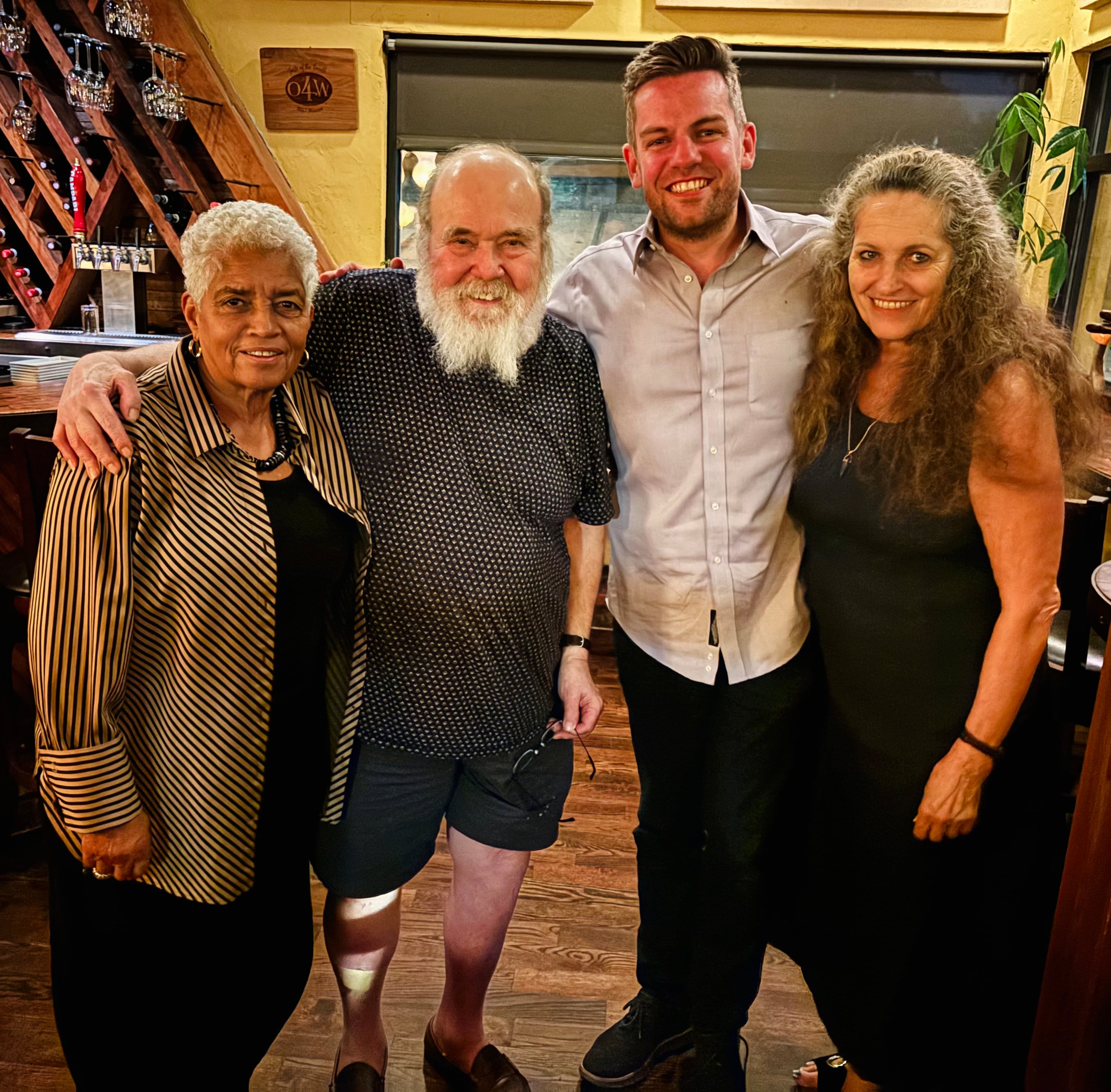
Atlanta City Council member Matt Westmoreland met Houck 13 years ago at Augustine’s, a former Memorial Drive watering hole and one of Houck’s favorite gathering spots. They quickly became friends. For the past five years, Westmoreland joined Houck, Saporta and former Atlanta Mayor Shirley Franklin for quarterly meals.
“He had an incredibly sharp wit and sense of humor and his institutional knowledge of Atlanta was unmatched,” Westmoreland said.
Born into a struggling blue-collar family in Boston, Houck became aware of social injustice in 1954 as a child when his Black second grade teacher told him about segregation in the wake of Brown v. Board of Education, the case in which the U.S. Supreme Court ruled that racial segregation in public schools was unconstitutional.
At age 12, he participated in his first protest holding a sign at a Woolworth’s in Cambridge, Massachusetts.
As a teen, after his mother died, he moved in with an aunt to Jacksonville, Florida, where he attended a school named after a Confederate general. His political leanings didn’t exactly fit in.
Appalled by Bloody Sunday in 1965, when Alabama law enforcement officers attacked about 600 peaceful civil rights protesters attempting to cross the Edmund Pettus Bridge in Selma, Houck left high school to join the subsequent march to Montgomery. He never looked back.

Houck joined the Southern Christian Leadership Conference under Hosea Williams.
In 1966, Houck was a scruffy teenager waiting outside the SCLC headquarters on Auburn Avenue when King spotted him.
His ride had failed to show up, so King invited him home for Sunday lunch.
The invitation would change the course of Houck’s life.
Coretta Scott King, Houck said in a 2009 interview with the University of Georgia, took an immediate liking to him. She was having trouble with drivers and asked Houck to drive her kids to school.
“Then Dr. King asked me if I would come on the road with him at times when he was traveling,” Houck said, “but always in Atlanta my job was basically to take the kids around and take Dr. King to the airport or wherever he had to be when he was back in town.”
Houck told CNN in 2008 that two of King’s children, Dexter and Martin Luther King III, would call him Uncle Tom with a wink and a nod.
He was also well aware of the irony of a white guy driving around a prominent Black man in a blue 1964 Chevy Impala in the Deep South listening to the O’Jays and Gladys Knight and the Pips on 1380/WAOK-AM.
At the same time, “driving for him,” Houck told Mark Woolsey of Reporter Newspapers in 2022 in his trademark gravelly voice, “was the greatest experience of my life.”
Houck, Farris said, ultimately became “an informal member of his immediate family.”
He spent several years working on voting rights and following Lewis’ path of getting into “good trouble.” He was arrested at protests numerous times. He also ran a political consulting group with Bond.
As Atlanta’s political landscape changed, Houck found another platform for his opinions: the airwaves.
His insider knowledge and liberal politics made him a natural fit for political talk radio and television, where he sparred with conservatives and became a familiar voice in the city’s political debates.
In the 1970s, Houck wrote columns called “The Tattler” for Atlanta Magazine and the Atlanta Gazette, which led to political reporting and commentary on 640/WGST-AM.
“He gave us credibility in City Hall,” said Eric Seidel, news director at the time. “He knew everybody there.”
Houck later became a WGST talk show host, going head-to-head with conservative Atlanta Journal editorial writer Dick Williams. He later hosted his own nighttime talk show but lost the gig in 1990 soon after WGST began running the syndicated Rush Limbaugh show.
“He was probably one of the first victims of the kind of right-wing takeover of talk shows,” Farris said.
Houck also spent two decades as the liberal voice on “The Georgia Gang,” a weekly political TV talk show that began on WSB-TV but moved to the CBS affiliate, then Fox 5. His run ended in 2001.
And Houck was always happy to mentor and advise a new generation of political leaders.
“He often was a great friend and adviser to my dad,” said Michael Julian Bond, an Atlanta City Council member and son of Julian Bond. “And when I entered politics, he assumed a similar role for myself. He was always someone you could go to and get a real, unabashed opinion about pretty much anything.”
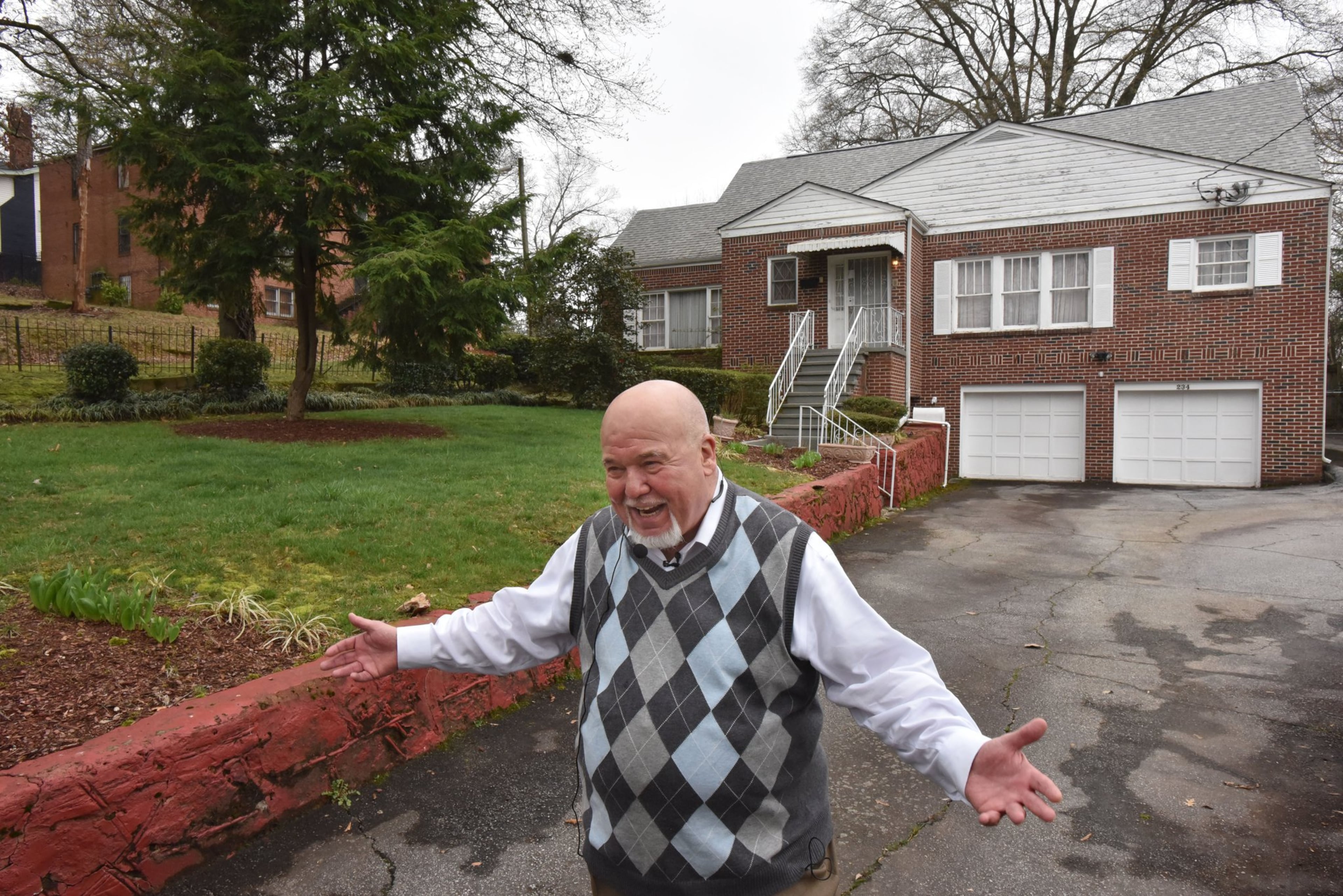
In 2015, Houck began a civil rights tour that ran regularly for more than a decade, save for a break during the pandemic. His last tour was held last month.
Farris said he and Michael Julian Bond would occasionally help Houck lead tours when groups became too large for him to manage alone.
Houck would not just host out-of-town tourists but would do special tours for students and for corporate leaders who wanted to learn about the city.
“It was a perfectly natural thing for him to do,” his friend Allen said. “So much of Tom’s personality was exemplified by driving around. A sense of place was important to him. I think it satisfied his soul taking people around and showing them where all the important moments in the civil rights movement happened.”

For a man who spent so much of his life surrounded by people, the passing of old friends became increasingly difficult.
Houck never married or had children, and Farris said the death of John Lewis in 2020 hit him particularly hard. As more friends from the civil rights era died, Houck sometimes struggled with loneliness.
Farris began making a point of checking on him, stopping by for dinner or calling just to talk.
Houck had once described the morning calls he received from Lewis, one of his closest friends.
“John Lewis was one of my best friends in the world,” Houck recalled in a 2022 interview. “He would call me almost daily and wake me up in the morning.”
Lewis would greet him with a familiar question: “Mr. Houck, are you awake? It’s almost eight o’clock!”