Sewage floods cells at ICE detention center in Georgia, advocates say
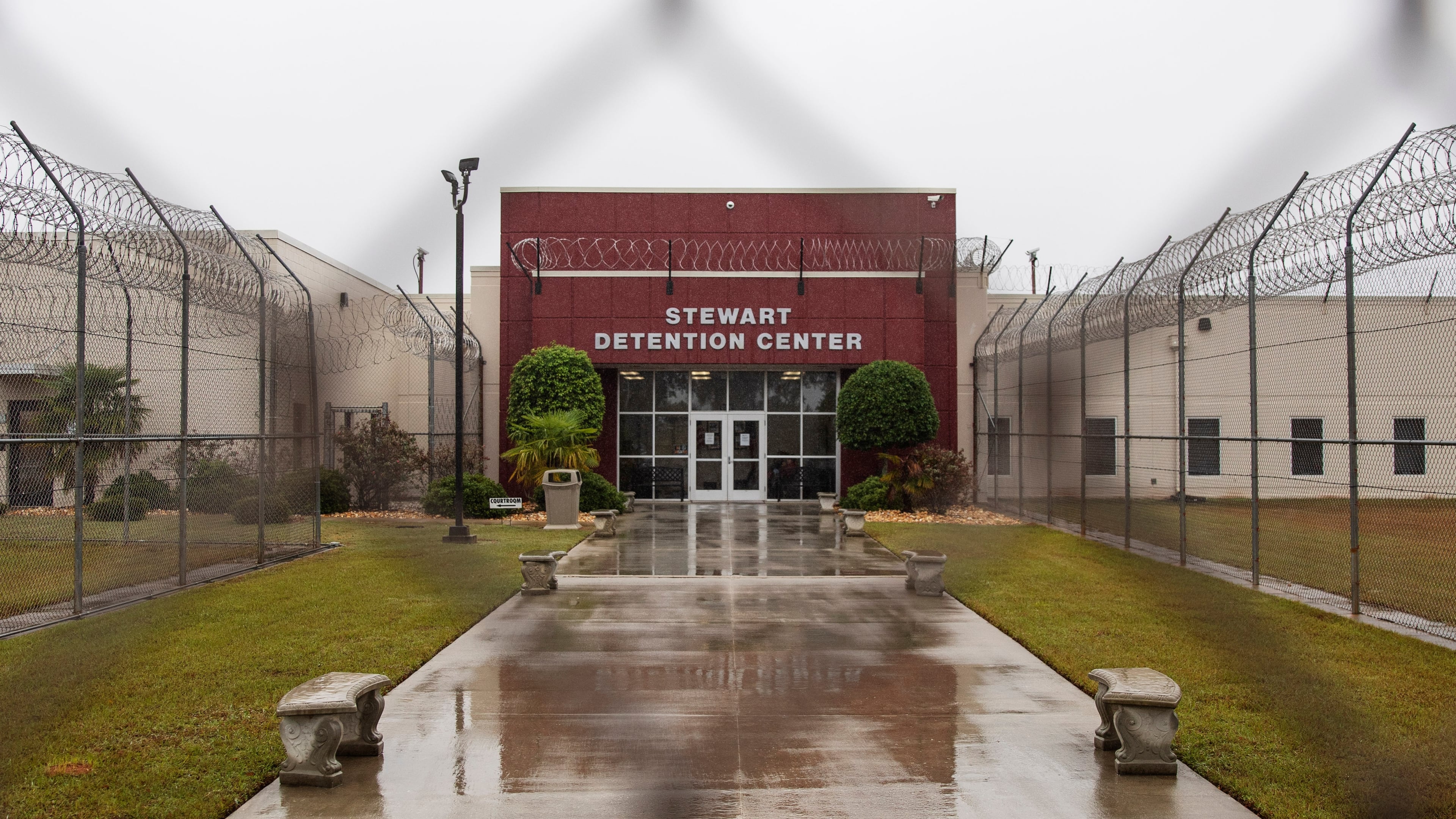

A sewage backup has flooded parts of South Georgia’s Stewart Detention Center, leaving some Immigration and Customs Enforcement detainees with restricted access to drinking water or showers, advocates say.
Amilcar Valencia, director of El Refugio, an immigrant-serving Stewart County nonprofit, said his organization has been fielding reports of foul-smelling sewage backing up from bathrooms and flooding cells with up to nearly an inch of contaminated water. He said eight calls came in from detainees or their loved ones expressing alarm.
“People are calling us desperate for help. They are reporting raw sewage in their cells, no drinking water, and being told to clean up contaminated water without protective equipment,” Valencia said in a statement released Thursday. “When the government chooses to detain people, it has a responsibility to ensure their basic health, safety, and dignity.”
Immigration attorney Marty Rosenbluth represents several individuals detained inside the Stewart ICE facility. He told The Atlanta Journal-Constitution that he received reports of detainees needing to sweep the sewage away from affected areas. He said guards received rain boots, but not detainees.
According to a spokesperson from CoreCivic, the Tennessee-based private prison operator that runs Stewart Detention Center, “a plumbing issue affecting two housing units” was first recorded Tuesday night. As of Thursday afternoon, work to fix the issue remained ongoing. Water service was temporarily shut off Thursday, and normal water service has yet to be restored.
According to the spokesperson, the individuals in the affected housing units “all currently have access to working plumbing facilities.”
“Additionally, detainees who assisted with the cleanup efforts did so voluntarily and were provided with the proper equipment,” the spokesperson continued. “Any claim to the contrary is false.”
Late Thursday, Atlanta-based ICE spokesperson Lindsay Williams emailed a response to the AJC: “We are aware of a temporary drainage issue at the facility and are working with a plumbing contractor to identify and repair the underlying cause.”
Williams wrote that “affected areas have been cleaned and are currently free of backup” and that detainees who “volunteered to assist with cleanup” were provided protective equipment.
“All detainees have access to drinking water, functioning toilets and hot showers,” he added. “Portable toilets are also available as a precaution should water service need to be temporarily interrupted during repairs.”
As of July 2026, Stewart was holding over 2,000 immigrant detainees, making it the second-busiest ICE detention facility in the country, according to the most recently available federal data obtained by the Transactional Records Access Clearinghouse, a research institute at Syracuse University.
Valencia said his organization will monitor for a potential increase in infections and other health concerns among Stewart detainees following their exposure to wastewater. He added that there is concern over Hurricane Isaias exacerbating plumbing and flooding problems in the facility.
“Any natural disasters that happen, the safety of those people who are incarcerated is not the first thing that comes to mind to people in general, and how to protect them,” he said.
CoreCivic said it’s watching the storm.
The company is “closely monitoring weather conditions ahead of the weekend and are taking precautions to address any potential flooding concerns at the facility,” the spokesperson said.