No way out: ICE detainees in Georgia increasingly have no access to bond
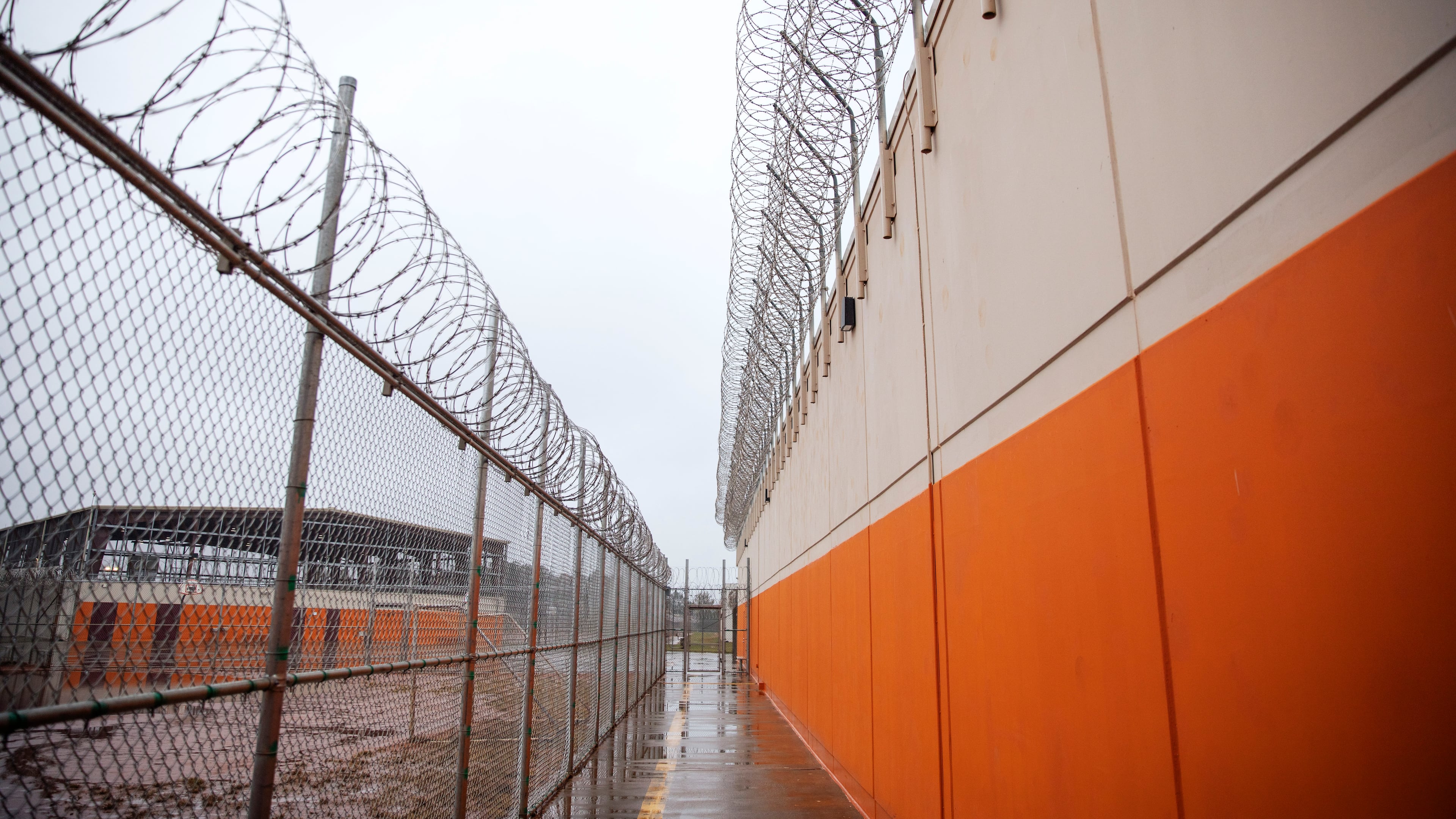

Tatiana Rivadeneira has not seen her husband in over eight months, since a December arrest by immigration authorities in Florida, where the couple settled after moving to the U.S. from Ecuador.
Rivadeneira’s husband, Elias Vera, was quickly transferred to an Immigration and Customs Enforcement detention center in Folkston, a small Georgia town that sits just north of the Florida border.
Vera is seeking asylum in the U.S, has work authorization and a driver’s license. Still, an immigration judge earlier this year denied Vera a bond that would have allowed him to continue working and wait at home for the ruling on his deportation case.
It’s the type of decision that is becoming increasingly common in Georgia, and stands in sharp contrast to previous administrations in which bond was broadly accessible to immigrants like Vera, with no criminal record and strong community ties.
Vera’s extended stay in detention has caused a decline of his mental and physical health over the past several months, Rivadeneira said.
“He is not ok. There are moments you can tell that he’s broken,” said Rivadeneira, who told The Atlanta Journal-Constitution that she speaks with her husband every day on the phone. His time in immigrant custody, she said, has “torn apart our family.”
Amid a push by President Donald Trump’s second administration to increase deportations and detentions, immigration judges in Georgia are granting fewer and fewer bonds.
The result, according to local immigration attorneys, are long stints in unhospitable detention facilities that push people to self-deport.
Over the course of the Joe Biden administration, immigration judges in Georgia approved nearly half of all bond applications, according to Mobile Pathways, a nonprofit that compiles and analyzes federal immigration court data.
From January 2025 through June 2026, the latest month of available data, bonds in Georgia were granted just over 25% of the time, with denials in 2026 jumping to the highest rates in at least four years.
Immigration judges nationwide are separate from the rest of the federal judiciary, and instead are employees of the U.S. Department of Justice.
Bond approval rates vary among individual Georgia judges.
Judge Bianca Brown, for example, approved 58 of the 528 bond applications she ruled on in the first six months of 2026 — an 11% rate, which is down from an approval rate of 33% in 2025; 36% in 2024; 59% in 2023; and 66% in 2022, according to Mobile Pathways.
The Atlanta Journal-Constitution attempted to contact Brown through the Executive Office for Immigration Review but did not receive a response.
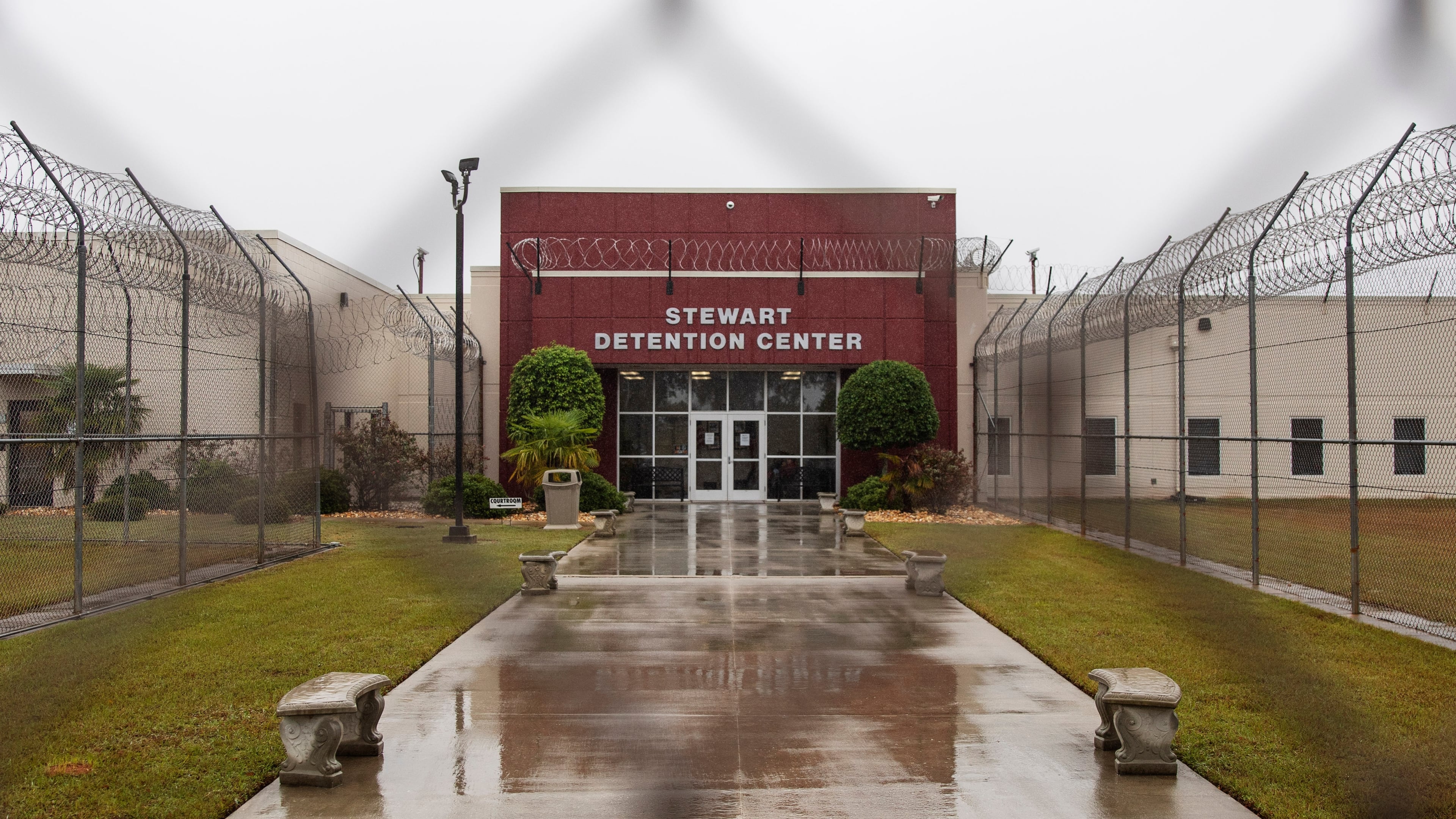
Brown hears cases out of the immigration court nestled inside ICE’s Stewart Detention Center, where overall bond-grant rates are lower than in the state’s other immigration courts, located in Atlanta.
As of July 2026, Stewart Detention Center held over 2,000 detainees, making it the country’s second largest immigrant lock-up, according to ICE data. Overall, Georgia held 4,556 immigrant detainees, fourth-most out of all states.
The Executive Office for Immigration Review, the agency that oversees the immigration court system, did not respond to questions about falling bond-grant rates in Georgia. A spokesperson said in a statement that the office “does not comment on immigration judge decision making.”
Karen Weinstock, a Dunwoody-based immigration attorney, said the “default now is to detain everybody, and don’t let anybody go.”
Carolina Antonini, a Buford Highway immigration lawyer, says she has recently started adding more evidence in her bond cases than in the past, putting in more effort to prove clients are eligible. But that has not been a guarantee of success.
“There are a lot of judges who are placing a burden of proof that is inordinately high, and the line keeps moving,” Antonini said.
Antonini said she believes the goal is to keep immigrants in detention, and erode their resolve to challenge their deportation — a process that can take years.
“The system seems to be set up at least as a soft goal to discourage people from fighting by making their life a living hell,” she said.
In the increasingly rare instances immigrants are granted bond, being able to leave ICE detention may still prove out-of-reach. That’s because immigration authorities are systemically filing stays and appealing bond grants to the Board of Immigration Appeals, the body that reviews decisions by immigration judges, attorneys say.
Appeals can take months, and immigrants remain behind bars during that time. Ultimate decisions by the appeals board tend to favor the government.
Bond amounts set by immigration judges have also been rising, which can create a financial roadblock since immigration bonds must always be posted in full, unlike some criminal bonds.
In 2026, the median bond granted in Georgia was $7,500, according to the federal data compiled by Mobile Pathways. That is up from $6,000 the year prior.
Weinstock said she frequently sees bond amounts set upward of $10,000 in her practice. Antonini called recent bond amounts the highest she has seen in her 30-year career.
Rivadeneira said she grows more worried for her husband with each additional day he spends in immigrant detention. Vera suffers from a chronic condition that causes sharp pain in his abdomen. He recently had to spend three weeks in a wheelchair because he struggled to move around the detention center, Rivadeneira said.
“I’m terrified of something even worse happening to him,” she said.
When they speak on the phone, Rivadeneira said she tries to distract Vera by bringing up his interests, from the World Cup soccer to Formula 1 racing. She urges him to read to keep his mind sharp and promises to cook him anything he wants upon his release.
“There are days where he only listens, he doesn’t speak,” Rivadeneira said.
The couple have two daughters.
The youngest graduated from high school earlier this year. Although she received a college scholarship, she has put her studies on hold and is working at a restaurant, to help buffer the family’s finances after losing Vera’s handyman income, Rivadeneira said.
The oldest is the only family member with permanent legal status. She has driven from Florida to visit her father at Folkston twice, but told her mother that will not repeat that experience.
“She told me: ‘I can’t see my dad like that. It made me want to make him really small so I could put him in my pocket and get him out of there,’” Rivadeneira said.
Judicial layoffs under Trump
During bond hearings, judges must weigh whether a detained immigrant is a danger to society or a flight-risk, meaning he or she is unlikely to show up to further deportation court dates, according to immigration court policy.
In practice, that means bonds have historically been granted to individuals with no criminal records and with extensive family, business and community ties in the U.S., according to attorneys and a former Georgia immigration judge interviewed by the AJC.
If bond applicants have a clear pathway to obtaining legal status in the country, that increases their chance of getting out of detention. Bonds are paid back at the conclusion of recipients’ immigration cases, assuming full compliance with all court orders.
Last year, the Trump administration rolled out a policy that made bond hearings largely inaccessible to detained immigrants. A federal appeals court in Georgia rejected that policy in May.
But over the course of recent months, renewed access to bond hearings hasn’t necessarily yielded more granted bonds.
Carmen Maria Rey Caldas was appointed as an immigration judge at Stewart in March 2022. She served there for nearly three years before being transferred to New York. She was laid off last year.
Judges, she said, have been told “that they’re being watched if they grant bond. And so what you’re seeing is a reflection of that.”
Weinstock said it has become common for immigration judges to quickly dismiss many of her bond applicant clients as potential flight risks without explanation, even if they have been in the U.S. for decades and are parents to U.S. citizen children.
“A lot of times they don’t even try to be objective and independent. They don’t even let you argue your case. They just say, ‘I’m just going to deny bond,’ or ‘I’m just not going to approve this case,’” Weinstock said.
As a branch of the DOJ, the Executive Office for Immigration Review is under command of the president. An immigration review office spokesperson told the AJC that immigration judges operate as independent adjudicators, and that all matters before them are settled on a case-by-case basis.
Since 2025, the Trump administration has fired more than 100 immigration judges — what immigration attorneys call an unprecedented purge that is likely pressuring remaining judges to fall in line with the policy of mass deportations.
Immigration judges “are aware of the tenor of the administration and what their ultimate boss, which is the president, wants them to do. They’re also watching everyone get fired, right?” said Rey Caldas, the former immigration judge at Stewart. “They’re able to read the tea leaves.”
In a memo published last June, Executive Office of Immigration Review acting director Sirce Owen, formerly an immigration judge and ICE official in Atlanta, accused some unnamed judges of exhibiting bias “in favor of an alien and against the Department of Homeland Security.” Owen noted that such a posture “may be subject to corrective or disciplinary action.”
Josh McCall, an immigration attorney in Gainesville, said that kind of general message has impact on individual hearings.
“Even if immigration judges are trying to do the right thing, there’s no way that (layoffs under Trump) can’t affect their mentality while they’re reviewing the cases, and that is improper,” McCall said. “In my opinion, that’s not due process, it’s not fundamentally fair.”
During past phone calls with her husband, Rivadeneira frequently urged him to stay strong. Vera’s underlying case for asylum was solid, she said, because of risks to his life in Ecuador.
Vera had another bond hearing, his second, on July 30. It was not successful.