Atlanta has lost nearly 150 acres of tree canopy a year, study finds

In the years since the Great Recession, many of Atlanta’s intown neighborhoods have been transformed by a building boom aimed at keeping up with the city’s growing population.
But for “the city in the forest,” that development has come at the expense of large chunks of its famed tree canopy. Between 2008 and 2023, Atlanta lost an average of nearly 150 acres of urban forest — an area more than six times the size of Centennial Olympic Park — each year.
Those are some of the findings from an extensive and long-awaited assessment of Atlanta’s tree canopy conducted by researchers at Georgia Tech’s Center for Urban Resilience and Analytics.
The survey was commissioned by City Council and led by Georgia Tech professor Tony Giarrusso, who has conducted three previous tree surveys for the city going back to 2008.
Atlanta City Council set a goal in 2023 of reaching and maintaining an average of 50% canopy coverage across the city. And while Atlanta still has one of the most expansive urban forests in the country, the new survey finds the city has drifted farther from hitting the mark.
The new report, which looked at how the city’s canopy changed between 2018 and 2023, found 45.7% of Atlanta’s total land area was covered in trees in 2023, down from 46.5% five years earlier.
It’s a continuation of the steady decline captured in previous surveys.
In 2008, just under 48% of Atlanta’s land area was covered by tree canopy. By 2014, coverage had shrunk to 47.1%, then to 46.5% in 2018, past Georgia Tech assessments found.
The report does not capture what’s happened since 2023.
Last year, City Council approved the most significant updates to the city’s tree ordinance since it was first adopted more than 25 years ago. The new rules took effect in January.
But the survey says the city’s canopy has likely continued to shrink.
“Measures to offset tree losses should be undertaken if the city is to achieve its goal of 50% canopy cover,” the assessment reads.
The report was shared with The Atlanta Journal-Constitution ahead of its official public release at Tuesday’s Community Development and Human Services Committee meeting, where it will be presented to council members. The committee oversees land use and zoning matters, including those that involve the city’s tree ordinance.
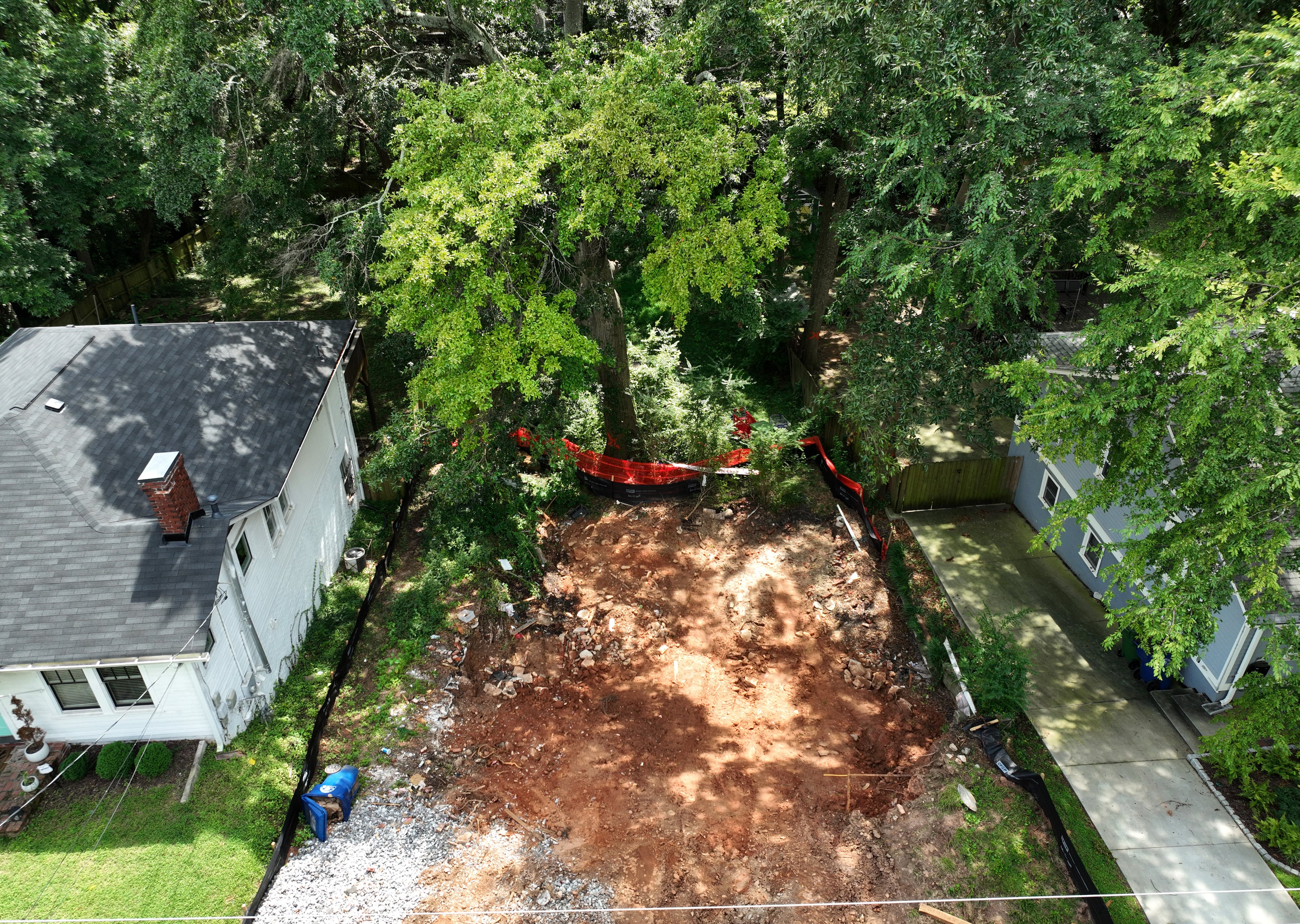
The survey’s findings were first reported by SaportaReport.
Michael Smith, a spokesman for Mayor Andre Dickens, said in a written statement that the administration continues to work on the tree protection ordinance, calling it a “multistep process.”
Giarrusso, the survey’s author, did not immediately respond to a request for comment.
Protecting Atlanta’s trees has been a thorny issue for years, perhaps best exemplified by the multiple failed attempts to rewrite the city’s tree protection rules.
City Councilman Matt Westmoreland, who chairs the Community Development and Human Services Committee, said he was not surprised by the survey findings but said he was open to considering more updates to Atlanta’s tree ordinance.
“We’ve obviously been seeing a lot of continued development in the city, and so two things can be true at the same time: Atlanta continues to have one of, if not the largest, percentage of tree canopy in the country — and ours has been going down,” Westmoreland said.
Mass clearings claim the most trees
Like past assessments, the survey found the overwhelming majority of Atlanta’s intact canopy — 72% — is on land zoned for single-family residential homes.
For years, tree removals on these properties had been driving the slow, steady decline of the city’s urban forest.
That was not case between 2018 and 2023.
While single-family projects are still claiming trees, researchers found multifamily development and redevelopment was responsible for most of the tree losses.
The shift from removals scattered on many smaller lots to mass clearings on a handful of properties is backed up by permitting data, the assessment notes. Over the five-year survey period, 50% of permitted tree removals occurred on just 2% of development sites. On each of those, 100 or more trees were knocked down.
Neighborhoods to the east, west and southwest of downtown lost the most trees, survey data shows.
The survey’s release comes with Atlanta, like other cities, already facing more intense heat waves. The risk of extreme heat is expected to grow in the coming decades, and studies have found trees are among the most cost-effective ways to keep the city cool.
As the climate changes, heavy rainfall events, like the kind that flooded the Downtown Connector in May and likely contributed to the deaths of thousands of fish on the Chattahoochee River, are also on the rise. There, too, research shows trees and other vegetation provide infrastructure benefits.
Tree protection advocates say the findings show the city needs to act to reverse the trends.
“We are losing our best trees to clear-cutting developers,” said Chet Tisdale, a member of the Atlanta Tree Conservation Commission. “If that continues there will be permanent damage, not just to Atlanta’s environment, but to the whole city and to our economy.”
Calls for new tree protections
The assessment also offers 12 broad recommendations for the city to consider in the interest of saving trees.
Those include requiring that builders prioritize planting and protecting native species, and employing strategies to reduce tree loss from residential, multifamily and other types of development.
Smith, Mayor Dickens’ spokesman, noted some of the report’s recommendations have already been incorporated in the city’s updated tree ordinance.
Indeed, the new tree ordinance includes tree replanting requirements that emphasize native species, along with minimum tree density requirements for plantings on single-family lots. The city also now charges higher fees for permitted tree removals and imposes steeper fines for illegal ones.

In the eyes of many tree protection advocates, however, the changes haven’t gone far enough.
Last year, amid the heated debate over how to revamp Atlanta’s tree rules, many conservationists pushed the city to adopt a set of “tree preservation standards” that would require developers to preserve trees on a certain percentage of their lots.
But builders pushed back hard on the proposals, claiming they’d stymie growth and worsen housing affordability problems. Ultimately, the measures tree advocates sought were left out of the ordinance.
Michael Paris, the president and CEO of the Council for Quality Growth, a trade association that advocates for the development industry, said in a written statement that the tree survey “shows us opportunities to continue to collaborate and make edits (to the tree ordinance) if needed.”
“The Council for Quality Growth is committed to finding the right balance between important affordable housing goals and tree canopy preservation,” Paris said.
Kathryn Kolb, an expert and consultant on tree protection, sees it differently. She said the survey findings show the city still has not solved its central problem of “massive, unregulated, unsustainable tree loss.”
“It’s up to the city to change that,” Kolb said. “And if they don’t, Atlanta will look and feel quite differently as an urban area not too long from now.”
A note of disclosure
This coverage is supported by a partnership with Green South Foundation and Journalism Funding Partners. You can learn more and support our climate reporting by donating at AJC.com/donate/climate.