How a dangerous and very rich con artist escaped federal prison
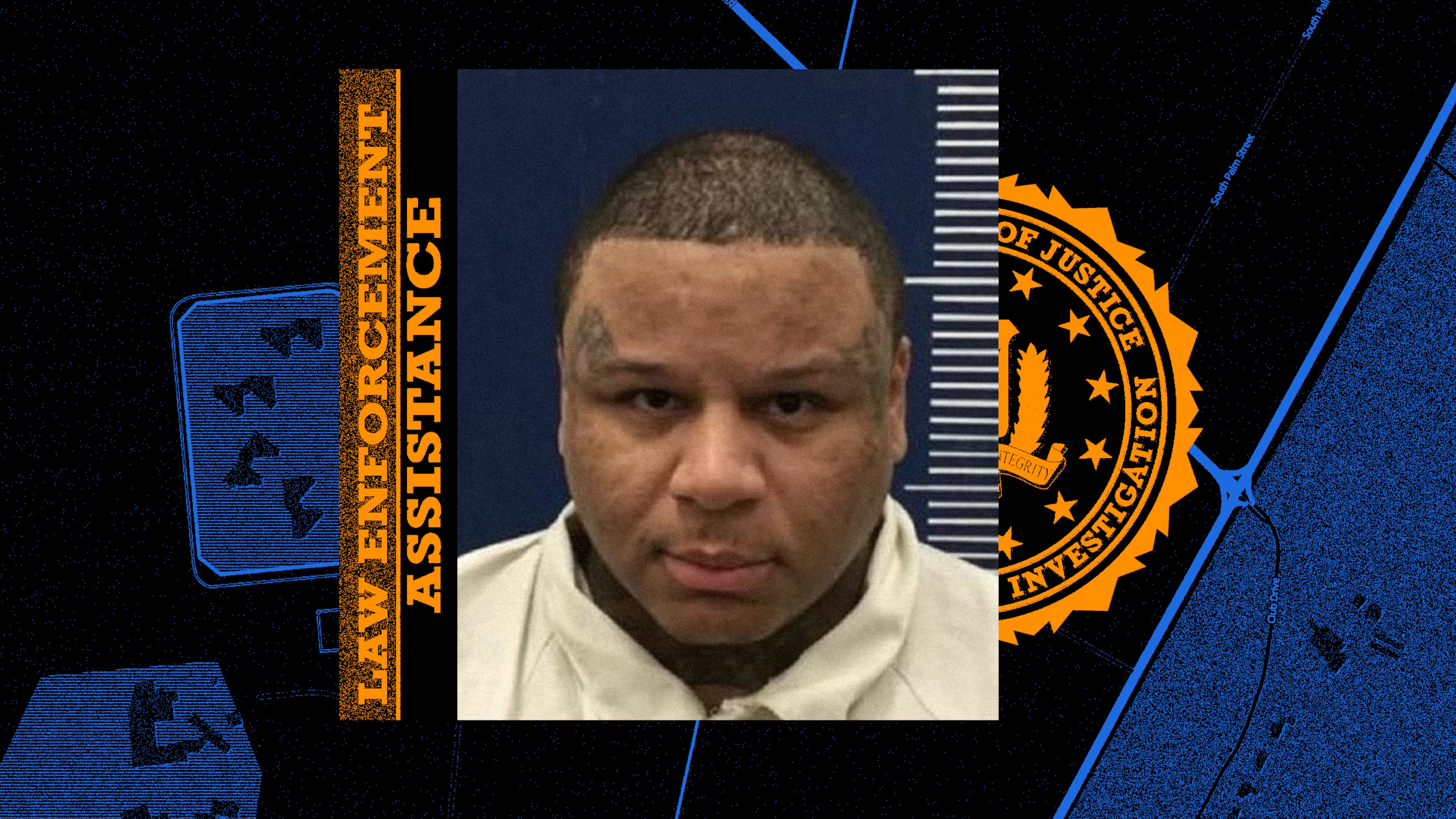

When Arthur Lee Cofield Jr. escaped from the federal prison camp in Jesup, it was not a moment destined to become part of prison break lore.
Minimum security prison camps like the one in Jesup generally do not have perimeter fencing, nor do they typically have multiple officers on duty. Prisoners can pretty much come and go as they please, and that’s basically what Cofield did. Sometime in the morning or afternoon of May 26, he left and never came back. Hours may have gone by before prison officials noticed.
Nearly two months later, Cofield is still, in the vernacular of the Federal Bureau of Prisons, a “walkaway.” But, of course, Cofield being Cofield, he’s much more.
The man who stole $11 million from one of America’s richest people while inside what’s supposed to be Georgia’s toughest prison has added yet another chapter to his story — only this time he’s made a different prison system look foolish.
Few prison scam artists have stirred public interest like Cofield, whose theft of $11 million from the Charles Schwab account of billionaire filmmaker and philanthropist Sidney Kimmel captured worldwide attention when it was first revealed by The Atlanta Journal-Constitution in 2022.
Cofield not only figured out a way to access Kimmel’s Charles Schwab account, he was able to turn the money into gold coins, hire a private plane to fly the coins from Idaho to Atlanta and use a portion to buy a $4.4 million mansion in Buckhead before federal authorities unraveled the scheme.
Escaping from the camp in Jesup has once again made the 34-year-old Cofield a phenomenon on social media, fueling speculation that, with the rest of the $11 million possibly hidden somewhere and at his disposal, he could be anywhere from Mexico to Norway.
But it also has shined a harsh light on the Bureau of Prisons, which appears to have disregarded its own security policy by assigning Cofield to a camp.
When he escaped, Cofield had six years remaining on an 11-year federal sentence for conspiracy to commit bank fraud and aggravated identity theft stemming from the Kimmel scam. He also was serving a concurrent state sentence for crimes related to a drive-by shooting — it, too, orchestrated from inside the Georgia prison system.
Based on his criminal history, Cofield would not appear to meet the criteria for a minimum security camp. Yet there he was at the camp in Jesup, where freedom is just a short walk through the woods.
“Walkaways happen,” said Hugh Hurwitz, a former longtime bureau official who from May 2018 to August 2019 served as its acting director. “But this one, to me, is a bad look. The question in my mind would be, ‘What is the BOP’s justification for putting this guy in a camp?’”
The bureau declined to respond to a series of questions from the AJC regarding Cofield and the circumstances surrounding his escape. In an email, a bureau spokesperson said the agency does not comment on the conditions of confinement for any prisoner because of “privacy, safety and security reasons.”
“Unfortunately, technical `escapes’/walkaways from non-secure facilities do occur,” wrote the spokesperson, Emery Nelson. “In these cases, inmates are referred to the Federal Bureau of Investigation and the U.S. Attorney’s Office for potential prosecution. An inmate committing the act of escape from a non-secure facility is subject to discipline and, accordingly, is reviewed for redesignation in a higher security level institution.”
In the Bureau of Prisons, people speak of prisoners “working their way down” to a camp. According to Hurwitz and other current and former federal prison officials interviewed for this story, that’s because those assigned to camps generally are short-timers with nonviolent records who are motivated to fly under the radar until their sentences end.
“The camps are typically there for prisoners who usually aren’t considered escape risks, because if you do escape from a camp, you go to a higher-security facility and face a longer sentence,” said Hurwitz, who is now a prison management consultant. “So most people put there are pretty much incentivized to stay there. They are close to getting out and in a more relaxed atmosphere. So you don’t want to screw up.”
The bureau assigns prisoners to its various facilities based on a series of public safety factors, two of which — “serious telephone abuse” and a violent history — are prominent parts of Cofield’s record.
Jack Donson, who spent 23 years as a manager in the federal prison system and now heads a prison reform nonprofit, said a prisoner serving concurrent sentences that include those factors would normally be in a low security prison, not a camp. If that prisoner was in a camp, “either the bureau missed (those issues) or they were waived,” he said.
AKA YAP Lavish
Cofield’s path to federal prison was indeed one in which his ability to acquire and use contraband cellphones while in Georgia Department of Corrections facilities led to the commission of several financial scams and at least one violent crime.
Sentenced to 14 years in prison for his role in a bungled armed bank robbery in Douglasville at age 16, he became a far different criminal inside the GDC, adept at penetrating financial institutions and stealing from unsuspecting citizens, including some famous for their wealth.
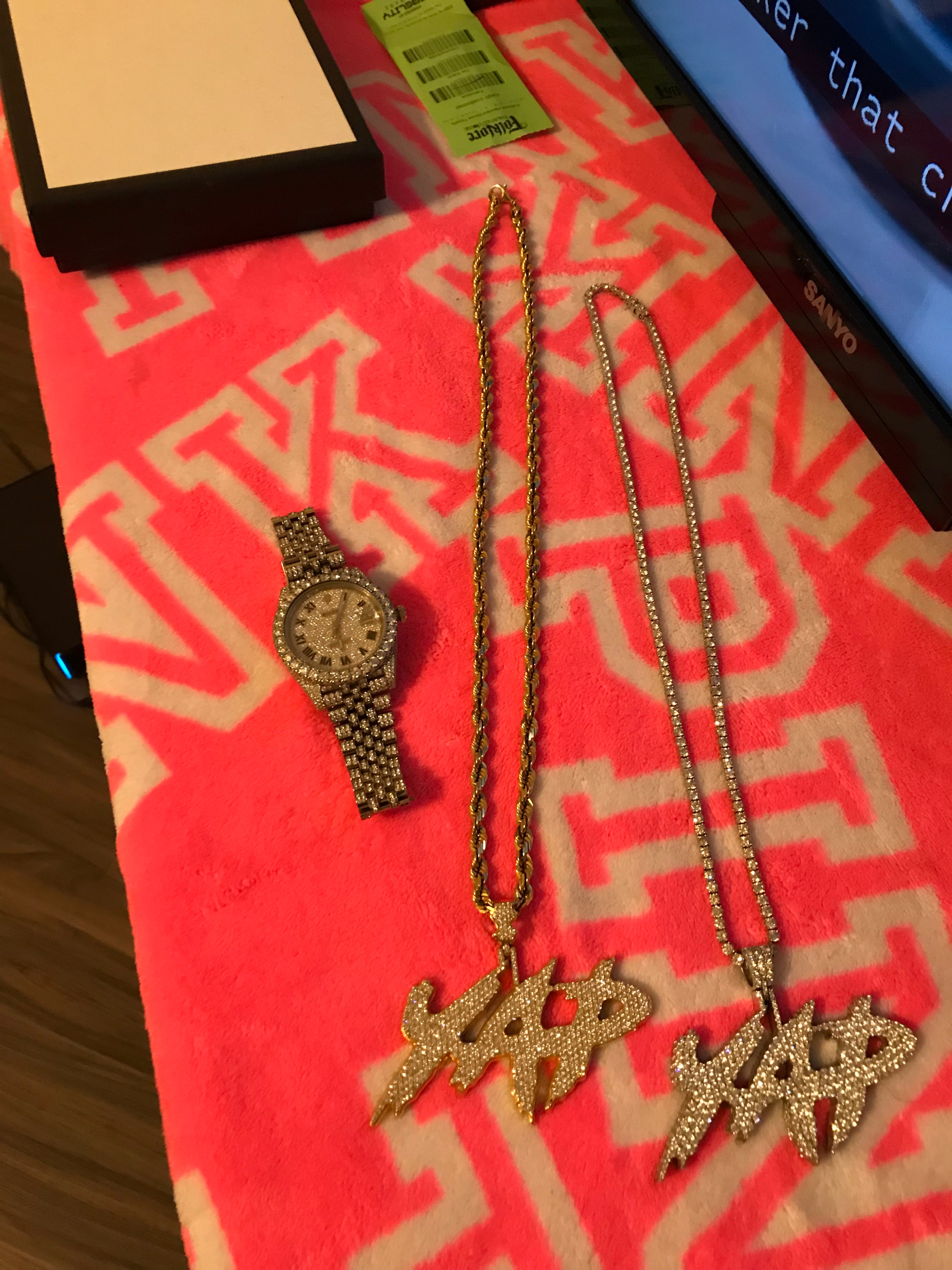
He formed a crew known as YAP, short for Young and Paid, and as its leader — YAP Lavish — he was pulling strings that ultimately made him flush with cash as well as a purveyor of violence.
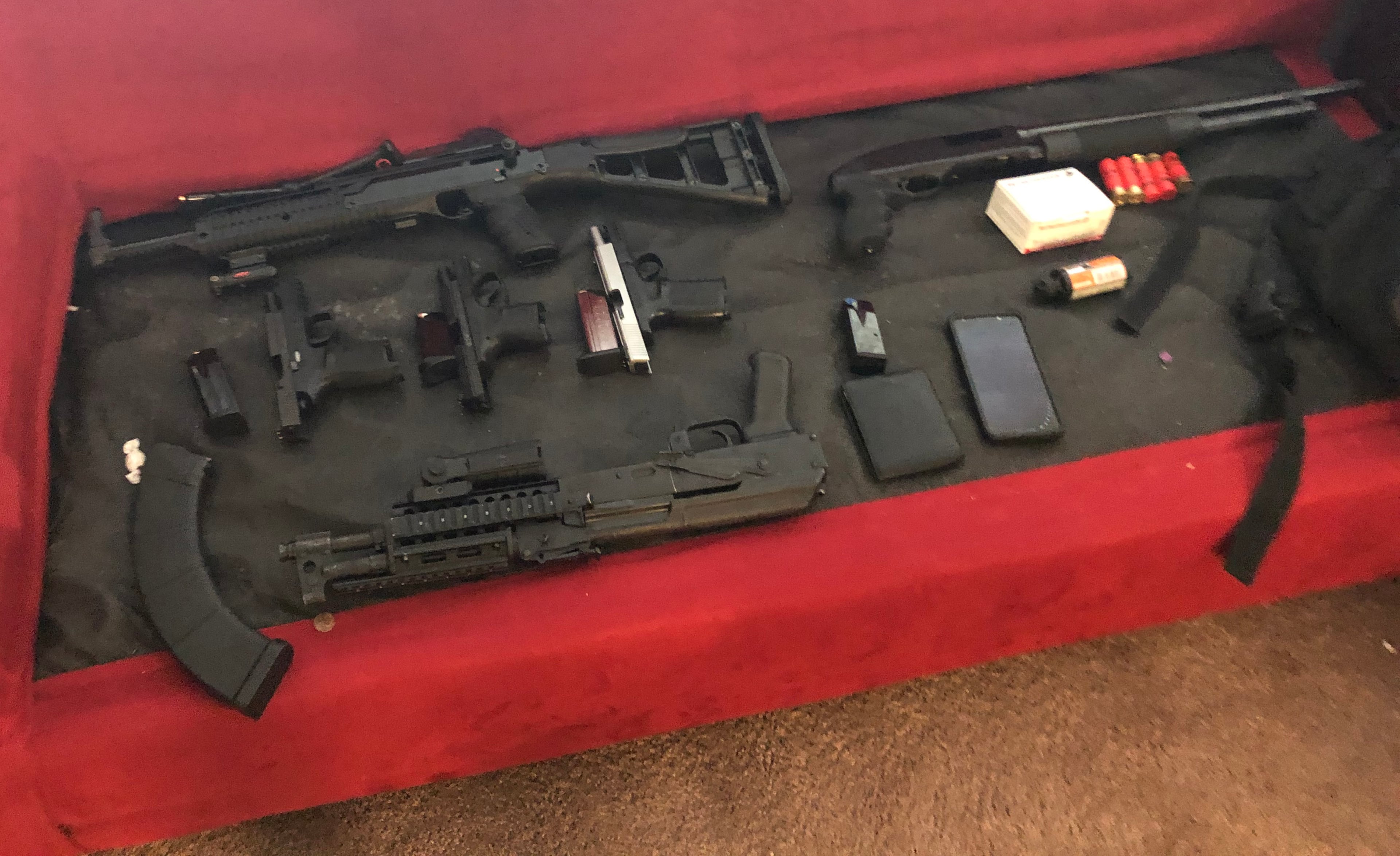
In 2018, Cofield was at Georgia State Prison in Reidsville when he ordered two of his YAP associates on the outside to carry out the drive-by shooting of a man he believed had moved in on a woman with whom Cofield had become romantically involved while in prison.
The victim, Antoris Young, was struck 14 times by a hail of bullets outside a recording studio in southwest Atlanta. He survived but was paralyzed from the waist down.
Cofield was moved to Georgia’s supermax prison, the Special Management Unit in Jackson, after Fulton County prosecutors charged him in the shooting, and it was there two years later that he put in motion the elaborate plan to steal Kimmel’s millions.
The feds were able to uncover the scheme when the warden, Jose Morales, confiscated Cofield’s cellphone and found that it still retained relevant data. But the remainder of the stolen $11 million has never been accounted for, nor has the government recovered millions believed to have been stolen by Cofield from others through his scams.
When Cofield’s GDC sentence for the bank robbery ended in 2021, he was placed in federal custody, and he was still there in January 2024 when he was sentenced after pleading guilty to the Kimmel heist.
The Fulton plea
One clue to the decision by the Bureau of Prisons to allow Cofield to go to the camp may lie in the sentence he received in Fulton County for the drive-by shooting.
Evidence recently obtained by the AJC shows how Cofield ordered the shooting and then, when Young managed to survive, wondered if the shooter would be able to finish the job.
“If he pull through I’ma finish up … Idk how that n---- still got breath,” Teontre Crowley, the shooter, wrote in a text.
“Ok Kool,” Cofield replied.
In October 2024, Cofield pleaded guilty to a series of state charges, including criminal attempt to commit murder and participation in criminal street gang activity, and received a 30-year sentence with 18 to serve in prison.
But the plea likely won’t lead to additional prison time. That’s because it calls for his state and federal sentences to be concurrent and coterminous, meaning they would end at the same time, newly reviewed records show.
Had Cofield been on the hook for additional state prison time, he would have had an official notice of it on his record, and that notice, known as a detainer, certainly would have prevented him from being in a camp, the current and former federal prison officials interviewed for this story said.
Cofield was represented in both the state and federal cases by Steve Sadow, the prominent Atlanta criminal defense attorney who also represented President Donald Trump in the Fulton County election interference case.
Sadow declined to be interviewed for this story except to state that he played no role in Cofield being assigned to the camp.
“I work cases as a trial lawyer,” he said. “Beyond that, I can’t explain why (the Bureau of Prisons) does what it does.”
Adam Abbate, the Fulton prosecutor who agreed to the plea, did not respond to phone and email messages from the AJC seeking comment.
Free to roam
The camp at Federal Correctional Institution Jesup is part of a large complex some 70 miles southwest of Savannah that also includes medium- and low-security prisons. Both are surrounded by fences. The camp has no fence and is situated only a couple hundred yards from the road that borders the complex to the northeast.
Cofield’s plea in federal court included a provision that he would be incarcerated at FCI Jesup, but it didn’t specify the camp.
According to a government affidavit, Cofield arrived at Jesup on March 13 to serve the remainder of his sentence and was assigned to the camp. The affidavit, filed to support a charge of escape from custody, doesn’t identify where Cofield was previously held in the federal system.
As for the escape itself, the Bureau of Prisons has said little other than Cofield was discovered missing from the camp during the 4 p.m. count on May 26.
Prisoners at the camp are supposed to be counted at least five times in any 24-hour period — at midnight, 3 a.m., 5 a.m., 4 p.m. and 10 p.m. Based on the bureau’s timeline, Cofield left the camp sometime after the 5 a.m. count on May 26 and before the next one at 4 p.m.
Terry Boulineau, who spent 35 years as an officer at FCI Jesup before retiring at the end of last year, said prisoners assigned to the camp are supposed to be in their rooms at night but can basically roam free during the day.
“There’s nothing restricting them from leaving other than their own conscience or their own initiative to stay and do their time,” he said.
The camp is adjacent to a walking track that surrounds a baseball field and a volleyball court. Beyond the track, a road that borders the camp, Sunset Boulevard, is just 50 yards away through a grove of pine trees.
Boulineau said camp prisoners have been known to go into the woods, where women have set up tents to meet with the men, and if a prisoner wants to leave, it isn’t hard to slip off the track and walk through the woods to the road.
“They can just walk out there on Sunset and somebody can pick them up,” he said.
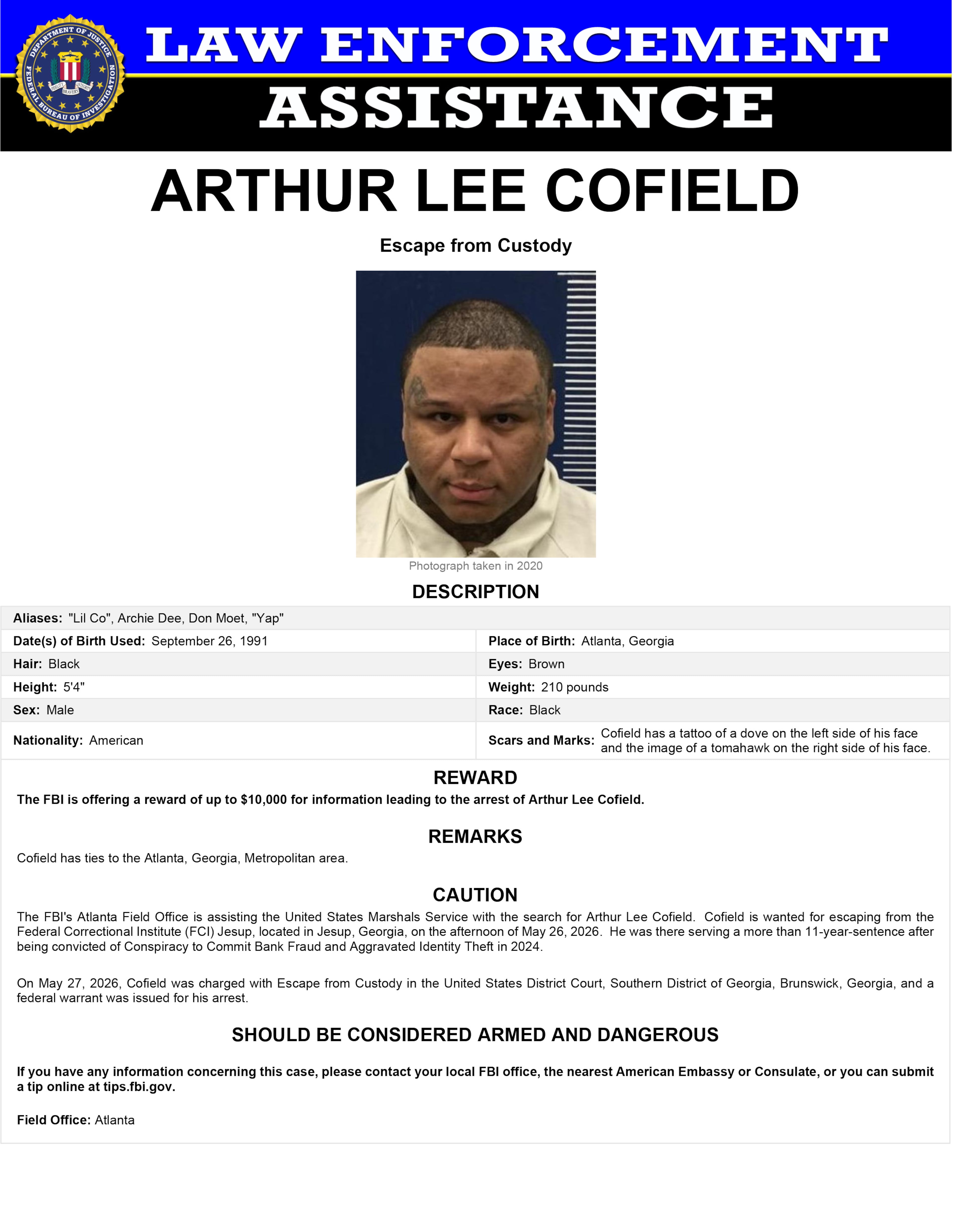
The FBI has offered a reward of up to $10,000 for information leading to Cofield’s arrest. “Should be considered armed and dangerous,” says the notice, which describes the escapee as 5-4, 210 pounds and having a tattoo of a dove on one side of his face and a tomahawk on the other.
The FBI’s Facebook post announcing the reward has drawn more than 1,500 comments, many ridiculing the amount as far less than what Cofield could pay to buy someone’s silence.
“He’s probably reading these and giggling. I would be,” one commenter wrote.
“Better up the reward to a couple mil lol,” wrote another.
Still, the fact that the FBI is offering any type of reward for a walkaway is unusual, signifying once again that Cofield is a criminal set apart.
“For the FBI, the (U.S.) marshals, when somebody walks away from a camp, it’s usually, `Eh, big deal. We’ll get ‘em, because they’ll do something stupid,’” Hurwitz said. “They don’t look that hard. But this sounds different. It sounds like this is something they’re taking seriously.”