Holster, then handcuff: Fatal DeKalb arrest defied most officer training
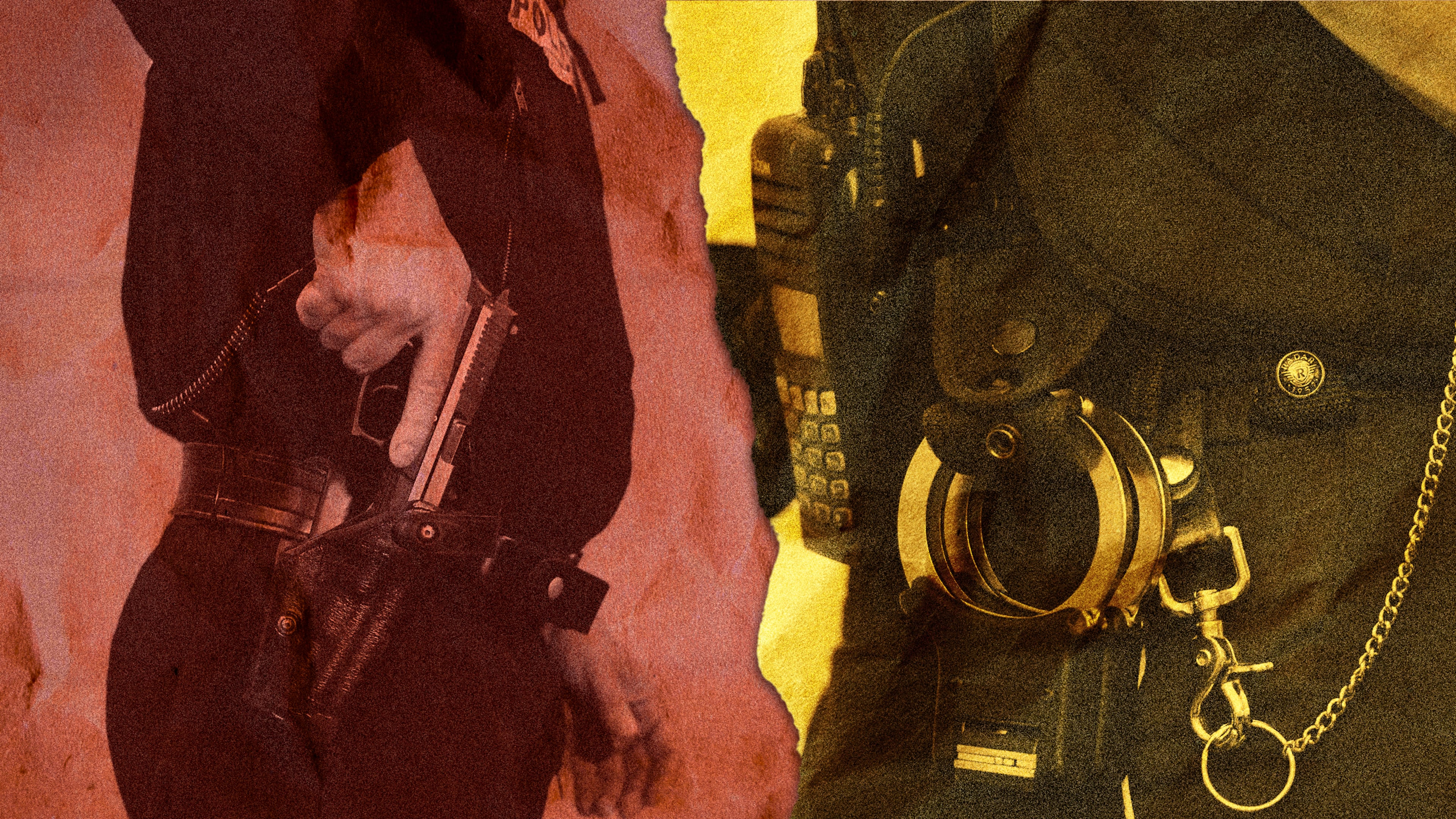

Law enforcement officers in Georgia are generally trained not to handle a firearm while they handcuff a subject, experts say.
But a DeKalb County officer recently had his firearm in one hand and handcuffs in the other while trying to arrest a teenager who was on the ground with his hands behind his back. The gun “accidentally” discharged and the 19-year-old was killed, an arrest affidavit reveals.
The incident led to criminal charges against the officer that are now working through the courts. In the aftermath, DeKalb’s CEO said the officer’s arrest reflected a “commitment to accountability” and court documents stated the shooting happened “while in the commission of Reckless Conduct.”
Several experts who spoke to The Atlanta Journal-Constitution agreed that handcuffing someone while also holding a gun can lead to dangerous mistakes.
Academy manager at the Georgia Public Safety Training Center in Athens, Maj. Greg Cochran, said he doesn’t train law enforcement officers to handle a firearm and handcuffs at the same time. In fact, he said he trains officers to only be “hands-on” with a subject when a firearm is no longer drawn.
“We teach them to handcuff using both hands, and a weapon should be holstered, and there should not be anything else in those hands,” he said.
Last week, officer Derrick Harris Jr. was terminated from the DeKalb police department and charged with involuntary manslaughter and reckless conduct. An arrest affidavit says Seth Eccles had complied with Harris’ order to get on the ground and lie on his stomach, and he was in a prone position with his hands behind his back when he was fatally shot after an “accidental” discharge.
Eccles was being arrested because law enforcement discovered he had an active warrant for a previous armed robbery, officials said.
According to Harris’ affidavit, the deadly shooting was “without any intention,” but that the accidental discharge resulted in Eccles’ injury and death.
State law and the Georgia Peace Officer Standards and Training Council rules don’t clearly outline such a scenario. DeKalb police’s policy also does not address the exact situation Harris found himself in. However, the police policy does outline some best practices.
When at the shooting range, officers are advised to never draw a firearm with their finger inside the trigger guard and never put their finger on the trigger unless they are ready to shoot.
When in a foot pursuit, the policy states officers should keep their “sidearm controlled at all times” and not run with it in their hand because “the risk of unintentional discharge or disarming is too high.” Officers are also told to not attempt to shoot while running because “the risk of wild shots and unintentional hits is too high.”
A spokesperson for DeKalb police said they couldn’t answer specific questions about policy on Saturday.
“We also do not comment on cases with open litigation,” the spokesperson said in an email.
Thaddeus Johnson — a former Tennessee POST-certified firearms instructor and Memphis police officer — said that if an officer finds themselves in a situation they feel they need to keep their firearm drawn but want to complete an arrest, then they should call for backup or seek a safer position until backup can come. Putting a subject into a vulnerable position, such as on the ground or against a wall, may allow the officer to holster their weapon and proceed with handcuffing, Johnson added.
“The officer generally shouldn’t handcuff a person while holding a firearm unholstered … it’s so easy to move that finger, but also it divides the officer’s attention,” said Johnson, who is now an assistant professor of criminal justice and criminology at Georgia State University.
Still, there is some discretion involved, and there are gaps in policy. Sgt. Betsy Smith with the National Police Association said training on whether to handle a firearm and handcuffs at the same time is “all very department specific.” She said there is no one standard and that agencies determine their own polices on the matter.
Former Dunwoody police Chief Billy Grogan, who retired in 2024, said he’s not aware of any department that trains their law enforcement officers to handcuff someone while they have a gun in their hand. He said it’s “not good practice” and considered “not safe.”
He recounted tackling a suspect early in his career and being unable to handcuff the person alone. He said the best thing he could do at that moment was wait for backup.
“I finally was on top of him and I just kind of laid there … I wasn’t trying to handcuff them at that point because I couldn’t, and it was just really sitting there waiting until help arrived,” Grogan said.
When there are at least two officers at a scene, a firearm can stay drawn while handcuffing happens simultaneously, but one officer takes on each task. Cochran said he trains officers on a “contact and cover” approach, which involves one officer maintaining a drawn firearm to cover the suspect and a second officer moving in to handcuff the suspect.
When an officer is alone and they draw a firearm during the arrest, Cochran said he trains officers to holster the firearm before moving in to handcuff.
“You want to gain compliance. Maybe order that subject down on the ground to lay face down and put them in a kind of a vulnerable position … and then you would holster your weapon and approach to put handcuffs on at that time,” Cochran said.
To avoid accidental discharges in general, Johnson said officers are taught to never put their finger on the trigger until they are ready to shoot. Sometimes an accidental discharge can occur because of a muscle spasm or contraction and a reaction to the environment causing the hand to move such as when an officer is startled, Johnson said.
“Under high stress situations, the first skills that you lose … are your fine motor skills, which are your fingers,” Johnson said. “That’s why you want to keep that finger off that trigger guard to avoid mistakes and make sure that when you pull that trigger, you intended to.”
After Harris’ arrest, DeKalb CEO Lorraine Cochran-Johnson called the death a tragedy. She said Wednesday in a written statement that “no one is above the law” and maintained that the county is committed to transparency and integrity.
DeKalb police confirmed in a previous statement they were aware of the arrest, adding that the incident had a “profound impact on everyone involved.”