Atlanta paid him more than the mayor. It has little record of his work.
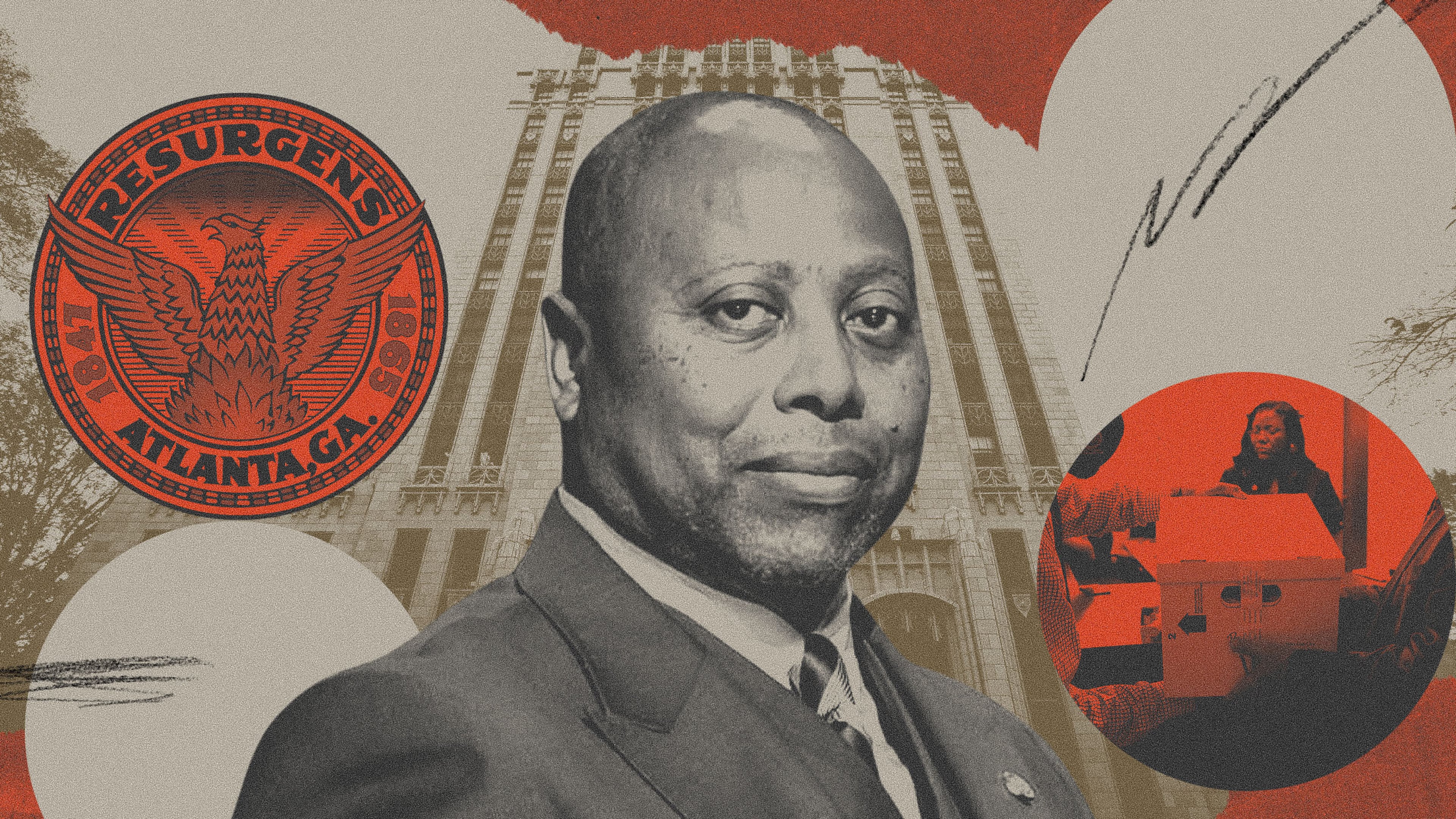


Foris Webb III spoke with city of Atlanta leaders so infrequently that not even the official whose department he worked for knew about the contract that had paid him more than the mayor.
In fact, records obtained by The Atlanta Journal-Constitution indicate the city attorney didn’t hear about Webb’s $35,000-a-month consulting contract until after he submitted his final invoice last fall.
“I don’t know what this is about,” then-City Attorney Patrise Perkins-Hooker wrote after a staffer forwarded the bill and told her Webb’s engagement was ending. “His last invoice?”
Webb, the city’s former municipal clerk, had been hired in 2023, before Perkins-Hooker started. Webb’s job was to help Atlanta handle a petition seeking a public vote on the Atlanta Public Safety Training Center that critics derided as “Cop City.”
But after an initial flurry of activity preparing for the process, Webb’s work appears to have tapered off within a few months, leaving more than a year of his time unaccounted for in public records as he continued to bill the city, an investigation by the AJC found.
Atlanta paid him $910,000 in just over two years yet has produced little record of what he did after those initial months of work, the AJC found after reviewing his emails, memos, invoices and other documents.
By the time Perkins-Hooker learned about her office’s arrangement with Webb, the training center had already opened. The referendum effort had been on hold for two years, mired in a legal dispute. Atlanta didn’t count the petition’s signatures, and the vote was never held.
Webb has not publicly addressed questions about his time as a contractor since the AJC revealed the arrangement in February, even as Mayor Andre Dickens and the City Council have pointed fingers over who’s to blame and the new city attorney has promised action to prevent future “surprises” in her office’s budget.
The AJC sent Webb repeated requests for comment via email, phone, text message and mailed letters in recent months. He did not respond.
A daunting task and a flawed contract
Webb was a fixture in Atlanta city government long before he became a contractor.
He got a job in 1989 as an officer in the municipal court’s pretrial services division, collecting information on defendants for a little under $8.50 an hour. He steadily rose through the ranks, and in 2018 he became the municipal clerk, tasked with tracking City Council legislation and overseeing city elections.
Records show he was making more than $155,000 a year and due to receive a six-figure annual pension when he retired in April 2023. The City Council passed a proclamation to mark the occasion, calling him “a guiding light to everyone he encountered at Atlanta City Hall.”
Within months, the city faced a challenge it had never seen before.
A group called the Cop City Vote Coalition wanted to hold a public vote on the training center and set out to collect tens of thousands of signatures on a petition to force a referendum.
The petition process had never been used in Atlanta, and by law, it would move fast: Once the petition was filed, the city would have 50 days to verify that the signatures were legitimate and the signers were registered to vote in Atlanta.
The job fell to Webb’s old office, which was still being run by a temporary leader.
The idea of engaging a consultant was uncontroversial. Legislation urging the city attorney and her Department of Law to hire outside help breezed through the City Council in August 2023 without a word of discussion.
Atlanta entered a contract with Webb the same day, agreeing to pay him at a rate equivalent to $420,000 a year. That was on top of his $141,000-a-year pension as a city retiree, records show.
At the time, Atlanta paid the mayor $202,730 a year.
The agreement with Webb, city leaders now say, was flawed.
Its description of the work Webb would do was vague, saying only that he would “shepherd the Referendum process on behalf of the City,” field questions from the media and “provide advice to the City … as requested.”
It didn’t require Webb to turn in reports on what he was doing or schedule check-in meetings.
And it didn’t set an end date.
Until Atlanta’s Department of Law terminated the agreement, the city would be on the hook indefinitely.
The contract was seemingly forgotten until the AJC started asking questions earlier this year.
Slowdown
Webb’s email activity suggests that his work dried up a few months after it started in 2023.
Emails released by the city in response to the AJC’s open records requests show that for a few months, he stayed in close contact with the interim municipal clerk, Vanessa Waldon, and the staff of then-City Attorney Nina Hickson, who had hired him.
He wrote a few memos explaining how the signature-checking process would work. He set up meetings with county elections officials. He fielded questions from reporters and U.S. Sen. Raphael Warnock’s office, often striking a formal tone.
“I shall not respond to hypothetical questions,” he told one reporter, adding: “Thank you for your journalistic coverage regarding this matter.”
When Webb was hired, however, the referendum process was being challenged in federal court, and the process soon became a mess.
State law and city rules limited who was allowed to collect signatures, and members of Cop City Vote sued in July 2023 to loosen the restrictions. A judge sided with them later that month. Then an appeals court issued a one-sentence decision reversing course that September.
The petition was left in limbo.
In the swirl of uncertainty, Atlanta decided it wouldn’t review the petition until the courts told it what to do.
“If and when the City receives guidance from the 11th Circuit to proceed with verifying the petitions,” Webb said in a statement in September 2023, “the Office of the Municipal Clerk will begin the process.”
That guidance did not arrive, but Webb kept billing the city and collecting monthly payments.
And before long, the activity on his city-issued email account appears to have slowed to a trickle.
Though the city refused to release every email Webb sent when the AJC asked for them, the emails it did produce show a sharp slowdown in 2024.
In the emails provided by the city, for instance, the last time Webb answered a media inquiry was in November 2023, his third month on the job.
Among those emails, the last time he accepted a meeting invite was in May 2024, the day after he sent his ninth monthly invoice.
And the last message the city released from his government email address was dated December 2024.
It was an email submitting invoice No. 16 of 26.

‘I never spoke to him’
In the months after Webb signed his contract, the two offices he was supposed to work with got new leaders.
Neither of them recalled working with him much.
Corrine Lindo, who replaced Waldon as municipal clerk, told the AJC she only discussed the referendum process with Webb a couple of times. She had been worried about how much work her office would have to do if the city had to start checking petitions, she said, but the Department of Law assured her it was taken care of.
“They said, ‘Don’t worry. We have someone, and the person will handle it,’” Lindo said.
Emails obtained by the AJC show Lindo and Webb talked about moving the boxes of petitions in February 2024, soon after Lindo was hired. And they scheduled a meeting that May to review the petition process.
The meeting didn’t make much of an impression. Lindo said she couldn’t remember if it actually took place. In the emails the city turned over, accepting the invitation was the last referendum-related message Webb sent.
Meanwhile, the Department of Law changed directors twice during Webb’s tenure. Hickson, who did not respond to requests for comment, left in May 2024. Her replacement, Perkins-Hooker, told the AJC she didn’t know about Webb’s contract.
“I never spoke to him about his services,” Perkins-Hooker said.
The current city attorney, Marquetta Bryan, has said she didn’t know about the contract either. She said she first heard about it when the AJC filed an open records request in January asking for a copy.
Missing records
If Atlanta has any trace of what Webb did in his last year and a half on the job, the city isn’t sharing it with the public.
In the months since the contract came to light, AJC reporters have pressed the city for evidence of what Webb was doing behind the scenes. Atlanta officials have had little to offer.
When the AJC asked for the work product he turned in, the city said it could not find anything aside from two memos and a press release he attached to his first invoice.
Asked for the contents of his online document storage account with the city, Atlanta officials said it was empty.
The AJC also asked for Webb’s emails. Reporters asked the city’s Department of Law for the messages he sent from his personal Gmail account to the leaders of the Department of Law and Municipal Clerk’s Office, plus everything he sent on his city-issued email.
Among the messages the law department turned over, the last one that had anything to do with the referendum was sent in May 2024, 17 months before Webb submitted his last invoice in October 2025.
The emails aren’t a perfect proxy for Webb’s work, in part because Atlanta’s Department of Law says it won’t release all of them.
The department told the AJC it was withholding an unspecified number of his emails because they were protected by attorney-client privilege, which allows the city’s lawyers to deliberate privately with employees and contractors.
The city didn’t object to releasing many emails Webb sent to its attorneys, and he isn’t a lawyer himself, a fact made clear in his own emails.
“I’m not an attorney,” Webb wrote when a journalist asked him a question about the referendum petition in September 2023. “Subsequently I can’t interpret state law or provide legal advice.”
The city says that in the emails it is withholding, Webb “made disclosures in confidence for the purpose of securing legal advice.”
The city won’t say anything more about them. The AJC asked multiple times for basic information about the emails, like a log showing how many there are and when they were sent. The city repeatedly refused to provide those details, saying information as simple as who Webb emailed is privileged.
The AJC filed a complaint with the Georgia Attorney General’s Office in May seeking the remaining emails’ release. The complaint is still pending.
Still, the emails Atlanta did make public suggest that Webb and the city didn’t communicate much after the spring of 2024, even though Webb was paid into the next fall.
Most of the emails released by the city from that time period were related to his invoices.

‘Answers I have not found myself’
The revelation in February that the Department of Law lost track of a $35,000-a-month contract prompted swift calls for change inside City Hall and weeks of finger-pointing.
Bryan, the new city attorney, quickly vowed to ban “open-ended” contracts in her office and impose spending limits on consultants.
She said she would review the department’s other open contracts and meet with contractors to make sure the city knows what they are doing.
And she formally terminated Webb’s contract, asking him to bring back the city’s cellphone and laptop.
Bryan did not respond to requests for comment or answer questions about what her review found.
Despite her promises, the episode touched a nerve.
City Council members and Dickens’ administration squabbled back-and-forth over who was responsible and how to move forward. The mayor went so far as to write a memo seeking to absolve his staff of any blame and place responsibility on the clerk’s office, which the council oversees.
Council members, meanwhile, struggled to get answers to basic questions, like what Webb had been expected to do and whether he had billed the city knowing he had no work to do. When councilmember Liliana Bakhtiari asked the city attorney those questions at a February council meeting, Bryan responded that they should be posed to Webb himself.
“Oh, I would be more than happy to question the contractor if that opportunity was provided,” Bakhtiari said. “I would love that.”
Bryan quickly poured cold water on the prospect: “Certainly, I cannot produce him for answers that I have not found myself,” she responded.
The City Council even disagreed over who should look into what went wrong. Councilmember Alex Wan, for instance, questioned whether the city should spend even more money by paying for an outside investigation. Bakhtiari wondered aloud if the public would trust the findings if the city decided to investigate itself instead.
A proposal to hire outside investigators has been languishing without a vote for months. Meanwhile, Atlanta’s interim inspector general, LaDawn Blackett, told the AJC her office has opened an investigation into the contract.
Mayor’s office spokesperson Michael Smith declined to answer questions about the situation, citing the ongoing investigation.
In the meantime, Webb’s time as a contractor has come to an end.
Webb abruptly stopped billing the city last fall without explaining why. Nothing had changed in the court case. The appeals court hadn’t formally shut down the possibility of a referendum vote. The training center had been open for months.
He sent in his last $35,000 invoice with a note thanking a law department staffer for all her help, and he extended an offer.
“Should you ever need anything,” Webb wrote, “please do not hesitate to contact me.”