Atlanta launches autonomous transit shuttle service
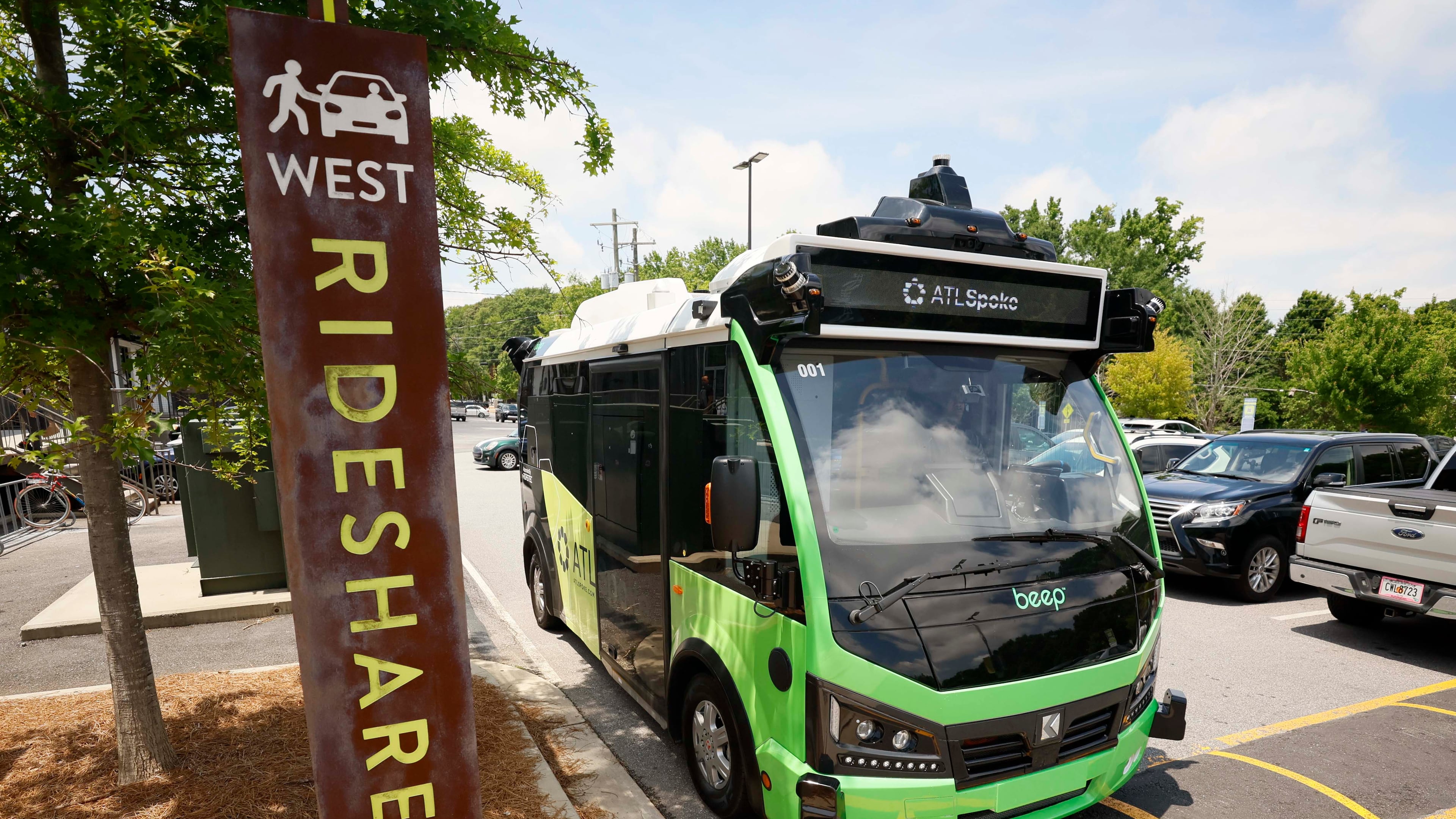

Atlanta’s first autonomous public transit shuttle service officially launched Friday, connecting the West End MARTA Station with the Beltline’s Southwest Trail and destinations in the Lee + White district, becoming the first Beltline transit project currently in operation.
Powered by Beep, a Florida-based autonomous public transit service provider, ATL Spoke is a 12-month pilot program offering free rides along a 2-mile route seven days a week. The project’s developers hope the service will improve connectivity to and from the Beltline for residents and visitors. Beltline officials gathered at the Lee + White shuttle stop to celebrate the new service Friday morning.
The 12-passenger vehicle is ADA-accessible and will always have an attendant on board to supervise operations, answer questions and take over the wheel if necessary. The shuttles are also continuously monitored and will remain in communication with a command center to promote rider safety, officials said.
ATL Spoke is one of the first deployments of Karsan’s e-JEST vehicles, which are powered by an electric motor, with driving software. Karsan is a commercial vehicle company based in Turkey. The pilot program has passed the Federal Transit Administration’s bus testing program and is fully compliant with federal motor vehicle safety and accessibility requirements, according to Beltline officials.
Beep vice president Alex Poirot says he hopes that autonomous vehicles will complement other forms of transportation rather than replace them. He believes technology can close transportation gaps many residents face in south and west Atlanta.
“We view it as a success if we are actually in fact providing that first mile and last-mile service, and not replacing a service but filling a gap that exists that is unserved today,” Poirot said in a telephone interview.
Still, Poirot says he wants Atlantans to look at this project and see it as more than a novelty.
“At the end of the day, the best compliment we can possibly get is not ‘Wow, this autonomous shuttle is cool,” Poirot said. “It’s ‘Wow, this service has been super helpful and has made my life better and more convenient.’”
The decision to move forward with the project in southwest Atlanta has raised questions inside City Hall. The Atlanta City Council recently received a complaint by a Midtown resident alleging that a conflict of interest influenced the decision to pause an Eastside Beltline rail project. Officials with the mayor’s office have denied any conflict.
Meanwhile, the second phase of ATL Spoke will extend its route north to the Atlanta University Center in time for the school year.
Some residents in the community are wary that ATL Spoke is a short-term fix to a bigger issue.
Wendy Darling, 51, was among the first riders to use the service and called it “convenient.” She lives on Joseph E. Lowery Boulevard, which is located along the shuttle route.
While she said the new technology makes her day-to-day responsibilities easier and provides an alternative to the MARTA bus that usually has long wait times, she added that this is a temporary solution to a more significant transit issue.
“I think that is a dead end, and avoiding the very obvious thing, which is that we need to have streetcars and light rail on the Beltline,” Darling said. “This is a stopgap measure, a temporary measure, because really there should be rail that goes from the station and links up here seamlessly.”
Officials said they are constantly learning from data from community feedback to see how they can adjust their approach and enhance the overall rider experience.
Ahead of the 2026 FIFA World Cup, officials want residents and visitors alike to know the service is designed to serve everyone.
“This is really to serve all those folks,” said Joe Iacobucci, the Beltline’s vice president of transit innovation, “we still want to provide a dynamic environment for people that live car-free.”
The Beltline, initially envisioned as a 22-mile loop of trails and light rail, has faced challenges. The light rail component of the plan has yet to materialize, and many — including Atlanta Mayor Andre Dickens — have opposed plans to begin light rail on the East Side Trail.
“The future is here,” said Atlanta Beltline CEO Clyde Higgs at the launch.