Atlanta gets a win for World Cup traffic not being worse

Who in their right mind schedules Super Bowl-sized events in the heart of downtown Atlanta at noon on a workday?
Not city officials or the Georgia Department of Transportation, but a mixture of FIFA, broadcasters and maybe the papal conclave.
The complex web of matches strewn across North America and serving fan bases in time zones around the globe led to Atlanta holding the first of its eight 2026 World Cup games at high noon Monday. The second happened at noon Thursday, after this writing. A third takes place Sunday.
The first match day was not perfectly executed by government officials and commuters, but it certainly went much better than it read on paper beforehand.
For this historic hosting privilege to coexist with Atlanta’s beastly traffic, enough people who had no interest in the Fan Festival at Centennial Olympic Park or the game at Atlanta Stadium (FIFA prohibits stadium sponsorships, so the Mercedes-Benz name stays in Arthur Blank’s garage) needed to stay away from the city center, if possible. And those seeking the football aura needed to ride MARTA and walk, since parking and lane space would be at a premium.
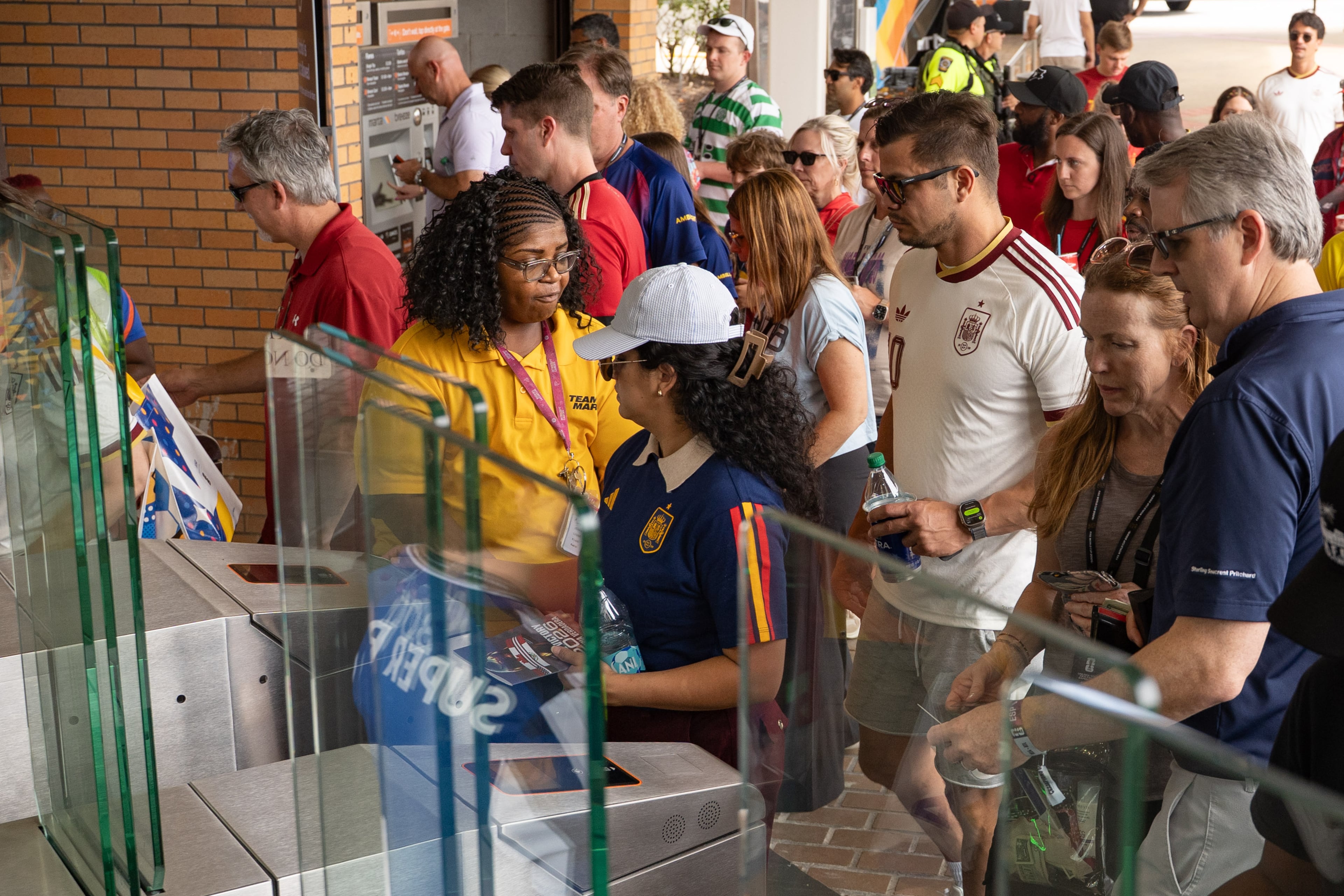
People largely did just this and made the World Cup opening — a few days before Atlanta’s first game — and subsequent parties, watch events and fan spirit go without severe chaos, so far. Win.
The city and its transportation department said the plan involved using the new integrated traffic center and surgical lane closures on main streets near attractions to create the best flow of pedestrians and cars.
A key decision to make one to two lanes of Centennial Olympic Park Drive next to its eponymous park available for pedestrian spillover benefited walkers much more than it jammed cars. Atlanta police also strategically blocked parts of Centennial Olympic Park Drive, Marietta Street and Park Avenue to cars as the first game ended Monday afternoon.
GDOT’s traffic plan centered on using an army of engineers in its Traffic Management Center in southeast Atlanta to adjust traffic signal timing in real time to suit the needs of cars and commuters.
The state said its team’s ability to operate with a 30,000-foot view prevented officers from having to take over intersections and direct traffic. The city said it stationed people in the state’s hub to communicate with officers on the ground. Cooperation is key to this plan.
We drove the 11Alive Traffic Impact Tracker truck up and down Northside Drive, Centennial Olympic Park Drive and many other streets near the hub. They progressively got slower after 8:30 or 9 a.m. on that first match day. Police and volunteers were everywhere, as were cones and barricades. We followed both the Spain and Cape Verde spirit walks as fans marched to the stadium, and both only fleetingly affected traffic.

The change in traffic light cycles was noticeable, as streams of people poured out of MARTA stations and hotels. Those signals favored the throngs of pedestrians far more than the four-wheeled thoroughbreds, and rightfully so.
Despite the heavy traffic before the game and the big spike in backups leaving the Spain-Cape Verde draw, Atlanta gets a win for it not being worse. Big events draw big delays, no matter what.

As for MARTA, the transit system is under severe scrutiny for safety and reliability issues, along with the uneven implementation of its new tap-to-pay fare gates. But on Monday, the rail system rallied and largely performed well. Trains came every few minutes and even more often closer to the beginning and end of the match.
One of the Peachtree Center gates was out of action, making exiting it a single-file affair on one side. And several escalators at the SEC District station stopped working for a bit, forcing riders to take the stairs or elevator.
The Five Points station was the biggest question mark as renovations have closed all but the Forsyth Street exit, which still had the old fare gates sitting wide open the day of the first match. Thankfully, between when I traveled there June 11 and again on June 14, MARTA had opened one of the two escalator-stair stacks, meaning riders had more than the elevator to access the street. Changing trains between lines, the main function of Five Points, was much easier along the newly renovated platforms.
The fact this station was not closer to ready by the tournament’s beginning is a huge miss.
11Alive also reported parking was packed at the Lindbergh Center station and that one set of the fare gates near the Garson Drive deck were still under construction.
MARTA did step up its police presence and has plans to do so after the World Cup, officials said at a June 11 board meeting.
The transit agency was heading for a blowout loss in the weeks leading into the World Cup, but its performance Monday will generously get a “draw” rating from me. It really needed to win the moment, but did better than expected.
Doug Turnbull covers the traffic/transportation beat for WXIA-TV (11Alive). His reports appear on the 11Alive Morning News from 6-9 a.m. and on 11Alive.com. Email Doug at dturnbull@11alive.com. Subscribe to the weekly “Gridlock Guy” newsletter for the column here.