As extreme heat arrives, dangerous days ahead for Atlanta World Cup revelers

Since it was announced the 2026 FIFA World Cup would take place in North America during summer — one made even hotter by climate change — the potential impact of heat on the tournament has been a concern.
In Atlanta, players taking the pitch inside the climate-controlled confines of the temporarily named Atlanta Stadium are protected from temperatures outside. But for fans attending matches or watch parties around the city, it’s a different story.
For the first time since the World Cup kicked off, Atlanta is set to endure a spell of potentially dangerous summer heat that could last a week or longer. Experts say the combination of soccer revelry, high temperatures and Atlanta’s trademark humidity poses health risks that attendees and event organizers need to pay attention to.
The conditions could also affect runners in another marquee Atlanta event: the Northside Hospital Peachtree Road Race, which is set to jump off on the Fourth of July. Extreme heat and humidity forced organizers to end the race early in 2024.
How hot will Atlanta get?
Forecasts can change, but it looks like Atlanta and most of Georgia will see daytime highs in the mid- to high 90s for at least the next week, with temperatures reaching triple digits in some places, according to the National Weather Service.
A thick layer of humidity could make it seem even hotter. The NWS predicts “feels like” temperatures will approach 105 degrees in many parts of the state.
With most of Atlanta’s World Cup festivities taking place in the concrete-heavy corridor around Centennial Olympic Park and Atlanta Stadium, it could feel even hotter to those attending matches or the FIFA Fan Fest.
Scientists for years have demonstrated that buildings, pavement and other heat-absorbing surfaces common in cities create urban heat islands that are much hotter than more vegetated areas.

Brian Stone is the director of Georgia Tech’s Urban Climate Lab, which has mapped the hottest parts of the city. He and his colleagues found the area around Atlanta Stadium and the nearby Georgia World Congress Center to be the largest contiguous hot spot in the city.
“To stroll along Centennial Olympic Park Drive between the stadium and Centennial Park is to endure a pedestrian environment almost fully free of any shade trees or shade structures,” he said.
Stone said temperatures in the area are typically at least 5-8 degrees warmer than in neighborhoods with ample tree cover, like Grant Park and Virginia-Highland.
Is that kind of heat dangerous?
Heat waves can be dangerous or even deadly to anyone.
More than 700 people die each year in the United States from extreme heat, according to the Centers for Disease Control and Prevention, making heat waves one of the country’s most deadly weather disasters.
The human body uses sweat and other built-in cooling mechanisms to keep internal temperatures at safe levels.
But over time, exposure to extreme heat and humidity can overwhelm the human body’s cooling defenses, Kristie Ebi, a professor at the University of Washington’s Center for Health and the Global Environment.
Muscle cramps, excessive sweating, shortness of breath, dizziness and headaches can all be signs of overheating. From there, if the body is not able to cool down, internal temperatures can rise to levels that put major organs at risk of damage.
Ebi said certain people are at higher risk for heat-related illness.
Those who need to be especially careful in the heat include the elderly, children, pregnant women and people taking certain drugs, such as psychotropic medications or beta-blockers to lower blood pressure. Preexisting conditions like heart and respiratory diseases also increase heat vulnerability.
It’s also possible that visitors to Atlanta, especially those traveling from cooler climates, could be more sensitive to high temperatures. But even Atlanta natives should not lull themselves into thinking they’re impervious to the heat, Ebi said.
“We’re seeing much higher temperatures than what people experienced before, and so local residents may not be as acclimatized as they think they are,” she said.
Do FIFA and other organizers have a plan?
Fan Fest organizers will remind attendees regularly via social media and announcements from the main stage to stay hydrated, seek shade and use available cooling resources, a spokesperson from the Georgia World Congress Center Authority said.
Visitors will have access to free water stations, the Fountain of Rings and shaded areas. They are allowed to bring in neck and handheld fans, said the authority, which operates its namesake convention center, the stadium and Centennial Olympic Park, where Fan Fest is held.
“We encourage all attendees to be responsible and prepared,” the GWCC said in a statement supplied to The Atlanta Journal-Constitution.

The GWCC’s team also will monitor the weather and will work with public safety and medical teams if those conditions change.
“The safety and comfort of FIFA Fan Festival Atlanta’s guests, staff, volunteers, performers, and partners are always our top priority,” the GWCC said.
For its part, FIFA said it has a system in place for when rising temperatures start to affect the health of players, staff and fans. From meeting with team doctors to having meteorologists on site, FIFA said it is drawing from experience at recent tournaments to ensure everyone at a match is protected from the heat and humidity.
FIFA said its plan calls for escalating safety measures based on real-time weather conditions before and during each match.
“Climate-related risks are assessed as part of overall tournament planning and managed in close coordination with the host cities, stadium authorities and national agencies,” FIFA said in a statement.
What can you do to stay safe?
Atlanta Stadium is air-conditioned, so Roxana Chicas, an associate nursing professor at Emory University, said she’s concerned about the people outside.
“Fans are tailgating, having fun, they are outdoors, walking toward the stadium … ” said Chicas, who researches occupational heat exposure and its health impacts on outdoor workers.
Out-of-town visitors who aren’t used to the South’s heat and humidity should take extra precautions.
The key is to drink a lot of water and electrolytes consistently beforehand, especially if you know you will sweat a lot, she said. This is especially important when it is humid because the body’s sweat won’t evaporate, which is the main way it cools itself.
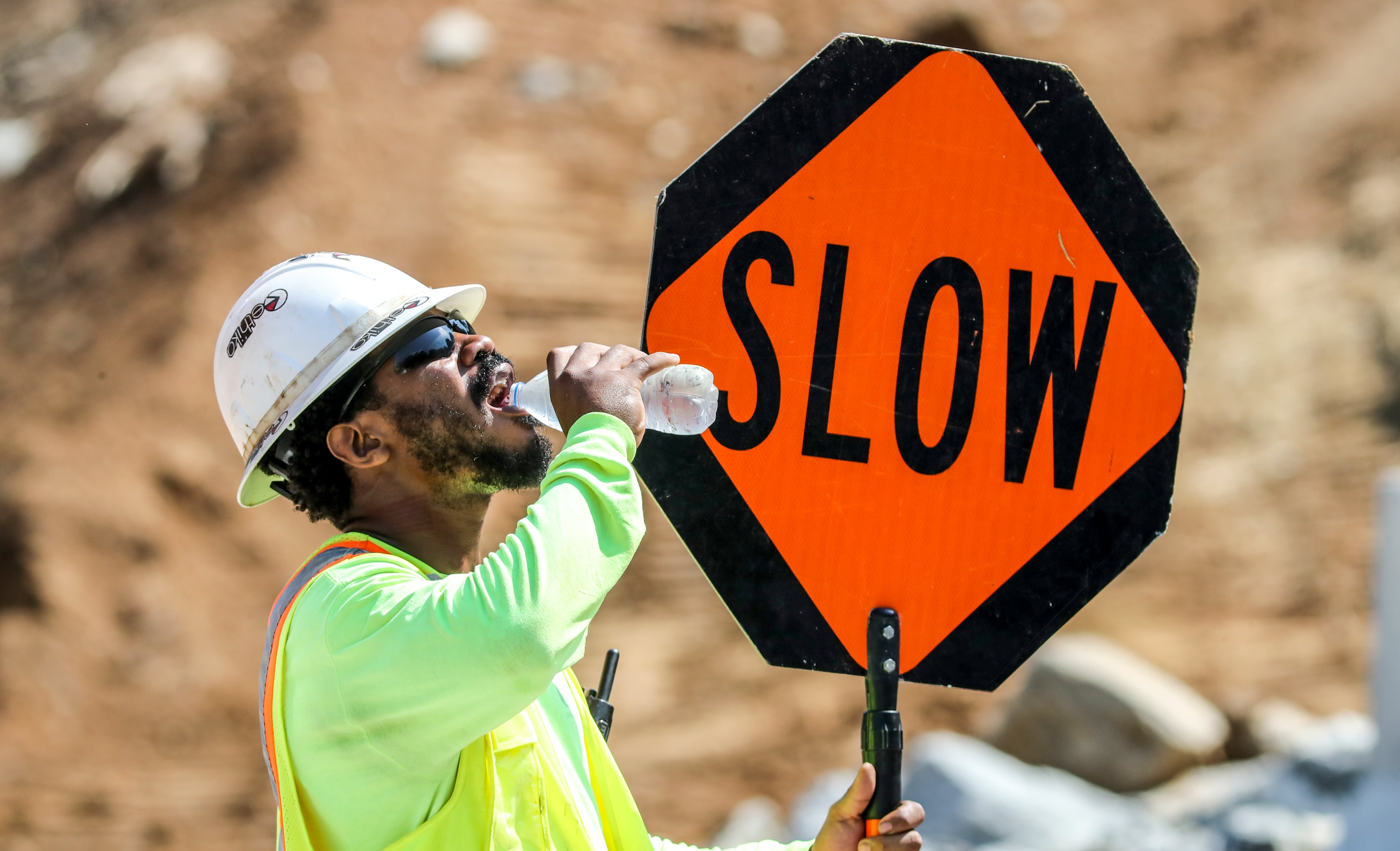
“Match what you’re drinking to how you’re sweating,” she said. Fans should carry water with them and drink it to the point that they have to refill those bottles. Consuming as much as 2 liters of water a day helps kidneys and other parts of the body work better, she said.
“If you feel like you’re not thirsty, then you’re probably doing a good job,” she said.
Although it’s a cliche, Chicas stressed the importance of listening to signals your body is giving you. Headaches, muscle cramps and light-headedness are signs to go into a cool place and rest. Simple steps like washing your face and arms with a wet rag to remove the sweat is helpful,” she said.
“Heat-related illness is preventable,” she said. “It’s important that people listen to their bodies.”
Parents should take notice if their children — who likely won’t know how to say they are hot and need to take a break — become cranky or stop playing because they have less energy, Chicas said.
Those are signs their body is telling them to settle down, but Chicas said it’s important to keep kids in the shade and that they are eating and drinking cold items such as popsicles.
Is climate change to blame?
Scientists have known for years that global warming loads the dice in favor of longer-lasting and more intense extreme heat events.
“I think the data points to that,” Chicas said, noting that heat records are now broken regularly and parts of the country that typically had mild summer temperatures are getting hot.
As the climate warms, researchers said they expect extreme heat events like this one will become more common. According to the most recent National Climate Assessment, released by the federal government in 2023, most of Georgia is likely to see anywhere from 10 to 40 more days with temperatures of at least 95 degrees by midcentury.
Stone, the Georgia Tech professor, pointed to the brutal heat wave that’s baked much of Europe for the past week, and other past extreme heat events, as yet more evidence that rising temperatures are becoming increasingly disruptive.
“The risk of heat-related injury and even death are rising with each year of record-breaking temperatures,” Stone said.
A note of disclosure
This coverage is supported by a partnership with Green South Foundation and Journalism Funding Partners. You can learn more and support our climate reporting by donating at AJC.com/donate/climate.