‘AI slop’ resolution seeks to reel in city’s use of artificial intelligence

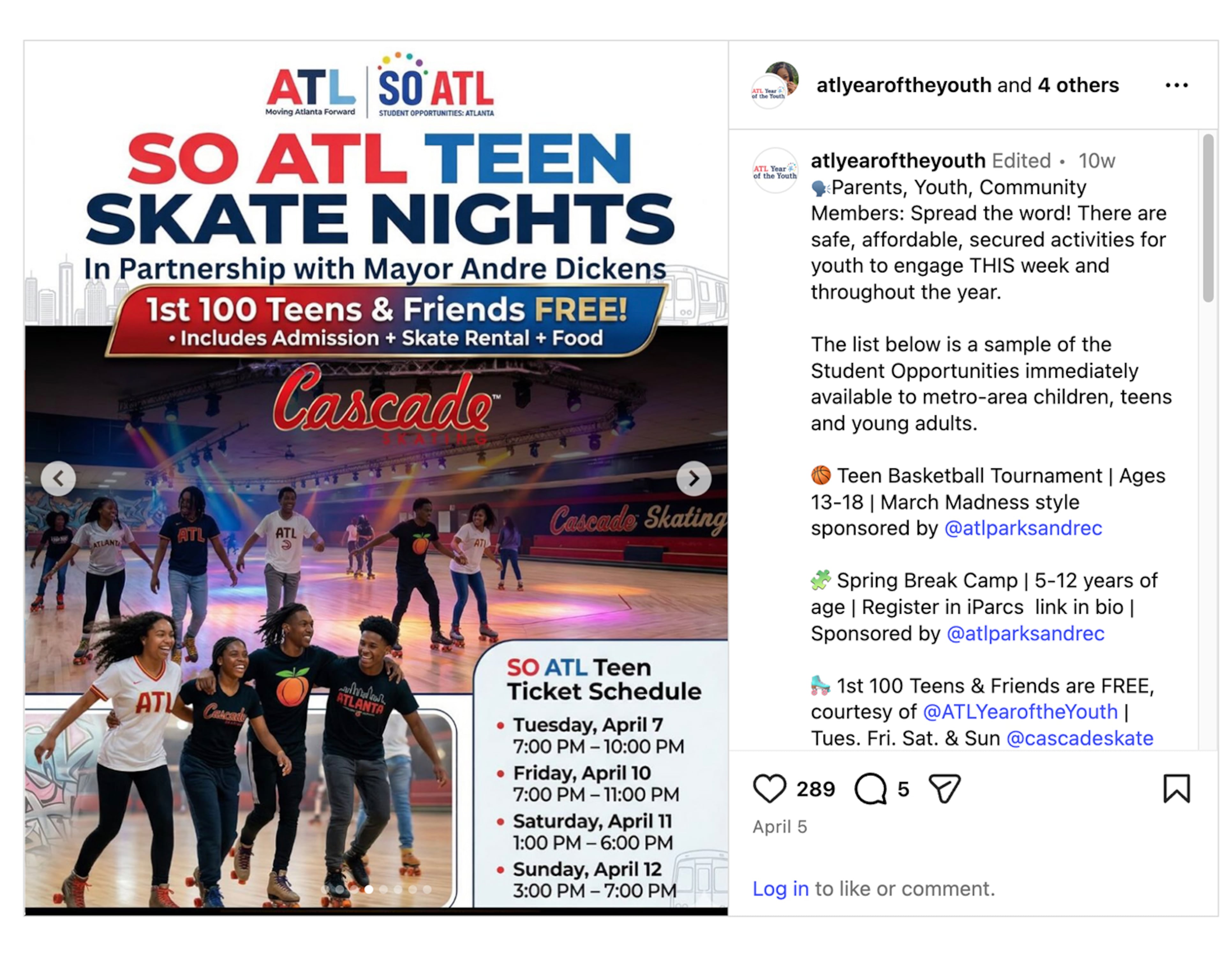
Strange-looking body parts, peculiar backgrounds and photos of smiling teens who don’t actually exist.
A series of bizarre images posted to the city of Atlanta’s official social media pages caught the eye of one council member who thinks the city should disclose its use of artificial intelligence.
Council approved a resolution this week calling on the city to prioritize the use of “human-created visual media” in its official communications.

The resolution was introduced by Council member Kelsea Bond, who noticed a series of suspicious images online.
Bond, who dubbed the resolution “Stop AI slop,” said the city’s use of artificial intelligence raises serious concerns about misinformation, bias “and the public’s ability to distinguish between factual and synthetically generated content.”
In an email, chief communications officer Allison Fouché said her department recently started using “AI tools to enhance productivity.”
“While we are fortunate to have a talented graphic designer on staff, the volume and pace of communications required to support a city the size of Atlanta can be significant,” Fouché said. “AI serves as a supplemental tool that helps improve efficiency, accelerate production timelines, and allow our team to focus more time on strategy, creativity, and public engagement.”
Fouché confirmed an image shared online depicting several teenagers at a skating rink was AI-generated. Other suspicious photos flagged by Bond had been sourced through Adobe Stock, the city said.

That apparently included images from a domestic violence awareness campaign where two people’s hands seem to morph together, and a couple pictures of crowds in Atlanta parks that don’t look quite right.
“Like many organizations, we view AI as a tool — not a replacement for human judgment, creativity, or professional expertise,” Fouché said. “All content remains subject to review and approval by our communications team before publication.”
In addition to passing Bond’s resolution, council members adopted the recommendations of the city’s Artificial Intelligence Commission, which met for a year to examine the role of AI across government operations.
Council members want Olympic cauldron to stay put

Plans to relocate the 1996 Olympic cauldron from Atlanta’s Summerhill neighborhood have drawn the ire of several city council members who would prefer that it stay put.
A resolution passed Monday requests the cauldron remain in place “pending a transparent and inclusive community engagement process.”
The measure was brought by Council member Jason Winston, whose resolution noted that since the ‘96 Olympics, the cauldron “has become a defining symbol of the neighborhood’s history, identity, resilience and revitalization.” Several other council members signed on.
Georgia State University recently announced plans to move the cauldron, the top portion of the Olympic flame tower, to Centennial Olympic Park.
That decision has outraged Summerhill residents, who say the cauldron lit by Muhammad Ali during the opening ceremony three decades ago has become a historic landmark in their neighborhood.
City Council member Michael Julian Bond called the decision to move the iconic cauldron “egregious”
“This is a wrong-headed idea and should definitely be reconsidered,” he said Monday. “We need this to remain where it is … forever.”
While there are plans to relocate the cauldron, the Olympic bridge and tower would remain in place.
In a news release last week, Georgia State said it would “work to enhance the remaining structure to celebrate the deeply intertwined legacies of the 1996 Atlanta Olympic Games, Georgia State and the Summerhill community.”
But neighborhood leaders said residents were never consulted about the move. The resolution asks that any decision affecting historic neighborhood landmarks include “meaningful input from residents and stakeholders most directly impacted.”
Council approves resolution for blight tax

The owner of a skeletal office tower that has languished for years in the heart of Midtown could be one step closer to an exorbitant tax bill after council members approved a resolution asking the administration to impose the city’s blight tax.
Monday’s resolution is the latest move to enforce action on the Campanile tower at 1155 Peachtree St. NE, which has sat empty since 2019.
Through the ordinance, a tax equivalent to 25 times the current city general operating levy millage rate can be applied to properties that remain in a blighted condition for an extended amount of time.