Cuba's electric and petroleum workers celebrate their colleagues during massive rally
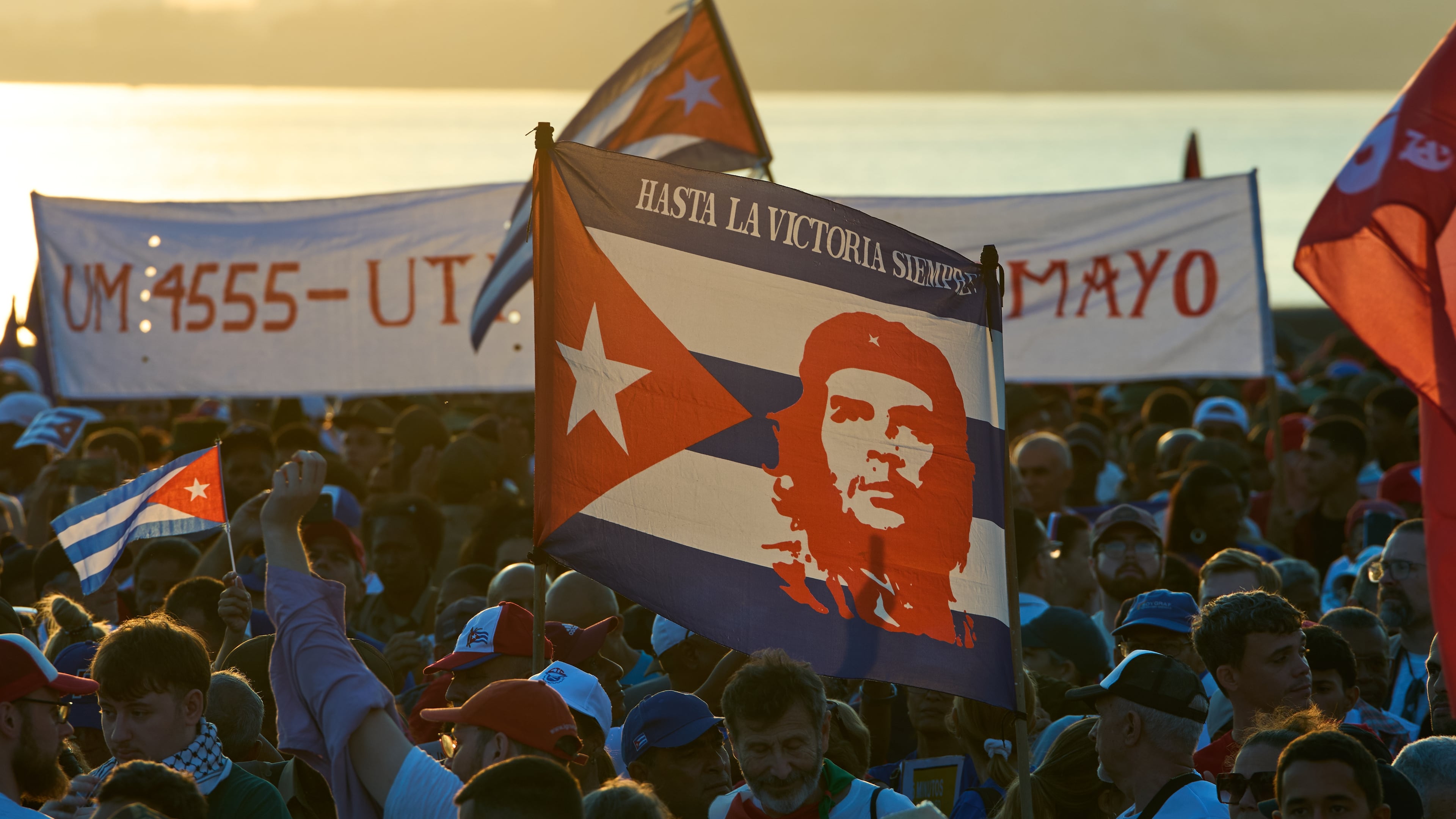
HAVANA (AP) — Tens of thousands of Cubans crowded along Havana’s famed seawall on Friday to celebrate workers on their day, especially those who keep the socialist country powered.
Employees of Cuba’s Electric Union are working 24 hours a day as the island’s power grid continues to crumble, provoking islandwide outages worsened by a lack of gasoline stemming from a U.S. energy blockade.
“We are living through difficult times,” said Yunier Meriño Reyes, an accountant with the Electric Union who joined Friday’s march to celebrate his colleagues. “We are carrying out a very tough, arduous and relentless effort — day and night — to provide electricity to the people who need it.”
Cuba’s power crisis deepened after the U.S. attacked Venezuela in early January, halting critical oil shipments from the South American country. Later that month, U.S. President Donald Trump threatened tariffs on any country that sells or provides oil to Cuba.
As a result, the island spent more than three months without a single oil shipment until a Russian tanker laden with 730,000 barrels docked in Cuba in late March.
Before it arrived, Cuba was relying solely on natural gas, limited solar power and disintegrating thermoelectric plants.
“It was brutal,” Vicente de la O Levy, Cuba’s energy and mines minister, recently told reporters.
Once the Russian oil arrived, it had to be refined, a process that took roughly two weeks.
“We have been working eight hours a day without stopping,” said Rafael Martínez, a refinery worker at Cuba’s Petroleum Union.
He recalled his joy when he heard that the Russian tanker had docked.
“Our job is to push ahead, that’s all you can do,” he said as his colleagues rallied around him on Friday, playing on cowbells and a large drum as they celebrated their day.
Cuba’s Petroleum Union posted a recent video highlighting its workers, including driver José Antonio Báez.
“Our work generates the entire economy of the country. We drive the country’s economy,” he said.
Pedro Luis López Manzano, an engineer and the director of maintenance at the Cienfuegos refinery, said in the video that crews had to take several steps to ensure operability because the refinery was shut down for four months.
“It’s a challenge, but we always thought it was possible,” he said.
Meanwhile, Gustavo Rodríguez Cordero, an engineer and a director general at Cuba’s Petroleum Union in Villa Clara, criticized the U.S. energy blockade in a video posted by his company.
“No one has the international right to oppress a people in this manner,” he said.
After the oil was refined, de la O Levy said the government chose to prioritize vital sectors including agriculture and food production.
“This enabled the irrigation of tobacco, corn and soybeans,” he said. “There were more hours of power outages than anticipated because we diverted a portion of the energy supply toward production; we could not allow factories to remain idle.”
He said some of the petroleum was converted into approximately 6,000 tons of diesel and fuel oil that was used to power hospitals, generators and transportation.
De la O Levy said Cuba’s situation began to improve starting April 17: “not the desired one, but significant.”
He said the government distributed 800 tons of fuel a day out of the 1,600 tons needed.
“If we used 1,600 tons, there would be fewer blackouts, but the (fuel) would last half as long,” he said.
De la O Levy warned the Russian oil was expected to last only until the end of April, noting that the priority is to sustain the island’s thermoelectric plants using Cuban crude oil.
“Without this fuel, we would face a total, systemwide blackout,” he said.
Cuba produces 40% of its required fuel and depends heavily on imports.
As the island’s crises grind on, Katiusca Carreño, 53, who works at the Electric Union’s command center, said she is committed to satisfying Cuba’s people.
“Resources aren’t reaching us, but all of us workers are still here,” she said after Friday’s rally. “It’s hard, but not impossible. We work 24 hours a day.”
___
Follow AP’s coverage of Latin America and the Caribbean at https://apnews.com/hub/latin-america