Cars can now gain new features long after you buy them

In early March, thousands of Volvo owners got cars with artificial intelligence-powered digital assistants powered by Google Gemini, capable of holding casual conversations with their owners.
What’s unique about that, you might ask? People buy new cars with advanced technology features all the time.
Yes. But these people didn’t buy new cars. They simply woke up to find new features in cars they’d owned for years.
Volvo pushed out a software update, free to most owners, that applied to cars bought as far back as 2020. Owners went to bed with a car without an AI assistant and woke up to one.
It’s part of a growing trend in new cars, though Volvo’s action is the most impressive we’ve seen.
Many of today’s new cars maintain internet connections and can download software updates on their own. That allows automakers to fix some problems remotely and, increasingly, allows them to add new features to cars already sold.

The first wave of updates is mostly digital
Volvo’s over-the-air software update went to cars from model year 2021 and newer equipped with the company’s Android-based infotainment system.
Among other things, it added the Gemini AI assistant, made frequently used apps easier to find and gave drivers of plug-in hybrids — which can operate like electric vehicles or gas-powered cars depending on the trip — more flexibility in drive modes.
Most of those features run through the central touchscreen, which hints to how these downloads usually work. They often center on high-tech features.
Updates can be functional. Subaru recently added a new hands-free highway driving system to thousands of relatively new Outback models that have already been sold. It works at up to 85 mph on many highways, though owners must keep their eyes on the road and stay ready to take over when prompted.
Or updates can be playful. Last year, EV startup Rivian used an update to give owners “Halloween costumes” for their cars that let the touchscreens mimic the flux capacitor from the “Back to the Future” DeLorean or the voice display from K.I.T.T., the talking car in the 1980s TV hit “Knight Rider.”
Tesla has long used the holiday season to issue a free annual update that often includes practical new features, like improvements to safety systems, and whimsical ones, like new video games to play when parked.
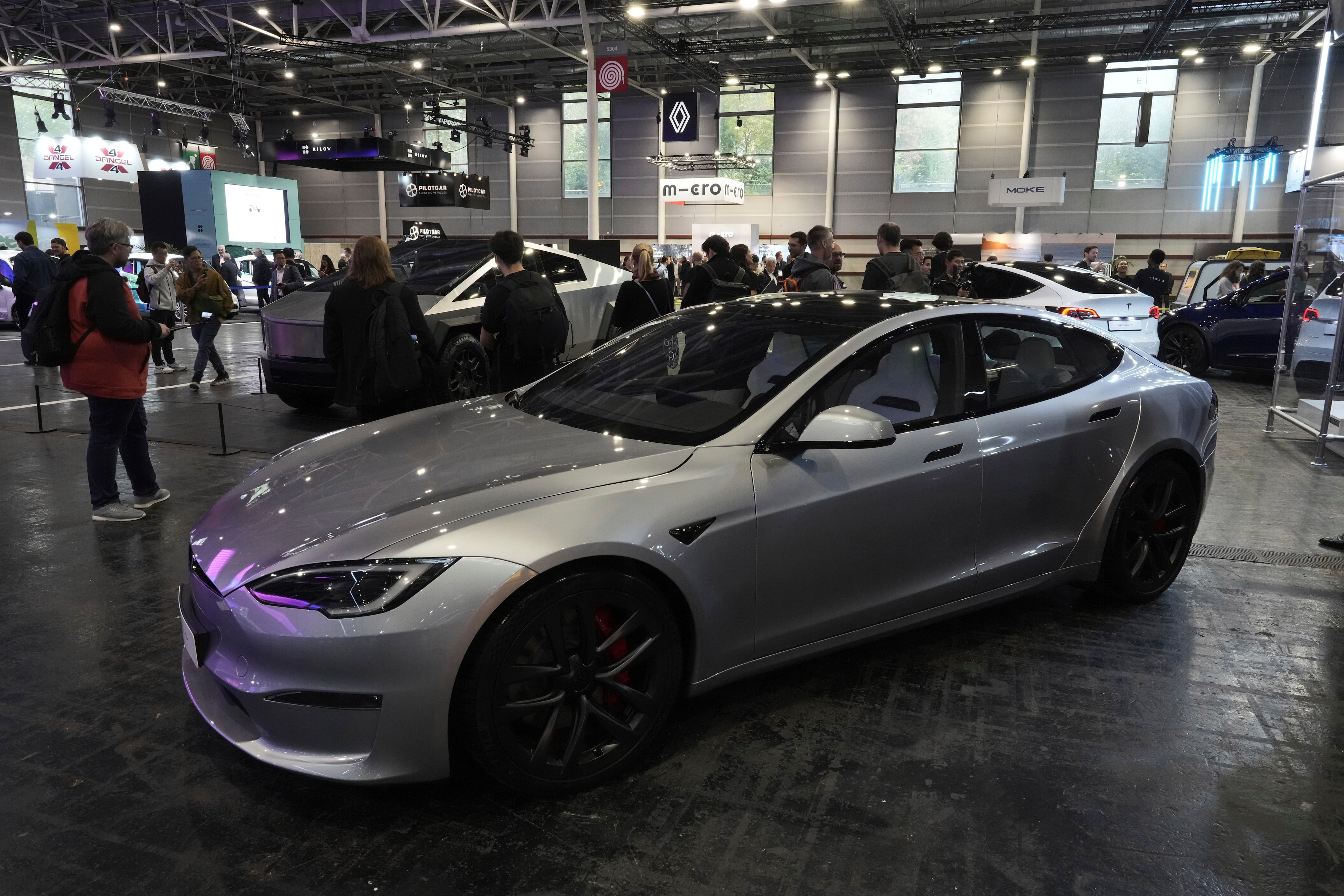
None of the four has charged a dime for these upgrades.
In some EVs, software can also unlock performance
The rise of electric cars means some owners can download a little more performance for their cars.
Manufacturers often use the same hardware in both moderately powered and high-performance versions of their EVs. The difference is programming. Software gates limit the performance of electric motors and batteries. Automakers can unlock them with coding changes.
Some automakers let owners download an update to change performance figures. To date, this has always involved a fee.

Ford, for instance, made an additional 100 lb-ft of torque and faster acceleration available to Mustang Mach-E owners for $995 in 2024. Mercedes allows owners of its EVs to subscribe to additional horsepower, paying a monthly or annual fee.
Rivian has offered a Performance Package update for several years, which can add both horsepower and range.
The promise and risk of the software-defined car
Remote software updates are both promising and nerve-wracking for car shoppers.
Automakers often tell us that “the software-defined car” is the future of transportation. As cars increasingly become mobile technology platforms, automakers can update them like phone manufacturers do. Features could come and go.
This unlocks possibilities many drivers find threatening. Some automakers have told investors they plan to charge monthly subscription fees for car features.
That would solve several problems for the automotive industry.
Today, they build different equipment into each trim level of a new car. This creates costs for them. A compact SUV, for instance, might be offered with an eight-speaker sound system in its base model, a 12-speaker audio system in a mid-priced model and a 16-speaker premium sound system in its top-of-the-line form. The factory must stock all three.
In the future, they could simply build 16 speakers into every edition, and activate eight, 12, or 16 based on what the buyer pays each month.
Americans are also keeping their cars longer than ever. The average car on American roads is now nearly 13 years old. Subscription fees would let automakers earn money from people who don’t shop for cars as often as they used to.
But the subscription model has proven controversial in survey after survey. Americans don’t want to continue making payments on something they own.
The technology is unambiguously good, however, when it’s free. Volvo’s voice assistant could be just the start of a long trend toward cars that keep improving long after you drive them off the lot.
A Volvo executive recently told us that the company plans many further enhancements, hoping to make the long-term experience of owning a Volvo a string of pleasant surprises.
Sean Tucker is a managing editor for Kelley Blue Book. He’s based in Washington, D.C., where he has covered the auto and energy industries for a quarter-century.
The Steering Column is a weekly consumer auto column from Cox Automotive. Cox Automotive and The Atlanta Journal-Constitution are owned by parent company, Atlanta-based Cox Enterprises. Cox is a minority investor in Rivian.