With World Cup knocking, homeless camp cleanup proceeds at downtown’s doorstep

On a beat-up, tan couch underneath the Downtown Connector, Xhexania Xander smoked a cigarette.
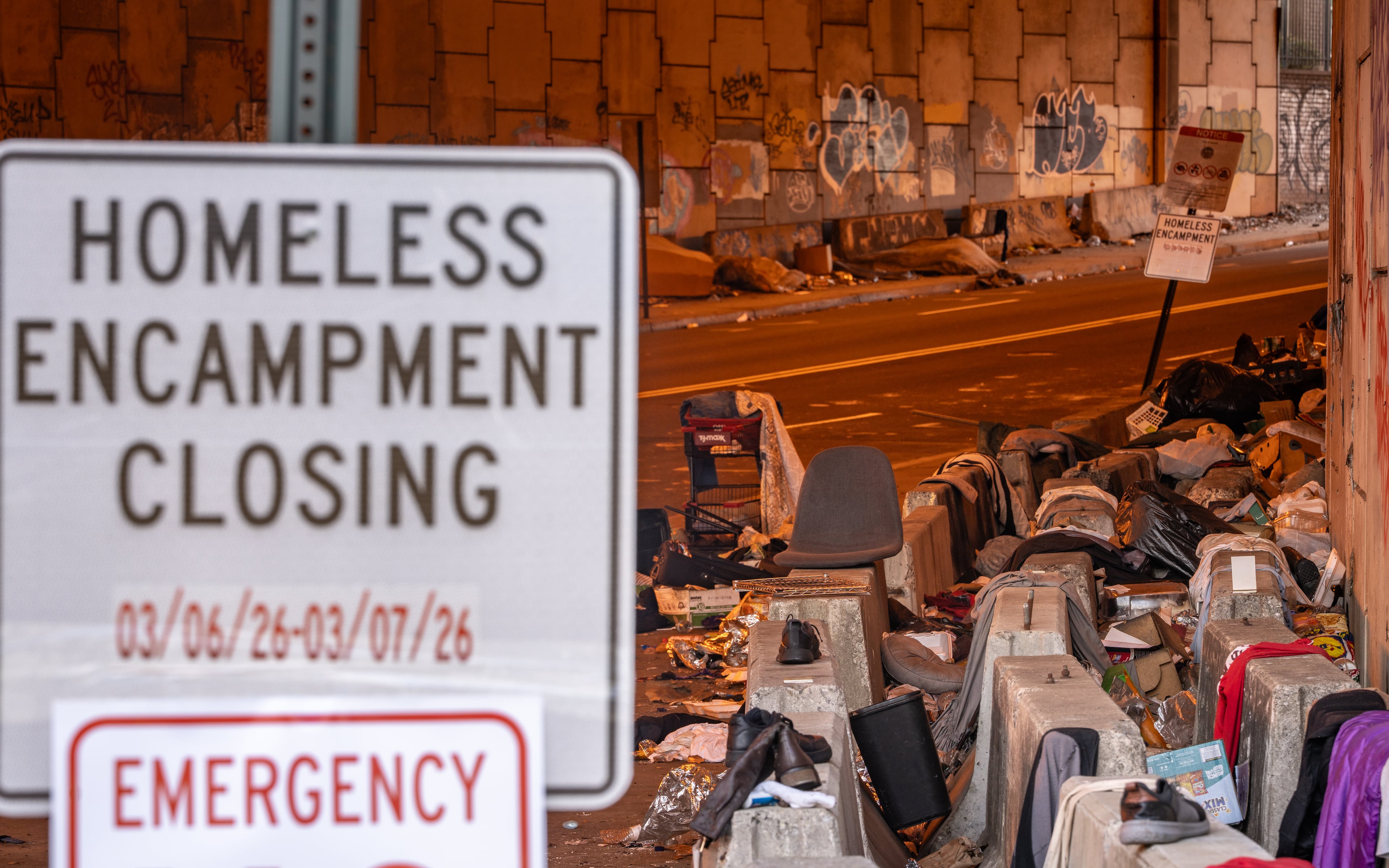
Tucked beneath the overpass, trash piled up around her and on nearly every section of the Bell Street sidewalk. The overflowing homeless encampment near Grady Memorial Hospital, just over a mile from Mercedes-Benz Stadium, had become a public health issue.
Xander was among the last people remaining in the camp Friday morning. She’s slept in a green tent in the area since late 2025.
“I don’t have a choice,” she said.
By Saturday morning, the tents and trash were mostly gone. Workers in white hazmat suits moved piles of rubbish into trucks.
The city of Atlanta cleared the site over two days, part of a larger endeavor to end homelessness in downtown Atlanta ahead of the June start to the FIFA World Cup. The effort, dubbed “Downtown Rising,” began in 2024 and aims to secure housing for hundreds of individuals experiencing homelessness.
Cathryn Vassell, CEO of Partners for Home, the organization helping the city implement homelessness policies, told The Atlanta Journal-Constitution on Friday the agency has been reaching out for months to those who live in the encampment as it works to move people into permanent housing and shelters.
Since January, she said caseworkers have compiled a list of eight individuals who regularly had been staying under the bridge.
Six have moved into permanent housing, and housing for another two, a couple, is pending, Vassell said.
Atlanta police Maj. Jeff Cantin said the city decided a little over a month ago it would tackle the Bell Street encampment this weekend. It’s the latest in a string of such clearings that officials have said will continue through the summer — when hundreds of thousands of soccer fans are expected to descend on the city — and beyond.
The last time this site was cleared was April 2024, when barriers were installed to prevent tents from being pitched on the sidewalks.
This part of Bell Street, where it intersects with Coca-Cola Place and Pratt Street, was filled with couches and old mattresses. Accumulating trash had led to an influx of rodents and other pests.
South of the I-85 overpass is an apartment complex. North of it is Grady, Children’s Hughes Spalding Hospital and the rest of downtown.
The concrete barrier removed over the two days had kept human waste and trash — including torn clothing and rotting food — trapped. The sidewalk had been nearly unpassable and the smell was pungent.
“It was really less about optics in this instance, and more about the safety of the people and all the folks that live in and around that area,” Vassell said about why the city decided to clear the encampment.
Vassell said the city is well on its way to reaching the goal to find housing for 400 people ahead of the World Cup. The multipronged “housing first” approach includes outreach and rehousing support plus wraparound mental health and medical services.
Many cities have embarked on similar efforts ahead of big events that thrust them into the national and international spotlight. Atlanta also has previously grappled with the issue. An estimated 9,000 homeless people were arrested ahead of hosting the Summer Olympics in 1996, according to the think tank Brookings.
The present-day push has not been without its critics, who worry the plan is unrealistic or a fleeting fix to a chronic issue facing the region and other U.S. cities.
A spokesperson for Mayor Andre Dickens previously described the initiative as part of a sustainable plan with significant financial backing to revitalize downtown.
“This is a long-term project, and just like the mayor’s significant commitment of $60 million for our unsheltered residents, this will last well beyond one single event,” Michael Smith said in a statement last year.

The January 2025 death of Cornelius Taylor, run over by a 5-ton Department of Public Works front loader as crews cleared the camp where he lived, stoked concern. That clearing came in preparation of celebrations for the Rev. Martin Luther King Jr. at Ebenezer Baptist Church, across from the Old Wheat Street encampment.
Since then, the city has amended its encampment cleanup protocols, including the introduction of tent checks using thermal imaging technology and a more judicious use of heavy machinery.
During clearings, city officials said outreach services to connect individuals to housing and mental health resources will persist. But, Cantin said, if anyone resists leaving, they will be taken to the city’s diversion center where they’ll be offered additional services.
Bell Street marked this year’s second encampment cleanup, according to the public works department. Cantin said such work is done “as needed.” A camp on Cooper Street, where some homeless people have set up tents in anticipation of the city finishing construction on a rapid housing project, is expected to be removed next, he added.
Also ahead of the World Cup, he expects more maintenance in already cleared downtown areas — such as Woodruff Park and Northside Drive.
Different strategies are implemented for different locations, according to Cantin. To keep people from returning to Bell Street near Grady, he said officers will patrol the area for 10 days and ensure newcomers know where they can find help.

Xander said she is reluctant to go to a shelter. She described unpleasant past experiences and said she feels safer under the bridge.
She was not among the individuals living in the encampment who were identified by Partners for Home, but Vassell said the organization has attempted to help her relocate and remains committed to assisting her.
Xander said she is considering returning after the city is done clearing the area.
“At what point are we going to address all this crap of running off the homeless? There’s just a lot of people turning a blind eye,” she said.
About the Author


