Whistleblowers’ plea rocked Atlanta City Hall, then fizzled

The so-called whistleblower letter rocked Atlanta City Hall.
Days after Mayor Andre Dickens completed a successful push to put the city’s inspector general on a shorter leash last year, five of the watchdog agency’s top staffers made a plea to state government and the FBI.
They said in a March 2025 letter that the inspector general’s office had uncovered evidence of criminal activity in city government, but new limits on the office’s authority threatened to shut down their investigations. They asked law enforcement to take up the cases after former Inspector General Shannon Manigault resigned in protest of the restrictions.
The whistleblowers described probes into all corners of city government. The allegations were both outlandish and outrageous: A parks official getting a fence built at his home by a city contractor. Leaders of the watershed department detaining employees for hours with help from an Atlanta police officer. A deputy fire chief running a lucrative side hustle.
But one year after the whistleblowers sent their letter asking for outside investigations, there is little to show for the effort.
After the OIG closed several of the cases in January, The Atlanta Journal-Constitution obtained reams of its investigation files to see the evidence the agency found, then filed open records requests with a half-dozen city departments to see how they responded to the inspector general’s findings.
Those records show that Dickens’ choice to run the office, LaDawn Blackett, found evidence of criminal activity in at least one of the cases the whistleblowers highlighted, plus potentially illegal acts and ethical concerns in two others.
Yet none of those have been handed off to law enforcement to investigate, Blackett said in response to the AJC’s questions earlier this month.
And there is no indication that law enforcement decided to act on its own.
The Georgia Bureau of Investigation and the state attorney general’s office both said they hadn’t taken up the cases. The FBI said it was aware of the letter but wouldn’t confirm or deny whether it opened an investigation.
FBI spokesman Tony Thomas added that “a review of allegations does not necessarily result in the opening of an investigation.”
This is what we know one year later.

Some cases found potential misconduct
1. The fence
Department: Parks and Recreation
What the whistleblowers wrote in March 2025: The inspector general was investigating an assistant director in the parks department, Winfred Cartwright, for allegedly using a city contractor to build a fence at his house. Later, they wrote, investigators found that Cartwright was connected to two businesses that had received city money.
What the interim inspector general concluded about the case: An investigation found that Cartwright, a longtime city employee, had a fence installed at his house in Covington in 2023 and left the roughly $3,000 invoice unpaid for months. The fencing company had done business with the city and emailed him a plea to settle up. The unpaid invoice put the company in a “bad situation with the City,” the contractor wrote to Cartwright: “They could accuse us of unethical business practice.”
A few more months passed, and a second city contractor received a questionable invoice: Cartwright allegedly instructed the second contractor to pay the fencing company. He sent the invoice for the project at his house and modified it to say “emergency fencing,” according to the inspector general’s newly released report.
The second contractor thought it had to do with a project to enclose a sinkhole at Channing Valley Park in Buckhead, according to the inspector general. But when an OIG investigator went to the park, they found the sinkhole hadn’t been fenced in.
About a month after the whistleblower letter was released, in April 2025, the inspector general’s office went back to the park. This time, a fence had been erected. An investigator contacted the company whose sign was on the fence, but learned the company wasn’t involved.
By May 2025, Blackett was describing the new fence as evidence of a cover-up attempt.
Compounding the issues, the inspector general found that Cartwright submitted another invoice to the same city contractor on behalf of a family consulting business. Questioned by OIG, he claimed he didn’t know the business or the woman who owned it. Yet in his internal employee profile, she was listed as his daughter.
Cartwright did not respond to text messages from the AJC and did not answer his phone.
What now: Blackett told the inspector general’s board in January that her staff hadn’t investigated the full extent of Cartwright’s actions. She concluded the fence situation and his daughter’s invoice were enough to justify firing him and decided to leave it there.
Cartwright retired after OIG delivered its findings, Blackett said.
Still, records show that an OIG investigator wanted someone else ought to investigate further: In a memo written in May 2025, the investigator recommended referring the case to the city auditor and the human resources, ethics and purchasing departments for further investigation.
But in response to the AJC’s open records requests, those offices said they didn’t have a record of launching their own investigations.
Asked about the case by the AJC, City Auditor Amanda Noble said her office might take up the case: “We’ll have to look at our audit plan and see when we can schedule it,” she said.
In her final report, Blackett agreed that more investigation was warranted: She recommended referring the case to law enforcement for potential criminal investigation. But when the office’s governing board closed the case in January, it did not hold a vote on handing it off.
2. The side hustle
Department: Fire Rescue
What the whistleblowers wrote in March 2025: The inspector general was investigating a deputy fire chief, James McLemore, for using city equipment and hiring off-duty staff to work events without permission. The whistleblowers added that McLemore “appears to have made false statements” and underreported revenue on his taxes. They also said investigators had found evidence that Fire Chief Rod Smith also might have a side business he hadn’t reported.
What the interim inspector general concluded about the case: While the whistleblower letter suggested a broader investigation into McLemore’s business, Blackett’s report zeroed in on his role coordinating EMS services for Dragon Con, the annual science fiction and fantasy convention.
Blackett found that there were no issues specific to the convention, because its organizers pay off-duty firefighters directly and McLemore’s business wasn’t involved.
Her closing report didn’t address other events his business handled, leaving that question to the city’s ethics office. The case file didn’t mention the fire chief.
What now: OIG ruled the case unsubstantiated, but an investigator for the office wrote that there may be cause for concern. The investigator found evidence of ethics violations, she wrote, though she didn’t detail them.
The case was sent to the ethics office for follow-up, where a case is still pending, according to Deputy Ethics Officer Carlos Santiago.
Meanwhile, McLemore, the fire department’s No. 2 official, filed a lawsuit in February accusing the whistleblowers and the city of damaging his reputation, claiming $5 million in damages, court records show.
In the lawsuit, he denied misusing city equipment, underreporting income or breaking rules by hiring off-duty employees. Records show that he told an OIG investigator he wasn’t aware of policies limiting off-duty work.
The whistleblowers and the city have moved to throw out the case, though a judge has not yet ruled on their requests.
But the legal fight has shed more light on the whistleblowers’ concerns.
In an affidavit filed in the case, a former deputy inspector general, Shelby Williams, wrote that an OIG investigator had found evidence that McLemore underreported his income to the city, didn’t get permission to do outside work and may have had a stake in another company he didn’t report on city financial disclosures. What’s more, she wrote, the investigator found evidence that the fire department “might have promoted McLemore’s company to vendors.”
The Fairley Firm, the law firm McLemore hired to file the lawsuit, declined to comment, citing the pending litigation.

Some complaints didn’t check out
3. The birthday party
Department: Aviation
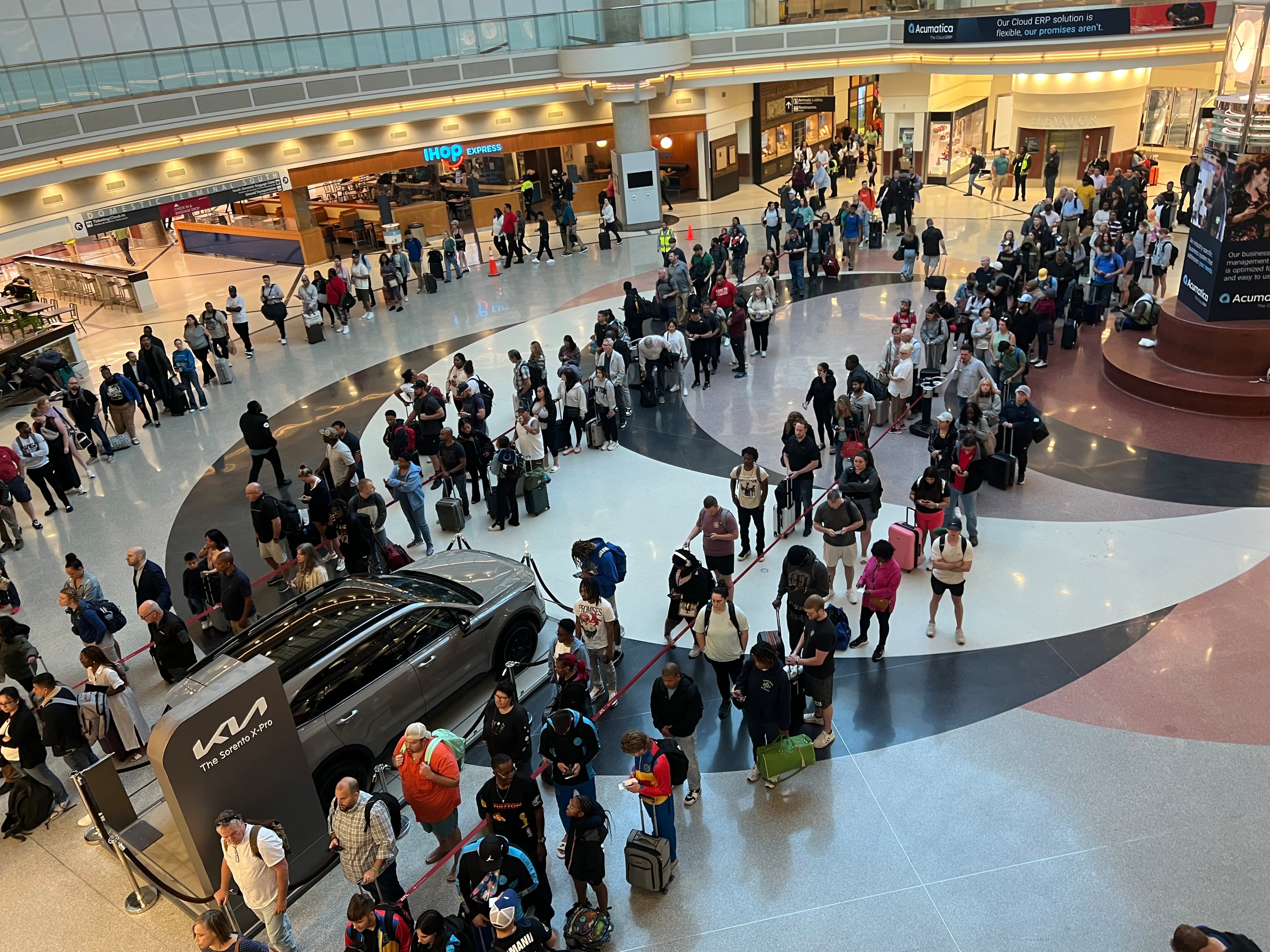
What the whistleblowers wrote in March 2025: The inspector general got a tip that Hartsfield-Jackson Atlanta International Airport employees used city money to pay for a Mexican-themed birthday party at The A Bar and Grill, a restaurant near baggage claim. The tipster said invoices were altered and the party was intentionally mislabeled on employees’ work calendars to cover their tracks.
What the interim inspector general concluded about the case: The OIG found that the party happened, but employees paid the tab themselves. An investigator wrote that there were problems with how the airport approved other payments for catering and events — for instance, expenses were often authorized retroactively — but the inspector general concluded that the issues owed to weak enforcement of city rules, not misconduct.
4. Union busting
Department: Fire Rescue
What the whistleblowers wrote in March 2025: A tipster raised a number of concerns about how the fire department interacted with the International Association of Fire Fighters union, saying agency leaders put pressure on the union’s Black board members, among other allegations.
What the interim inspector general concluded about the case: Blackett found a mixed bag. Some sources told an investigator that they felt department leaders’ decisions to promote and discipline employees discouraged union activity. But when they gave specific examples, those stories were either disputed by other employees or not documented, according to Blackett’s final report.
She concluded that there was tension between the city and the union, but no misuse of authority.
Plus, Blackett wrote that she thought the case shouldn’t have been opened: Labor issues fall outside of OIG’s jurisdiction, she concluded.
Some cases are still under investigation
5. The detention
Department: Watershed Management
What the whistleblowers wrote in March 2025: According to the whistleblower letter, the inspector general was investigating claims that a group of watershed employees was held against their will in a conference room for more than three hours because a supervisor’s wallet was missing. When one of them asked to use the restroom, the letter said, a police officer told them they couldn’t leave the room.
What now: The inspector general initially concluded that the allegations largely checked out. OIG investigators found that employees were sent to a conference room, where they were watched by an Atlanta police officer.
The employees were held in the room anywhere from almost an hour and a half to more than three hours as watershed security officers searched for the missing wallet and conducted interviews, according to OIG’s initial report. A recording from the police officer’s body camera confirmed that the employees were told they couldn’t use the restroom without an escort.
Blackett concluded that several watershed employees, including a current deputy commissioner and the security director, abused their authority in the incident. She suggested their actions could have constituted false imprisonment. The OIG board agreed and closed the case in January.
But the board unexpectedly reversed course Tuesday, vacating its findings after Blackett said she learned some of the implicated employees hadn’t received notice of the investigation. Pressed by board members, she said none of the officials accused of abusing their authority had been interviewed — not by her investigators or her predecessor’s.
Addressing the board, two of the watershed officials named in the report said they didn’t know they’d been investigated until after the board voted on their conduct.
Sterling Graham, watershed’s security director, conceded that mistakes were made in the search for the wallet. For instance, it took too long to bring in investigators from across town to question the people in the conference room. In hindsight, it would have been better to schedule interviews later. But he insisted that his team didn’t hold the group involuntarily.
“The information related to the investigation became public before the investigators or myself had an opportunity to provide our perspective before this body,” Graham told the board, adding: “In my opinion, it was pretty important to talk to the people that became subjects of the investigation.”
The OIG board agreed, asking Blackett to conduct the interviews and write a new report. Blackett signaled that her conclusions were unlikely to change: She said the body camera footage painted a clear picture.
Even so, she said she would try to reinvestigate the case by May.
Separately, it is unclear what, if anything, the Atlanta Police Department concluded about its officer’s actions.
As of last fall, the department was conducting an internal affairs investigation, OIG records show. But the department did not answer the AJC’s questions about the status of the case.

6. The convention
Department: Mayor’s Office and City Council
What the whistleblowers wrote in March 2025: The inspector general was investigating payments the city made to attract the 2024 Democratic National Convention. A tipster raised questions about $500,000 City Council allocated to a nonprofit set up to attract the convention. And as OIG reviewed the case, investigators found evidence that Dickens had coordinated the payment of $2 million to the International Woodworking Fair, which had booked a convention for the dates the DNC wanted. The whistleblowers also said there was evidence the woodworking convention was asked to sign a nondisclosure agreement.
What the interim inspector general concluded about the case: Blackett found that City Council was within its rights when it spent $500,000 to try to attract the convention. Investigators didn’t turn up evidence that the payment, which was approved through city legislation, was used to advance a political cause or personal gain.
Instead, Blackett told the OIG board, the payment could be justified as an effort to increase tourism spending.
What now: The case is not altogether resolved. Blackett didn’t address the $2 million payment to the woodworking conference when the first case was closed in January.
And in a memo written last fall, an investigator wrote OIG was conducting a separate probe based on evidence it found investigating the initial tip, though it didn’t offer any details.
The mayor’s office has dismissed the whistleblower letter’s allegations, saying in a statement last year that they are “based on anonymous complaints that have apparently been investigated for more than a year and have found no wrongdoing.”
The status of some cases is unclear
7. The nonprofits
Department: Mayor’s Office and City Council
What the whistleblowers wrote in March 2025: OIG received several complaints centering on the relationship between the city and nonprofits like Star-C that focus on housing issues. (The mayor’s chief of staff, Courtney English, previously worked at Star-C.) Among other allegations, according to the whistleblowers, tipsters accused City Council of giving money to Star-C because of English’s connections there and failing to conduct oversight of their work.
What now: The OIG’s board voted in January to close dozens of lingering cases, and Blackett has separately closed many more that she said her office can no longer investigate because of time limits on OIG’s work. (City Council voted last year to put a two-year limit on the inspector general’s investigations.)
But neither Blackett nor the board has addressed the investigation into the city’s ties to the nonprofits, even though it was launched more than two years ago — and well before many of the cases closed earlier this year.
The mayor’s office said the whistleblower letter represented an attempt to “tarnish the names and reputations of not only City employees, but private citizens and social service organizations.”
English has said he resigned from Star-C’s board of directors in 2023 at the recommendation of the city’s ethics officer.
Blackett said she would not confirm or deny the existence of the case. But she said that while the city charter gives her office two years to investigate a case, it can take more time to write up its findings.
Every case the office has ever opened will be brought before the OIG’s board eventually, she said.
8. Water valves
Department: Watershed Management
What the whistleblowers wrote in March 2025: A tipster told OIG that the city was installing cheaply made metal boxes around the water system’s shutoff valves. The complaint said this was ultimately wasteful because the covers broke when cars drove over them. (Water crews access shutoff valves through lids that look like small manhole covers.) But the letter did not explain why the whistleblowers thought it warranted a criminal investigation.
What now: Blackett and the OIG board haven’t addressed this case, either. But according to the whistleblower letter, the investigation wasn’t launched until August 2024, meaning the office hasn’t yet run up against the two-year time limit.
About the Authors


Riley Bunch is a reporter on the local government team at The Atlanta Journal-Constitution covering Atlanta City Hall. She covers the mayor and Atlanta City Council while also keeping an eye on the city’s diverse neighborhoods.


