Discovery of lost evidence is stunning twist in decades-old sex assault case

Prosecutors in Savannah have reopened an unsolved sexual assault case after an unexpected discovery: Key evidence that had been missing for decades was found scattered about the small-town police department that investigated the case.
The development marks a stunning twist in the case of Sandeep “Sonny” Bharadia, who was released in 2024 after spending more than 22 years behind bars for a crime he says he didn’t commit.
A three-day sweep of the Thunderbolt Police Department turned up the evidence that was missing for nearly a quarter‑century, according to officials with the Chatham County District Attorney’s Office. Investigators found the files strewn about the police department and in another building, Shalena Jones, the county’s district attorney, said Monday.
“It was like a treasure hunt,” she said.
The news comes nearly two years after Bharadia‘s conviction was vacated in April 2024. He was released that November and last year prosecutors formally dismissed his charges, citing a lack of evidence and DNA linked to the case that could have cleared him.
Jones said the discovery of the lost evidence a few weeks ago led to her decision to reopen the case.
“Technically, it could be retried again,” she said.
The 51-year-old has always maintained his innocence, and turned down a plea deal ahead of his 2003 trial. The deal would have forced Bharadia to serve a decade in prison, but he rejected the offer because it would have required him to admit to something he said he didn’t do.
“This should have never happened,” Bharadia told the AJC in an interview last year. “But I’m grateful it’s over with.”
Witnesses said he was some 250 miles away in metro Atlanta when a young teacher was sexually assaulted during a home invasion in November 2001. The crime occurred in Thunderbolt, a tiny town just outside of Savannah.
After his release, Bharadia sued the town of Thunderbolt and the two former police officers who investigated the case.
His lawsuit alleges the small-town’s shoddy police work led to him spending nearly half his life in prison despite DNA evidence that should have exonerated him much sooner.
Investigators had no reason to believe he was involved in the home invasion, but pushed forward with the case against him anyway, he alleged. Prosecutors even cut a deal with a man named Sterling Flint, whose DNA would appear on a pair of batting gloves that the victim said were used in the crime, according to his lawsuit. Flint was a star witness at Bharadia’s trial that helped put him away.
Bharadia and his legal team had long maintained that missing evidence had hampered his efforts to clear his name. His lawsuit also noted they had sent multiple Open Records Act requests to the Thunderbolt Police and other agencies seeking information about the investigation.
The police department has said for years that it was unable to locate the evidence initially used to tie Bharadia to the crime, including the photo lineup officers showed the victim.
That story held until March 10.
Jones said she created a new special victims’ unit last year. The group primarily focuses on sexual assault cases, but also includes a review team that examines old cases.
On that day, Isabel Pauley, an assistant district attorney who heads the unit, said she and a fellow investigator found the long-missing evidence after showing up at the police station unannounced.
They found the long-missing evidence strewn across bankers boxes and plastic bins. The evidence includes an untested sexual assault kit that was still sealed, and an original photographic lineup containing Bharadia’s image and others that were shown to the victim after the crime, prosecutors said.
Pauley said the discovery of the lineup image in particular was a “remarkable” moment.
“I must have held it three or four times,” she said. “I know an original photographic lineup when I see it.”
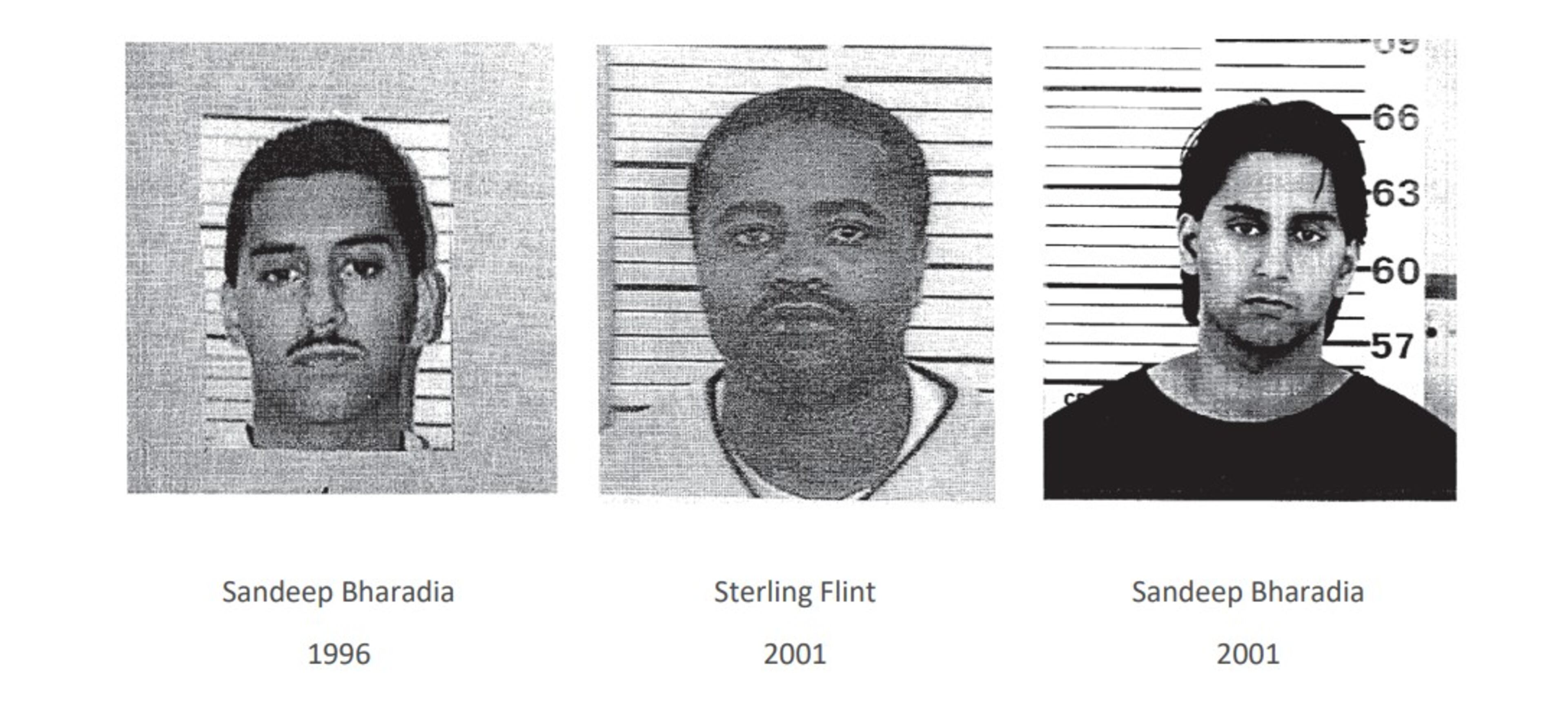
The Georgia Innocence Project, which works to exonerate wrongly convicted prisoners, and some of the defense attorneys who spent years advocating on Bharadia’s behalf, said they would examine everything the prosecutors had uncovered.
“We look forward to finally reviewing the evidence, which we were previously informed had been lost or destroyed,” the Georgia Innocence Project and attorneys Olivia Vigiletti and Noah Pines wrote in a joint statement.
Jones has a long history with the case. Before her election as DA in 2020, she was prosecutor in the office. She said she opposed his motion for an extraordinary new trial more than decade ago.
For more than 20 years, Jones said prosecutors were told by various employees at the police department that evidence in Bharadia’s case was “missing and that it didn’t exist.” But many of the items, it turns out, were tucked inside boxes labeled from 2001 to 2006, which is when much of the activity in the case occurred.
“It’s hard not to be flabbergasted that this evidence materialized all these years later,” Jones said. “It’s unbelievable.”

Whether the newly discovered evidence could lead to new charges remains to be seen. Prosecutors said they will comb through the evidence and send the sexual assault kit off for testing.
Exonerees in Georgia could be eligible for compensation under a law passed earlier last year. It’s a process Bharadia and his legal team said they would explore as a way to seek some compensation from the state for decades he spent in prison.
It was Bharadia’s existing lawsuit, as well as the potential for additional litigation, that led Jones to reexamine the case and sent her team to the Thunderbolt PD for the fateful search.
“We thought maybe we’d take a look at the Bharadia case to just assess what legal issues still remain, if we needed to anticipate a statutory claim,” Jones said. “Just to cross our T’s and dot our I’s.”
After discovering the long-lost evidence, Jones said her office’s first duty was to alert the parties involved. She sent a letter to Bharadia’s team last week alerting them to the discovery.
Her second order of business, she said: “Review the evidence as if this was Day 1 and this crime occurred yesterday.”
About the Authors


