How Black gospel changed my white life

In early February 2025, I caught the spirit on an I-285 on-ramp in Smyrna. Black gospel found me, and hasn’t left me since.
As a lifelong white person, I indulge in an annual Black History Month hyperfixation. There was the year I listened to Black classical composers nonstop, and the one where I read only romance novels written by Black authors. I like this practice, elementary as it may seem, because the discoveries always multiply and endure long after February is over.
Last year, I had a similar plan. But as Marvin Sapp would say, God had a better one.
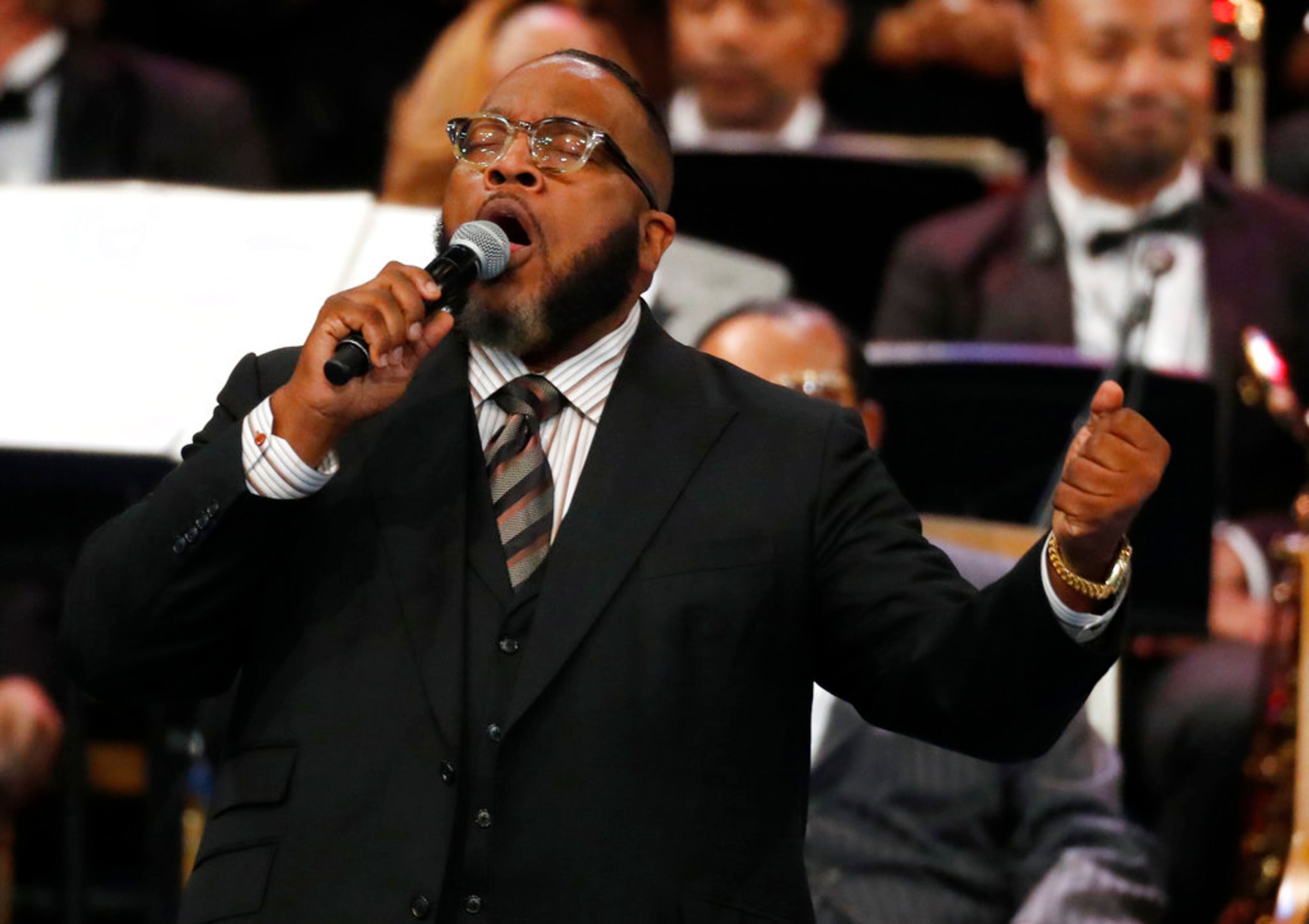
It’s all their fault actually, Marvin Sapp and God. I was supposed to be exploring Black hymnody (the study of hymns) but the meager Spotify collection I selected on the way to work turned over into gospel music, and I reluctantly let it play.
As a progressive Episcopalian and classical music devotee, gospel music was outside of my ken. Anglican people are famously allergic to anything but common time organ-and-piano repertoire. We are very boring in that way. Regarding other contemporary Christian music, I have my own thoughts, and none of them are good.
I made it 2 minutes and 30 seconds into Sapp’s “He Saw The Best In Me” before tears, unexpected and unbidden, were streaming down my face.
I’ve never even had a judgmental auntie or uncle, not the way Marvin was telling it, but in our shared language of music and churchgoing extemporization he told me something new about lives I could never understand. It was true, in a bone-deep way, like a bass line that rattles up your spine.
I was changed.

Communing with the angels
I love music, the meat of it, how it’s made and where it comes from. For that kind of hunger, Black gospel music is an unparalleled feast.
I gorged myself on Hezekiah Walker, Fred Hammond, the Christianaires, Mary Mary. It was a beginner’s education, one that breezed over subgenres and specific eras but illuminated my world like daybreak.
Nothing makes you believe in a higher power like an extraordinary musician, and the first time I heard LaShun Pace my soul popped right out of my body. One evening I trapped my husband in the library and played Fred Hammond’s “Jesus Be a Fence” on the speakers just so I could explain the metric deliciousness of it. When “Melodies from Heaven” plays, I think I could dive into the sound, like the River Jordan, and come out shining.
These are rich texts, too. Lines as succinct as, “The Lord is in the temple, let everybody bow,” directly reference Hebrew experiences of the presence of God. The heritage of early African American spirituals is evident in their structure and motifs. Black gospel music glitters with historical details of mysteries and mysticism and a divine that is no farther away than a thought.
As I pressed my nose to the figurative stained glass separating me from the nuances of Black church experiences, I came to appreciate other details of the culture.
The prism of Black beauty turned and turned, and my mental vision board of heaven’s angels filled up with Dottie Peoples in the spangled armor of God, Mahalia Jackson’s elegant countenance, the Pace sisters’ smiles and whatever genius concocted the color scheme for the cover of Mary Mary’s “Thankful” album — the apex of 2000s glamour.
It didn’t take long to learn the participatory contours of the genre; the call-and-response, improvisation and repetition that, if you’re patient, reveals new textures with every refrain. A lifetime studying music and singing in church choirs helped, but congregational hymns aren’t as, shall we say, animating as the communal music-making of Black gospel. I’m not a dancer or a clapper, or a put-your-hands-in-the air kind of person. In my car, my second church, I would be lying if I said I didn’t do it all.
The more I immersed myself, the more I recognized a quality of spiritual truth that was new to me.
A different Christian story
In my listening, I noticed an emphasis on the worth of the individual and the power of personal resilience. Sheri Jones-Moffett’s “Encourage Yourself,” Mary Mary’s “I’m Walking” and “I Just Can’t Give Up Now,” and Anthony Brown’s “Worth It” don’t just celebrate God, they celebrate inner strength and self-worth. My mind draws parallels to Memphis sanitation workers saying “I AM a man,” and the Rev. Jesse Jackson’s powerful refrain that he was “somebody.”
In this context, self-worth isn’t some frivolous thing, as some Christian traditions regard it. To recognize oneself is to recognize God’s work.
During slavery in the United States, major Christian denominations debated whether to “convert” enslaved people, arguing on one hand for the all-important saving of souls and on the other against sharing a story that spoke so specifically of what they were denied: freedom, equity, dignity, compassion, the acknowledgment of human worth.
My growing appreciation of Black gospel led me to dig deeper, and I was humbled to learn Southern states even passed laws against teaching enslaved people to read just so they wouldn’t read the Bible.
I can’t get that out of my mind.
Although this may be a Christian account, it is more importantly one of myth, storytelling, history, the human experience and the invisible ties that bind these together. The political execution of Jesus and the Hebrew story of slavery and exile are not abstract notions in Black theology. They reflect a lived history of bondage and freedom and righteous persistence.
These parallels are so powerful oppressors knew enough to keep the source away from those who needed it. “You shall know the truth,” the Gospel of John says, “and the truth shall set you free.”
In fact, the entirety of Black American history is so biblically resonant, once you start to think about it, it hurts your teeth and zings around in your bones.
I believe faith is a divine exercise of the imagination, and that all enduring faith myths hold a shape of truth. Christianity happens to be the language I speak, but listening to Black gospel feels like stepping into an even deeper truth. Only now do I understand what the “living word” means. These songs and words are alive.
That doesn’t mean they’re perfect.
Since its inception, the Black American church has struggled with its treatment of women, LGBTQ people and other outsiders. I am not authorized to speak on these conditions, other than to say they’re the same ones that plague every powerful religion.
No matter how well-meaning, when I hear Kirk Franklin tell people to “just smile,” I think of friends whose smiles were their only armor against religious abuse. When a praise break rebukes the sin of homosexuality, I mentally add “hatred of” before it. There is no perfect messenger.
Instead, I think about the truth in the message, and how it wound its way through history, across continents and ages, bound the righteous struggles of the still-recent past and took a detour to visit a suburban white lady through the speakers of an F-150 on a cold February morning.
I wonder where it’s going next, and what it will show me.

Finding the joy
My original aim, before Marvin Sapp grabbed me by the throat, was to further study Black hymnody. Sacred music is a personal passion, and I betrayed the beauty of traditional church music when I called it “boring.” I love hymnody. It speaks to my soul in a way no other music could touch. I’m still glad Black gospel found me.
For all the beauty of African American spirituals and early songs, for all they poetically unite divergent emotions of hope and sorrow, they were still created in a context of suffering.
I am tired of learning about Black culture through Black suffering.
Years ago I interviewed composer Adolphus Hailstork about an operetta he wrote to commemorate the 1921 Tulsa Race massacre. Despite the pain of the occasion, he described the Black American experience as a triumph of survival.
“It deserves to be honored in the arts. On stage. In music,” he said. “It’s a noble story, and it needs to be told.”
When I listen to Black gospel, I hear that triumph sung right out loud. It is music to my ears.
This year’s AJC Black History Month series marks the 100th anniversary of the national observance of Black history and the 11th year the project has examined the role African Americans played in building Atlanta and shaping American culture. New installments will appear daily throughout February on ajc.com and uatl.com, as well as at ajc.com/news/atlanta-black-history.
About the Author

AJ Willingham is an National Emmy, NABJ and Webby award-winning journalist who loves talking culture, religion, sports, social justice, infrastructure and the arts. She lives in beautiful Smyrna-Mableton and went to Syracuse University.


