Investigators say deadly midair collision near DC followed years of ignored warnings about traffic
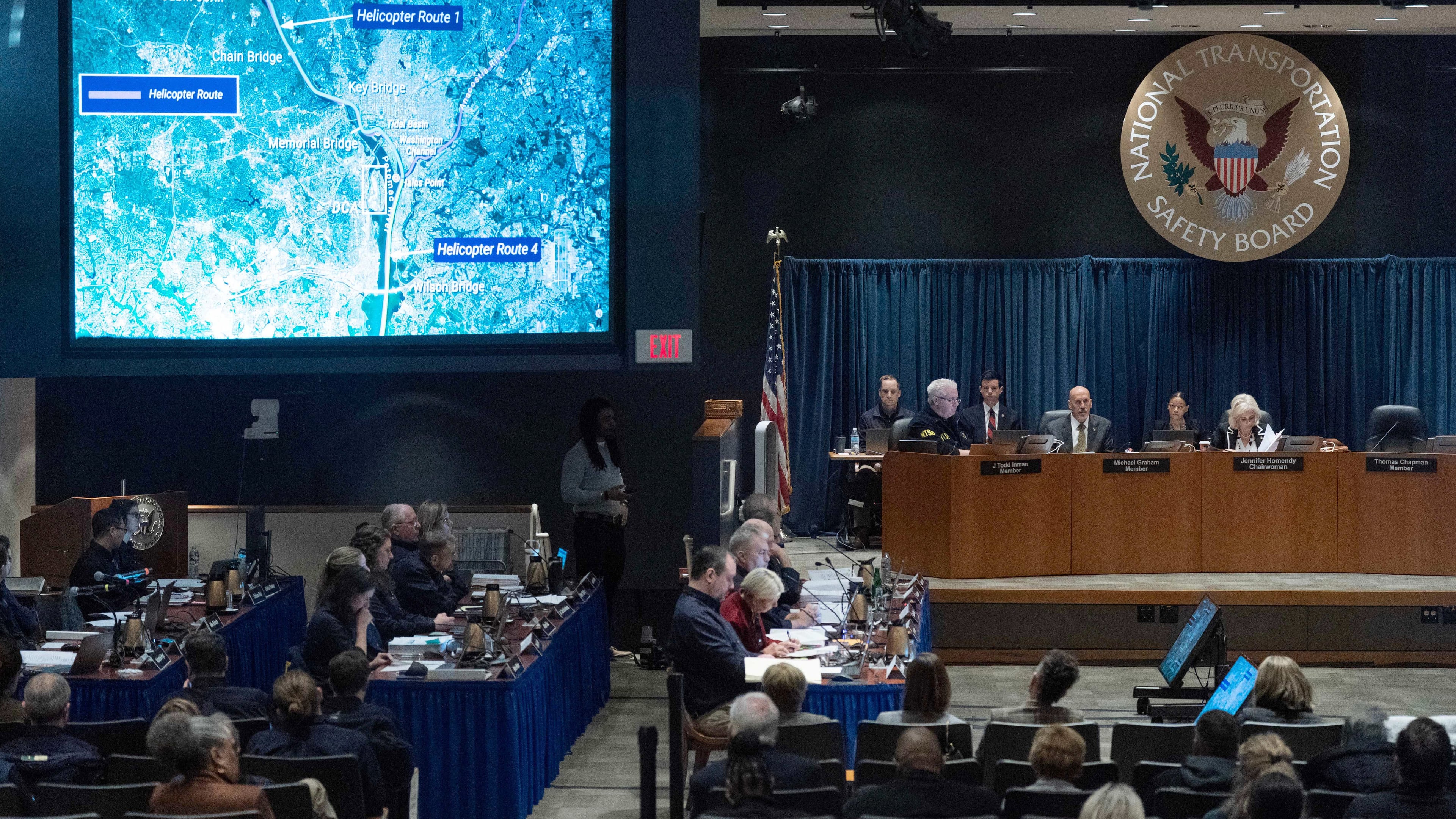
WASHINGTON (AP) — National Transportation Safety Board members were deeply troubled Tuesday over years of ignored warnings about helicopter traffic dangers and other problems, long before an American Airlines jet and an Army Black Hawk collided a year ago, killing 67 people near Washington, D.C.
A helicopter route in the approach path of a Reagan National Airport runway created a dangerous airspace and irregular safety reviews made it worse, the board said. That was a key factor in the crash along with air traffic overly relying on asking helicopter pilots to avoid aircraft.
The Federal Aviation Administration took steps to address those major concerns not long after the crash, but throughout the daylong hearing, investigators emphasized the history of unaddressed risks. Those include the FAA denying a regional supervisor's 2023 request to reduce air traffic at Reagan and failures to relocate the helicopter route or warn pilots more after an eerily similar near miss in 2013.
NTSB Chairwoman Jennifer Homendy made no apology for her occasionally stern tone.
“We should be angry. This was 100% preventable. We’ve issued recommendations in the past that were applicable to use. We have talked about seeing and avoid for well over five decades. It’s shameful. I don’t want to be here years from now looking at other families that had to suffer such devastating loss.”
Families watch for accountability
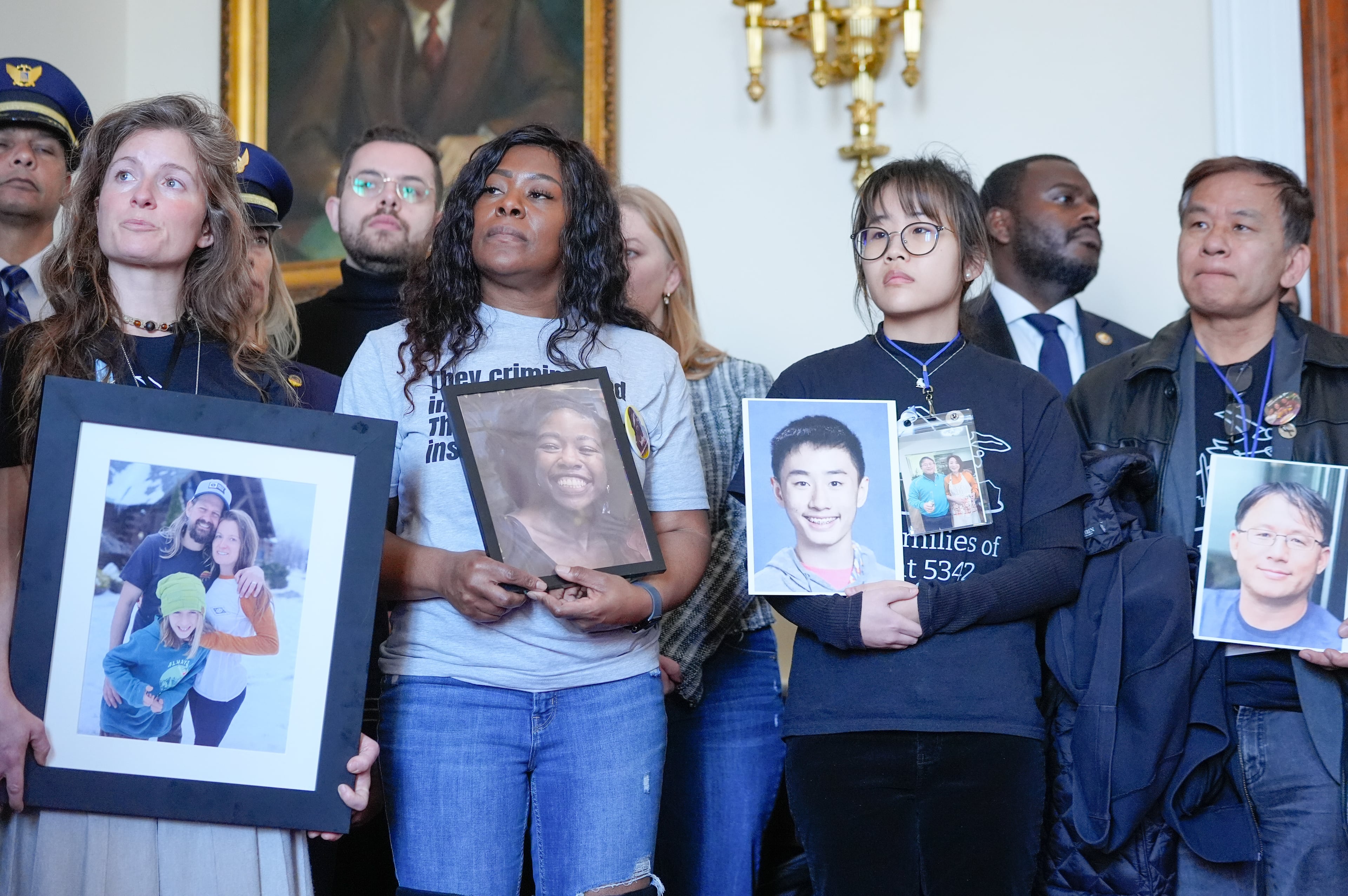
Family members listened intently during the hearing. Some were escorted out, including two in tears, as they saw an animation recreating some of final moments of their loved ones' lives. Others wore black shirts bearing the names of first responder units.
“The negligence of not fixing things that needed to be fixed killed my brother and 66 other people,” Kristen Miller-Zahn, who watched from the front row, said during a break.
The animations demonstrated how difficult it would have been for the pilots to spot each other amid the lights of Washington. They also showed how the windshields and the helicopter crew’s night vision goggles restricted views.
Victims’ families say they hope there’s meaningful change in response to the long list of recommendations the NTSB adopted Tuesday. The measures seek to improve airport training, staffing and safety, particularly at Reagan, as well as the culture of safety within the FAA and Army.
More than 30 of the recommendations are directed at the FAA. Making sure that controllers and their supervisors are properly trained and understand when visual separation can be used is key. But the NTSB also wants the FAA to reconsider the way it classifies Reagan airport and reevaluate all of its helicopter routes while making better use of data.
Systemic problems caused the crash
Before hearing from investigators, Todd Inman said “systemic issues across multiple organizations,” not an error by any individual, caused the tragedy, although the NTSB did also highlight several key mistakes.
Everyone aboard the jet, flying from Wichita, Kansas, and the helicopter died when the two aircraft collided and plummeted into the icy Potomac River. It was the deadliest plane crash on U.S. soil since 2001, and the victims included 28 members of the figure skating community.
The FAA took some action immediately after the crash and last week made some changes permanent to ensure helicopters and planes no longer share the same airspace around the airport.
Missed warnings
Homendy said she couldn’t believe the FAA didn’t realize this helicopter route provided at most a mere 75 feet (23 meters) of separation between planes landing on Reagan’s secondary runway.
“We know over time concerns were raised repeatedly, went unheard, squashed — however you want to put it — stuck in red tape and bureaucracy of a very large organization,” Homendy said.
Mary Schiavo, a former Department of Transportation Inspector General, said it's troubling to hear how many times the FAA failed to act.
“It was just a shocking dereliction of duty by the FAA. And they have so much work to be done to fix it. And just from my background, I don’t know if the people there are up to it,” Schiavo said.
The board recommended the FAA seek outside advice on improvements from the department’s Inspector General rather than create a single office to track concerns and enforce standards. Transportation Secretary Sean Duffy had announced the new safety office Monday.
NTSB investigators said the Army and FAA weren’t sharing all safety data with each other before the crash, and that Army helicopter pilots often weren’t aware when they were involved in a near-miss around Reagan.
Overwhelmed controller
NTSB investigator Katherine Wilson said an air traffic controller felt a “little overwhelmed” when traffic volume increased to 10 aircraft about 10 to 15 minutes before the collision, but then “felt the volume was manageable when one or two helicopters left."
Yet about 90 seconds before the collision, Wilson said, “traffic volume increased to a maximum of 12 aircraft consisting of seven airplanes and five helicopters. Radio communication showed that the local controller was shifting focus between airborne, ground and transiting aircraft.”
The workload “reduced his situational awareness,” Wilson said. If two controllers had divided up responsibility for helicopters and planes, like they were supposed to at that time of day, the aircraft might have been warned sooner and prevented the collision.
Recommendations for the government
Many changes recommended by the NTSB will depend on how Congress, the Army and the Trump administration respond after the hearing. A bill that Homendy has endorsed would require aircraft to have advanced locator systems to help prevent collisions, which NTSB has recommended for years. The senators who introduced it believe their proposal would address many of the NTSB’s concerns, but they are already discussing a hearing in the next few months to dig deeper into the final report and recommendations.
NTSB also recommends adjusting collision avoidance systems to direct pilots to take evasive action closer to the ground. Research by agency investigators shows alerting pilots down to 300 feet (91 meters) rather than 900 feet could eliminate 90% of all near misses.
Before Tuesday, the NTSB had already spelled out many key factors that contributed to the crash. Investigators said controllers in the Reagan tower overly relied on asking pilots to spot aircraft and maintain visual separation.
The night of the crash, the controller approved the Black Hawk's request to do that twice. However, the investigation has shown that the helicopter pilots likely never spotted the American Airlines plane as the jet circled to land on the little-used secondary runway.
In a statement, the FAA said safety remains its top priority. It has reduced hourly plane arrivals at Reagan airport from 36 to 30 and worked to increase tower staff. The agency said it has 22 certified controllers in the tower and eight more in training.
“We will diligently consider any additional recommendations” from the NTSB, the FAA said.
Several high-profile crashes and close calls followed the Washington collision, alarming travelers. But NTSB statistics show the lowest number of crashes since the pandemic hit in 2020, with 1,405 nationwide.
___
Funk reported from Omaha, Nebraska, and White reported from Detroit.