Jury finds Chicago man not guilty of circulating $10K bounty on life of top Border Patrol leader
CHICAGO (AP) — A man accused of offering a $10,000 bounty over Snapchat for the life of a top Border Patrol leader was found not guilty on Thursday in the first criminal trial stemming from the Chicago-area immigration crackdown that started last year.
Jurors deliberated less than 4 hours before returning the favorable verdict for 37-year-old Juan Espinoza Martinez. He faced one count of murder-for-hire and up to 10 years in prison if convicted. Testimony lasted mere hours in the federal trial that was the latest test of the Trump administration’s credibility on federal surges that have played out from Minnesota to Maine.
Espinoza Martinez, who wore a suit and tie, listened intently with his arms crossed near his stomach. He hugged his attorneys and shook their hands after court adjourned.
Attorneys for the defense declined comment. Prosecutors did not address reporters waiting in the lobby of the federal court in downtown Chicago. Neither did jurors.
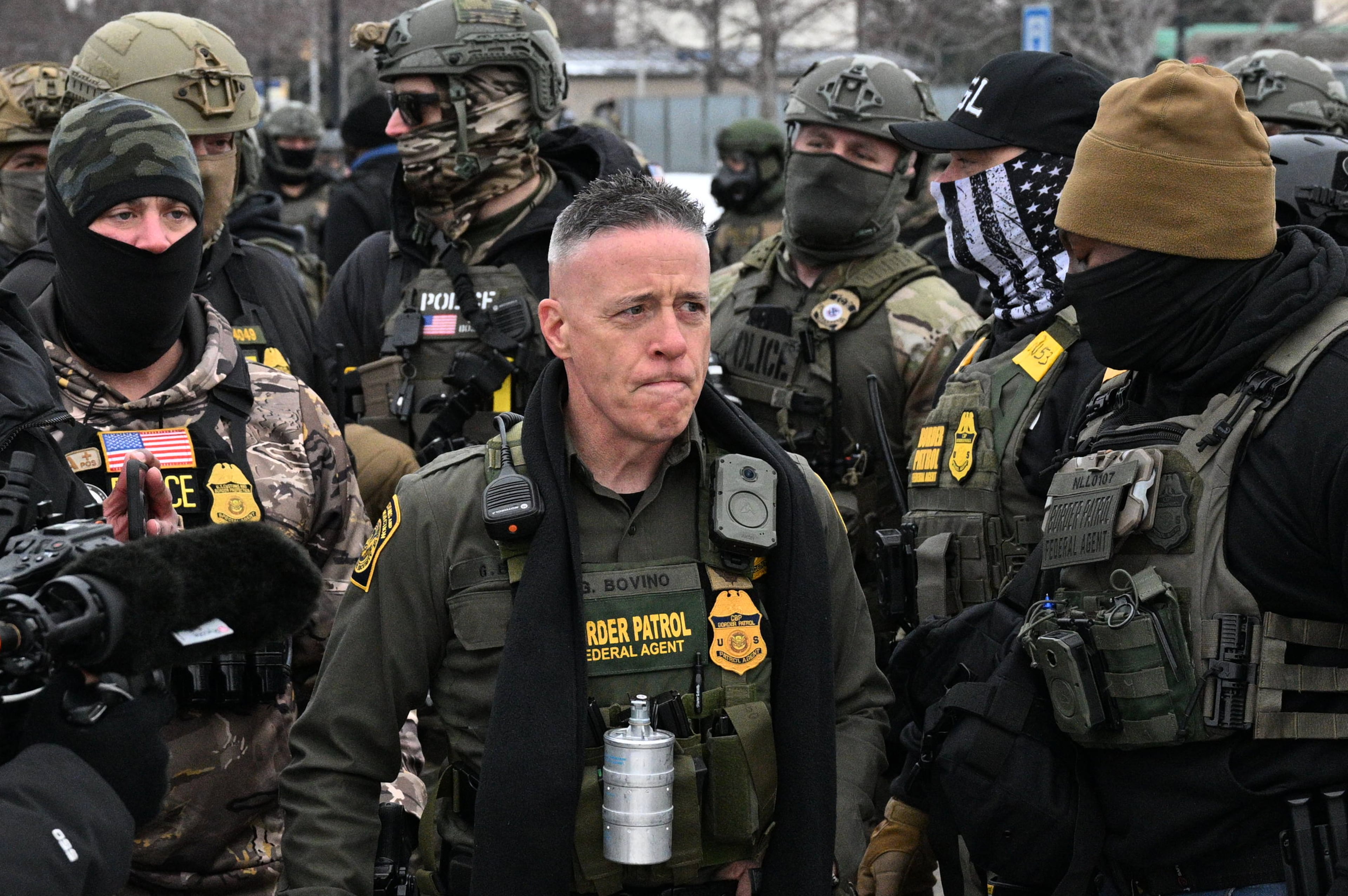
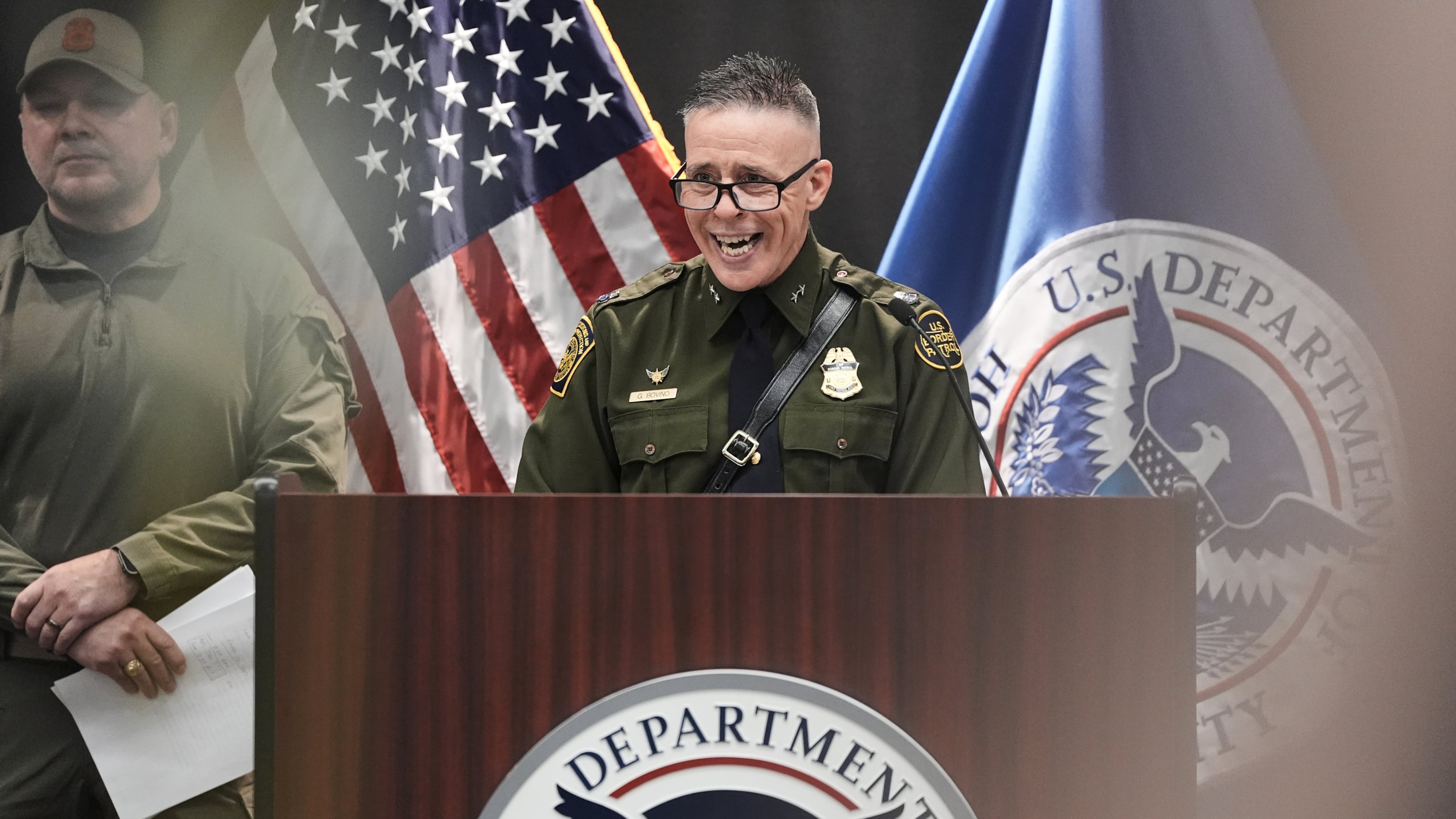
At the heart of the government’s case were Snapchat messages sent from Espinoza Martinez to his younger brother and a friend who turned out to be a government informant. One read in part “10k if u take him down,” along with a picture of Gregory Bovino, a Border Patrol official who has led aggressive crackdowns nationwide, including in the Chicago area.
“Those words do not indicate that this was a joke,” First Assistant U.S. Attorney Jason Yonan told jurors during Thursday's closing arguments. “Those words have meaning. They are not innocent and harmless words.”
But defense attorneys said the government didn’t show any evidence against Espinoza Martinez who sent the messages as “neighborhood gossip” after coming home from work and unwinding with beers. He didn’t follow up on the exchanges and had only a few dollars in his bank account.
“Sending a message about gossip that you heard in the neighborhood, it’s not murder for hire,” his defense attorney Dena Singer told jurors. “It’s not a federal crime.”
Her office did not return a message seeking comment after the verdict. Neither did the U.S. attorney's office in Chicago or the Department of Homeland Security.
In court, prosecutors accused Espinoza Martinez of being “fixated and obsessed” with Bovino and cited other messages where he criticized the crackdown.
Espinoza Martinez was arrested in October as the city of 2.7 million and surrounding suburbs were seeing a surge of federal immigration officers. Protests and standoffs with agents were common, particularly in the city’s heavily Mexican Little Village neighborhood where Espinoza Martinez lived.
He did not testify at his trial.
But attorneys played clips of his interview with law enforcement where he said he was confused about the charges and that he sent the messages without much thought while scrolling social media after work.
“I didn’t threaten anyone,” he told investigators, interchanging English and Spanish at times in the interview. “I’m not saying that I was telling them to do it.”
Born in Mexico, he’s lived in Chicago for years but doesn’t have citizenship.
DHS touted Espinoza Martinez’s arrest on social media with unredacted photos of his face, referring to him as a “depraved” gang member. Bovino has held the case up as an example of the increasing dangers faced by federal agents. Prosecutors included Yonan, the second-highest ranking federal prosecutor in the Chicago region.
But several federal lawsuits in Chicago have fueled skepticism about DHS’s narratives. Of the roughly 30 criminal cases stemming from Operation Midway Blitz, charges have been dismissed or dropped in about half. In a notable lawsuit that forced Bovino to sit for depositions, a federal judge found he lied under oath including about alleged gang threats.
Bovino did not testify at Espinoza Martinez’s trial.
Nationwide, dozens of criminal cases tied to immigration operations have also crumbled.
Federal prosecutors initially referred to Espinoza Martinez as a “ranking member” of the Latin Kings, but their lack of evidence led U.S. District Judge Joan Lefkow to bar testimony on the Chicago street gang at trial. According to the criminal complaint, Espinoza Martinez allegedly sent messages on behalf of the gang to other gang members.
At trial, there were minor mentions of the gang, including Espinoza Martinez saying in his interview that he had nothing to do with the Latin Kings. His brother, Oscar, testified that he took the Snapchat messages as a joke and were something he’d already seen on Facebook.
Singer poked holes in the government’s case, including in the testimony of their first witness Adrian Jimenez.
The 44-year-old owns a construction company and had been in touch with Espinoza Martinez over Snapchat about work. Unknown to Espinoza Martinez, he had also worked as a paid government informant over the years after serving a prison sentence for a felony. He shared the Snapchats with a federal investigator.
Jimenez, who suffers from back problems, walked slowly with a limp to the witness chair and needed help getting up.
“Would you solicit for hire an individual that was in that much pain and could barely walk?” Singer said to jurors. “That doesn’t make any sense.”
More Stories
The Latest