Inside the botched launch of ex-NYC Mayor Eric Adams' new crypto token
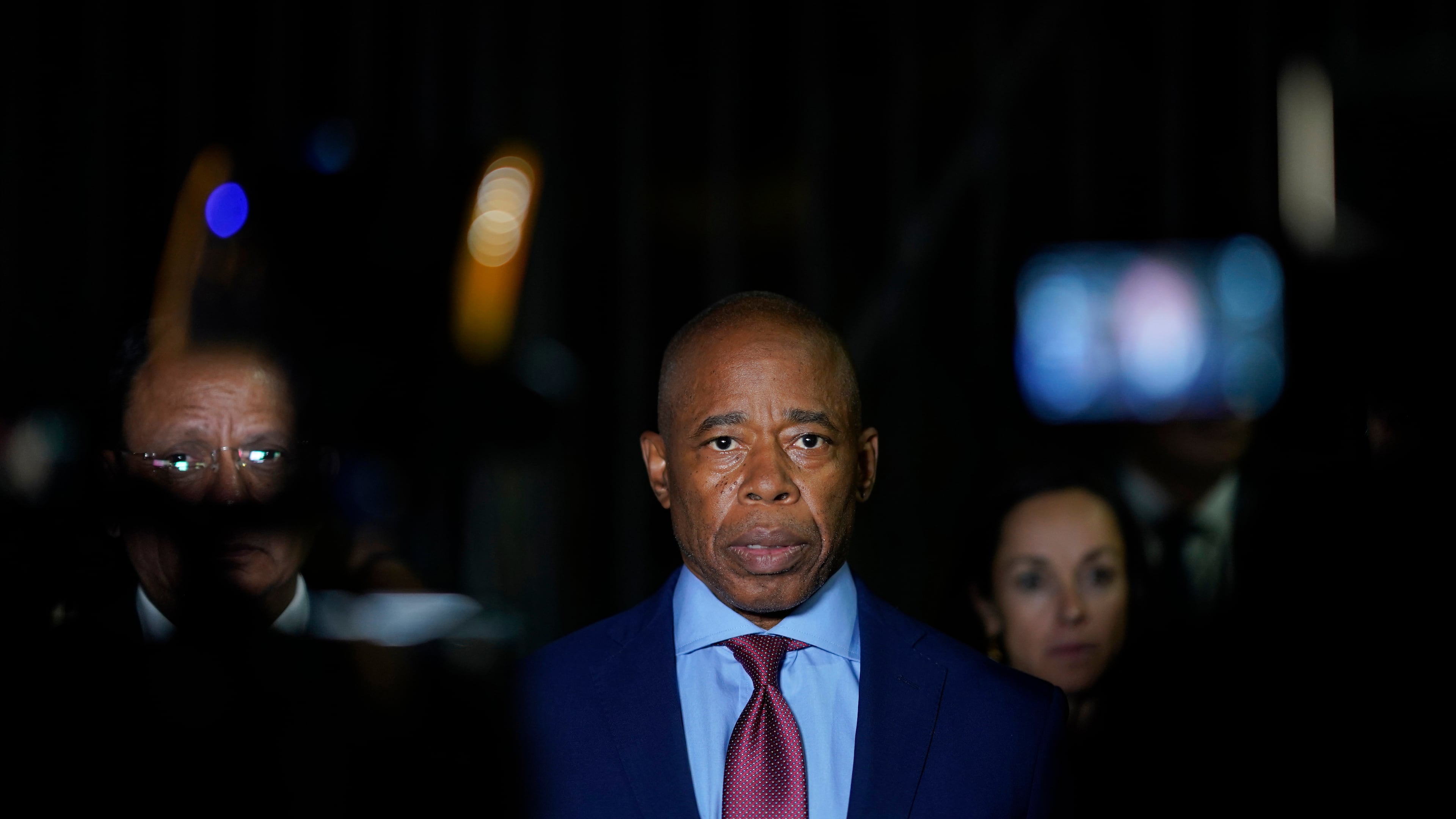
NEW YORK (AP) — For a moment, Eric Adams was riding high.
Fresh off trips to Dubai and the Democratic Republican of Congo, the now jobless ex-mayor of New York City was back in Times Square on Monday to announce his first initiative as a private citizen: a new cryptocurrency coin that would also serve to beat back antisemitism and “anti-Americanism.”
“We’re about to change the game,” he promised, without describing how, exactly, the digital asset would support those lofty ambitions. “This thing is going to take off like crazy.”
But after surging to a nearly $600 million valuation within minutes of its launch, the new coin, dubbed NYC Token, went into free fall, losing nearly 75% of its value by that evening. The drop came after an account linked to the token's creation withdrew $2.5 million worth of coins, according to the crypto-analytics firm Bubblemaps.
Around $1.5 million was later returned, the firm said, though by then investor confidence had collapsed. To some cryptocurrency experts, the rollout had all the hallmarks of a “rug pull.” The scheme — prevalent among celebrity-linked meme coins — involves insiders hyping an asset then quickly dumping their stakes, saddling amateur investors with deep losses.
Others have suggested that Adams and his inexperienced team were themselves duped by savvier investors, who took advantage of a sloppy launch.
The debate has found Adams back in a mode of damage control that defined so much of his one-term mayoralty: denying misconduct, attacking the press and facing scrutiny about the competence of his inner circle of loyalists.
Through a former campaign spokesperson, Adams has released multiple statements in recent days clarifying that he had not profited off the token and had not moved investor funds, calling reports otherwise “false and unsupported by evidence.”
“Like many newly launched digital assets, the NYC Token experienced market volatility,” the spokesperson, Todd Shapiro, said Wednesday. “Mr. Adams has consistently emphasized transparency, accountability, and responsible innovation.”
A machine lawyer and an Israeli hotelier
Despite claims of transparency, Adams has so far declined to reveal his partners in the token.
But two people close to the project confirmed that Frank Carone, Adams' former chief adviser and one-time lawyer for the Brooklyn Democratic Party, was closely involved in the launch. The two people spoke to The Associated Press on condition of anonymity because they had been asked not to disclose the identities of people involved in the token's creation.
One of Carone’s former clients, Yosef Sefi Zvieli, a real estate investor linked to several Israeli hotels, was also part of its creation, Shapiro confirmed to The Associated Press.
Zvieli, whose involvement was first reported by Business Insider, previously owned a college dorm in Brooklyn, which drew complaints from students of filthy conditions and neglect. After defaulting on his mortgage, Zvieli hired Carone as his attorney and was able to turn the troubled property into a city-financed homeless shelter.
Their exact role in the token launch was not immediately clear, though at least part of Zvieli’s job involved reaching out to influencers ahead of the debut. Neither he nor Carone appeared to have direct experience in cryptocurrency. Messages left with the two men were not returned.
As questions around the launch swirled this week, Adams sought guidance from Brock Pierce, the billionaire crypto investor, and former “Mighty Ducks” child actor, whose private jet he sometimes used as mayor.
After looking into the project, Pierce said he was confident that “no one has run off with anyone’s money."
Though he described himself as Adams’ “crypto adviser,” Pierce said he was only made aware of the project after its launch. “Had I been consulted, I would’ve put together a team of more qualified people who knew what they’re doing,” he added.
Political-coin instability
Even within the largely unregulated world of meme coins, experts say projects promoted by politicians are especially prone to unsavory trading practices.
The president of Argentina, Javier Milei, has faced fraud allegations for his own crypto promotion, which drew thousands of investors before swiftly collapsing. Coins launched by President Donald Trump and his wife, Melania Trump, also saw significant price fluctuations upon release.
The number of accounts that invested in NYC Token were far less than those ventures, totaling just over 4,000 as of Thursday, according to Nicolas Vaiman, the founder of Bubblemaps, which conducted an analysis of publicly available trade records.
Roughly 80% of those accounts had bought in during a 20-minute period before Adams had announced the coin but after it was made available for purchase, the analysis found. The window, Vaiman said, provided an advantage to insiders involved in the launch and other traders who pay close attention to new tokens.
“Political coins are driven purely by attention, and the crypto community is aware that attention peaks right after the launch,” Vaiman said. “People know you don't want to stick around, especially for such a vague prospect, like fighting anti-Americanism or antisemitism. What does it even mean? How are you going to achieve that in a token?”
The website for the coin says a “portion of the proceeds” will be divided evenly among three causes: antisemitism and anti-Americanism “awareness campaigns,” crypto education for the city’s youth and a scholarship initiative.
It does not detail which organizations will be supported, or what percentage of the proceeds will go toward charitable causes.
Uncertain fate
Adams has disputed that any money had been pulled by the token's creators.
He has said the appearance of withdrawals were the result of adjustments made by the designated market maker, an entity that buys and sells orders of a new token to ensure traders can make purchases without major price shifts.
The market makers include FalconX, a well known digital asset broker. The company declined to respond to inquiries on the record.
As of Wednesday, a majority of accounts that invested in the coin had lost money, according to the Bubblemaps analysis. Fifteen traders were down at least $100,000, while 10 had netted $100,000.
Pierce said he was still hoping the project could be salvaged, adding that “the fate and outcome of this project will be determined in the coming days.”
But some in the crypto world had their doubts.
“It could be a legitimate project with just a really bad rollout," said Benjamin Cowen, the founder of another crypto research analytics firm, Into the Cryptoverse. "But the way it was launched didn’t instill a lot of confidence. It’s hard to regain trust in the crypto community.”


