History of last enslaved Africans on display in Mobile
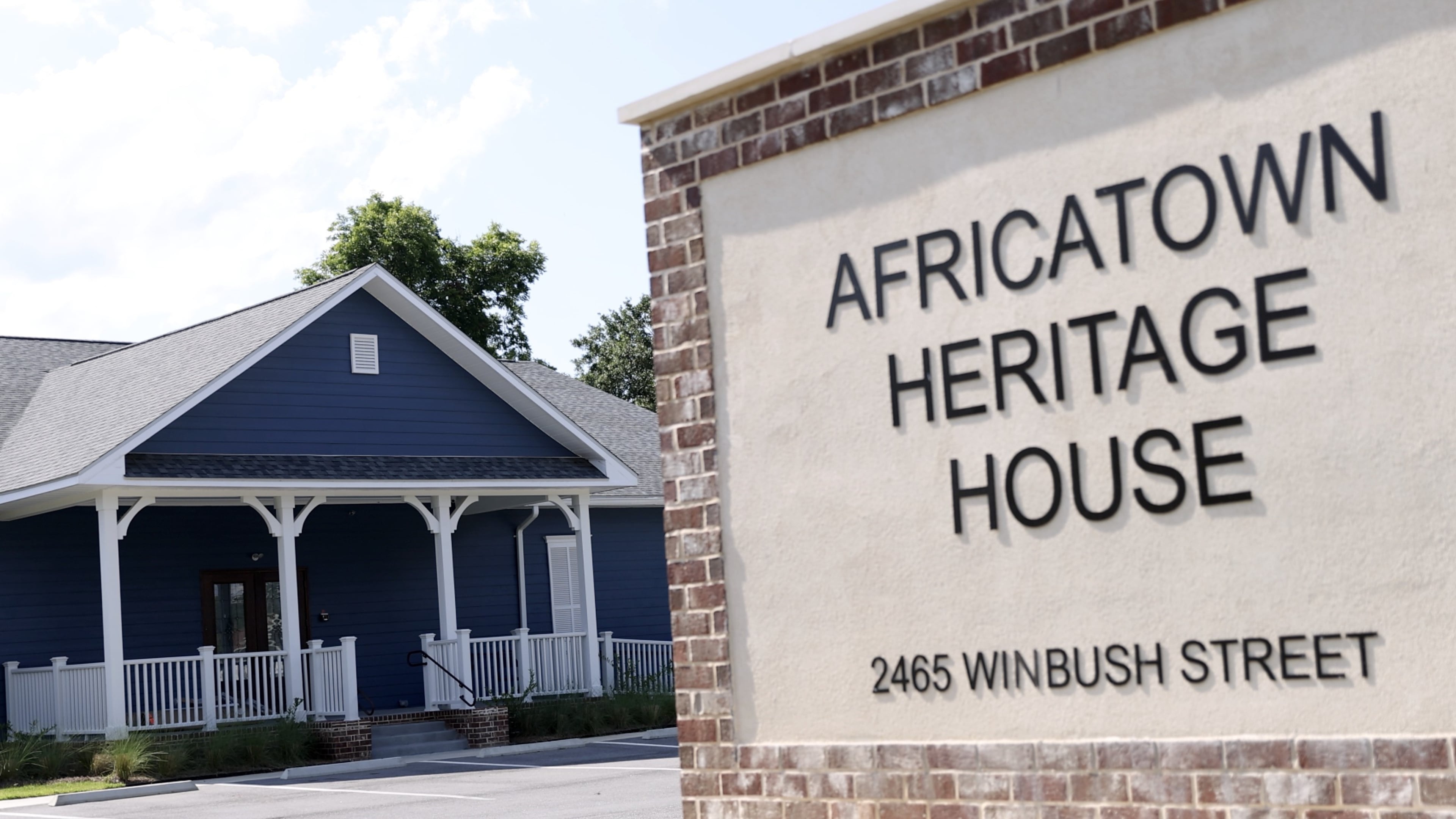
This week, Atlanta Journal-Constitution columnist Nedra Rhone and her 12-year-old daughter Layla are on the road, traveling to five Black history museums in five days.
When Rhone was growing up in Chicago, her parents took her on similar summer trips. And, just like them, she has a mission — to educate her daughter about significant moments in American history and culture.
Fourth Stop: Mobile
Driving into this port city, we crossed the Mobile River, the waterway where the sunken wreck of the last known ship to bring enslaved Africans to the United States was uncovered.
The Clotilda’s discovery was the impetus to establish a museum that will tell stories — not of the ship, but of the community that was formed by the 110 enslaved Africans who took that final trip to American shores. The Clotilda’s journey is perhaps the best documentation of the middle passage that exists.
When the museum opens July 8, it will tell the story of Africatown’s history, starting from the West African origins of the men, women and children who were on the ship.
Visitors will then learn the story of the Clotilda, which made an illegal trip to bring human cargo across the Atlantic more than 50 years after the slave trade had been banned. The trip from Ouidah, Benin to Mobile is told via primary sources, said Meg McCrummen Fowler, director of the History Museum of Mobile.
There are biographies of known persons on the Clotilda, and their stories lead visitors to the heart of the exhibit: the founding of Africatown.

Joycelyn Davis, a resident and descendant of Africatown, left us with something to think about as the history of the community will be shared with a larger audience. “As a people, we have gone through segregation, colorism and been ostracized for everything. We have been ashamed to be who we are. I hope that shame is no more.”
Also of interest:
We enjoyed a light lunch at the relatively new Ginger & Spice, a raw and vegan café on Dauphin Street that opened four months ago. Smoothies, wraps and more are on the menu. We tried the Nefertiti, a mix of peach, mango, strawberry, pineapple, lemon, coconut water and chia seeds.
Another must do: the Dora Franklin Finley African-American Heritage Trail, which highlights forgotten chapters in history and the contributions of heroes from the city’s past.
If you go

Follow our journey at https://www.ajc.com/opinion/real-life-blog/ and https://www.instagram.com/ajcnews/.
About this series

In June, Atlanta Journal-Constitution columnist Nedra Rhone and her 12-year-old daughter took a five-day road trip to Black history museums in South Carolina, Georgia and Alabama.
With two new institutions opening in the region this summer, Rhone saw an opportunity to examine the ways that history is being preserved in the South. She considers the museums more important than ever now, as lawmakers around the nation are limiting how race is discussed in schools.
Rhone reflects more deeply on what she and her daughter learned on their journey in this three-part series.
THURSDAY: For many Black Americans, Charleston was our ancestors’ Ellis Island
SATURDAY: A preteen’s take on history: America moving forward, slowly
SUNDAY: Museum tells story of Africatown, its people and the crime that started it all