This 300-year-old ‘lucky’ seed is ruling Atlanta kitchens

In artisan bakeries, locavore kitchens and seasonal menus across Atlanta, a minuscule, often subtle ingredient has been quietly showing up with increasing frequency: heirloom benne seeds.
Unless you’re a student of menus, you may not have noticed it — the similarities between commercial sesame seeds and West African-rooted benne seeds are many.
But the wider adoption of benne is part of a greater movement to reclaim heritage crops across the United States. In the South, it’s a way for chefs and other food producers to honor the culinary contributions of enslaved people who brought ingredients like benne from Africa and shaped the region’s food.
What is heirloom benne?
Simply put, benne is a tiny, toasty seed with tremendous impact and deep cultural meaning. The word benne comes from West African Bantu languages, and the crop has long been a symbol of luck, resilience and goodwill.
Many who were forced to surrender themselves for enslavement overseas wove the seeds into their hair to ward off the horrors of that journey and life beyond. Those who survived then planted the seeds in this new land, including the American South (namely South Carolina and Georgia), where it became an important part of these foodways.

Why did benne disappear from Southern kitchens?
Benne fell out of fashion as farming became more industrial and producers chased efficiency and yield, Greg Johnsman, owner of Marsh Hen Mill, a leader in Southern heirloom grains, told The Atlanta Journal-Constitution. Commercial sesame produced from modern varieties gradually took its place.
“Over time, people also became less familiar with benne and its importance to Lowcountry food traditions,” Johnsman said.

What’s the difference between benne and sesame seeds?
Benne seeds and sesame seeds are similar, but a major distinction is their oil content.
According to Glenn Roberts, founder emeritus of the legendary heirloom grain specialists Anson Mills and the driving force behind the return of benne seeds, “African benne seeds were low-oil — 20 to 30%, tops, versus the 70% average of regular sesame.”
For this reason, they were commonly cooked instead of pressed for oil, offering more balanced flavor and nutrition than the sesame that replaced it in commercial farming because of its greater yield.
What do benne seeds taste like?
Myles Moody, chef-owner of So. Fox, one of Atlanta’s hottest new restaurants, explained that benne’s lower oil content allows for more flavor complexity.
“The West African landrace variety has a much more robust flavor than conventional sesame seeds; Anson Mills breeds it to preserve those delicious characteristics rather than prioritizing ease of cultivation or processing,” Moody said.
Jarrett Steiber, chef-owner of Little Bear and the soon-to-open Bar Schmutzi, agreed. Benne “possesses a lovely bitterness to complement the sweet and nutty flavors that you simply don’t get with conventional sesame,” he told the AJC.
Chef Terry Koval, owner of The Deer and the Dove, B-Side and Fawn Wine & Amaro Bar, summed it up: “It’s simply a remarkable ingredient with far more flavor and complexity than conventional sesame.”
How did Southern farmers bring benne back?
Benne’s comeback was initially spurred by the plant’s farming utility rather than its value as a food crop. It was first reintroduced as a sister crop for Carolina Gold rice, another heirloom grain saved from extinction. Benne works as a natural repellent for worms that can cost farmers their entire grain field.
Roberts considered several types of sesame before coming to benne. The one he ultimately chose was a variety saved by the Catawba Nation when, under British rule, they began to protect people who escaped slavery in Georgia, the Carolinas and Virginia.
But benne’s grand comeback truly took off when Roberts’ wife, journalist Kay Rentschler, spotlighted the grain in a 2005 story for The New York Times.
When demand skyrocketed overnight, Roberts decided to donate his heirloom seeds to benefit the legacy Catawba and African teachings for farmers. He sent them to culinary institutes, cooking schools and famous chefs in the Southeast and beyond, including Thomas Keller in California.

Why is benne appearing all over Atlanta menus?
Though benne is historically a South Carolina crop, Roberts said much of its resurgence can be credited to Atlanta.
“I remember driving to farmers markets in the area every week for free, delivering it myself so I could get next to all the chefs to get them to try it,” he said.
Once Roberts connected with chefs, benne sold itself.
The market for benne fell into a lull after its initial boom, but Roberts said the ingredient has caught a second wave.
Moody first encountered benne while working with Linton Hopkins at Restaurant Eugene before bringing it to So, Fox, and Steiber remembers benne being on the lines at Empire State South, Abattoir and Holeman & Finch, and it remains in his own kitchen now.
Emily Stephens, the kitchen manager, baker and managing director of Little Tart, started using benne as recently as 2019, when the team was developing a tahini cookie recipe.
“We decided to use benne seeds because of their historical significance in the South and our ability to get them from a regional mill,” she said.
What Atlanta restaurants serve heirloom benne?
Staplehouse
The local, seasonally inspired mains have earned this casual, counter-service restaurant acclaim, but the fresh-baked breads are just as much a star. Get the grinder for the most concentrated toasted benne experience in town.
541 Edgewood Ave. SE, Atlanta. 404-524-5005, staplehouse.com
The Deer and the Dove
Chef Terry Koval thinks outside the box with his benne usage. Find it in his burrata dish of roasted beets, charred oranges, preserved rooftop Jimmy Nardello benne seed onion jam, and focaccia as well as the everything cracker that accompanies a sampler of wood-fired olives, Decimal Place Farms whipped feta, toasted sunflower seeds and almonds.
155 Sycamore St., Decatur. 404-748-4617, deerdove.com
Fawn Wine & Amaro
Another by Terry Koval, this concept focuses on volcanic winemakers, amari, and dry-aged seafood. Benne seeds are used in the trout skin furikake on their fried oyster crackers and in the mixture of grilled fall local vegetables in razor clam XO sauce,
119 E. Ponce de Leon Ave., Decatur. 404-748-4937, fawnwineamaro.com
B-Side
At the coffee shop and bakery counterpart next door to the Deer and the Dove in downtown Decatur, wood-fired Montreal-style benne seed bagels are an easy entry point to discovering what these little seeds can do. Get it with one of their specialty schmears, which rotate regularly.
151 Sycamore St., Decatur. 404-748-4617, deerdove.com/bside
So. Fox
Culinary power-duo chef Myles Moody and sommelier Rachael Pack present hyper-seasonal, regional ingredients with California finesse at this newcomer. Find benne seeds scattered in the gorgeous charcoal ombre lavash cracker that accompanies the rough-cut tartare.
1017 N. Highland Ave. NE, Atlanta. 404-341-9374, sofoxatl.com
Little Tart
Across three locations, excellence and invention in French-inspired baked goods and pastries remain the constant. A gluten-free cookie specifically developed to spotlight local producers combines benne seeds with Georgia pecans and xocolatl chocolate. The benne seed dulcey cookie with roasted Valrhona white chocolate is mild, toasty, salty and sweet simultaneously.
Three locations. 404-348-4797, littletartatl.com
Little Bear
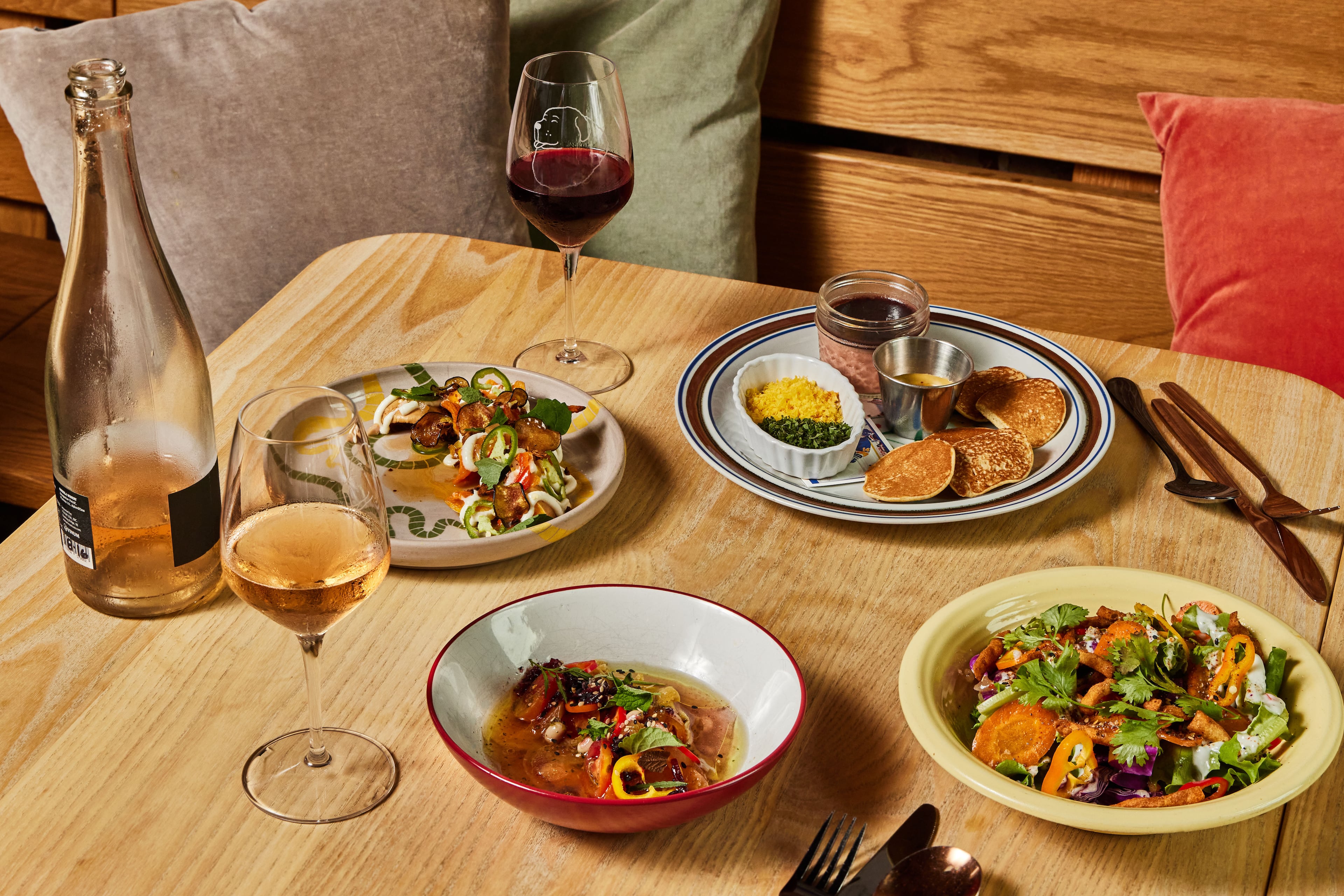
Named after chef Jarret Steiber’s late Great Pyrenees, this bright and cozy Summerhill restaurant creates irreverent Eastern European Jewish-Sichuan Chinese inventions that surprise. Find benne in the blondie with whiskey milk and the Ssam salad with preserved grapefruit, daikon, pickled pear and pole beans.
71 Georgia Ave. SE, Atlanta. 404-500-5396, littlebear.com
Bacchanalia
This four-course prix fixe restaurant remains one of the most seasonal in the city, often featuring ingredients from chef Anne Quatrano and Clifford Harrison’s farm, Summerland. Benne seeds are found with onions sourced from that property, an accompaniment to the lamb option.
1460 Ellsworth Industrial Blvd., Atlanta. 404-365-0410, starprovisions.com/bacchanalia
Miller Union
Stephen Satterfield’s vegetable-forward flagship incorporates regional produce at all opportunity. Benne seeds are the base of the tahini that accompanies the grilled fall squash and edamame crisp featured this autumn.
999 Brady Ave. NW, Atlanta. 678-733-8550, millerunion.com
Saints + Council
This Colony Square spot offers eclectic New American with contemporary, local Southern touches and some international flair. Try the shishito peppers with benne seed dukkah or fried green tomatoes with pimento cheese and chow chow for your benne fix.
1221 Peachtree St. NE, Atlanta. 770-731-8159, saintsandcouncil.com
Twisted Soul Cookhouse & Pours
Deborah VanTrece’s award-winning soul food is a great way to experience benne seeds. Get it in the cornbread and benne seed waffle with sorghum jalapeño butter and a fried lobster tail.
1133 Huff Road NW, Atlanta. 404-350-5500, twistedsoulcookhouseandpours.com
Kinfolk Supper Club Pop-up
An intimate underground dining experience with Atlanta native and Miller Union alum chef Alex Hochfelder, his 10-course menu regularly features benne seed sourdough for the bread course.
Address revealed at time of ticket purchase. Instagram.com/kinfolkatl.