America 250: These 4 Georgia foods influenced how the U.S. eats


Georgia’s most influential dishes could be debated vigorously, but there’s no question that food has been an integral part of the South’s culture. As a result, this region has had a hand in shaping much of the American food identity.
Atlanta food historian Akila McConnell has spent years studying Atlanta and Georgia’s dishes, businesses and people, but she said it can be difficult to know exactly when a food hits that cultural critical mass.
She said there are often three ways food items enter the zeitgeist: “Either necessity, aspirational cuisine or really, really good marketing.”
Here are some iconic foods and businesses with Georgia connections that went on to influence American food as we know it.

Biscuits
Most Southern states claim ownership of the biscuit. It’s widespread, with origins dating back to the stiff hard tack eaten by European settlers in North America.
While the biscuit is prevalent across the South, there’s an argument to be made that Georgians boosted their popularity in the region’s kitchens and beyond.
One of the early Southern biscuits was a beaten biscuit, named as such because baking powder had not yet been invented, so the dough had to be beaten many times over until air bubbles were incorporated into the dough and it baked off with a crackly crust.
“Using a rolling pin or axe handle, this process took over an hour and was often done outdoors, many times by the hands of enslaved cooks,” Atlanta chef Erika Council writes in her comprehensive biscuit cookbook, “Still We Rise: A Love Letter to the Southern Biscuit With Over 70 Sweet and Savory Recipes” (Clarkson Potter, $26).
With the end of slavery in the 1860s, biscuit-making fell into a decline, and high costs of wheat flour and buttermilk made them luxuries, McConnell said.
Georgia’s hand in helping biscuits return to popularity was, in part, because of several Georgia women who were excellent marketers.
“(Atlanta) was one of the wealthiest cities (in the South) for a really long time, and so people here had the money to experiment,” McConnell said. “So we had several cookbook authors here in Atlanta who basically spread the word on how to make buttermilk biscuits across the South.”
That included Annabella P. Hill, whose 1867 book, “Mrs. Hill’s Southern Practical Cookery and Receipt Book,” became influential in instructing people on the basics of Southern cooking, including biscuits. Hill also became a spokesperson and advertiser for the modern cast-iron stove, McConnell said, a technology that was a game-changer for home cooks thanks to controlled, even heating, an important function in baking biscuits.

Decades later, the Atlanta Constitution cooking editor Henrietta Dull, who wrote under the name S.R. Dull, published her own cookbook titled “Southern Cooking” in 1928, one that spread the intricacies of Southern cuisine across the U.S. She also took up the mantle in promoting the gas stove and teaching other women how to use it.
The Southern biscuit is still evolving with influences from Atlanta chefs like Council, whose Bomb Biscuit Co. has found national acclaim.

Lemon pepper wet
How did lemon pepper wet chicken wings become so deeply associated with Atlanta? In large part, because of good marketing.
The pieces began to come together more than 60 years ago. The lemon pepper mixture as it’s known today was bottled and sold in the late 1960s by Californian William Shoffeitt, part of Shoffeitt’s Enhance Seasoners line. Meanwhile, Buffalo chicken wings (deep-fried chicken wings covered in a hot sauce) were first served at Anchor Bar in Buffalo, New York, in 1964, when the bartender and his mother whipped up a secret sauce for some extra chicken wings to pass out to hungry friends.
When Northeasterners moved to Georgia, including the founder of J.R. Crickets, Buffalo native Paul Juliano, they brought their Buffalo chicken wings with them. In the late 1980s, wing cooks on Campbellton Road experimented with a seasoning mixture of lemon peel, pepper and melted butter.
Lemon pepper wet culture flourished in Atlanta nightlife and strip club kitchens like Magic City, whose lemon pepper wings are legendary. Soon the zesty, citrus-spiced wings could be found in restaurants across the city. But it wasn’t until Donald Glover’s FX TV show, “Atlanta,” showcased lemon pepper wet wings from J.R. Crickets in 2016 that the regional dish gained broader recognition.
“People have been eating lemon pepper wet for a really long time,” McConnell said. “What happens is because it is identified in mass media, in the ‘Atlanta’ TV show, and then all of a sudden people feel pride about this, and it’s everywhere, and we’re all talking about lemon pepper wet.”
Now, lemon pepper is a staple of Atlanta cuisine that’s moved beyond chicken wings and into all sorts of dishes, like a lemon pepper wet pizza from pop-up Phew’s Pies and lemon pepper wet frog legs at fine dining restaurant Avize.

Coca-Cola
Georgia may not have been the birthplace of soda, but the advent of Coca-Cola and Asa Candler’s aggressive marketing changed the heights to which a soda company could soar.
Coca-Cola started as a medicinal product sold in Jacobs’ Pharmacy in downtown Atlanta. John Pemberton had created a drink that contained coca (an extract from the same plant that cocaine comes from), alcohol and the kola nut, which has high levels of caffeine. When the first round of prohibition struck Atlanta, Pemberton removed the alcohol from the mixture, leaving coca and the kola nut, McConnell said.
Pemberton was never able to grow Coca-Cola much in his lifetime, and he sold the formula to Asa Candler not long before his death in 1888.
Candler, however, was a marketing genius, and McConnell said he inserted ads for Coca-Cola in just about every newspaper around.
“I think that foods becoming part of the cultural zeitgeist is a lot more intentional often than people think,” she said. “The fact that we in the South refer to all soda as Coke goes to show how effective their marketing has been.”
Candler’s rigorous marketing paid off; by 1904, annual sales of Coca-Cola hit a million gallons, and two years later bottling operations expanded outside of the U.S.
The Coca-Cola Company, which is still headquartered in downtown Atlanta, now owns over 200 different brands, including global products like Minute Maid, Ayataka green tea in Japan, Fairlife, Dasani, Topo Chico and Costa Coffee.
Chick-fil-A
While the first major fried chicken chain was KFC, Chick-fil-A has left a mark on the national fast food ecosystem with top-performing sales and accolades.
But it wasn’t always as well known.
Truett Cathy opened his first diner, the Dwarf Grill, in 1946 with his brother Ben. With this first restaurant, Cathy experimented on creating an affordable boneless chicken sandwich that could be prepared and cooked quickly.
With his chicken sandwiches outselling the rest of the diner’s menu, Cathy went on to open the first Chick-fil-A restaurant in 1967 inside the Greenbriar Mall in Atlanta, according to the Georgia Historical Society.
At first, Chick-fil-A operated out of mall food courts, but when company leaders foresaw the declining popularity of shopping malls, they pivoted into standalone restaurants.
That meant finding a new way to market its chicken.

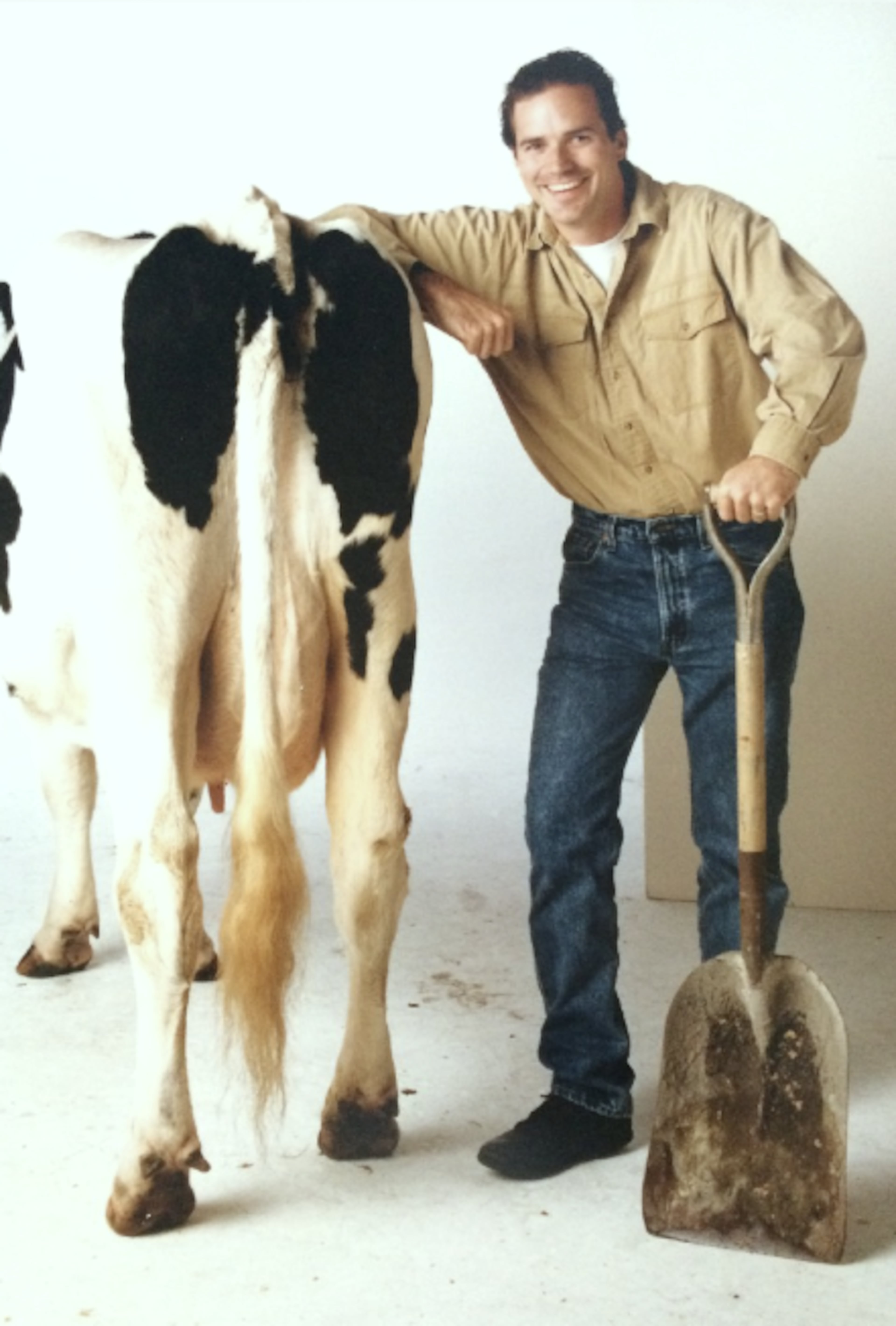
Enter Texas-based advertising company TRG Agency and one of its advertisers, David Ring. While on the Chick-fil-A project, Ring experimented with several ideas for new billboards and branding ideas, including a giant 3D chicken.
Over the course of several billboard iterations, he found himself thinking of the antics of cartoonist Gary Larson’s cows in “the Far Side” comic, he told the AJC.
“What if a cow was pro-Chick-fil-A because that was their best chance of not getting eaten?” he said.
To attract people into its standalone restaurants, Chick-fil-A needed a big idea, something that would make customers smile, Ring said. A mischievous cow focused on self-preservation felt like it might do the job.
“I don’t think anybody realized at the time that they were going to propel it forward like they did,” Ring said.
The Chick-fil-A team loved the idea, he recalled, and in 1995 those first billboards depicting cows and “Eat Mor Chikin” in messy, misspelled handwriting appeared in Atlanta.
The iconic cows were a powerful push in Chick-fil-A’s brand recognizability, but Ring acknowledged that, at the end of the day, it’s not the advertising that keeps people coming back to eat at Chick-fil-A. It’s the quality of the restaurant.
“They have a flawless food operation,” Ring said. “I think they would have grown naturally just from word-of-mouth, regardless of the advertising, but I think the cow thing gave it a kick, and once people try it, then they go back, because it’s that good.”
Chick-fil-A now has more than 3,000 locations across the U.S. and internationally, and its ubiquitous cow is ingrained in the culture of the restaurant long after Ring first devised the cow’s messy handwriting.
Looking toward the future
Robert Butts, executive chef at Auburn Angel and one of the members of the New South, a chef collective, said he’s seen respect for Southern cuisine grow since he started working in the industry.
But he still doesn’t see enough fine dining restaurants with a focus on Southern cuisine. That’s part of what he and the other New South chefs wanted to create with the collective.
“We came together because we feel like our food was not being represented in a positive light,” he said. “A lot of times it can be seen as very gimmicky or one-sided, but not really knowing that Southern cuisine and Southern ingredients play a major role in how America was made.”

Being a Southern chef means finding many different ways to work with the ingredients inherent to the state, because one of the region’s great benefits is the amount of produce and crops that flourish here.
Council said she knows there are so many talented chefs in Atlanta, but she isn’t always confident in what the future of its culinary scene will look like as resources and capital continue to be a challenge for talented people to access.
Even so, she believes the local restaurant industry in Atlanta is more supportive of each other than what she’s witnessed from other cities and states.
“We do show up for each other in regards to the local scene here,” Council said.
Butts said he’s hopeful for the future of Southern cuisine and that the next generation of chefs will continue telling its stories.
“Some people think (the South has) a dark history, but it has a rich history too, and with all the foods and the stories and the kind of memories you make, like just don’t forget that,” Butts said. “Southern food is our story, and we’re always going to tell it.”