We full? What Atlanta hotel bookings for World Cup look like.


Hotel bookings for the World Cup this summer are looking soft among host cities, but a new report suggests Atlanta is outperforming most of its U.S. peers.
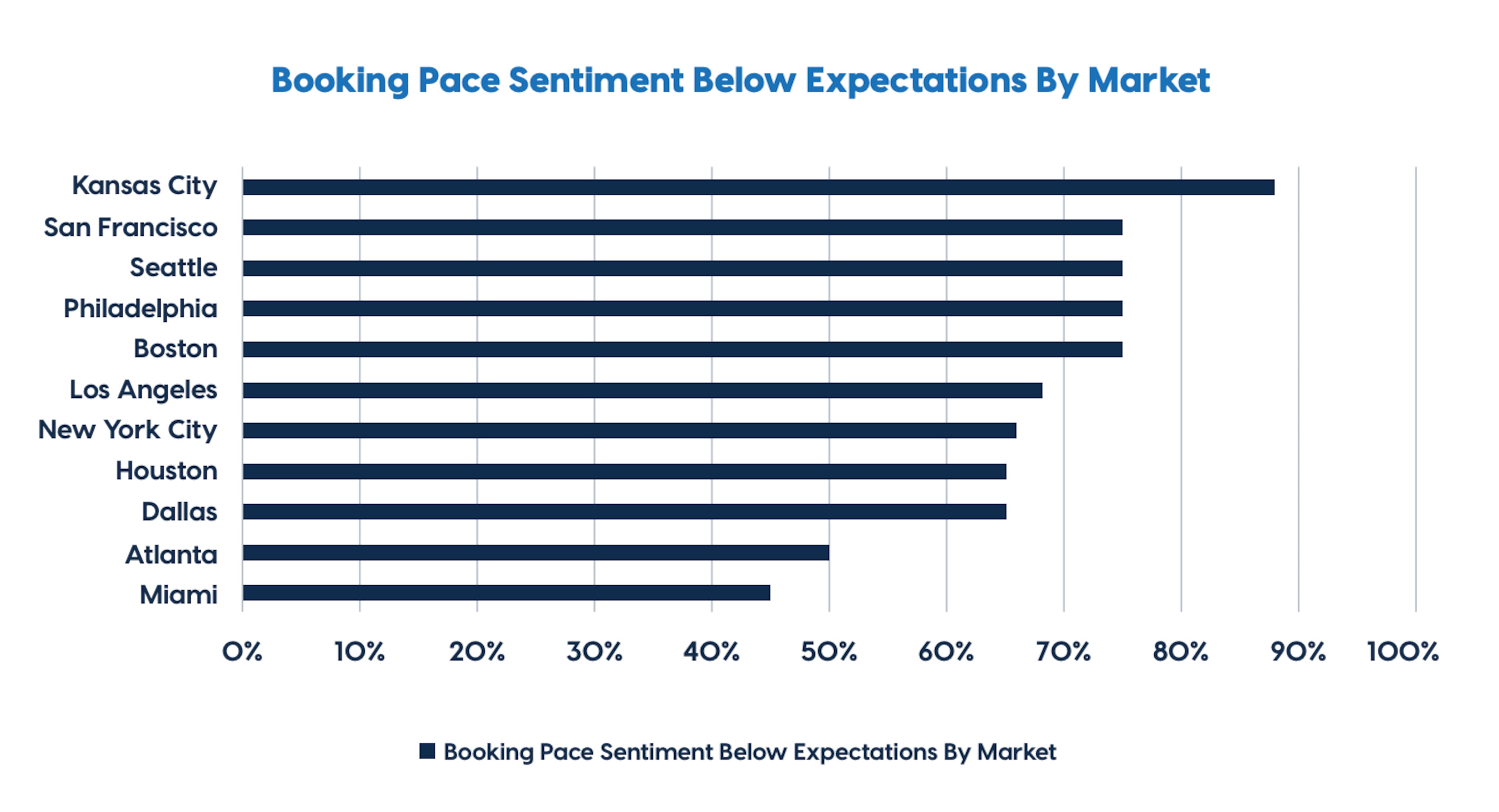
The American Hotel & Lodging Association surveyed hoteliers across the 11 U.S. markets that will host World Cup matches. In its report, the AHLA broadly said the “anticipated economic lift may fall short of expectations,” with 80% of survey respondents saying that hotel bookings are tracking below initial forecasts.
But Atlanta is faring better than nine of the host cities. About 50% of the city’s survey respondents said their booking pace was in line with or ahead of expectations, with demand trending above a typical June or July.
The World Cup is less than a month away, with the first match set in Atlanta on June 15. Cities in Mexico and Canada will also play host to matches. Atlanta will welcome eight matches during the global soccer event, including a semifinal.
The AHLA report said Atlanta’s hotel demand was “driven largely by team base camps, strong air connectivity and diversified demand sources.”
Only one city posted better results than Atlanta — Miami.
Kansas City, Missouri, which claims it is the soccer capital of America, is the most “negatively impacted” host market, the report says. Almost 90% of Kansas City’s respondents said the hotel booking pace is below expectations and trailing a typical June or July.
The report cites issues across the U.S. cities such as visa barriers and broader geopolitical concerns, which have muted international travel demand. It also said soccer governing body FIFA released hotel room blocks, including in Atlanta, which “amplified booking uncertainty.”
The war in Iran, meanwhile, has created a surge in fuel costs, sending the cost of plane tickets soaring.
How many Atlanta hotel rooms are booked for World Cup?
The Atlanta Convention & Visitors Bureau said 213,000 hotel rooms are now booked during the approximately 30 days that Atlanta hosts World Cup matches, spanning the downtown, Midtown and Buckhead markets.
“Things are really starting to come together. I think people are getting their tickets,” William Pate, president and CEO of the ACVB, said in a recent interview. “They’re starting to look at their travel opportunities, and we are starting to see hotel rooms coming off the shelf.”
One thing that has affected the pace of hotel bookings, Pate said, is that FIFA has released tickets in phases. That has resulted in a shorter booking window than is typical for large events, he said.
“FIFA is still distributing tickets, so you still have people that are going to get tickets that haven’t been notified yet, and so they need to make their travel plans,” Pate said. “It’s just a different experience.”
Why are Atlanta’s hotel bookings outperforming other World Cup cities?
Pate said he believes Atlanta is seeing hotel bookings outperform some other World Cup cities because the city was less affected when FIFA returned hotel rooms to the market that it booked in advance.
FIFA had set aside hotel rooms for staff, media organizations and operational stakeholders, a spokesperson previously said. But as the event drew closer, it adjusted its hotel room bookings based on attendance numbers.
The impact was not as severe in Atlanta as some cities, Pate said, meaning FIFA returned a smaller percentage of hotel rooms back to the market.

He also said the ACVB, responding to headwinds with international travel, focused marketing efforts on attracting expatriates in the U.S. from countries playing in Atlanta that haven’t been to the World Cup before, including Cape Verde and Uzbekistan.
“We are expecting there is going to be a lot of passion amongst those fans,” Pate said.
“Not that we aren’t still doing marketing activities internationally, but we also did a heavy pivot to focus on those folks that are already in the United States and don’t need to get a visa,” he added.
Of the hotel rooms booked in Atlanta, less than 20% are international visitors, he said.
“Our city is absolutely ready for all these visitors to come,” Pate said. “It’s going to be a great experience.”
What could be the economic impact?
Hoteliers across the country have for years awaited the World Cup. For Atlanta, it’s the biggest sporting event in the city since the 1996 Centennial Olympic Games and is estimated to bring hundreds of thousands of visitors.
But it’s not clear yet how much economic impact the World Cup could ultimately bring, especially amid a more challenging travel situation. Beyond the war in the Middle East, heightened immigration enforcement under President Donald Trump has affected international travel demand.
Tickets are also pricey. The Economist on Monday reported the World Cup “will be the most expensive cultural event ever,” with the cheapest tickets for group-stage matches averaging $200 and those for the final reaching at least $2,000.
The Metro Atlanta Chamber in a 2024 report estimated the World Cup could have an economic impact of roughly $500 million in Georgia.
Executives with technology provider Granicus said they expect a boost to the whole region, especially if there are events for people who don’t have World Cup tickets.
“This idea of creating local resident host parties and watch parties to really try to infuse that resident experience … that seems to be a really successful strategy,” said Adam Boscoe, general manager with Granicus Destinations, a division of the company that serves destination marketing organizations, including Atlanta and all the other U.S. World Cup host cities.
In Atlanta, the FIFA Fan Festival is planned at Centennial Olympic Park, and watch parties are scattered throughout the metro. Among other events, State Farm Arena is hosting a slate of concerts, and cities including Atlanta and Decatur will have celebrations.
“You don’t have to have a ticket to have a World Cup experience,” Pate said. “We want to make sure the residents here feel a part of the excitement.”
How many short-term rentals are booked?
ACVB said about 50,000 short-term rentals are booked in the city of Atlanta during the approximately 30 days that Atlanta hosts World Cup games.
Analytics firm AirDNA, which tracks short-term rentals from platforms including Airbnb, Vrbo, Expedia and Booking.com, has data from across metro Atlanta. The firm said metro region is large, with more than 20,000 individual listings.
AirDNA data show metro Atlanta occupancy for group-stage matches at 31%, which is up 26% from the same time last year.
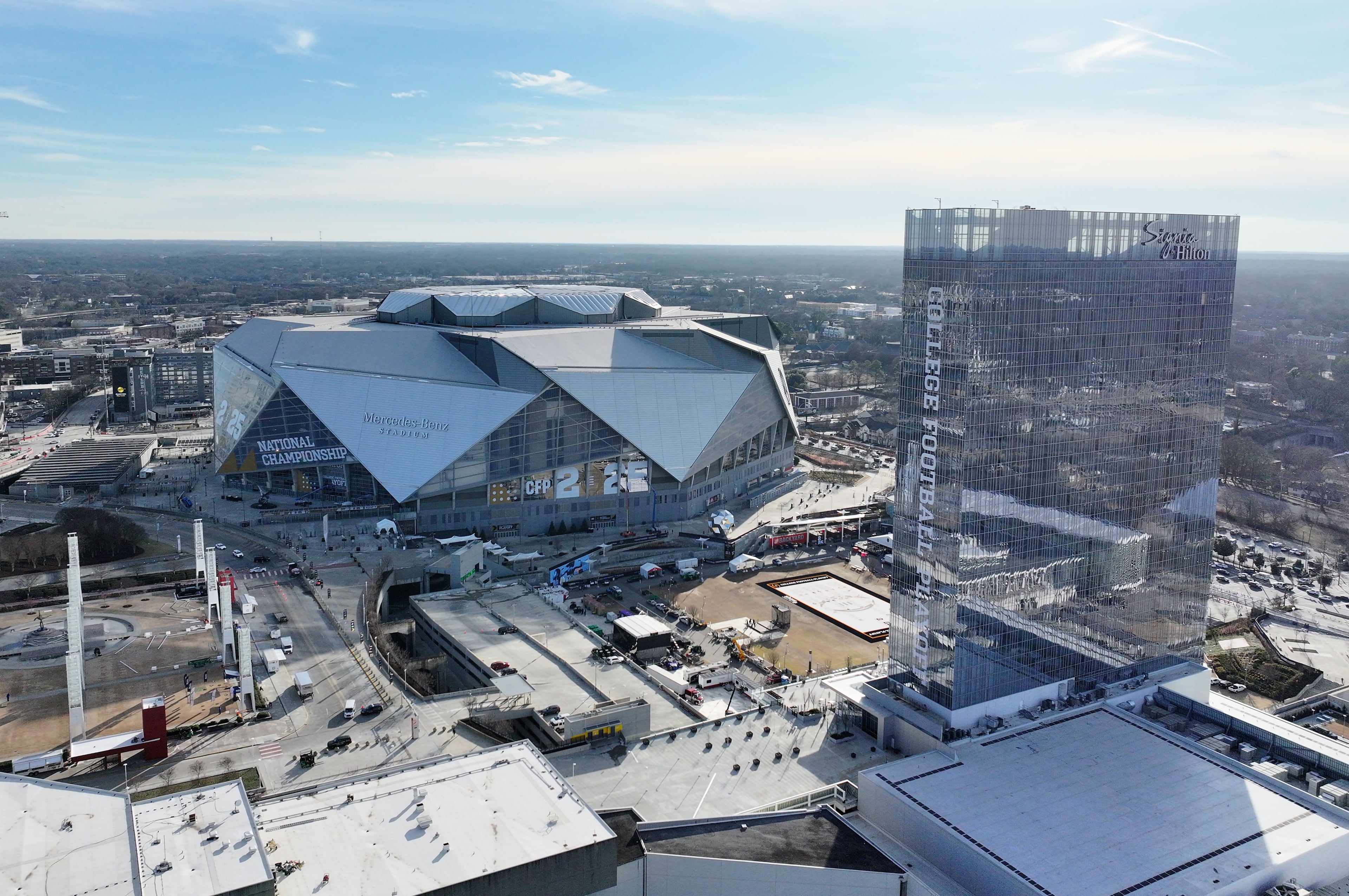
Areas near Mercedes-Benz Stadium, the epicenter for the World Cup, are trending higher. For example, occupancy in downtown neighborhoods Castleberry Hill and Mechanicsville is up about 100% from last year for group-stage matches.
“I think this year we’re going to see meaningfully higher occupancy rates in those two months” during the World Cup, said Bram Gallagher, director of economics and forecasting for AirDNA.