In Louisville, where UPS is a ‘hometown company,’ crash recovery continues
Louisville Mayor Craig Greenberg will never forget the smell of burning and fuel.
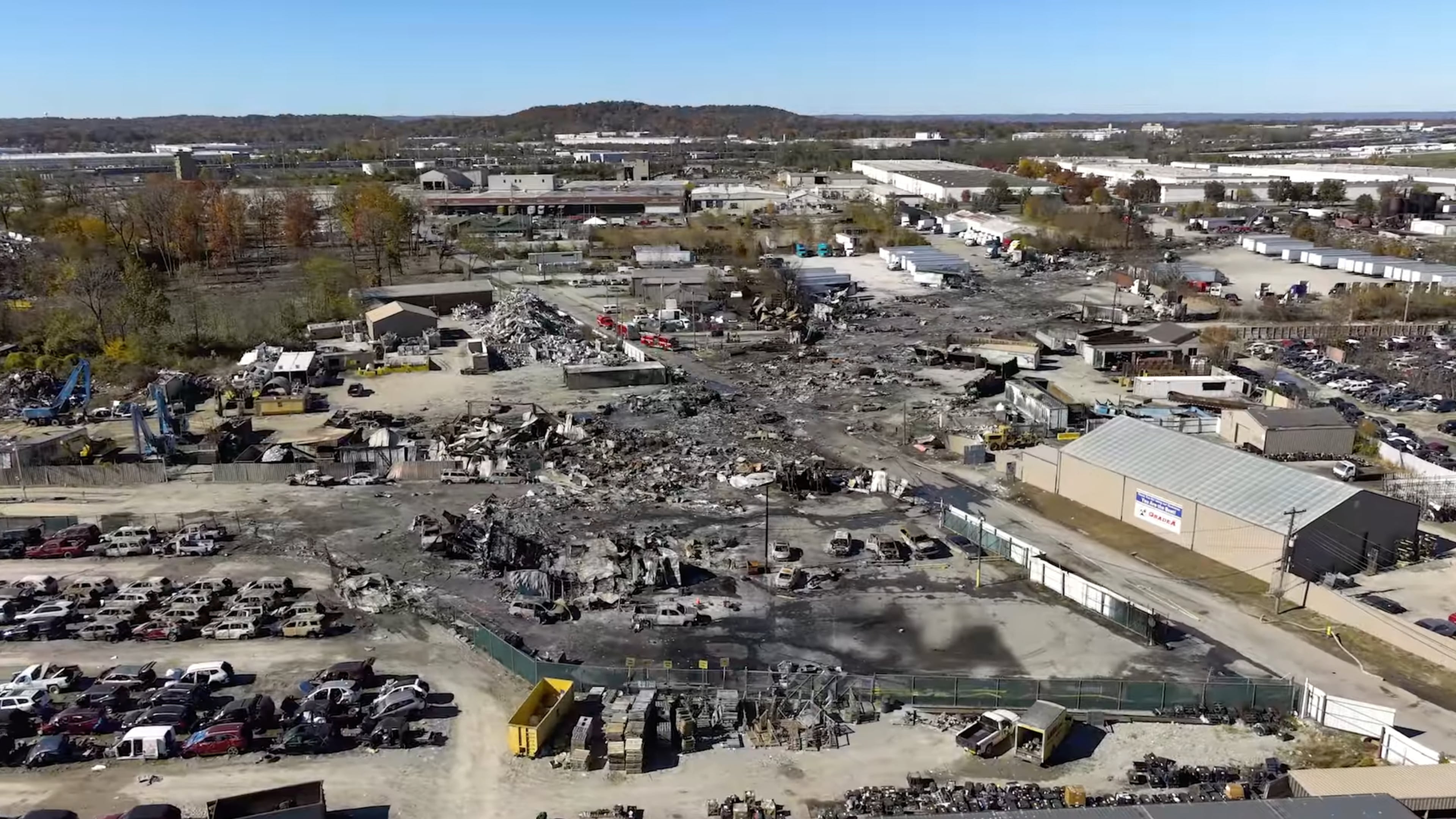
He toured the still-smoldering wreckage left by UPS Flight 2976 days after it crashed near the Louisville Muhammad Ali International Airport six months ago.
As he walked closer to the site, “the smells got more intense,” he recalled. “It was an apocalyptic site. It felt like you were walking through some kind of movie scene because everything was charred. There were flames that were still burning.”
The cargo jet was loaded with about 38,000 gallons of jet fuel bound for Hawaii on Nov. 4, 2025.
It had barely left airport grounds when it crashed into a nearby industrial neighborhood that included auto parts and oil recycling businesses, which the Environmental Protection Agency said had about 226,000 gallons of motor oil and 37,000 gallons of oil-water-antifreeze mix on-site.
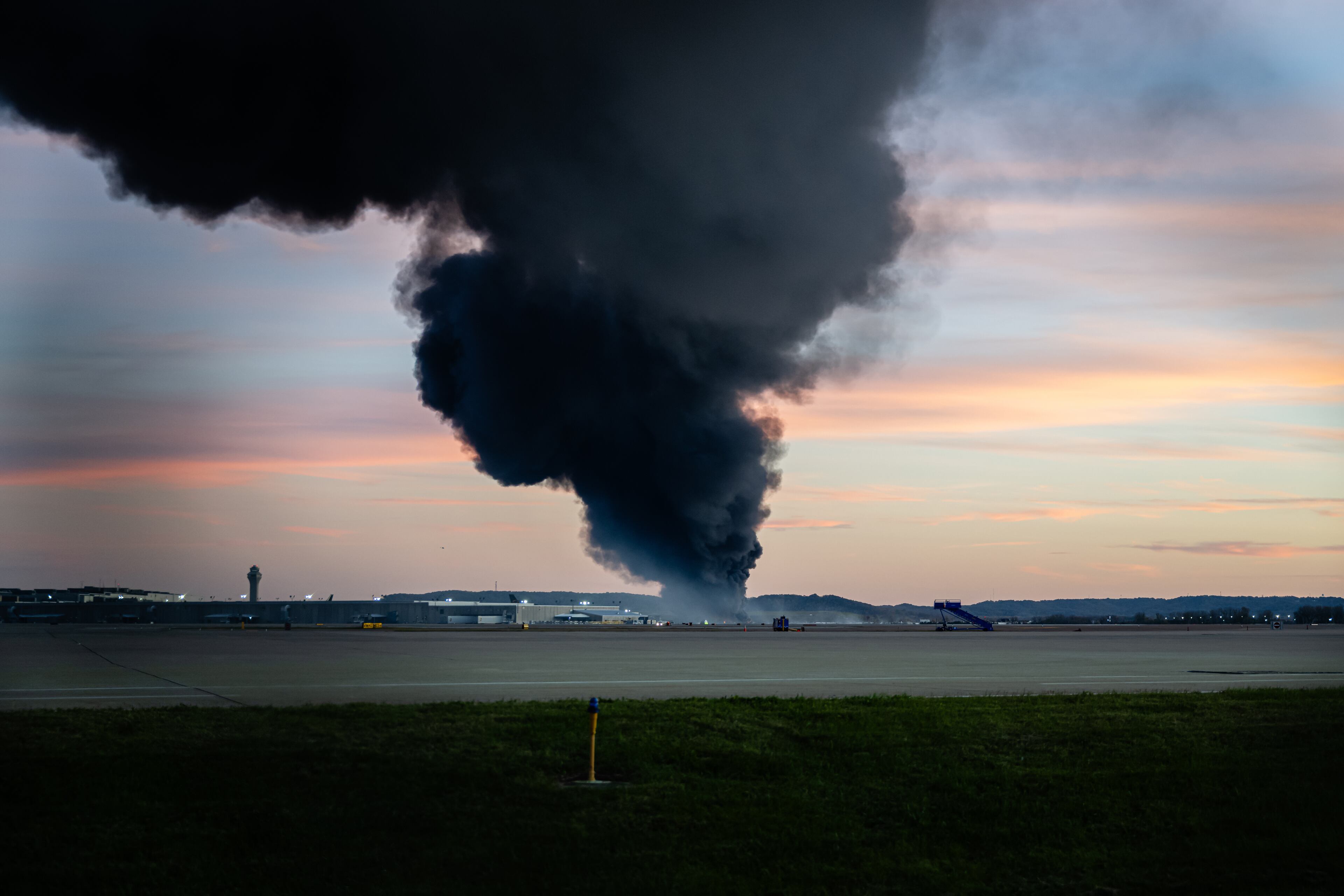
Black smoke billowed as the fire grew to the size of a city block. More than 40 first-responder agencies arrived from hundreds of miles away to help. Much of the city was under a shelter-in-place order.
In an interview last week, UPS CEO Carol Tomé said, “In my professional career, this is the hardest thing I’ve ever dealt with.”
Because while the global logistics giant is technically headquartered in Sandy Springs, its relationship with Louisville, where its cargo airline is headquartered, is extremely tight.
“We consider UPS our hometown company also,” Greenberg said.
As he toured, he noticed flags in the debris, Greenberg recalled, marking where first responders had identified human remains.
Fifteen lives would be lost in the accident, including the three UPS pilots.
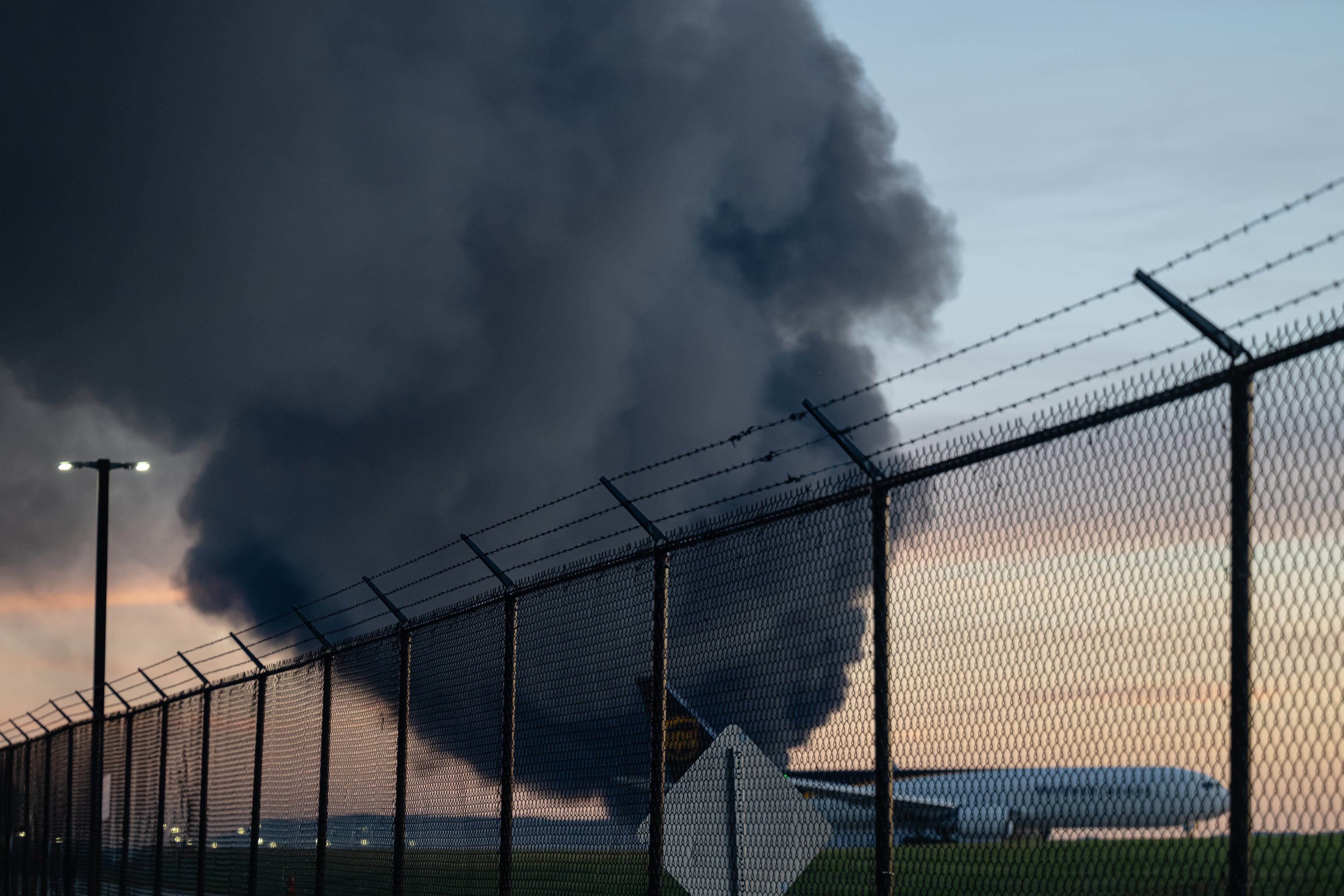
First responders were “literally having to put these fires out while bodies were smoldering next to them. They couldn’t touch the bodies because a coroner had to see them first,” recalled Louisville Metro Councilman Dan Seum, who represents the area including UPS’ Louisville hub.
“It was like a war zone.”
Six months later, the environmental cleanup is still underway, including water pipe replacement and storm basin cleanup, Greenberg said. Some roads remain closed. Some businesses have reopened, but others don’t know if they will.
Lawsuits have been filed against UPS and the aircraft and engine makers. And the National Transportation Safety Board’s investigation into the accident’s causes is ongoing, with investigative hearings set for later this month.

‘UPS is home’
UPS runs its largest global package handling facility, “Worldport,” in Louisville.
The company employs about 30,000 people in Kentucky, Tomé said.
That’s more than the Georgia company’s metro Atlanta headcount.
UPS opened Worldport in 2002. Much of Louisville’s own expansion over the past several decades “is tied to UPS’ growth,” Greenberg said.
The same will likely be true in the future, he said. High-tech healthcare companies are locating in Louisville because of their proximity to UPS’ growing healthcare logistics hub there.
Kentucky “is so important to us,” Tomé said. “And so we’ve spent a lot of time with our people … hand-holding, listening to people, showing as much empathy and support as we can.”
“It was a tragic accident,” she said. “But we do the right thing.”
Greenberg said he was on the phone with UPS executives within minutes of the accident.
With the company’s support, the city set up a community resource center for individuals and business impacted. The federal Small Business Administration was present, and claims assistance was offered, he said.
The city government has been tallying the cost of the response and recovery for which it will ultimately seek compensation, Greenberg said, but they have no plans to file a lawsuit.
UPS spokesperson Michelle Polk told The Atlanta Journal-Constitution that UPS immediately handed out short-term monetary assistance to those affected and has reached out to every impacted business since the accident.
The company, she said, also offered access to some of its employee-only mental health and crisis support services broadly to the community.
UPS remains “deeply saddened by Flight 2976,” Polk said in a statement. “Our focus continues to be on supporting those affected and working closely with the National Transportation Safety Board as the investigation continues.”
Seum agreed that UPS “stepped right up” in the response to the accident. UPS “is home,” he said.
“We’re used to the planes … they’re a staple in this community.”

‘A nightmare’
But to Debbie Self, it doesn’t feel like UPS stepped up.
She has owned Stooges Bar & Grill in Louisville for more than four decades.
Six months ago she employed 44 people and had a “thriving business,” she said. UPS employees were among her most loyal customers, alongside workers at Ford Motor Company and CSX nearby.
The day of the accident, everyone evacuated as a plume of smoke billowed from just next door, but her property was spared the worst.
“I thought in a couple weeks at most I’d be back operating,” she said.
She lost $150,000 worth of spoiled food; she thinks she got sick from cleaning it up three weeks after the crash.
But reality started to set in when she was still not back up and running around Christmas, she recalled.
She had to let her employees go, but not before managing to pay them and coordinate gift cards from charities to help them through the holiday season.
The big challenge has been the contamination and remediation work, she said.
She has two sand volleyball courts and a gravel parking lot on her seven acres, all of which have to be dug up and replaced.
Insurance is helping cover many expenses, but not all, she said.
She still hasn’t been able to reopen and doesn’t see a path to doing so.
“My employees are gone. I can’t do this alone. I’m 76 years old, and … it’s a nightmare,” she said.
Self said she went to the community resource center twice to ask for help covering ongoing utility bills, but never heard back.
She is part of a class-action lawsuit from business owners seeking compensation from UPS. She said she was offered a settlement but that it requires her to release too much future liability to be worth it.
UPS said it does not comment on pending litigation.
“I’m so angry, and I’m not the only one,” Self said. “That’s their airplane. It wasn’t our fault. We did nothing wrong. We was just in the wrong place.”

Whose fault?
The question of how the crash happened — and who is ultimately at fault — now lies with the NTSB.
In a preliminary report, the agency said that just as the MD-11 jet was taking off, the left engine came off the wing.
Within days UPS grounded its MD-11 fleet as a precaution and on the recommendation of Boeing, which acquired MD-11 maker McDonnell Douglas in 1997. Competitor FedEx followed suit.
The Federal Aviation Administration soon officially grounded the aircraft — as well as DC-10s, which have a similar design — until they could be inspected with corrective actions taken.
In January, the NTSB said Boeing was aware of a structural flaw in the aircraft design that could cause cracks in a part of the plane holding the left engine in place.
Soon thereafter, UPS announced it would retire the aircraft entirely.
Tomé told the AJC that the company had years ago begun a “programmatic maintenance program” to retire the more than three-decade-old planes over time. MD-11s represented 9% of UPS’ fleet.
“After the tragic crash of 2976 we said, ‘Huh, why don’t we just accelerate that? We’ve got aircraft on order. Let’s just accelerate it.’ And so that’s what we did,” she said.
The company took delivery of three more fuel-efficient Boeing 767s in the first quarter, with 15 more expected through next year, she outlined.
Louisville Democratic Rep. Morgan McGarvey has called on the FAA to permanently remove the MD-11s from service.
The NTSB’s investigative hearings on the crash are scheduled for May 19 and 20, and many in Louisville, including Self, will be tuning in.
“Sometimes it feels like it was eternity ago. Other times it feels like it was yesterday,” Greenberg said. “There will be — and there is — no doubt about it,” a permanent effect on the community.