He built an empire that helped build Atlanta. A new marker honors him.
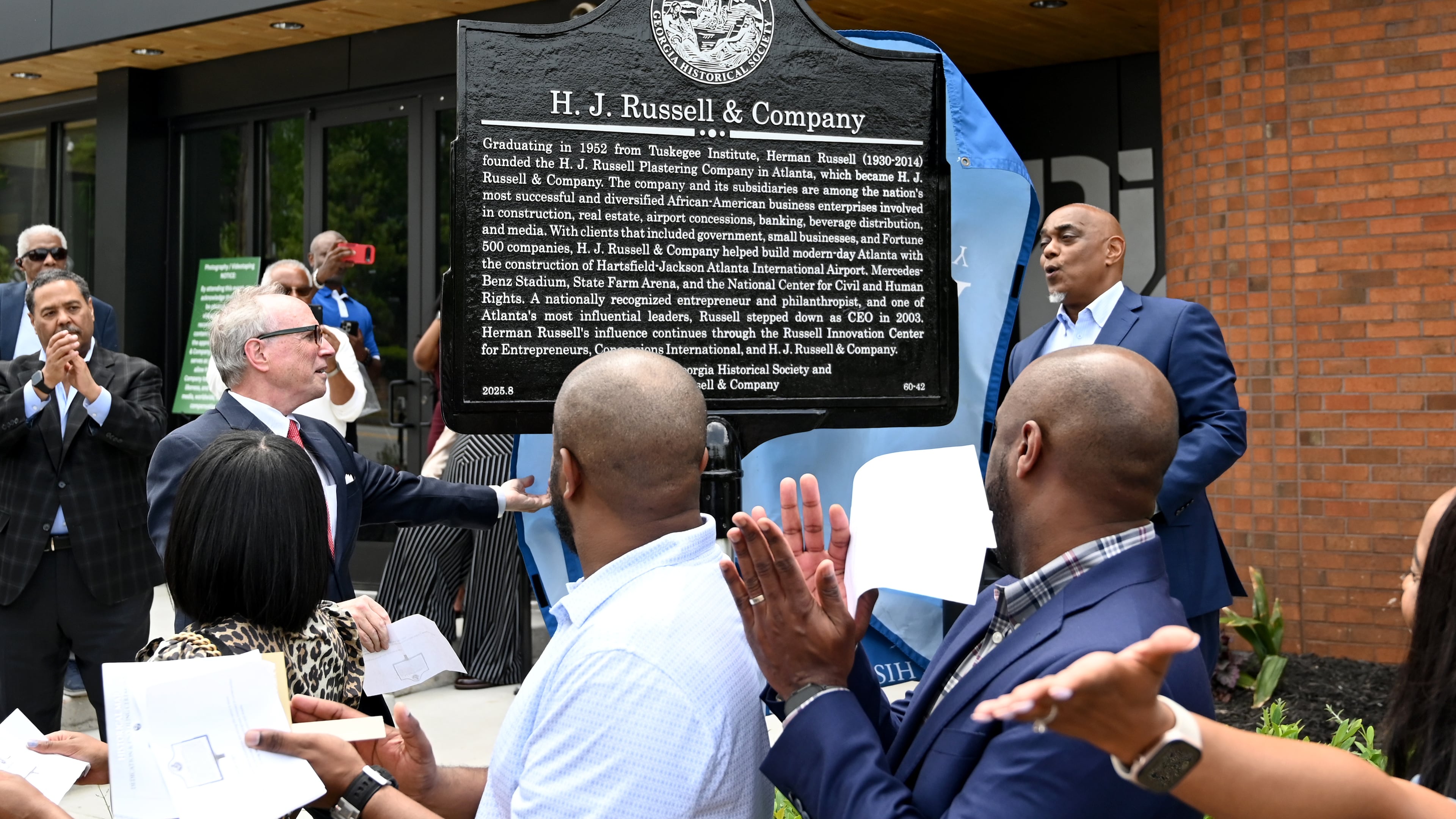
In 1952, a young plasterer and shoe shiner purchased a plot of land on the corner of Northside Drive and Fair Street, just south of downtown Atlanta, as the site where he would build his dreams.
Just 22-years-old, Herman J. Russell chose the land for the headquarters of his fledgling business. Over the decades, he would turn a small plastering company into a real estate and construction empire — and one of the most influential Black-owned businesses in the country.
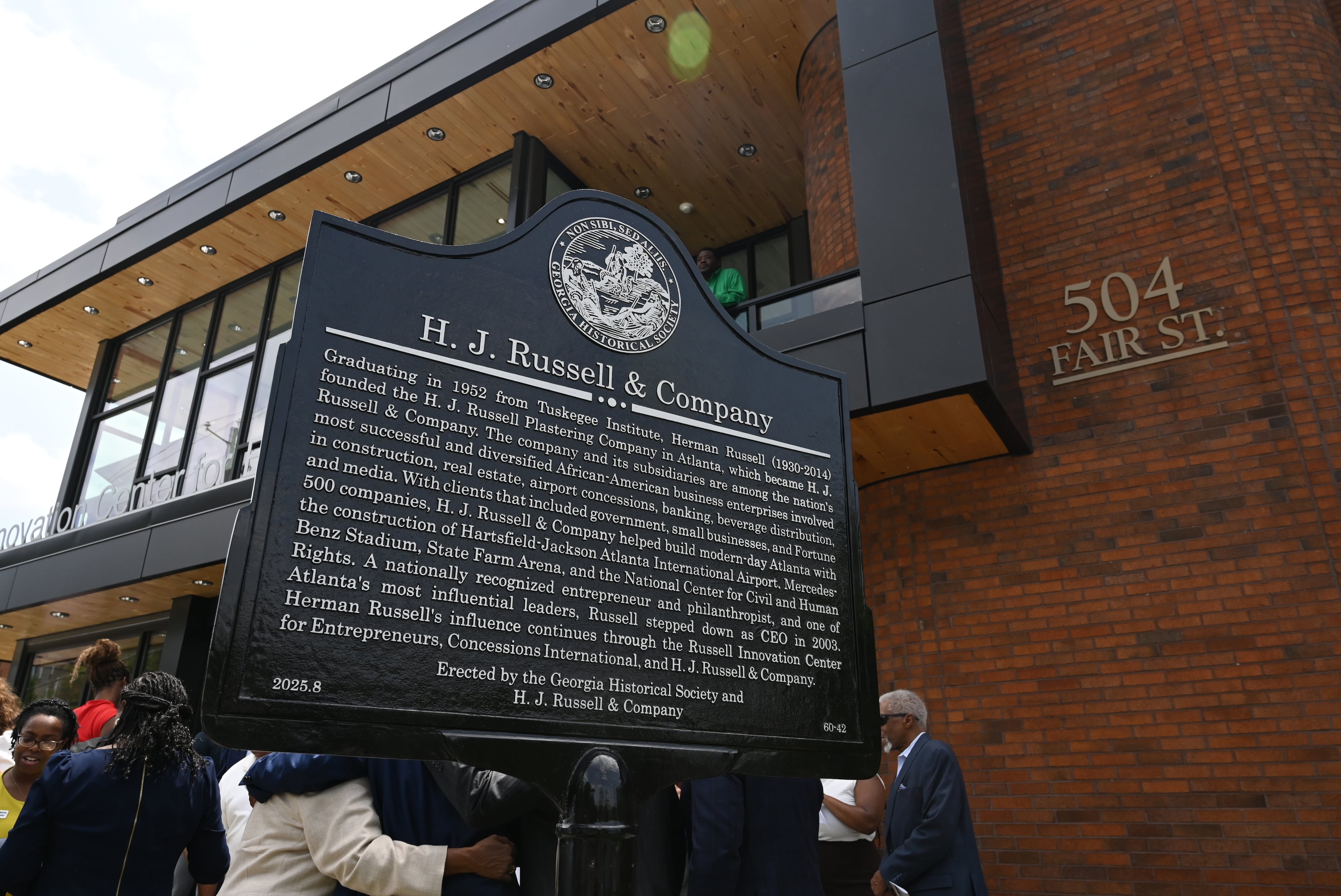
Now, as H.J. Russell & Co. prepares to celebrate its 75th anniversary next year, the Georgia Historical Society has erected a marker at 504 Fair St. detailing some of the company’s achievements that shaped modern-day Atlanta.
“Herman and (his wife) Otelia Russell didn’t just start a company, they established a way of thinking, a way of leading, a way of living,” their eldest son and the company’s current president, H. Jerome Russell Jr., said Wednesday at a ceremony unveiling the new marker.
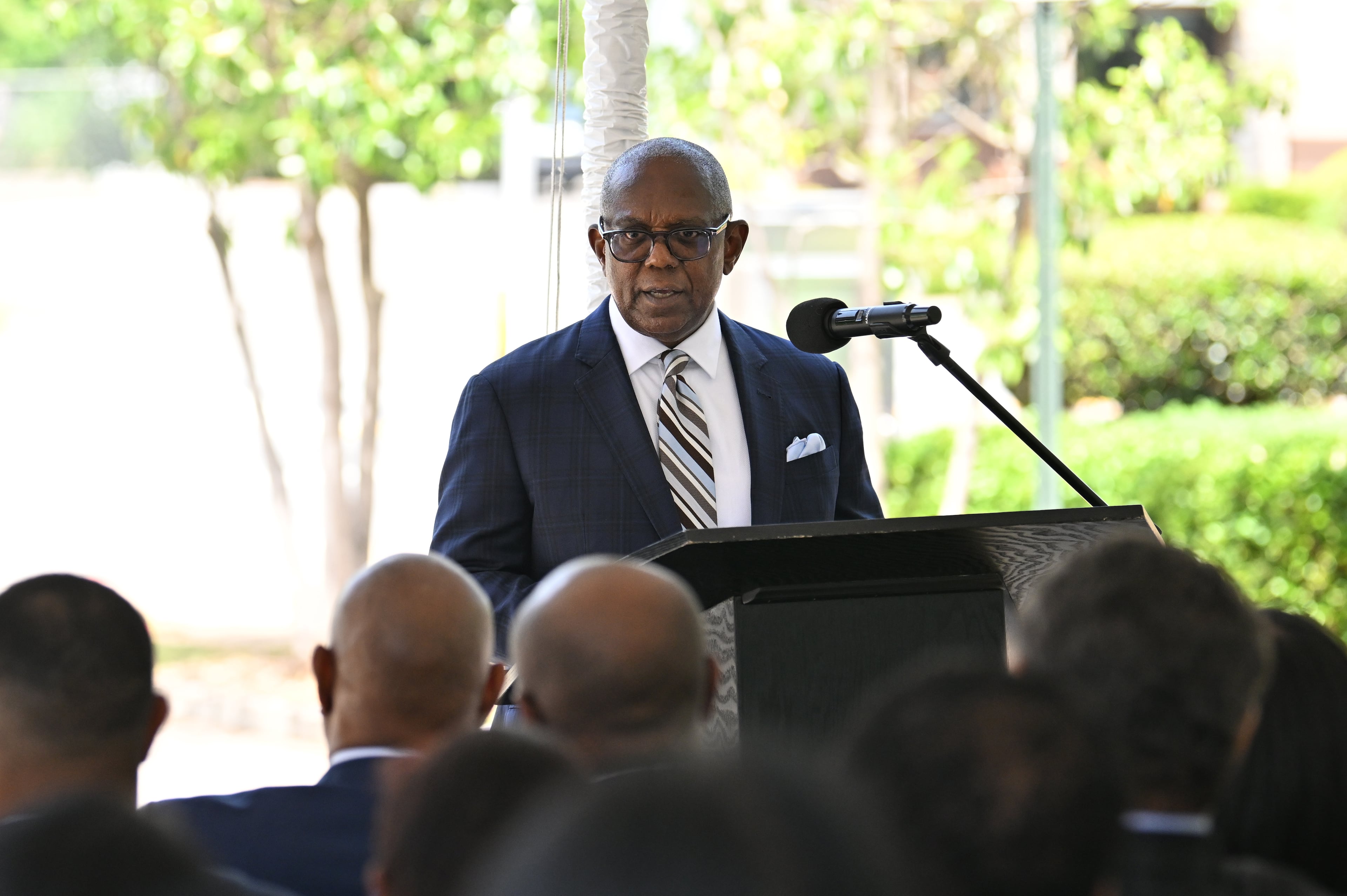
“The values they embedded — integrity, resilience, empathy, compassion and diversification, in life and in business — have guided our family and enterprise for nearly 75 years,” he said.
The historical marker is one of the few highlighting Black entrepreneurship as part of the Georgia Business History Initiative. And it comes at a time when teaching African American history has become a political flashpoint.
“The past is like a pair of glasses we all put on every morning, and it shapes the way we see the world,” Todd Groce, president and CEO of the Georgia Historical Society, told The Atlanta Journal-Constitution. “But for most of us, those glasses are totally out of focus. So what we’re doing is trying to bring that into focus, make sure that it’s complete.”

H.J. Russell & Co. built many of Atlanta’s most iconic structures — from Hartsfield-Jackson Atlanta International Airport to Mercedes-Benz Stadium — often through pioneering joint venture agreements.
In 1979, Russell founded Concessions International to provide food and beverage concession services to major airports in the United States. The company was able to grow as a disadvantaged business enterprise under a federal program, since projects funded by the Department of Transportation had goals for contracting with such firms. In the 1990s, it outgrew the disadvantaged business program and became large enough to hire its own minority partners.
Along the way, Russell broke a multitude of racial barriers, helping to integrate the city’s business community. He was the first Black member of what was then called the Atlanta Chamber of Commerce (now known as the Metro Atlanta Chamber) and the second African American to serve as its president.
Russell was also an influential philanthropist. At the height of the Civil Rights Movement, Russell paid bail for activists and was a heavy donor to the Rev. Martin Luther King Jr. and the Southern Christian Leadership Conference.
In 2006, he was one of the first Atlantans to contribute $1 million for the successful acquisition of King’s papers, now owned by Morehouse College and a part of the National Center for Civil and Human Rights, which H.J. Russell & Co. helped construct.
Two years after Russell’s death in 2014, his children turned the company’s original headquarters on Fair Street into the Russell Innovation Center for Entrepreneurs, which today serves hundreds of small-business owners, providing programming and a physical space for them to build their own companies.
“It is without question that the Russell family is a royal family in the city of Atlanta. It is without question that the name Russell has been synonymous with entrepreneurship, with innovation, with Black excellence‚” Courtney English, chief of staff to Mayor Andre Dickens, said Wednesday.
A who’s who of Atlanta’s business and political elite came to the unveiling ceremony, including real estate titans Egbert Perry and T. Dallas Smith, as well as former Atlanta Mayors Kasim Reed and Bill Campbell, and Democratic gubernatorial candidate Michael Thurmond.
Alongside the new marker, the Georgia Historical Society has also created a case study on H.J. Russell & Co. for eighth-grade teachers around the state to use to teach economics.
“This is an opportunity to learn about his story, not to somehow necessarily glorify him,” Groce said, “but to be able to say, ‘This is something you can do.’ It can be an inspiration to young people.”
— Staff writer Zachary Hansen contributed to this report.